
Florida Pileup Claims in Fog: Cameras and 911 Logs
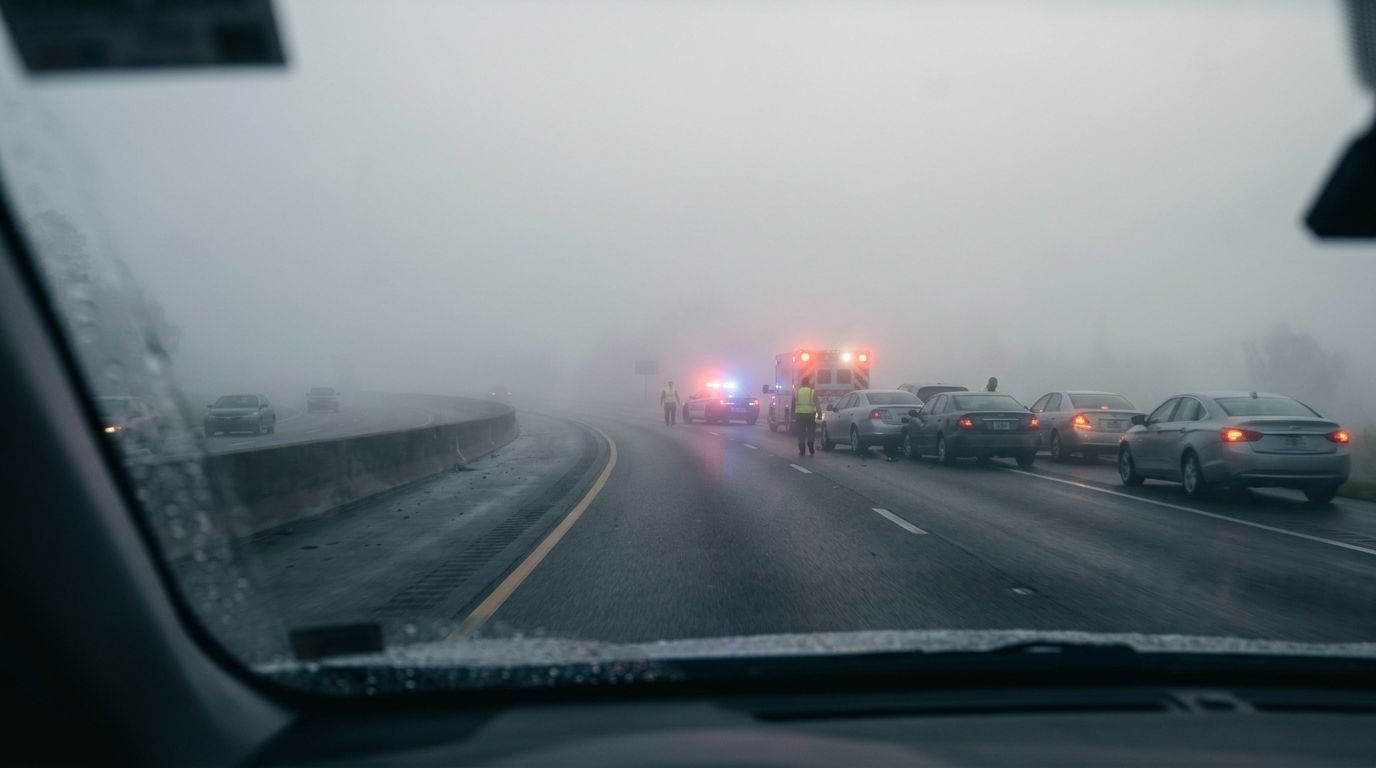
Fog can turn a Florida roadway into a blind corner in seconds. When several cars collide, the hardest part is often not the impact itself. It is proving who saw what, when they saw it, and how fast the crash spread.
That is why Florida pileup claims often rise or fall on records that do not rely on memory. Camera footage, dispatch records, and 911 logs can lock the timeline in place before the scene changes. The details that matter are often the ones drivers never had time to see.
Why low-visibility pileups become evidence fights
A pileup is rarely one clean hit. It is usually a chain reaction, with each driver reacting to the car ahead. In fog, that chain can start before anyone sees the hazard.
The scene also changes fast. Tow trucks arrive. Police redirect traffic. Brake marks fade, debris gets moved, and witnesses leave with their own version of events. Road closures and emergency lights can change the scene even more. By then, the original pattern may be gone.
That is why low-visibility pileup claims often turn into fights about timing. One driver may say traffic stopped without warning. Another may say the fog was thick enough to make stopping impossible. A third may blame hard braking, tailgating, or a lane change that set off the crash.
Insurers know this. They look for gaps, delays, and stories that do not match the physical scene. If the record is weak, they use that weakness to push blame onto someone else. Witness memory helps, but it is rarely enough on its own.
This is where fast proof matters. In a multi-car crash, the order of impact can matter as much as the impact itself. If the first collision happened in low visibility, the question becomes whether each following driver had a fair chance to react.
What fog footage can show before the scene changes
Camera footage in fog, roadway video, and dash cams can capture the crash in a way human memory cannot. A timestamp may show when traffic slowed. A frame may show whether brake lights were visible. Even a blurry clip can help if it confirms the level of visibility.
A short video can also prove what the weather felt like on the road. Was the fog light, or did it sit low enough to hide taillights? Did cars have room to stop, or did they meet a wall of white? Those details matter because insurers often argue that the crash was avoidable.
Here is a quick view of the video sources that often matter most.
| Source | What it may show | Why it matters |
|---|---|---|
| Traffic or highway cameras | Fog, lane movement, brake lights, stopped traffic | Helps place the first impact in time |
| Dash cams | Driver viewpoint, speed changes, sudden stops | Shows what the driver could actually see |
| Nearby business security video | Approach to the crash, traffic buildup, impact sequence | Can fill gaps when roadway cameras miss the scene |
| Weather or traffic-monitoring feeds | Visibility and road conditions | Supports the claim that drivers had limited sight distance |
No single clip tells the whole story. Still, matching footage with other records can show which driver had time to brake and which one did not. That becomes powerful in a pileup claim, because it turns guesses into a timeline.
Why 911 logs matter in a Florida pileup claim
911 records often do more than mark the first call. They show when the crash was reported, how many callers spoke up, and what those callers said before stories started to drift.
911 logs can freeze the first version of the crash before memory gets reshaped by shock, traffic, and conversation.
If the first calls report multiple vehicles, blocked lanes, or a sudden wall of fog, that helps show how fast the crash grew. If dispatch notes show several calls within a short span, the pileup may have unfolded in seconds, not minutes.
The audio can matter too. Callers may describe low visibility, stopped traffic, or a vehicle sitting in the lane. Even small details help when a later statement tries to soften the conditions. A claim gets stronger when the call logs, the video, and the police report point in the same direction.
A line of calls can also show how many people were stuck, whether lanes were blocked, and whether responders had to treat the scene as a mass crash. That helps show the size of the event, not just the first impact.
Request timing matters. The longer a case waits, the harder it can be to gather clean records. Calls, radio traffic, and logs can still exist, but they are easier to preserve when someone asks early. That is especially true after a major crash scene opens and closes quickly.
For Florida pileup claims, 911 records are often the bridge between what happened and what can be proven. They help fix the sequence before the case turns into a memory contest.
What insurers argue after a chain-reaction crash
After a fog-related pileup, insurers often look for shared blame. One adjuster may say a driver followed too closely. Another may point to speed, poor headlights, or a late brake tap. Someone else may blame the weather and call the crash unavoidable.
That is why the claim needs more than a police report and a few statements. In Florida, personal injury protection may help with early medical bills, but it does not answer who caused the pileup. Liability still matters when injuries are serious.
The record also has to match the physical damage. If a vehicle was hit first from behind, then pushed into others, the order of impact can change who pays. Each carrier may try to shrink its share by blaming the next car in line. If a truck, van, or delivery vehicle was involved, more records may exist. That can include onboard data, company logs, and driver statements.
This is where a Florida car accident attorney can make a real difference. A lawyer can ask for footage before it gets deleted, compare 911 logs with the crash report, and press each insurer to explain its version of events. That matters because the weakest claim is the one built on delay.
Steps that help preserve a pileup claim
The strongest claims usually start with simple moves made early.
- Get medical care right away, even if pain feels mild. Adrenaline hides injuries, and the record should show you looked for treatment.
- Save every image, video, and text message tied to the crash. Phone photos, dash cam files, and screenshots can fill gaps that no report covers.
- Write down the weather, the lane you were in, and the direction of travel. Small details fade fast after a stressful crash.
- Ask about nearby cameras before the footage is lost. Stores, offices, gas stations, and traffic systems may hold useful video.
- Keep the vehicle and damaged parts available for inspection if possible. Repairs can erase signs that matter later.
- Be careful with insurer calls. A short, inaccurate statement can create a problem that is hard to fix.
These steps are simple, but they carry weight in a pileup case. Low visibility makes the event hard to reconstruct. Good records make it easier.
If the crash involved several cars, the details may already be scattered across video files, dispatch logs, and witness memory. Pulling those pieces together early can keep the claim from drifting. A phone video, a timestamped photo, or a tow-yard note can matter later, even if it looks small on day one.
Conclusion
Fog can hide the first mistake in a pileup, but it cannot hide every record. Video footage, 911 logs, and prompt evidence collection can show how the crash unfolded and who had a real chance to stop.
That is why low-visibility Florida pileup claims often turn on the timeline. When the facts are gathered early, the case has a firmer base.
If you were hurt in a fog-related chain reaction, the most important step is protecting the proof before it fades.