
Florida Rear-End Crash Claims When Brake Lights Are Disputed
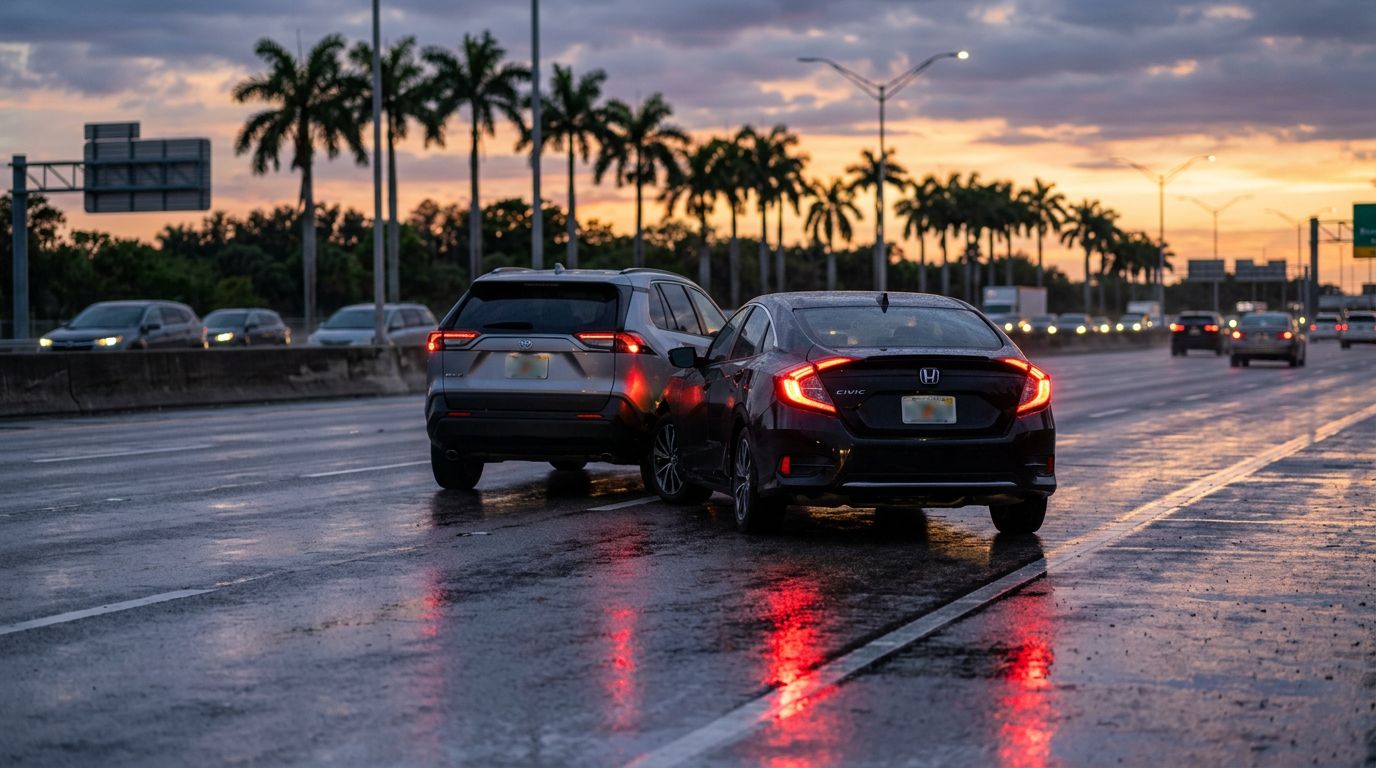
Florida rear-end crash claims can turn on one stubborn detail, whether the brake lights worked. A rear driver usually starts with the harder job, but a broken bulb or wiring problem can change the story fast.
Insurers know that a brake-light dispute can turn a simple collision into a fight over blame. The answer depends on proof, not guesses. The first question is where that proof comes from.
Why a broken brake light changes the whole case
Rear-end crashes often look clear at first. One car hits another from behind, so the rear driver seems at fault. However, that simple picture can break apart when the brake lights are disputed.
Florida drivers have a duty to keep their cars in safe working order. Working brake lights warn the driver behind that the car ahead is slowing or stopping. If the lights were out, the rear driver may argue there was no fair chance to react.
That does not erase other possible causes. Speeding, distraction, tailgating, wet pavement, and poor visibility still matter. The crash must be judged on the full set of facts. When liability turns on small details, Florida car accident lawyers can help preserve the record before it fades.
Evidence that shows the lights were out
The best Florida rear-end crash claims usually rely on more than one source of proof. One detail can be questioned. Several details that point the same way are harder to dismiss.
| Evidence | What it can show | Why it matters |
|---|---|---|
| Police report | Whether officers saw damaged or unlit brake lights | Creates an early record of the scene |
| Photos and video | The rear of the car, lens damage, road conditions, and traffic flow | Shows how the vehicles looked right after impact |
| Witness statements | Whether the lead car slowed without warning | Supports your account when drivers disagree |
| Repair and maintenance records | If the driver knew about a lighting defect | Helps show ignored maintenance |
| Vehicle data and crash downloads | Speed, braking, and timing before impact | Can back up or challenge each driver’s version |
A single burned-out bulb may matter, but a full record matters more. If officers wrote that the brake lights were not working, request the report as soon as it is available. You can often get the Florida crash report from the Florida Department of Highway Safety and Motor Vehicles within about 10 days.
Video is often the strongest proof. Dashcam footage, traffic cameras, and nearby business cameras can show whether the rear lights were dark before the crash. In newer vehicles, an event data recorder may also show speed and brake input in the seconds before impact. A reconstruction expert can compare that data with skid marks, impact points, and photos.
A broken brake light does not decide fault by itself. It changes what has to be proved.
One more detail matters. A lens cracked in the crash is not the same as a bulb that failed before impact. That timing can make or break the claim.
Florida fault rules when both drivers blame each other
Florida uses fault to sort out who pays. In a rear-end case, the insurance company often starts with the rear driver. If the lead car had no working brake lights, the balance of fault can shift.
Under Florida’s modified comparative fault rule, shared blame can reduce or bar recovery in a negligence case. That makes every fact matter. A rear driver who followed too closely may still carry most of the blame. A lead driver with broken brake lights may also carry part of it. The real question is how the evidence splits responsibility.
That is why these cases are often about details, not slogans. Did the car slow gradually or stop hard? Was the rear driver watching the road? Were the brake lights dead before impact, or did the crash break them? Those questions decide whether the case looks like a routine rear-end collision or a mixed-fault crash.
If the facts are disputed, a personal injury law firm can look at the medical proof, repair records, and witness statements together. The claim gets stronger when the story fits the documents.
What insurers look for when they deny brake-light disputes
Adjusters look for reasons to keep the rear driver at fault. They may say the following driver was speeding, distracted, or too close. They may also argue that the lead car braked normally and the rear driver simply failed to stop.
They will also inspect the vehicle itself. A dead bulb, bad wiring, a blown fuse, or a faulty brake switch can support a brake-light defense. Yet a broken lens after impact can create confusion, so timing matters. The key question is whether the light failed before the crash or because of it.
Scene evidence matters too. Skid marks, bumper height, impact points, and traffic signal timing can show whether the rear driver had room to stop. Camera footage can settle a dispute faster than a stack of statements. Even one clear frame can help.
A recorded statement can also hurt a case. A simple line like “I did not see them stop” may be used later as an admission. So can a guess about speed, distance, or signal timing. The less you speculate, the better.
What to do before the evidence disappears
The first day after a crash matters. The scene changes fast, and memories fade even faster. If brake lights are part of the dispute, preserving the evidence should come first.
- Photograph the back of both vehicles before repairs start. Get close shots of the brake lights, the lens, bulbs, and any broken wiring.
- Ask witnesses for names and phone numbers. Write down what they saw while the scene is still fresh.
- Request the crash report and save every bill. Tow charges, repair estimates, and medical records help show the cost of the crash.
- Keep the vehicles available for inspection if possible. Once a car is repaired or sold, some proof is gone for good.
A personal injury law firm can also collect the records, photos, and witness details that insurers often challenge. If there are cameras near the crash site, ask about video right away. Many systems overwrite footage quickly, and waiting can cost you the one clip that settles the dispute.
Conclusion
Brake-light disputes make rear-end cases feel simple at first and messy soon after. The rear driver may seem at fault, but that answer changes when the lead car had no working lights or the facts are unclear.
The strongest Florida rear-end crash claims are built on evidence. Photos, police reports, witness statements, vehicle data, and quick inspections can show whether the lights failed before impact or were damaged in the crash.
When blame is in dispute, early action matters. The record gets harder to change when it is collected right away, while the cars, the scene, and the witnesses are still available.