
Florida Slip and Fall Claims: Why Restroom Logs Matter
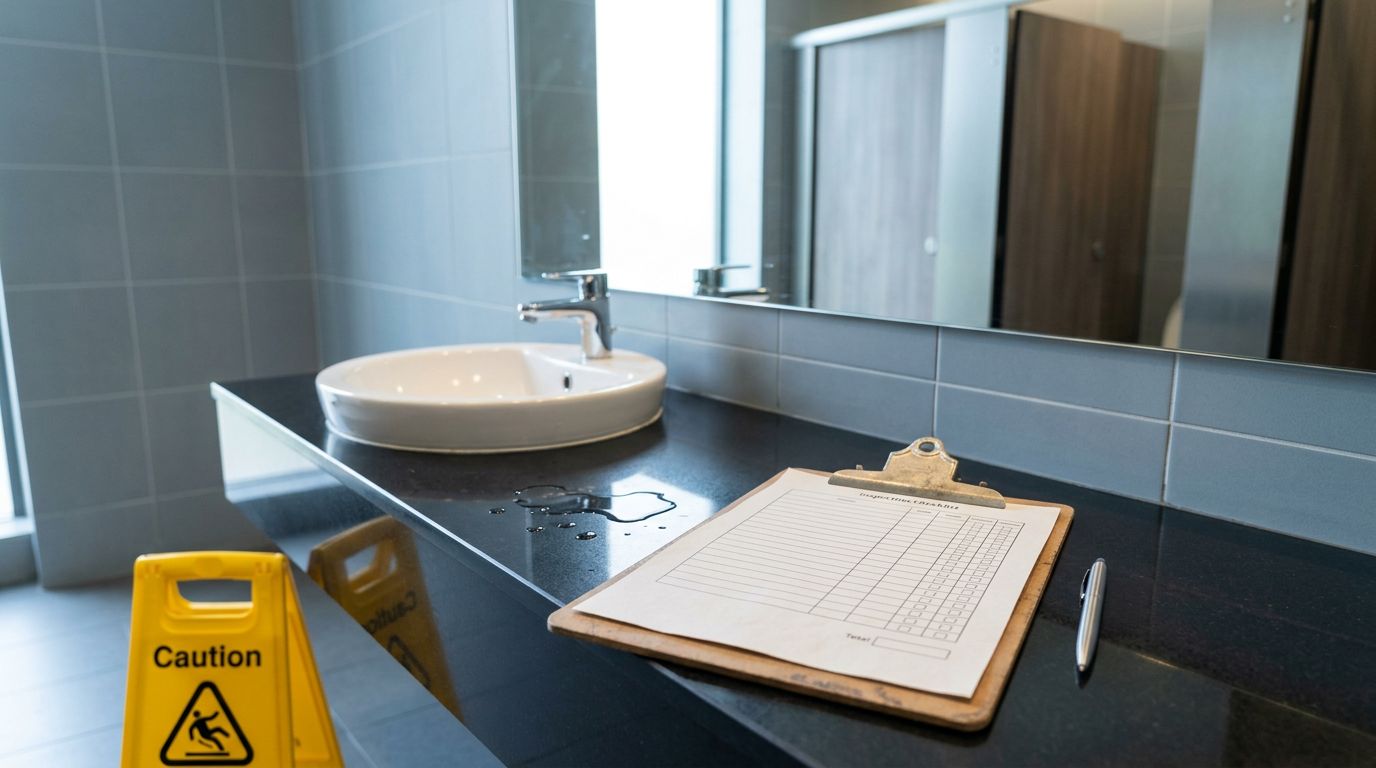
A restroom floor can become dangerous in minutes, but the records showing what happened may disappear just as quickly. When someone slips near a sink, toilet, entrance, or shower area, inspection logs can help show whether the business knew about the hazard or should have found it.
For many Florida slip and fall claims, the central issue is notice. A medical record can prove your injury, but a restroom inspection log may help prove why the property owner should be responsible. Understanding these records can help you protect evidence after an accident.
Key Takeaways
- Florida law often requires proof that the property owner had actual or constructive knowledge of the dangerous condition.
- Restroom inspection logs can show when employees checked the area, what they found, and whether they corrected problems.
- Missing, incomplete, or contradictory records may raise questions about the business’s safety practices.
- Report the fall promptly, photograph the area, identify witnesses, and seek medical care.
- A lawyer can request logs, video, cleaning schedules, incident reports, and employee records before evidence disappears.
Why Notice Matters in a Florida Restroom Fall
Florida premises liability law requires more than proof that a fall occurred on someone else’s property. In most cases, an injured person must connect the fall to a dangerous condition and show that the property owner or operator had notice of it.
Notice can be actual or constructive. Actual notice means an employee or manager knew about the hazard. For example, a customer may report water near a restroom sink, or an employee may see a leaking toilet and fail to address it.
Constructive notice means the business should have known about the condition. Under Florida Statute Section 768.0755, a claimant may establish constructive knowledge by showing that the condition existed long enough for the business to discover it. A recurring condition that regularly occurs in the same location may also support constructive notice.
Restrooms create recurring risks. Water can collect around a handwashing station. Cleaning solution can remain on tile after mopping. A loose mat can fold at the edge, while a leaking fixture can leave a clear or nearly invisible film across the floor.
The timing of inspections often becomes the disputed issue. If a log shows that an employee checked the restroom ten minutes before the fall, the business may argue that the hazard appeared afterward. If the last recorded inspection occurred hours earlier, the gap may support an argument that the business failed to monitor a high-use area.
That record doesn’t decide the case by itself. The condition, witness accounts, photographs, video, employee testimony, and medical evidence must fit together. Still, an inspection log can provide the timeline that connects those facts.
What Restroom Inspection Logs Can Prove
A useful log does more than show that someone signed a form. It should create a reliable record of the restroom’s condition at particular times.
Depending on the business, the records may identify:
- The date and time of each inspection
- The employee who performed the inspection
- Whether the floor, fixtures, mats, and stalls were safe
- Spills, leaks, obstructions, or sanitation problems
- Cleaning work that was completed
- Repairs or corrective steps taken
- The next scheduled inspection
Retail stores may use restroom checklists or sweep sheets. Hotels, restaurants, hospitals, airports, and office buildings may use cleaning schedules, maintenance software, or electronic work orders. A digital system can record when a task was opened, completed, changed, or left overdue.
Those details matter because a business’s written policy often establishes its own expected inspection routine. If the policy requires a restroom check every 30 minutes but the records show a two-hour gap, the discrepancy may support a negligence claim. It can also show that employees did not follow the procedure managers required.
A log can also reveal what happened after an employee noticed a problem. A notation such as “water by sink, mopped at 2:15 p.m.” may help establish notice, response time, and whether the area was safe when the customer entered. A blank line may raise different questions, especially if witnesses saw employees working nearby.
The absence of a log isn’t automatic proof of negligence. Businesses don’t all use the same record system, and an employee may have inspected an area without documenting it. However, missing records become important when the company claims frequent inspections but cannot produce the documents supporting that claim.
A clean-looking log can also conflict with other evidence. If photographs show wet footprints, a soaked mat, or debris while the log says the floor was dry and clear, the difference may affect the record’s credibility. Lawyers may compare the log with surveillance video, point-of-sale timestamps, employee schedules, and customer statements.
Evidence to Preserve After a Restroom Slip
Your first priority after a fall is medical care. Even when pain seems minor, injuries involving the back, head, hip, knee, or wrist can worsen over time. Tell the medical provider how and where the fall happened, and follow the recommended treatment.
If you can do so safely, report the incident before leaving the property. Ask for a manager, supervisor, security officer, hotel representative, or building administrator. Give a factual description of the condition without guessing about who caused it.
Request an incident report and ask how to obtain a copy. Don’t assume the business will automatically preserve every related record. Surveillance footage may be overwritten, and employees may clean or repair the area before photographs or an inspection occur.
Photographs can show details that a later inspection cannot. Capture the floor from several angles, including the surrounding restroom, lighting, warning signs, mats, fixtures, and entrance. If the hazard involved water, photograph nearby sinks, toilets, pipes, drains, or cleaning equipment. Keep the original files and avoid editing them.
Write down what you remember while the details remain fresh. Record the approximate time, where you walked, what you felt under your shoes, what you saw on the floor, and whether employees were nearby. Ask witnesses for their names and contact information if they are willing to provide it.
Keep the shoes and clothing worn during the fall. Don’t wash or discard them until a lawyer advises you. Their condition may help show whether the floor was wet, slippery, or contaminated.
Useful records may include:
- The incident report and any correction or supplement
- Restroom inspection and cleaning logs
- Maintenance tickets and repair requests
- Surveillance video from the restroom entrance or nearby hallway
- Employee schedules and training records
- Prior complaints about leaks, slippery floors, or restroom conditions
- Photographs, witness statements, and medical records
Avoid signing a release or giving a recorded statement to an insurer before obtaining legal advice. A statement made soon after an injury may omit important details or contain guesses that later affect your claim.
How Lawyers Evaluate an Inspection Log
A lawyer does not review a log only for the last signature. The surrounding records may show whether the document is complete, accurate, and consistent with what happened.
The first question is often whether the log identifies a real inspection. A series of identical initials at perfectly regular times may deserve closer review, particularly if employees say they were assigned elsewhere. Digital records may reveal whether entries were made at the time of inspection or entered later in a batch.
The next issue is whether the inspection covered the actual hazard. A form marked “restroom checked” may not show that an employee examined water near the sink, a loose mat, or a leaking toilet. More detailed entries can establish what the employee saw and what action followed.
Video can help test the timeline. If a log says an employee inspected the restroom at 3:00 p.m., camera footage may show whether the employee entered the area. Video may also show customers reporting the condition or employees walking past it without taking action.
Prior complaints can matter when they involve the same type of problem. Repeated reports of water near one sink, for example, may support an argument that the business knew the area required more frequent attention. A single earlier complaint may not prove the later hazard, but it can provide context.
Lawyers may request records through an insurance claim, preservation letter, subpoena, or formal discovery after a lawsuit begins. They may also interview employees about the company’s inspection policy, training, recordkeeping, and response to restroom hazards.
An inspection log is evidence, not a conclusion. Its value depends on whether it fits the physical evidence and the testimony. The strongest cases usually have several sources that support the same timeline.
Deadlines and Legal Help for Florida Slip and Falls
Florida’s deadline for a negligence lawsuit depends on when the injury occurred and whether an exception applies. For many negligence claims accruing after March 24, 2023, the limitations period is two years. Older claims may involve a different deadline, and special rules can apply to claims involving government property or other circumstances.
Because a missed deadline can end a claim, speak with a Florida personal injury lawyer as soon as possible. Early advice also gives counsel more time to seek inspection logs, video, incident reports, and other records before they are lost.
The circumstances of the property visit matter too. A customer, hotel guest, patient, tenant, employee, or invited visitor may have different legal issues. Your attorney will examine the location, the dangerous condition, the reason it existed, the business’s response, and the injuries that followed.
If you are considering legal representation after a fall, you can review Florida personal injury attorneys at Avard Law to learn about available assistance. Bring photographs, medical information, the incident report, witness details, and any messages from the property owner or insurer to your consultation.
Florida also follows comparative fault rules. The defense may argue that your footwear, attention, conduct, or failure to use an available warning affected the accident. That argument doesn’t erase the business’s duties, but it can affect the amount recovered.
Conclusion
A restroom inspection log may show whether employees followed the property’s safety policy, how long a hazard remained, and what response occurred before the fall. Those details can help establish notice in a Florida slip and fall claim.
Report the incident, preserve photographs and clothing, identify witnesses, seek medical care, and avoid agreeing to a quick settlement before the evidence is reviewed. When the floor condition is disputed, the right records can turn a missing timeline into a provable one.