
Florida School Bus Crash Claims: Finding Video Records
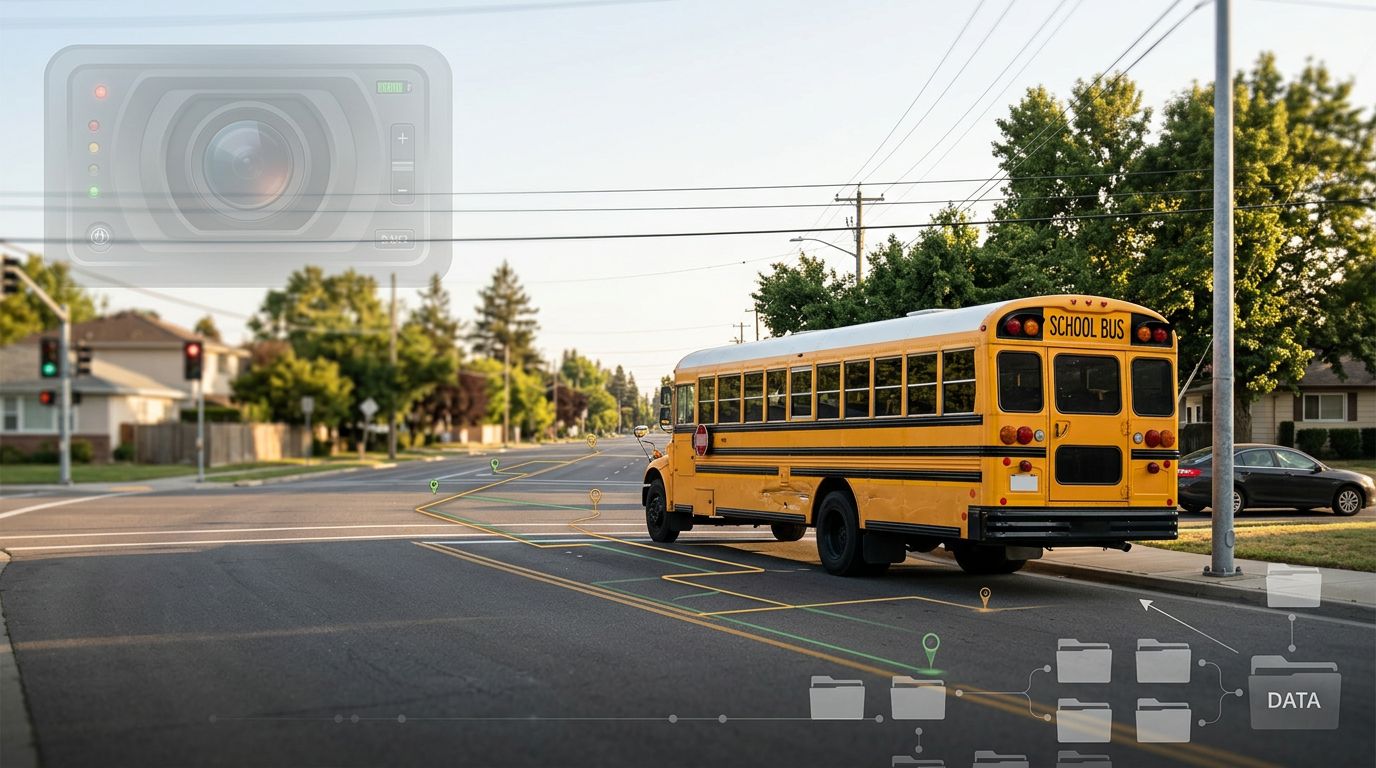
A school bus crash can leave a family with painful injuries and unanswered questions. Florida school bus crash claims often depend on evidence that disappears quickly, including onboard video, GPS data, driver logs, and dispatch records.
A crash report may tell you what happened at the scene. District records can show what happened before the collision, including driver training, maintenance issues, route information, and prior safety concerns. Knowing where to find those records can protect a claim before critical evidence is lost.
Key Takeaways
- School bus video may exist on interior cameras, exterior cameras, traffic systems, or vendor platforms.
- Florida crash reports generally have a 60-day confidentiality period, with earlier access for certain people and entities.
- A written preservation request should go to the school district, transportation department, bus contractor, and other record custodians quickly.
- District records may include GPS data, driver logs, maintenance files, radio traffic, and training records.
- Claims against public school districts involve special notice rules, damage caps, and deadlines that differ from claims against private companies.
Why Video and District Records Matter After a Bus Crash
Witness memories can change, and physical evidence may disappear after a wreck. Video often provides the clearest record of speed, lane position, traffic signals, braking, passenger movement, and the moments immediately before impact.
A school bus may carry several cameras. Some record the road ahead. Others monitor the aisle, emergency exits, entrance steps, or the area outside the bus. A separate system may record vehicles that illegally pass a stopped bus. The district, sheriff’s office, transportation contractor, or camera vendor may hold each recording.
Video can answer questions that a short crash report cannot. For example, it may show whether the driver looked away from the road, whether a passenger stood before impact, whether another motorist crossed the center line, or whether a door opened during the collision.
Records also help establish what the district or contractor knew before the crash. A maintenance file might show repeated brake complaints. A driver file might contain training records, traffic citations, or prior safety violations. GPS data can help confirm the route, speed, stops, and timing.
However, a recording doesn’t automatically prove legal fault. The full context matters. A lawyer may need to compare the footage with the crash report, vehicle damage, medical records, eyewitness testimony, and applicable transportation rules.
Families seeking compensation after a collision can also review Florida car accident legal services when another motorist caused or contributed to the crash. School bus cases often involve more than one potentially responsible party.
Which Records Can Help Prove a Florida School Bus Claim?
The right evidence depends on the crash, the bus, and the entities involved. A focused request may seek several categories at once.
Bus video and camera data
Request all footage from cameras inside and outside the bus. Include recordings from:
- Forward-facing and rear-facing cameras
- Interior aisle cameras
- Door, step, and emergency-exit cameras
- Cameras that capture the bus stop or surrounding roadway
- School bus passing-enforcement systems
- Nearby school, intersection, toll, or law-enforcement cameras
Ask for the original file format when available. A video copied from a phone or social media page may lose timestamps, metadata, or surrounding footage.
GPS, telematics, and electronic data
Many transportation systems record the bus location and movement. Relevant data may include GPS coordinates, speed, route deviations, stop times, hard-braking events, acceleration, and geofence alerts.
Some buses also have electronic data recorders. Depending on the vehicle and system, an EDR may record information about speed, braking, seat belt use, throttle position, or impact forces. The available information differs by manufacturer and equipment.
Driver and transportation records
A records request may include the driver’s training file, license and certification information, driving history, route assignments, schedules, disciplinary records, drug and alcohol testing records where legally available, and prior complaints.
Florida school districts must review driver records and follow rules for school bus operators. A prior violation doesn’t automatically prove negligence, but it may matter if the district ignored a known safety concern or assigned a driver who lacked required qualifications.
Maintenance and inspection files
Maintenance records can help identify defects that contributed to the crash. Request inspection sheets, repair invoices, work orders, tire records, brake records, defect reports, recall notices, and communications about mechanical problems.
The relevant records may belong to the school district, a private transportation company, a bus owner, or a repair contractor. A request to only one agency may leave out important evidence.
Emergency and investigation records
Also consider requesting 911 recordings, dispatch communications, incident reports, photographs, diagrams, witness statements, officer body-camera footage, ambulance records, and fire-rescue reports.
Some records may contain confidential student information or other protected material. The custodian may redact those sections while producing the rest. A partial production doesn’t always mean the agency has withheld the entire record improperly.
Florida Public Records Rules and Crash Report Timing
Florida’s public records law generally allows access to records made or received by public agencies during official business. That rule can apply to school district transportation records, including records held by a contractor on the district’s behalf.
A crash report has a separate access rule. Under Florida’s traffic crash report statute, identifying information in a report is generally confidential for 60 days after the report is filed. Parties to the crash, their legal representatives, insurers, and law enforcement may have earlier access under the statute.
After the confidentiality period, the report generally becomes available as a public record through the appropriate records custodian or the Florida Department of Highway Safety and Motor Vehicles. The investigating agency may also have related records that are not part of the state crash report.
The 60-day period doesn’t mean families should wait. It applies to crash reports, not every piece of evidence. A bus recording, GPS file, driver log, or maintenance record may have a separate retention schedule. Some systems overwrite files when storage fills. Others delete information after a set period.
Public access also has limits. Student education records, certain personal information, security-system details, and parts of an active investigation may be confidential or exempt. An agency should identify the legal basis for a redaction or denial when it withholds a record.
The fact that a document is publicly available doesn’t make it complete. A crash report may omit medical details, later witness accounts, mechanical findings, and information gathered after the initial investigation.
How to Request School District Video and Records
A public records request should identify the incident with enough detail for the custodian to locate the records. Include the crash date, approximate time, roadway, bus number, route number, school, driver if known, investigating agency, and the names of injured students when appropriate.
Send the request to the school district’s public records custodian. Also identify other likely custodians, such as the district transportation office, county sheriff, city police department, private bus operator, camera vendor, and school bus safety program provider.
A practical request may ask for:
- All video and audio recorded by the bus or related camera systems before, during, and after the crash.
- GPS, telematics, EDR, route, and dispatch data for the relevant period.
- Driver schedules, training records, qualification documents, and prior safety complaints.
- Inspection, maintenance, repair, and defect records for the bus.
- Communications between the district, contractor, driver, law enforcement, and families.
- Photographs, diagrams, witness statements, incident reports, and investigative materials.
Ask the custodian to preserve the records while the request is pending. Request production in the native electronic format when possible. If the agency claims that a record is exempt, ask for the specific statutory exemption and a description of the withheld material.
A request doesn’t need to accuse anyone. It also shouldn’t include unnecessary speculation about fault. Clear facts help the custodian locate the file and reduce confusion about which incident you mean.
If a district says it has no responsive records, ask whether another agency or contractor maintains them. A school board may contract transportation services, but the district may still have records about the contract, route, complaints, inspections, or incident response.
Send a Preservation Letter Before Video Disappears
A public records request asks for existing records. A preservation letter tells the district and other parties not to delete, alter, overwrite, or destroy relevant evidence.
Send preservation demands as soon as possible. The letter should identify the crash and list the materials that must be retained. Include bus video, nearby camera footage, GPS data, driver communications, electronic logs, maintenance files, photographs, electronic devices, and physical parts removed from the bus.
The letter should go to every likely custodian. That may include the school board, transportation director, private contractor, bus owner, camera vendor, telematics provider, law enforcement agency, and insurance carrier.
Preservation matters because ordinary business practices can destroy evidence without anyone deciding to hide it. A camera may record over older footage. A GPS platform may retain location data for only a limited period. A vendor may close an incident file after completing its internal review.
Families should preserve their own evidence as well. Keep photographs, medical records, bills, damaged clothing, school communications, insurance letters, and notes about conversations with witnesses. Save online videos in their original form when possible, and record the account name, posting date, URL, and time of download.
Do not edit the only copy of a video. Keep the original file in a safe location and make a working copy for review. A lawyer or qualified investigator can help document when and how the file was obtained.
How Records Affect Liability and Damages
A school bus crash claim may involve several theories of liability. The driver may have failed to follow traffic rules or operate the bus safely. A school district may face allegations involving hiring, supervision, training, maintenance, or route management. A private transportation contractor may have separate responsibilities under its contract.
Another driver may have caused the collision by speeding, passing a stopped bus, distracted driving, or failing to yield. A manufacturer or repair company may become involved if a defective part or improper repair contributed to the event.
Video can help assign responsibility, but district records may show whether negligence occurred before the crash. A history of brake problems, repeated driver complaints, or missing inspections can support a different claim than a momentary driving error.
Medical evidence connects the crash to the injuries. Keep records of emergency treatment, hospital care, imaging, surgery, physical therapy, prescriptions, counseling, and follow-up appointments. For a child, documentation should also address missed school, changes in activities, sleep problems, fear of riding in vehicles, and the need for future treatment.
Florida law may reduce compensation when more than one party shares fault. The amount and availability of recovery can also depend on insurance coverage, the status of each defendant, and whether the injured person is a student, passenger, pedestrian, or occupant of another vehicle.
A public school district is a government entity. Claims against it may involve sovereign-immunity limits, statutory notice requirements, and special procedures. A private contractor, motorist, or manufacturer may not have the same protections.
Public School Districts and Private Bus Companies Are Different
Identifying who owns and operates the bus is an early step in a Florida school bus injury case. Some districts operate their own fleets. Others contract with private transportation companies. A contractor may hire the driver, maintain the vehicle, manage the route, and carry separate insurance.
The district may still possess records even when a contractor operates the bus. Contracts, performance reports, complaints, inspection documents, communications, and incident reviews may be held by the school board. The contractor may hold driver files, maintenance records, video, and GPS data.
A claim against a public entity generally requires a written notice of claim before suit. Florida law also includes a waiting period that allows the agency to investigate. The general personal injury deadline and the government notice deadline are separate issues, and exceptions can apply.
Damage caps may limit recovery against a government agency. Those limits can differ from available coverage for a private company or an individual driver. A lawyer should identify every potentially responsible party before the claim deadline expires.
Do not assume that a district’s first response determines who is responsible. Transportation arrangements can involve multiple contracts and vendors. Request the operating agreement, insurance information, safety policies, and responsibility assignments for the route and bus involved.
What Families Should Do After a School Bus Crash
Seek medical attention even when injuries seem minor. Neck injuries, concussions, internal injuries, and emotional trauma may not appear immediately. Tell medical providers that the condition followed a school bus crash, and follow the recommended treatment plan.
Report symptoms in writing. Parents should keep a simple record of pain, headaches, sleep changes, anxiety, missed school, restrictions on activities, and changes in behavior. Children may describe symptoms differently than adults, so teachers and caregivers may also provide useful observations.
Avoid giving a recorded statement to an insurer before understanding the claim. Provide accurate information, but don’t guess about speed, fault, or the extent of future injuries. Preserve every letter, email, text message, and form received from the district, contractor, or insurance company.
Ask the school for information about the incident, but don’t rely on a verbal promise that video will be saved. Send a written preservation request and keep proof of delivery. An attorney can send targeted requests to the district, contractor, and other custodians.
Do not post detailed accounts of the crash or the child’s injuries on social media. Public posts can be copied, misunderstood, or taken out of context. A video already posted online may help identify evidence, but sharing it can expose a child to unwanted attention and may affect privacy.
A Florida personal injury attorney can review the evidence, deadlines, insurance coverage, public-entity rules, and potential defendants. Early review matters because a claim may depend on records that are no longer available later.
Conclusion
Video and district records can turn an uncertain school bus crash investigation into a clearer account of what happened. Crash reports, camera footage, GPS data, driver records, and maintenance files each answer different questions.
The strongest Florida school bus crash claims often begin with fast evidence preservation. Families should identify every likely record custodian, request the files in writing, protect medical documentation, and obtain legal advice before government notice or personal injury deadlines expire. When a bus camera captures only a few seconds, those seconds may carry the facts a claim needs.