
Florida Semi Truck Rear-End Crash Claims and ELD Proof
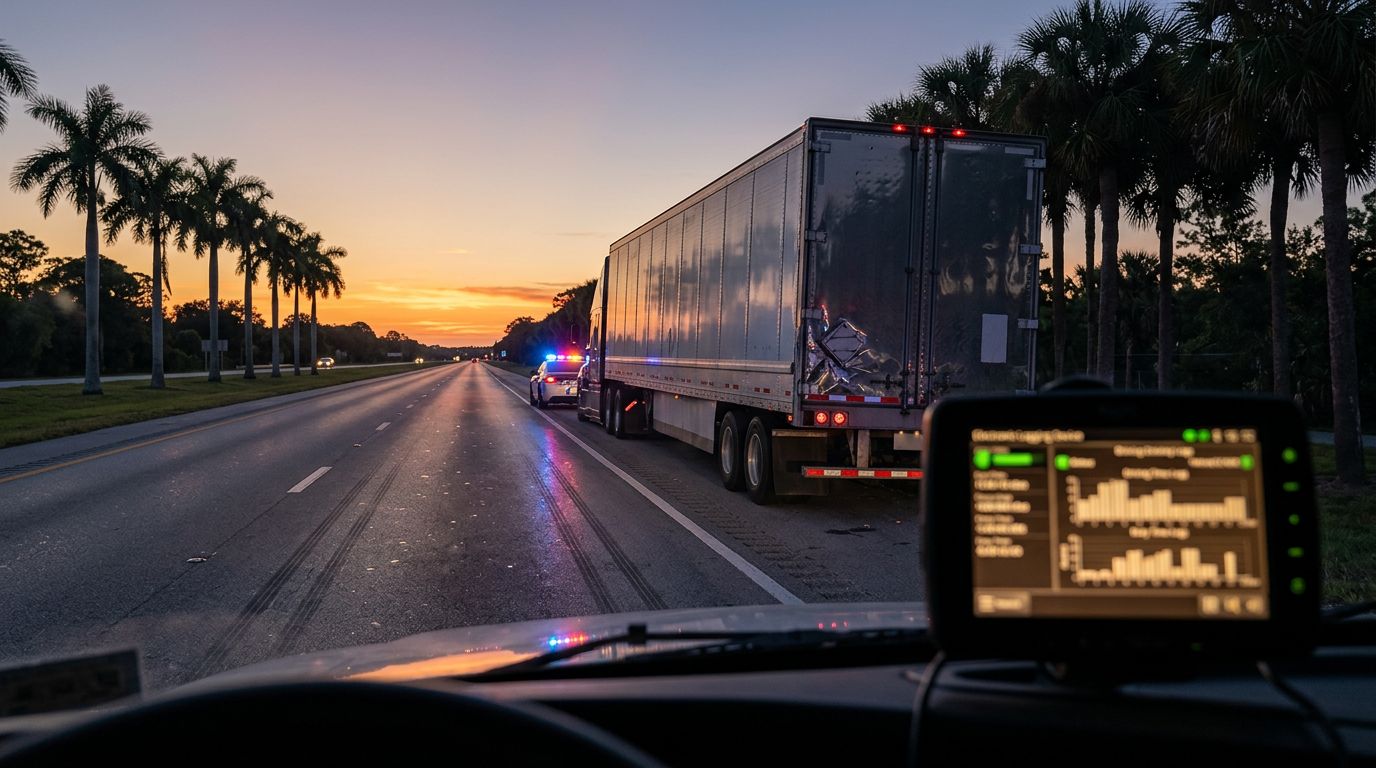
A rear-end crash from a semi truck can look simple at first, until the records start telling a different story. In many Florida semi truck crash claims, the key questions are basic: how close was the truck, how fast was it moving, and did the driver have enough time to stop?
Those questions matter because a truck needs far more space than a passenger car. When the impact comes from behind, the scene often points toward fault, but the strongest claims still need proof. That proof can come from the crash site, the truck’s electronic data, and the company records behind the wheel.
Why rear-end truck crashes matter so much in Florida
Florida drivers must keep a distance that is reasonable and prudent for the speed, traffic, road, and weather conditions. That rule sounds broad, but it gives lawyers and insurers a clear test. If the road was slowing down and the truck stayed too close, the driver may have set up the crash before the brake lights came on.
Truck crashes are different from ordinary fender benders. A loaded tractor-trailer can take much longer to stop, and a tired driver can lose the last safe second. That means the truck driver should leave more room, not less, especially in heavy traffic, rain, or sudden slowdowns.
A rear-end hit does not prove everything by itself. Still, it often gives the injured person a strong starting point. The question then becomes whether the evidence shows the truck driver had enough distance, enough time, and enough control to avoid the impact.
Following-distance proof that supports a truck crash claim
The best proof usually answers one simple question, was the truck following too closely for the conditions? To show that, the case should combine physical evidence, witness accounts, and the crash report. One piece on its own may not say much. Together, they can paint a clear picture.
Here is the kind of evidence that often matters most:
| Evidence | What it can show | Why it matters |
|---|---|---|
| Crash photos | Vehicle positions, damage height, and road conditions | Helps show where the impact came from and how hard it was |
| Dashcam video | Traffic flow and the moment before impact | Can show whether the truck had time to stop |
| Witness statements | How close the truck was before the crash | Supports the injured driver’s account |
| Skid marks and debris | Braking effort and impact point | Helps reconstruction experts measure distance and speed |
| Damage pattern | Rear impact force and alignment | Shows whether the truck hit straight from behind |
| Police report | Initial observations and citations | Gives an early summary of fault indicators |
When this evidence lines up, the claim becomes much stronger. For example, if traffic slowed and the truck never left a safe cushion, the crash scene may show a late brake attempt or no meaningful stop at all. That can matter as much as the impact itself.
The scene tells part of the story, but timing records can finish it.
How ELD logs fit into the fault picture
An ELD, or electronic logging device, records a truck driver’s duty status and driving time. In many trucks, it also captures GPS data and speed information. That makes it useful in a Florida semi truck crash claim, because it can show what the driver was doing before the collision.
ELD data does not prove negligence by itself. It becomes powerful when it lines up with the crash facts. If the logs show a long stretch on the road with little rest, fatigue may be part of the story. If the truck was still moving quickly in stop-and-go traffic, the logs can help show why the driver could not stop in time.
The records may also show pressure from dispatch, short breaks, or a route that left little room for error. When a driver is pushed to keep moving, the risk rises fast. A semi-truck at the end of a long shift is not a safe place for guesswork.
Records worth requesting right away
A claim often gets stronger when the right records are requested early. The most useful ones include:
- ELD logs, showing driving time and duty status
- GPS history, showing location and timing
- Hours-of-service records, showing rest breaks and shift length
- Dispatch messages, which may show pressure to keep moving
- Trip sheets, which can confirm the route and schedule
- Event data recorder information, which may capture speed and braking
- Dashcam footage, if the truck had one
These records can disappear fast. Some are overwritten on a schedule. Others stay in the trucking company’s hands unless someone demands they be preserved.
Why speed, fatigue, and dispatch pressure matter
Rear-end truck crashes often come down to more than one mistake. A driver may have been following too closely, but fatigue or rushed driving may have made that mistake worse. That is why ELD evidence matters so much. It can show whether the driver had a legal amount of rest, or whether the trip ran too long to be safe.
Speed is another key issue. A truck moving a little too fast may still look normal in traffic, until the car ahead slows down. Then the stopping distance turns into the whole case. If the ELD or engine data shows speed that did not match the traffic pattern, that helps explain why the truck struck the rear of the vehicle.
Dispatch pressure can also matter. A driver who feels forced to meet a tight schedule may stay on the road longer than he should. The law still expects safe driving. Commercial deadlines do not excuse a crash.
A rear-end collision can feel sudden and unavoidable to the injured driver. The records may say otherwise. That is why it helps to compare the ELD, the crash scene, and the timing of the stop. When those facts match, fault becomes much easier to prove.
Preserving trucking company evidence before it vanishes
Truck evidence is fragile. A company can repair the tractor, rotate the driver, or overwrite electronic data while the injured person is still getting medical care. That is why a preservation letter matters. It tells the trucking company to keep the truck, the trailer, the ELD data, and any video or maintenance records.
The request should reach the right people quickly. It should cover the black box, driver logs, inspection records, and any communication tied to the trip. If the truck was part of a larger business operation, the paper trail may be even broader.
That is where handling claims involving fleet and commercial vehicles becomes part of the process. A commercial carrier may have dispatch notes, payroll records, route data, and maintenance files that help show how the truck was used before the crash. Those records can be important when the company tries to shift blame to the driver alone.
Once that information is gone, it gets harder to rebuild the crash story. Speed, following distance, and fatigue may still be suspected, but suspicion is weaker than documented proof.
How fault gets argued after a rear-end truck crash
Insurance companies often look for an excuse. They may argue that the car in front stopped suddenly, changed lanes, or braked without warning. They may say weather or traffic caused the collision. Sometimes they blame a mechanical problem.
Those arguments do not end the claim. They just show why proof matters. Florida law still expects a commercial driver to leave enough room for the road conditions in front of the truck. If traffic was heavy, the safe distance should have been greater. If rain made the pavement slick, the driver needed even more space.
This is where the paper trail helps. If the ELD shows a long drive with little rest, that can support a fatigue theory. If the crash photos show a direct rear impact and a short stopping area, that can support a following-distance claim. If witnesses saw the truck tailgating before the impact, that may close the gap even more.
A strong case does not depend on one fact alone. It builds a chain. Each link matters.
The proof that matters most in a Florida semi truck crash claim
Rear-end truck cases rise or fall on evidence that can be checked. The clearest claims usually show that the truck was too close, the driver had too little rest, or both. ELD logs, crash photos, witness statements, and company records can work together to show that chain.
That is why fast action matters after a Florida semi truck crash. The truck may be fixed. The logs may be overwritten. The company may already be defending itself.
When the distance evidence and the ELD data line up, the story becomes much harder to dispute.