
Florida Slip and Fall Claims After a Freshly Mopped Floor
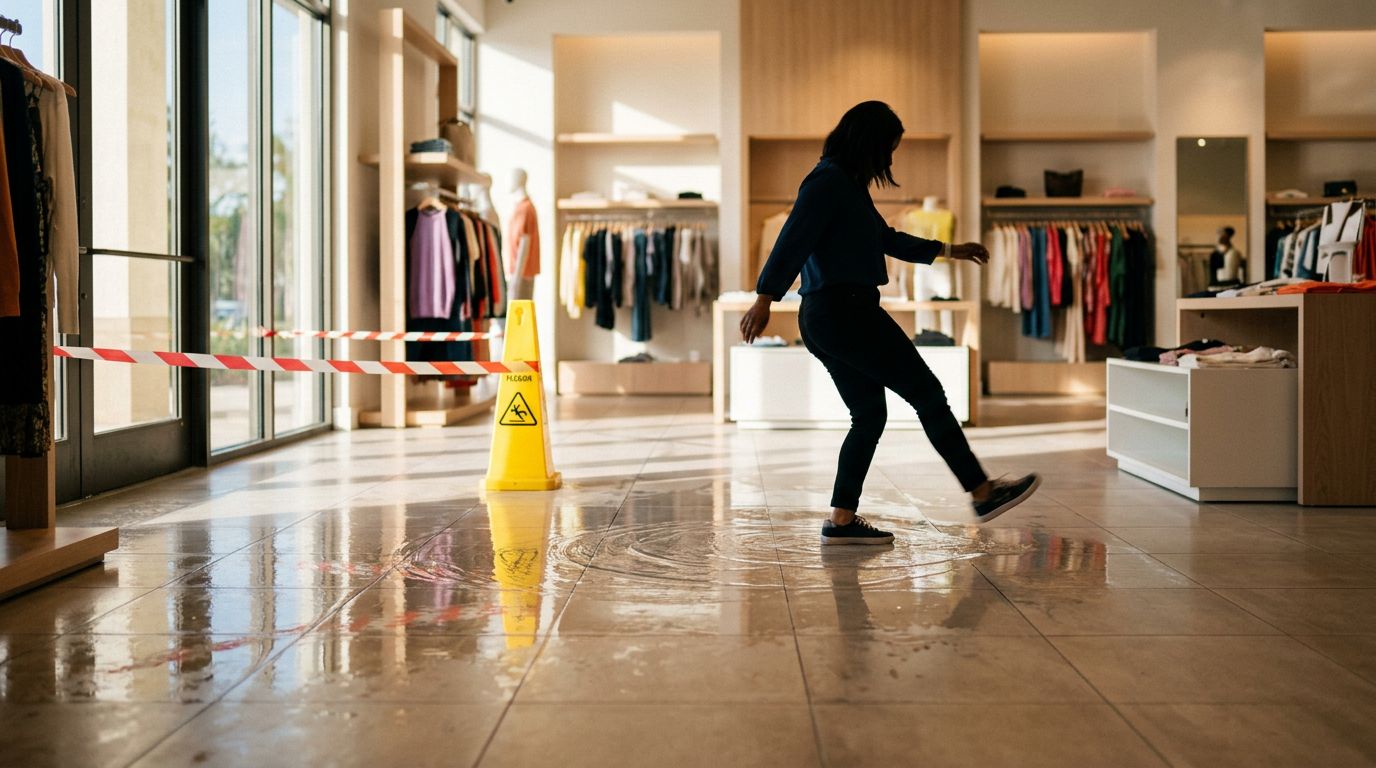
A freshly mopped floor can turn a normal errand into a serious injury in seconds. The mop itself is not the whole story, though. What matters is whether the business warned people, dried the area, and kept a real record of what happened.
That is where cleaning logs come in. They can show when the floor was cleaned, who did it, whether warning signs were used, and whether anyone checked the area before the fall. In many Florida slip and fall claims, those details can make the difference between a weak story and a strong case.
Why a fresh mop job does not end the case
A business does not escape responsibility just because an employee cleaned the floor. If the surface stayed wet, became slick from cleaner, or had poor warning signs, the hazard can still support a claim. The key issue is whether the business took reasonable steps to protect customers and guests.
Florida cases often turn on notice, which is why the rules in Florida premises liability duty of care matter so much. A store, restaurant, hotel, or office building may be liable if it knew about the danger or should have known about it and failed to act.
A wet floor sign helps, but it does not answer every question.
Was the sign close to the danger, or placed near a doorway where nobody could see it? Did the employee mop one aisle and leave another one slick? Did the business clean during a busy time without keeping people away from the area? Those facts matter because a mop bucket does not erase risk by itself.
When the floor was cleaned moments before the fall, the cleaning log becomes one of the first records to review. It can help show whether the business had time to dry the area, inspect the spot, or put up a clear warning before someone walked through.
What cleaning logs can reveal
A good cleaning log is more than a clipboard full of initials. It can show a timeline, and timelines are powerful in wet-floor cases.
| Log entry | What it can show | Why it matters |
|---|---|---|
| Date and time of mopping | When the floor was last cleaned | Helps compare the log to the fall time |
| Employee name or initials | Who handled the area | Identifies witnesses and decision-makers |
| Exact location | Which floor or hallway was cleaned | Prevents vague or broad claims |
| Warning signs noted | Whether signs were used | Important if signs were missing or too far away |
| Supervisor review | Whether anyone checked the work | Shows if the business followed its own rules |
| Exception notes | Leaks, spills, or repeat cleaning | Can show the hazard kept coming back |
A clean, complete log can help the business. A messy one can help the injured person. If the record says the hallway was mopped at 3:00 p.m., but the fall happened at 3:05 p.m., that timing raises questions about drying time and foot traffic. If the log lists a different area, the business may have a harder time tying the record to the actual accident spot.
A paper record also has to match the real scene. If the floor was wet but no sign was nearby, the log loses weight. If the sign was there but hidden behind a display rack, the issue stays alive. The log is only one piece of the puzzle.
When the paperwork does not match the floor
Missing logs can matter just as much as written ones. A blank form, a late entry, or a record that appears to have been filled out after the fall can weaken the business’s story. The same is true when a paper log says one thing and surveillance video says another.
In a restaurant or café case, the evidence checklist for Florida restaurant slip and fall claims can help sort the paper trail. Restaurants often keep opening sheets, closing sheets, and restroom checks, and those records may be useful when the fall happened near a dining area, server station, or hallway.
Small details matter here. A time stamp that appears after the incident. Handwriting that looks copied across several lines. A log that skips the exact hour of the accident. These problems do not prove a claim on their own, but they can make the defense record look less reliable.
A preservation letter can help before video is erased or paper records disappear. That step matters because many businesses rotate logs, overwrite security footage, or move files after a reported fall. Once that happens, the timeline gets harder to prove.
The first hour after a wet-floor fall
What you do next can shape the claim. The best evidence often comes from the first few minutes after the fall.
- Get medical care right away, even if the pain seems mild. Some injuries feel worse later, and a prompt exam creates a record.
- Report the fall to a manager or employee, then ask for a copy of the incident report if one is made.
- Take photos of the floor, the sign placement, your shoes, and the lighting around the area.
- Get witness names and phone numbers, and ask which employee cleaned the area.
- Save your clothes, shoes, receipts, and medical paperwork.
Those steps help because memory fades fast. A person may forget the exact time of the fall, but a photo of the wet floor and the nearby sign can hold that moment still. If the business says the area was checked before the accident, your early evidence may tell a different story.
The same is true for medical care. A visit to an urgent care center, emergency room, or primary doctor links the injury to the fall. That link becomes important later, when the insurance company starts asking questions about pain, treatment, and missed work.
How a lawyer uses cleaning logs to build a claim
Cleaning logs matter most when they are matched with other records. A lawyer can compare them with surveillance video, employee schedules, maintenance tickets, and medical records. If the log shows the floor was mopped ten minutes before the fall, the next question is simple. Was the area dried, marked, and checked before people were allowed to walk through?
That is also where witness statements help. An employee may remember that the floor stayed wet longer than the log suggests. A shopper may recall that the warning sign was missing. A camera may show that the area had no barrier at all.
Once liability starts to take shape, calculating slip and fall damages in Florida depends on medical bills, follow-up care, missed work, and pain. The cleaner the proof, the easier it is to connect the fall to the losses. If the records show a gap, the claim may still move forward, but it can take more work to show what really happened.
Insurance companies often look for ways to shift blame. They may say the sign was visible, the floor was only damp, or the injured person should have watched where they were going. A strong record can answer those claims. It can show whether the business followed its own cleaning policy or left a dangerous surface in a place people had to cross.
The paper trail matters most
A freshly mopped floor can look harmless for a few seconds, then turn dangerous fast. In many Florida slip and fall claims, the cleaning log tells the first version of the story, and sometimes the most important one.
If the record is clear, it may support the business. If it is missing, inconsistent, or out of sync with the scene, it can help the injured person. Either way, the log should never be treated like a minor detail. It is often the piece that shows who knew what, and when they knew it.