
Florida Staged Crash Claims and the Evidence That Defeats False Blame
A staged crash can turn a normal drive into a fight over blame in minutes. The damage may look small, but the fallout can be expensive and stressful.
In Florida staged crash claims, the story often changes fast. One driver says one thing, the insurer hears another, and you end up proving what happened instead of discussing your injuries. The best defense is clear evidence, gathered early and kept in order.
Why Florida staged crash claims move so fast
A crash scene does not stay still for long. Cars get moved, traffic returns, witnesses leave, and tire marks fade. If someone planned the collision, those first moments matter even more.
That is why suspicious crashes can feel unfair from the start. The other driver may act calm, give a polished story, or point the finger before anyone has checked the facts. Insurance companies also tend to look hard at these claims because fraud changes how they pay and who they believe.
The key is simple, even if the process is not. You need proof that shows what happened before impact, during impact, and after impact. A single photo or one witness statement may help. A full set of records tells a stronger story.
When possible, ask for a police report right away and explain why you think the crash may have been staged. That creates a formal record early, before details get blurred. It also gives your claim a cleaner starting point if the other side starts blaming you.
The evidence that carries the most weight
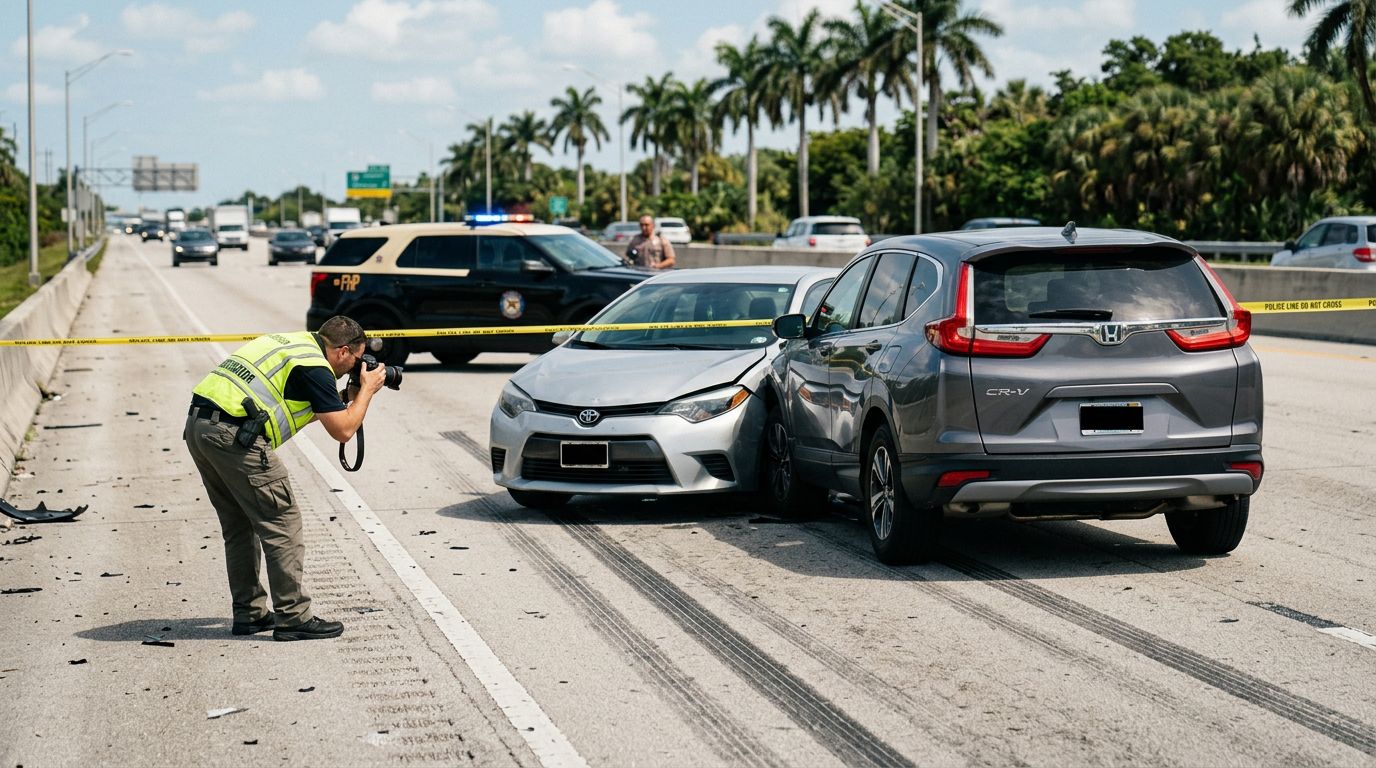
The strongest proof usually comes from the scene itself. Pictures, video, and witness details can show whether the crash fits a normal accident or something planned.
Here is a quick look at the evidence that often matters most:
| Evidence | Why it helps | What to preserve |
|---|---|---|
| Scene photos | Show vehicle positions, damage, signs, and road layout | Wide shots, close-ups, skid marks, traffic lights |
| Dash cam footage | Captures driving behavior before impact | Save the raw file and a backup copy |
| Witness statements | Give a neutral account of the crash | Names, phone numbers, short notes |
| Nearby camera video | May show the setup or the collision | Store names, times, and camera locations |
| Police report | Creates an early record of suspicion | Ask that concerns be included |
A wide photo of the whole intersection often says more than a close-up of a bumper. The same is true for video. A dash cam can reveal sudden braking, unsafe lane changes, or a driver who waves you forward and then hits you.
The first version of the story is not always the truth. It is only the first version.
Witnesses help because they are not part of the insurance fight. Even a brief statement can support your version if the other driver starts changing details. If anyone nearby saw the crash, get their contact information before they leave.
Nearby businesses may also have useful footage. Gas stations, stores, and apartment buildings sometimes keep video long enough to matter. That video can be the difference between a weak claim and a clear one.
Red flags that point to a setup
Some crash patterns raise suspicion fast. One odd detail does not prove fraud, but several details together can paint a clear picture.
Common warning signs include:
- A driver brakes hard for no clear reason.
- A driver waves you through, then collides with your car.
- Several passengers claim injuries that seem too coordinated.
- Someone pushes a specific tow truck, clinic, or body shop.
- The other driver gives a story that changes after the scene.
These signs do not prove the crash was staged on their own. Still, they matter because they create a pattern. Fraud often hides in patterns, not in one dramatic clue.
A driver who acts too eager to control the scene should also raise concern. The same goes for someone who seems more focused on paperwork than safety. Honest crashes usually involve confusion, shock, and scattered details. Staged crashes often involve a cleaner script.
Insurance adjusters look for that script. So should you. If the other side moves fast to pin blame on you, keep your focus on facts. Record the names of everyone involved, write down what was said, and save every message tied to the crash.
Records that can expose false injuries and damage
After the scene, the paper trail becomes just as important as the photos. Repair estimates, medical notes, rental car records, and call logs can show whether the claims match the physical damage.
That matters because staged crashes often depend on overstatement. A low-speed tap may be described like a major impact. A sore neck may be turned into a much bigger injury story. Your records help show the real sequence.
Keep these items in one place:
- medical visits and discharge papers
- repair estimates and shop notes
- towing and storage invoices
- text messages with the other driver
- voicemail recordings
- ride share, rental, or work records tied to missed time
These records do more than prove expenses. They also help show timing. If the other driver waited too long to report an injury, or if the damage on the cars does not fit the claimed impact, that gap can work in your favor.
An accident reconstruction expert can make that gap clearer. By comparing vehicle damage, impact points, speed, and crash angles, the expert can test whether the story makes sense. That is often powerful in Florida staged crash claims, especially when the insurance company is quick to blame the wrong person.
Why early legal help changes the outcome
Suspicious crash claims move quickly, and evidence disappears just as fast. Camera files get overwritten. Cars get repaired. Witnesses forget details. That is why early legal help matters.
A lawyer can send preservation letters, request nearby video, and line up witness follow-up before records are lost. The attorney can also deal with the insurer, which helps keep your statements consistent and limited to the facts. That matters because one careless phone call can create new problems.
If you suspect fraud, get help from a firm that handles crash cases every day. A Florida car accident lawyer can review the damage, the scene photos, and the report to see whether the blame story holds up. That early review often reveals missing proof or weak spots in the other side’s account.
If you’re already facing that fight, Florida car accident attorneys can help preserve the records that matter most and push back when the blame doesn’t fit the facts.
The goal is not to argue louder. The goal is to build a file that tells the truth better than the other side can tell a lie.
Conclusion
A staged crash case rises or falls on proof. Scene photos, dash cam footage, witness accounts, camera video, and repair records all help show what really happened.
When the facts line up, false blame gets harder to keep in place. That is why the first hour after a crash matters so much, and why a careful record can change the course of the claim.
If the story on the scene does not match the damage, trust the evidence. That is often what breaks a staged crash claim open.