
Florida Sun Glare Crashes and the Evidence That Beats Excuses
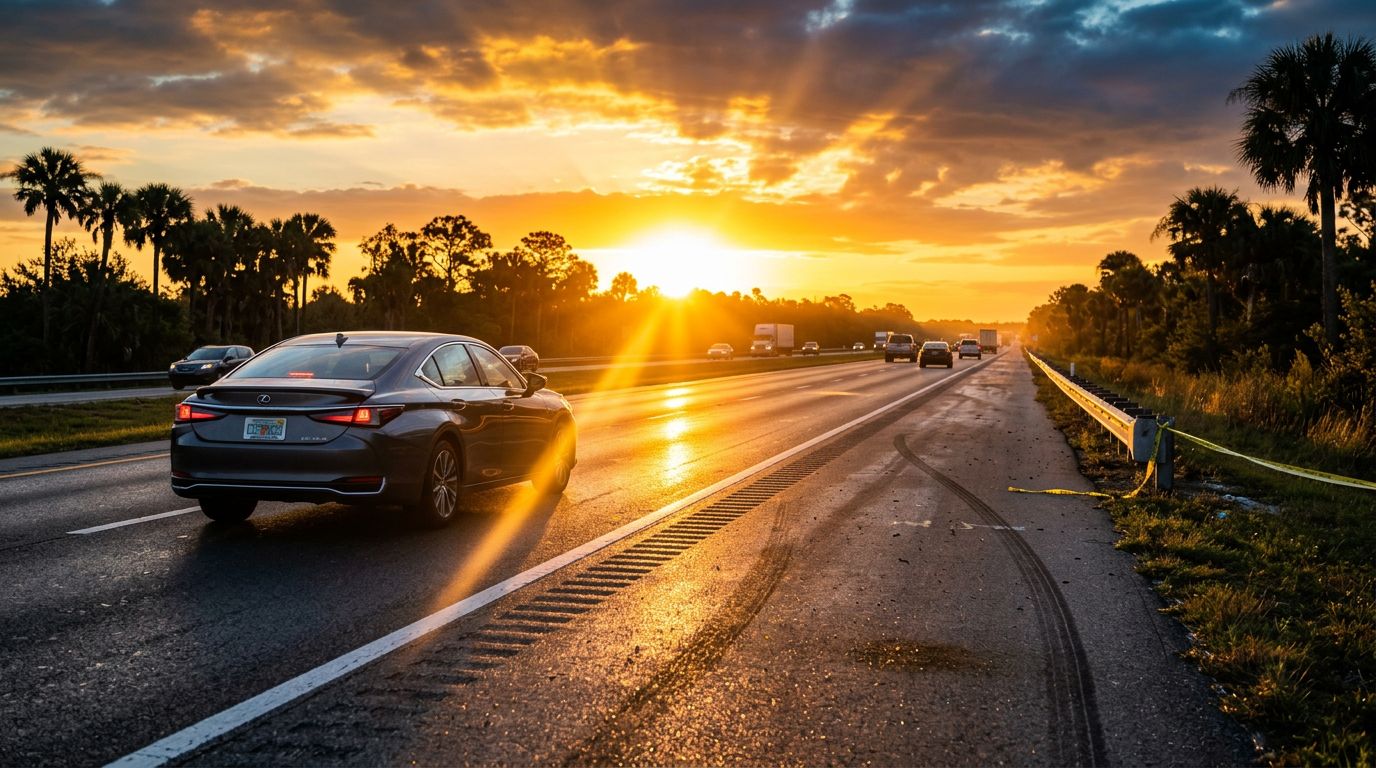
A bright Florida morning can turn dangerous in seconds. Florida sun glare crashes often happen when a driver looks into the light, misses a stop, or drifts across a lane.
That excuse may sound simple. The proof behind the crash is rarely simple, and that’s where strong evidence matters. If you’re trying to figure out fault after a glare-related wreck, the facts around the scene, the cars, and the driver’s choices can tell a much clearer story.
Why Florida sun glare crashes happen so often
Florida gives drivers plenty of sun, and that is part of the problem. The sun sits low in the sky at sunrise and sunset, especially on east-west roads. Coastal routes, open highways, and long stretches with little shade make glare worse.
Weather can add to the risk. A clean windshield can still reflect harsh light if the angle is wrong. Wet pavement, tinted glass, and dirty windshields can turn a bad view into a dangerous one.
Glare also hides more than the road itself. It can blur brake lights, lane markings, pedestrians, and traffic signals. A driver who fails to slow down has less time to react, and that delay can cause a rear-end crash, a sideswipe, or a left-turn collision.
The key point is simple. Glare is common, but it is also predictable. Drivers know the sun rises and sets every day. They should adjust before the road forces the issue.
Why “the sun was in my eyes” rarely ends the question
Insurance companies hear the same excuse all the time. A driver says the sun was blinding. They say they could not see the car ahead. They say they had no chance to stop.
That statement may explain what the driver felt. It does not prove that the driver acted with care.
A safe driver can slow down, increase following distance, use a visor, wear sunglasses, or wait for a better gap in traffic. If a driver keeps speed, follows too closely, or turns without checking the lane, glare does not erase that choice. It may become part of the story, but it is not the whole story.
A driver’s claim that the sun was blinding them may explain a mistake, but it does not erase the duty to drive safely.
This matters because fault is built from facts, not excuses. A claim that sounds believable can fall apart if the evidence shows the driver had time to react. It can also fall apart if the crash happened in a spot where glare was expected and avoidable.
Evidence that beats excuses after a glare crash
The strongest cases start with details that are easy to miss on a stressful day. The best proof is often ordinary, but it holds up because it is specific.
Here is a quick look at the evidence that often matters most:
| Evidence | What it can show | Why it matters |
|---|---|---|
| Police crash report | Time, place, driver statements, citations | Creates the first official record |
| Scene photos and video | Sun angle, lane layout, skid marks, damage | Preserves what the road looked like |
| Dashcam footage | Driver movement, traffic flow, impact | Shows the crash as it happened |
| Witness statements | Whether the driver slowed or stayed alert | Adds an independent account |
| Weather and sun-position data | Sun angle, visibility, time of day | Confirms glare was likely and predictable |
| Phone and vehicle data | Speed, braking, possible distraction | Can counter a false story |
| Medical records | Injury timing and treatment | Links the crash to the harm done |
The pattern matters more than any single item. A police report may show the driver blamed the sun. Photos may show clear weather and an open road. A witness may say the driver never slowed down. Put those pieces together, and the excuse starts to shrink.
Timing matters too. A scene changes fast. Tire marks fade, cars get moved, and witnesses leave. Even a phone photo from the shoulder can make a difference if it captures the sun, the road, and the vehicles before the tow trucks arrive.
What to do in the first 24 hours
The first day after a crash is often the best time to lock down proof. Small details can disappear if you wait.
- Get medical care first.
Your health comes before the claim. Prompt treatment also creates a record that links the crash to your injuries. - Ask for the crash report number.
If police respond, get the officer’s name and report number before you leave. That report often becomes a core piece of evidence. - Take photos from more than one angle.
Capture the cars, the road, the traffic signals, the skid marks, and the sun’s position if you can do it safely. A few extra photos can answer questions later. - Write down witness names and contact details.
People forget what they saw. A short note taken early is better than a vague memory days later. - Save every message and repair estimate.
Keep texts, emails, medical bills, tow receipts, and repair records. These documents help show the crash’s full cost. - Be careful with recorded statements.
Insurance adjusters may ask for a statement before you know the full picture. A quick answer can create problems if it leaves out key facts.
These steps are simple, but they matter. A claim gets stronger when the record starts early and stays organized.
How a Florida lawyer turns evidence into a claim
A good claim is more than a stack of papers. It is a timeline that connects the weather, the road, the driver’s actions, and the injuries.
That’s where legal help can make the difference. A lawyer can request the crash report, gather photos, talk to witnesses, and look for nearby video before it gets deleted. If the other driver blames glare, the claim may need more than a quick insurance call. It may need a file that shows how the crash really happened.
A firm that handles car crash cases can also tie the evidence to damages. That includes medical care, lost income, pain, and the cost of future treatment if the injury lasts. In serious cases, a lawyer may also look for signs of distraction, unsafe speed, or poor lane control that sit behind the glare excuse.
If you want help with that process, Florida car accident attorneys can review the scene evidence and the insurance response with a sharper eye. The goal is not to repeat the driver’s story. The goal is to test it.
That is especially important when the facts are close. Two drivers can describe the same moment in different ways. However, photos, video, phone data, and witness statements can show which version fits the road.
Conclusion
Bright sun does not give anyone a free pass. A driver still has to slow down, stay alert, and control the car.
That is why evidence beats excuses after a glare-related crash. The report, the photos, the witness accounts, and the medical records can show what happened long before the other side settles on a story.
If you’ve been hit in a crash and glare is being used as the explanation, the best move is to build the record early. The truth is often sitting in the details.