
Florida T-Bone Crash Claims: Proving You Had the Green Light
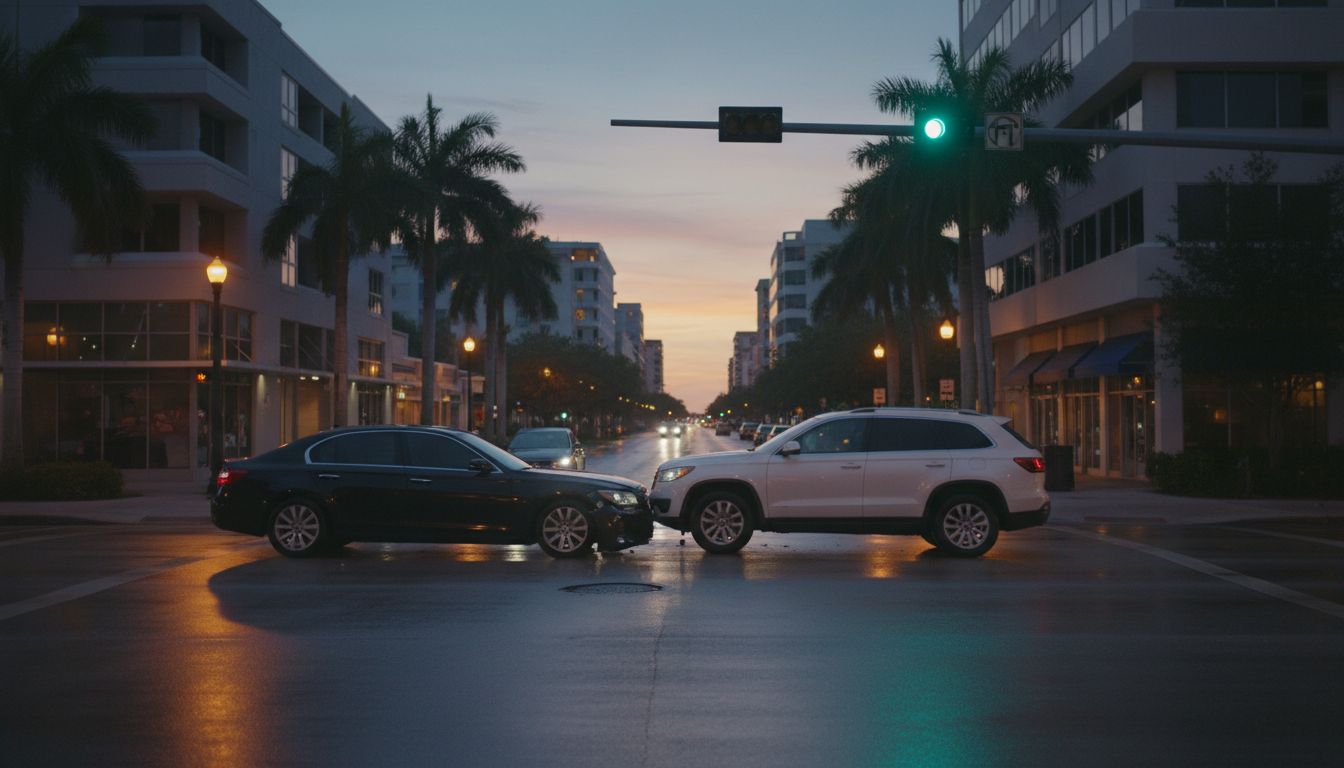
A T-bone crash at an intersection can turn into a fight over one thing, the light. If you say you had green, the other driver may say the same, or claim you should have avoided the impact.
That sounds simple until the cars are moved, the signals change, and memories start to clash. In Florida T-bone crash claims, the driver who can prove the signal often holds the stronger case.
Why the green light matters in Florida
Florida still uses no-fault insurance for many early medical bills, but that does not end the fault question. If your injuries are serious enough, you can pursue a claim against the driver who caused the wreck. That is where proof matters.
Florida also follows a modified comparative negligence rule. Under Florida 51% fault rule explained, a driver who is found more than 50% at fault can lose the right to recover from the other side. So if an insurer can push blame onto you, your claim value can drop fast.
That is why intersection crashes create so much conflict. A side-impact hit often looks obvious after the fact, but the real question is who had the right of way in the seconds before impact. Florida does not publish a separate statewide T-bone crash total, but the state still sees hundreds of thousands of crashes each year, and intersection wrecks remain a common source of injury claims.
Proof that backs up your account
The best claims do not rely on memory alone. They use several kinds of evidence that point to the same answer. That is especially true in Florida T-bone crash fault disputes, where each driver may tell a different story.
Start with the scene, because the scene tells a lot.
- Dashcam or traffic camera video can show the signal, vehicle speed, and lane position.
- Witness statements can confirm which direction had the green light.
- Photos of the intersection can show signal heads, stop lines, debris, and final resting spots.
- Vehicle damage patterns can help show which car entered the crossing path.
- Police notes and 911 records can capture what people said right after the crash.
- Signal timing records or crash analysis can fill gaps when video is missing.
If you have a green-light claim, do not wait for the insurance company to ask for this material. Cameras get overwritten. Witnesses forget details. A photo taken at the scene can matter far more than a memory recounted days later.
One detail often helps more than people expect, the exact position of the cars at impact. If the other vehicle struck your side after crossing your lane, that can fit a failure-to-yield theory. If your car was already well into the intersection, that can help your case too.
How insurers challenge a T-bone claim
Insurance adjusters look for room to shift blame. They may say you entered on yellow, were speeding, looked away, or could have braked sooner. They may also pick apart your statement if you sound uncertain.
The driver who proves the signal usually has the stronger claim, even when the crash itself looks obvious.
That is why your first statement matters. If you do not know something, say so. Do not guess. A small guess can become the line the insurer repeats for months.
Insurers also compare your account with the police report, witness statements, and medical notes. If those records do not match, they will use the gap against you. In some cases, they will argue both drivers share fault, even when one car took the side impact.
The wording in your report can matter too. If the officer records the wrong lane, signal, or direction of travel, fix it as soon as possible. A mistake that sits unchallenged can grow into the version the insurer treats as fact.
Mistakes that weaken your case
A few common errors can make a green-light claim harder to prove:
- Waiting too long to get medical care, which gives the insurer room to question your injuries.
- Posting crash details on social media, then forgetting that adjusters may see them.
- Telling the insurer you “might have” caused the wreck, even if you were only trying to be polite.
- Skipping photos of the intersection, vehicle positions, and signal heads.
- Ignoring errors in the police report after you spot them.
Florida crash reports are not always perfect. If yours contains the wrong light color, lane, or witness detail, review common mistakes in crash reports. A short delay can make a simple correction much harder later.
The safest approach is to document first and explain second. A photo, a witness name, or a dashcam clip can do more for your claim than a long argument with an adjuster.
Conclusion
A T-bone crash can feel like a split-second event, but the claim that follows takes patience and proof. If you had the green light, the job is to back that up with evidence that holds up under pressure.
In Florida, that evidence can shape fault, reduce blame, and protect the value of your claim. The sooner you preserve the scene, the stronger your position becomes.