
Florida Movie Theater Fall Claims and the Role of Low-Light Evidence
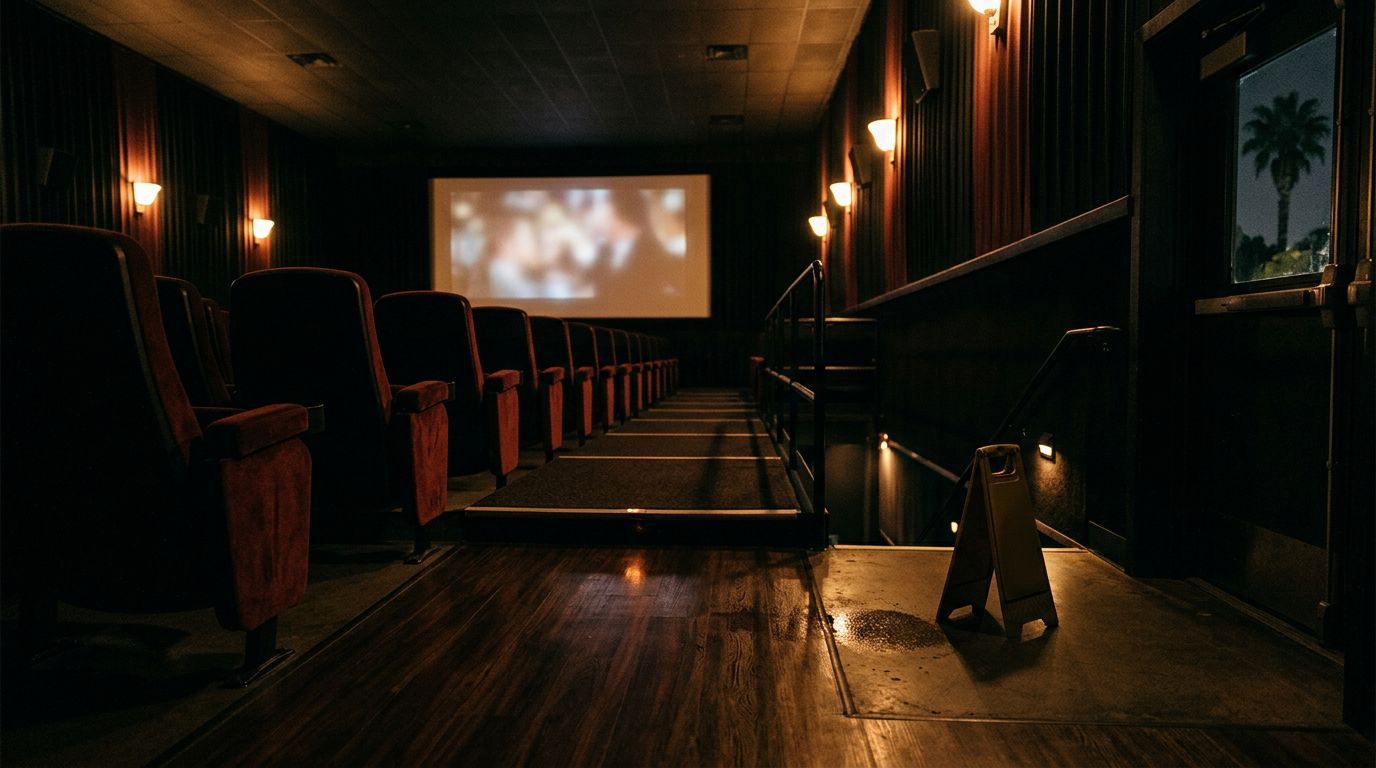
A movie theater is supposed to be dark, but it still has to be safe. If you slipped on a stair, wet floor, or uneven aisle in Florida, the hardest part may be proving what you could not clearly see.
Florida movie theater fall claims often turn on lighting, timing, and the paper trail left behind. Darkness can hide the hazard, yet it can also hide missing warnings, burned-out aisle lights, or poor cleanup. The sooner you document the scene, the better your chance to show what went wrong.
Why low-light conditions matter in a theater fall claim
Florida property owners have a duty to use reasonable care for guests. In a theater, that means safe walkways, working lights where needed, clean floors, and signs when a hazard cannot be fixed right away. The fact that a movie is playing does not excuse a broken step, a slick aisle, or a loose handrail.
Dim lighting creates a proof problem. The defense may argue you should have watched your step, while the theater may say the room was dark by design. Both arguments miss the same point, which is whether the property owner took sensible steps to keep a guest path safe.
Low light is part of the setting, not a shield against unsafe floors or broken steps.
When the risk sits in a path people must use, lighting matters. That is why aisle lights, exit markers, and handrails can become important evidence.
What low-light evidence can show
Low-light evidence is more than a blurry photo. It can show what the room looked like, when staff responded, and whether the hazard was visible before the fall. In many cases, the strongest proof is the first proof collected.
If the theater makes reporting difficult, how to obtain a slip and fall incident report shows the next step and helps you build the paper trail early.
| Evidence | What it can show | Why it matters fast |
|---|---|---|
| Theater surveillance video | Aisle traffic, lighting level, and staff response | It can be lost if nobody asks for it right away |
| Phone photos or video | Dark walkways, wet floors, broken lights, missing signs | The scene can change within minutes |
| Witness statements | What was on the floor and how visible it was | Names and numbers are easier to gather at the scene |
| Incident report | Time, place, and the theater’s first response | It creates a written record before memories shift |
| Medical records | The injury, treatment, and timeline | They connect the fall to the harm you suffered |
The table shows a simple truth. The scene changes fast. People clean spills. Managers adjust lights. Other guests leave. That is why a claim gets stronger when the first account matches the video, the report, and the medical records.
Even a phone photo can help if it captures the wider area. A close-up of your injury matters, but a wide shot often matters more. It can show the aisle, the stair edge, the seat row, and the spot where the light should have been.
Common hazards that show up in theater falls
Movie theaters create repeat risk points. The worst ones are easy to miss in the dark and easy to blame on the customer later.
- Spilled soda or melted ice near cupholders and footpaths.
- Popcorn and debris on stairs or in front of seats.
- Burned-out aisle markers or step lights.
- Loose carpeting, curled mat edges, or uneven flooring.
- Broken handrails or blocked exits.
A claim gets better when you can connect the hazard to the place where staff should have been checking. A spill near the front row matters. So does a dark stairwell near the exits. The more obvious the danger was for staff, the harder it is to explain it away as a surprise.
Low light can also make a simple problem worse. A small spill can become a serious fall risk when the walkway is dim and the warning sign is missing. That is why the condition of the lighting and the condition of the floor often belong in the same conversation.
What to do after the fall
The first minutes matter because memory fades and the scene changes. That is true even if you feel embarrassed or shaken. A short report now can save a long fight later.
- Tell theater staff what happened and ask for a report.
- Get names of employees and any witnesses.
- Photograph the aisle, the lighting, the hazard, and your shoes or clothes.
- Go to urgent care, an ER, or your doctor, then keep every record.
Do not guess about fault in a written statement. Keep your description to what you saw, heard, and felt. If you can, write down the movie title, showtime, row number, and exact location of the fall before you leave.
If the theater or insurer starts pushing back, Florida slip and fall attorneys can help preserve video, request records, and sort out the legal pieces before evidence disappears. That matters because surveillance footage is often the best proof of what the lighting looked like.
The same is true for your clothes and shoes. Save them without washing them if possible. A wet pant leg, a popcorn stain, or a scuffed shoe can help confirm where and how the fall happened.
What compensation may cover in a Florida claim
A clear look at understanding Florida slip and fall damages helps you see why proof matters. If the fall led to a sprain, fracture, head injury, or back pain, the claim may include medical bills, follow-up care, missed work, and pain and suffering.
Some injuries need future treatment. That can include physical therapy, imaging, injections, or surgery. A claim built on vague memory is easier to attack, while a claim backed by photos, reports, and records is harder to dismiss.
Florida fault rules can also affect the value of the case. If the defense says you ignored warning signs or moved too fast, your evidence may help show the real issue was the unsafe walkway, not your shoes or your attention. That is where low-light proof matters most. It can show whether the hazard was hard to see for anyone, not just for you.
A theater may argue that darkness was expected. That argument only goes so far. Darkness is expected on the screen, not in a way that turns unsafe conditions into harmless ones.
Conclusion
A theater can be dark and still owe guests safe footing. That simple point drives many Florida movie theater fall claims. Low-light evidence matters because it turns a blurred memory into a clear timeline.
The best proof is often collected early. Photos, witness names, an incident report, medical records, and any video that still exists can make the difference between a shaky story and a solid claim.
When the lights come back on, the facts still have to hold up.