
Florida Semi Truck Jackknife Claims and ECM Data
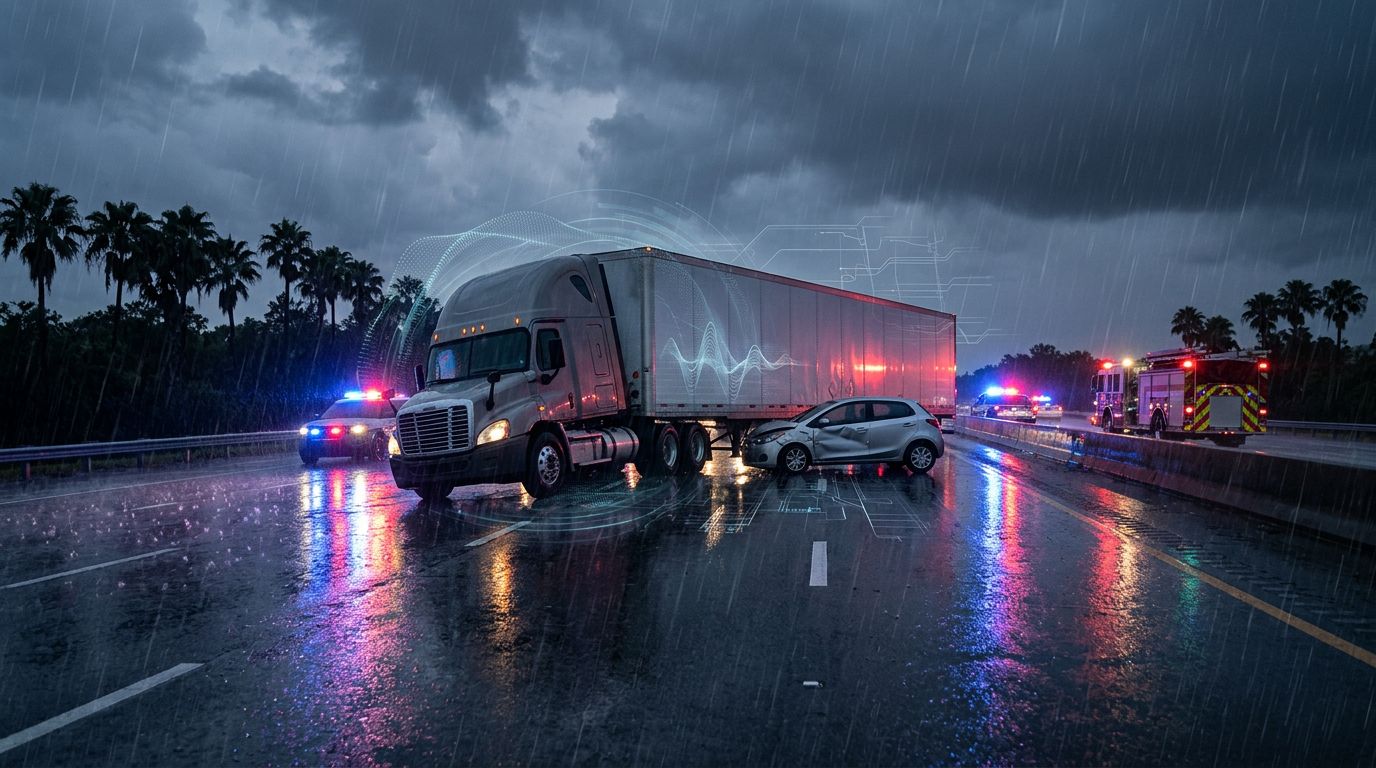
A jackknife crash can shut down a Florida road in seconds and leave a mess of questions behind it. One truck folds across lanes, another vehicle strikes the trailer, and the facts start to blur fast.
That is where truck jackknife claims often turn on evidence, not guesses. ECM data, crash photos, witness statements, and inspection records can show what the truck did in the final seconds before impact. When that data is preserved early, the claim is usually easier to prove.
Why jackknife crashes create hard Florida claims
A jackknife happens when the tractor and trailer fold toward each other at a sharp angle. It often starts with sudden braking, a slick road, a blown tire, a load shift, or a driver who loses control.
Florida weather adds risk. Rain, standing water, and sudden traffic slowdowns can turn a small mistake into a multi-vehicle wreck. Because these crashes often involve more than one car, fault gets disputed quickly.
The truck driver may blame the road. The carrier may blame the driver. Another motorist may be blamed too. In Florida, that fight over fault can lower a claim value, so the facts matter from the start.
Jackknife cases can also involve more than one responsible party. A trailer with bad brakes, a shipper that loaded cargo unevenly, or a carrier that ignored maintenance can all play a part. The crash scene only shows the end result. The claim has to show what caused it.
What ECM data can show after a semi truck wreck
ECM stands for electronic control module. Many people call it the truck’s black box. Depending on the truck, it may store a short record of how the vehicle was moving before the crash.
That record can include speed, brake use, throttle position, engine RPM, gear selection, cruise control activity, and fault codes. Some trucks also store data tied to the anti-lock brake system. Others keep less. The point is simple, the module can help show what the truck was doing right before impact.
Here is a quick look at the kind of data that may matter in a Florida claim:
| ECM data point | What it can help show |
|---|---|
| Vehicle speed | Whether the truck was too fast for traffic or road conditions |
| Brake application | When the driver braked, or whether braking was delayed |
| Throttle position | Whether the truck was still accelerating before the crash |
| Engine RPM and gear | How the truck was being operated before impact |
| Fault codes | Possible mechanical problems or warning signs |
That data can be powerful, but only if someone gets it before it is lost, overwritten, or buried in repairs.
ECM data rarely tells the whole story by itself. It becomes valuable when it matches the crash scene, the photos, and the rest of the records.
Evidence beyond the black box
ECM data matters, but it works best with other records. A strong claim usually ties the module data to the rest of the paper trail.
Driver logs and electronic logging device records can show how long the driver had been on the road. Maintenance files can reveal worn brakes, tire problems, or missed inspections. Dispatch notes and bills of lading can point to cargo weight issues or pressure to meet a deadline.
Dashcam video and nearby traffic cameras can also be useful. So can skid marks, debris patterns, and damage to the tractor and trailer. If the ECM says the truck braked hard, the scene should support that story. If it does not, the claim may need a closer look.
A few other records often matter in jackknife cases:
- Driver training records can show whether the carrier put the driver behind the wheel too soon.
- Inspection reports can reveal whether the truck had known safety problems.
- Loading records can show whether the cargo was uneven or overweight.
- Repair invoices can confirm whether the truck had repeated brake or tire issues.
- Witness statements can help explain what other drivers saw before the impact.
The best claims connect these pieces. A single record may raise a red flag, but several records together can show a clear pattern.
What damages a Florida jackknife claim can cover
A jackknife crash can cause serious injuries because the impact is often violent and sudden. Some people suffer broken bones, head injuries, spinal injuries, or long-term pain. Others miss weeks or months of work.
A claim may seek payment for hospital bills, surgery, therapy, lost wages, future medical care, and pain and suffering. Property damage can also be part of the case. When a crash leads to a death, the family may have a wrongful death claim under Florida law.
The size of the claim often depends on two things, the injuries and the proof. If ECM data, inspection records, and scene evidence all point to negligence, the claim is stronger. If the records are thin or late, the defense gets more room to argue.
That is why trucking companies and insurers move fast after these wrecks. They know the evidence can fade. The truck may go back into service. The trailer may be repaired. The data may be harder to get later.
Protecting the data before it disappears
The clock starts running as soon as the crash happens. If you want a broader checklist for the first hours after the wreck, steps to take after a truck accident covers the immediate basics.
After a jackknife crash, the first moves matter:
- Get medical care right away and make sure the crash is reported.
- Photograph the truck, trailer, road marks, debris, and any visible damage.
- Save names, phone numbers, witness details, and the trucking company name.
- Ask for a preservation letter so the carrier does not lose or overwrite key data.
- Have the ECM downloaded and compared with the police report, photos, and scene evidence.
Do not assume the trucking company will keep everything for you. Repairs, towing, and ordinary use can all change what is available later. A prompt request for data preservation helps prevent that.
Experienced Florida truck accident attorneys know how to push for that evidence early. They can also work with reconstruction experts, review maintenance records, and compare the ECM record with the physical crash scene.
Conclusion
A jackknife crash on a Florida highway can look chaotic, but the most important facts are often hidden in records. ECM data can show speed, braking, and throttle use, while logs, inspections, and photos fill in the rest of the story.
The strongest truck jackknife claims are built fast and built carefully. When the data lines up with the scene, the path to fault becomes much clearer. When it is left to fade, the case gets harder to prove.