
Florida Semi Truck Underride Claims and Trailer Guard Evidence
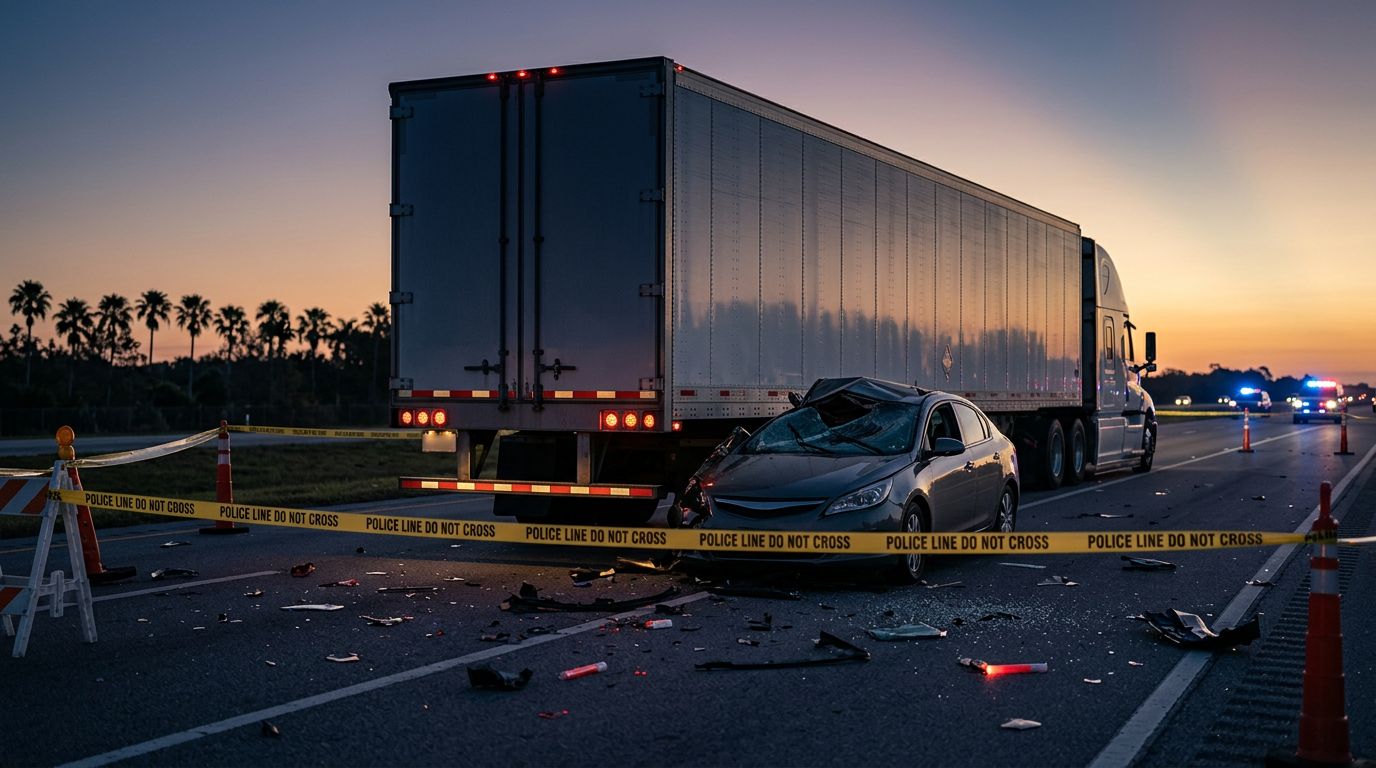
A truck underride crash can turn an ordinary drive into a roof-level impact in seconds. In Florida truck underride claims, the trailer itself often becomes the most important witness, because the guard, lights, and maintenance records can show what went wrong.
That proof does not stay in place for long. Repairs happen, trailers get moved, and cameras overwrite footage, so the case can change fast if no one preserves the scene.
How an underride crash creates liability
An underride happens when a smaller vehicle slides under a truck or trailer. The impact often strikes the windshield, roof, or upper cabin, which is why these crashes so often cause severe or fatal injuries.
Rear underride crashes are the most familiar. Side underride crashes are just as dangerous, especially when a trailer turns across traffic or sits poorly marked on a dark road.
The question in these cases is not only who hit whom. It is also whether the trailer had the protection it was supposed to have, and whether the trucking company kept that equipment in safe condition.
A bent guard, missing reflectors, weak lighting, or a corroded mount can point to a preventable problem. So can old repair notes, ignored complaints, and inspection reports that show repeated defects.
Florida roads add more risk when traffic is heavy, visibility drops, or weather turns wet. A trailer that should have been visible can become almost invisible until the last moment.
That is why early legal help matters. A firm that handles Florida truck accident lawyers can move quickly to preserve the trailer, the logs, and the repair history before the evidence disappears.
Trailer guard evidence that can prove fault
The best proof is usually practical, not dramatic. It comes from the trailer, the maintenance file, and the data left behind by the carrier.
| Evidence | What it can show | Why it matters |
|---|---|---|
| Trailer photos and video | Bent rails, missing bolts, crushed brackets, rust | Captures the guard before repairs or scrapping |
| Inspection reports | Prior damage, loose mounts, corrosion, failed checks | Shows whether the carrier knew about the problem |
| DVIRs and pre-trip logs | Repeated complaints or false sign-offs | Helps prove notice and neglect |
| Repair orders and work emails | Ignored maintenance requests, delayed fixes | Links the defect to company decisions |
| ELD, GPS, and telematics data | Speed, route, stop times, duty status | Tests the driver’s story against the record |
| Police reports and scene measurements | Impact angle, lighting, trailer position | Supports accident reconstruction |
A detailed Florida truck underride crash evidence checklist helps organize these records before the trucking company starts closing the gap.
The first repair can be the most expensive one for a claim, because it can erase the marks that prove what failed.
A guard that was rusted, poorly welded, or hanging loose may point to long-term neglect. On the other hand, a clean, intact guard can support a different story, which is why the physical condition of the trailer matters so much.
Brake history can matter too. That proof often overlaps with Florida jackknife truck accident claims, because poor maintenance, worn parts, and bad inspections can affect more than one type of crash.
Florida and federal rules that shape the case
Current underride guard standards
Federal law requires rear underride guards on many tractor-trailers. These guards, often called Mansfield bars, must sit no more than 22 inches above the ground and extend to within 4 inches of the trailer sides.
That matters because a guard that sits too high or ends too far inward may fail to catch a smaller vehicle the way it should. A guard with corrosion, cracks, or damaged mounts may be just as bad.
There is still no federal requirement for side underride guards on every commercial truck. That gap matters in side-impact cases, because the trailer can leave the passenger vehicle exposed along its full length.
Congress reintroduced the Stop Underrides Act 2.0 in February 2026. The bill would require side underride guards on newly manufactured trailers, semitrailers, and single-unit trucks, and it would set a 40 mph performance standard. It is not current law, but it shows where safety rules may be headed.
For now, the claim still turns on existing rules, the equipment on the road, and what the trailer looked like at the moment of impact.
Florida trailer safety rules that matter
Florida law also makes trailer maintenance part of the picture. Trailers with a gross weight above 3,000 pounds must have brakes on all wheels, and trailers made after January 1, 1972, must have automatic brakes that stay applied for at least 15 minutes if the trailer breaks away.
Lighting rules matter too. Florida requires taillamps, stop lamps, and turn signals that work as they should. A dark trailer with weak lighting gives a defense lawyer less room to argue that the vehicle was easy to see.
Those rules do not create an underride claim by themselves. They do, however, support the argument that the rig was unsafe, poorly maintained, or harder to see than it should have been.
When a trailer guard, brake system, or lighting setup fails, the case often starts to look less like a random tragedy and more like a maintenance problem that was waiting to happen.
Building a stronger Florida underride claim
A strong claim starts with preservation. The trucking company, insurer, and repair shop may all move fast after the crash, so the next steps matter.
The trailer should be inspected before repairs if possible. The guard, mounting points, reflectors, lights, and surrounding metal should all be photographed from several angles. If there is dashcam footage, yard video, or a nearby business camera, that footage should be requested right away.
Maintenance records matter just as much as pictures. The file should include annual inspections, DVIRs, repair orders, work emails, and any notes about prior damage to the guard or trailer frame. If the company knew about the defect and kept using the trailer, that fact can carry real weight.
Medical records and wage loss proof also belong in the file. An underride crash often causes long hospital stays, surgery, rehabilitation, and lasting pain. The claim should reflect the full effect of the injury, not just the first emergency room bill.
A case also gets stronger when the facts are organized early. The scene, the guard, the maintenance file, and the injury record need to line up. If one piece is missing, the defense will try to fill the gap with blame.
That is why a detailed claim is more than a stack of papers. It is a clear picture of how the crash happened, who controlled the trailer, and what safety steps were ignored.
Conclusion
Florida truck underride claims often rise or fall on evidence that disappears fast. A rear guard, side-impact damage, inspection file, and lighting record can say more than a dozen opinions.
When the trailer shows rust, broken mounts, missing lights, or a guard that failed on impact, the claim starts to point toward negligence. When the records show repeated warnings and no real repair, the picture gets even clearer.
The strongest cases are built on the trailer’s condition, not on guesswork.