
Florida Beach Umbrella Injury Claims and Setup Records
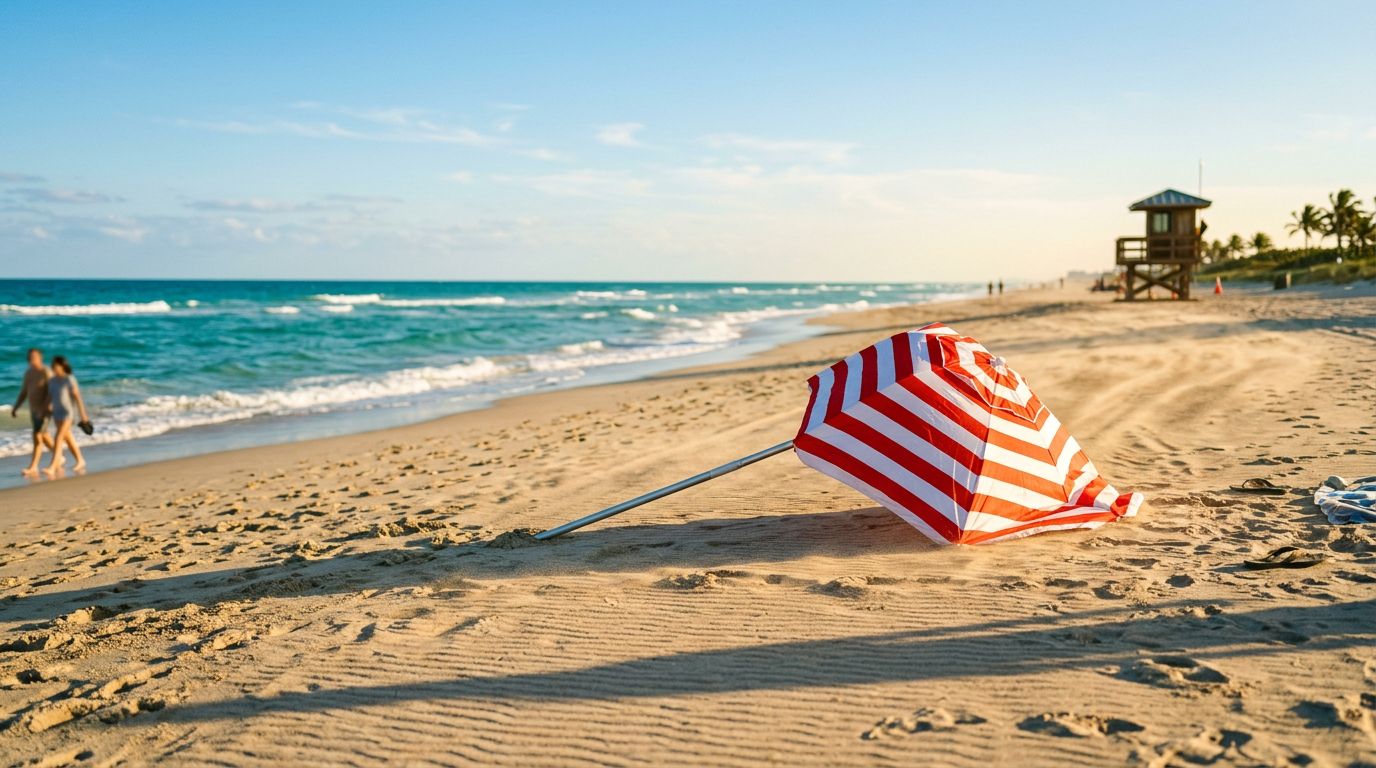
A beach umbrella looks harmless until a gust turns it into a spear. In Florida, that can lead to a painful injury, a disputed claim, and a fast-moving argument about who set it up and how.
Florida beach umbrella injury claims often turn on small details that people forget within minutes. Who installed the umbrella? What anchor was used? Was the setup checked after the wind picked up? Those answers matter for injured visitors, rental companies, condo owners, and beach service operators alike.
How a beach umbrella injury becomes a Florida claim
When an umbrella fails on a Florida beach, the damage can happen in seconds. A canopy can flip, a pole can strike a passerby, or a loose setup can travel across sand and hit someone who had no warning at all. Injuries may include cuts, eye injuries, head trauma, and impalement, and property damage can pile up too.
Florida claims usually focus on negligence. That means a person or business had a duty to act with reasonable care, failed to do so, and caused harm as a result. In a beach rental setting, that duty may include using the right anchor, checking wind conditions, placing the umbrella in a safe spot, and warning customers when conditions change.
Federal safety guidance matters here as well. ASTM F3681-25, revised in July 2025, addresses beach umbrellas and anchor devices. For a 7.5-foot umbrella, the standard calls for 75 pounds of resistance and performance in winds up to 30 miles per hour. The CPSC also warned in May 2024 that umbrellas are only safe with proper anchoring. Many umbrellas sold without a real anchor system do not meet that standard.
If you are trying to build a claim, talk with experienced personal injury attorneys early. Beach injuries move fast, and the evidence does not stay fresh for long.
The strongest claim usually starts with a simple question: who set up the umbrella, and was it anchored for the wind that day?
A rental company, beach vendor, hotel, or condo association can face exposure if staff installed the umbrella poorly. A private beachgoer can also face liability if a setup they controlled hurt someone else. The facts decide which theory fits best.
Records that show how the umbrella was set up
Setup records can make or break the case. They show whether the umbrella was installed by staff, whether the anchor matched the canopy size, and whether anyone checked the setup before the injury. They also help connect the weather to the failure.
When someone asks for proof, the best evidence is usually plain and practical. Save whatever shows the setup, the location, and the conditions.
| Record type | What it can show |
|---|---|
| Rental receipt or work order | Who installed the umbrella, when it was placed, and where it was assigned |
| Photos or video | The anchor style, canopy size, pole angle, and surrounding conditions |
| Inspection or maintenance log | Whether staff checked the setup before the injury |
| Employee schedule or training record | Which worker handled the umbrella and whether they had instructions |
| Weather report or wind data | Whether wind conditions were strong enough to make the setup unsafe |
| Incident report and witness names | What happened right before the injury and who saw it |
After an injury, these records matter as much as the medical bills. They help answer the question that every insurer will ask, which is whether the umbrella failed because of bad weather or bad setup.
If you are gathering proof, documents to show your personal injury attorney can include the rental slip, photos, text messages, and any written beach rules you were given. The more complete the paper trail, the harder it is for the other side to rewrite the story.
Setup records also help when the dispute centers on a waiver or disclaimer. A waiver does not fix a careless installation. It also does not erase records showing that staff ignored the wind, skipped an anchor, or used equipment that was not meant for the conditions.
Who may be responsible for a beach umbrella injury
Responsibility depends on control. The person or business that owned the umbrella may be responsible, but so may the one who placed it, warned about it, or failed to secure it. On a rented beach, that can include a concession operator, hotel staff, a condo association, or a third-party vendor hired to manage beach equipment.
In some cases, the issue is not only negligence but also local rule violations. Belleair Shore, for example, bans umbrellas on its beach. Walton County uses leave-no-trace rules and limits how items can stay on the sand overnight. Local beach rules vary across Florida, so a setup that looks normal in one place may violate a rule somewhere else. When a business ignores those rules, it can hurt its defense.
A claim may also involve product liability if the umbrella or anchor system itself was defective. If the product could not meet basic wind resistance requirements, the maker or seller may share blame. Still, many cases come back to the same core problem, which is failure to use a proper anchor or failure to remove the umbrella when conditions changed.
For injury lawyers, the key is to sort out who had control at each stage. One person may have sold the rental. Another may have installed it. A third may have moved it after lunch. Those details matter because liability follows the hands that handled the setup.
What to do right after a beach umbrella injury
The moments after the injury are often messy. Sand gets kicked up. People try to help. The umbrella may be moved before anyone thinks about evidence. That is why the first steps matter so much.
- Get medical care right away, even if the injury looks minor.
- Photograph the umbrella, anchor, canopy, nearby signs, and the weather.
- Ask for the rental receipt, employee name, and incident report.
- Get witness names and phone numbers while people are still nearby.
- Save broken umbrella parts, straps, or anchor pieces if it is safe to do so.
- Avoid signing anything or giving a recorded statement before you understand the claim.
Weather matters in these cases, so note the time, wind, and any sudden change in conditions. A quick phone note can help later. If waves were strong, flags were posted, or staff gave verbal warnings, write that down too.
Do not repair or discard the umbrella until the claim team has reviewed it. A bent pole, missing anchor, or ripped strap can be important evidence. Even small details, such as the angle of the pole or the depth of the sand base, can matter when someone argues that the setup was secure.
If the other side blames the wind, the paper trail can answer back. If they blame the injured person, photos and records can show whether the setup was stable in the first place.
When beach rental records protect the business too
Owners and operators need records for the same reason injured people do. A clear log can show that staff used the right anchor, checked the setup, and removed equipment when the wind rose. That can cut down on false claims and help defend a case that gets filed anyway.
Good records also help with training. If one employee always anchored umbrellas correctly and another guessed at the process, that difference will show up in the file. So will repeated complaints, missed inspections, or a habit of leaving equipment out too long.
For a rental company, a simple routine can prevent a much bigger problem. Staff should document the umbrella model, the anchor used, the time it was placed, and any later adjustment. They should also record weather changes and any instructions given to customers. In a dispute, that kind of detail often speaks louder than a general promise that the beach setup was “fine.”
Businesses that rent umbrellas near the surf also need to pay attention to liability coverage. A claim can involve medical bills, lost income, pain and suffering, and defense costs. When a beach setup goes wrong, the legal bill can grow faster than the rental fee that started the day.
Conclusion
A beach umbrella injury can look simple on the surface, but the real case often lives in the details. The strongest claims usually depend on the setup record, the weather, the anchor system, and the person who controlled the umbrella when it failed.
If you were hurt, keep every photo, receipt, and witness name you can find. If you run beach rentals, document every installation and inspection before the wind does the talking for you. In Florida, setup records can be the difference between a clear claim and a long fight over blame.