
Florida Wrong-Way Crash Claims and the Proof That Matters
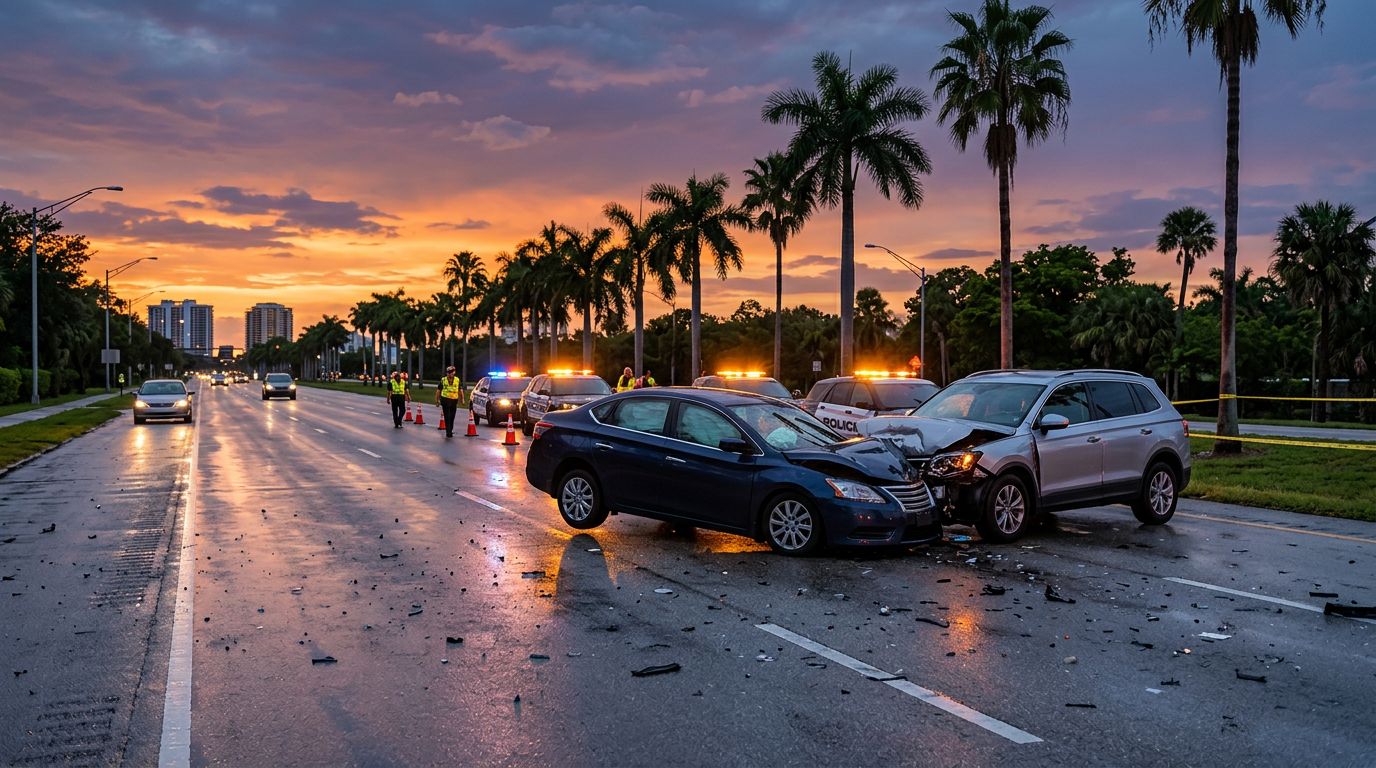
Wrong-way crashes often look obvious, but claims can still turn on small details. A driver going the wrong direction may seem like a clear case, yet Florida wrong-way crash claims still depend on proof that holds up with insurers and in court.
How do you show fault when the other car came straight at you? The answer starts with scene evidence, witness accounts, and fast medical documentation.
The sooner you gather those pieces, the harder it is for the defense to shift blame. That proof also matters if another party helped cause the crash.
Why fault is usually clear after a wrong-way crash
Every driver has a duty to use the road safely. A wrong-way driver breaks that duty the moment they enter a one-way street, miss an exit warning, or drive against traffic on a divided road.
That breach often makes the case stronger than a typical crash claim. In many wrecks, both drivers argue over speed, lane position, or a light change. In a wrong-way collision, the path of travel itself can point to fault.
Still, fault does not stop with one driver in every case. Florida uses a modified comparative fault rule in negligence cases, so a claim can shrink or fail if the injured person gets too much blame. That makes proof more than a box to check, because percentages matter.
A firm that handles Florida car accident attorneys matters can move fast on camera footage, witness names, and scene photos before they disappear. In a wrong-way case, speed matters because evidence fades quickly.
A wrong-way entry is powerful evidence, but the rest of the record still decides how strong the claim really is.
Evidence that proves the other driver caused the wreck
The strongest claim is built from several pieces of proof that match each other. When those records line up, it becomes much harder for an insurer to spin a different story.
| Evidence | What it shows | Why it matters |
|---|---|---|
| Police report | Initial findings, citations, and officer observations | Gives the claim a starting point and may record the wrong-way entry |
| Witness statements | What other people saw before and during the crash | Helps when the drivers tell different stories |
| Photos and videos | Vehicle positions, lane markings, signs, skid marks, and road layout | Shows how the crash happened in real time |
| Dashcam, traffic camera, or surveillance footage | The vehicles’ movement before impact | Can confirm the wrong-way driver entered the road incorrectly |
| Medical records | Injuries, treatment, and the timing of care | Connects the crash to the harm you suffered |
| Cell phone records | Possible distraction at the time of the wreck | Can support a claim that the driver was not paying attention |
| Crash reconstruction expert testimony | Analysis of the physical evidence | Helps when fault is disputed or the scene is complex |
The best claims usually include more than one of these records. A report without video is useful, but a report plus footage, witness statements, and treatment notes is much harder to challenge.
If your injuries are serious, a personal injury law firm can help keep the medical trail organized while the claim develops. That paper trail matters because it shows not only what hurt, but when it hurt and how it affected daily life.
When road design or signs share fault
Wrong-way crashes do not always come from driver error alone. Sometimes the road layout creates confusion. Other times, a sign is missing, blocked, damaged, or hard to see at night.
That matters because another party may share blame. A poorly marked exit, unclear lane markings, or weak lighting can make a dangerous situation worse. The wrong-way driver may still be at fault, but the case can also involve a road owner, contractor, or maintenance issue.
The proof for that kind of claim looks a little different. Scene photos, lighting conditions, and sign placement become important. So do any records that show prior complaints or repair problems in the area.
A crash reconstruction expert can help explain how the roadway contributed to the collision. That can be especially useful when the scene is busy, the impact is severe, or the available video is incomplete.
The key point is simple. A wrong-way crash can have more than one cause, and every cause affects how the claim is valued.
How insurers try to cut down Florida wrong-way crash claims
Insurance adjusters rarely accept liability without a fight. They may argue that you were speeding, distracted, or driving too fast for the conditions. They may also say you had time to avoid the collision.
Another common move is to question your injuries. If you waited to see a doctor, the insurer may claim the crash did not cause the pain. If your records are incomplete, they may argue the treatment was unrelated or overstated.
Florida’s fault rules give them more room to argue than many people expect. If the defense can push enough blame onto you, your recovery can drop fast. In some cases, it can disappear.
Fault percentages matter in Florida. If the defense can move your share high enough, the claim gets much weaker.
Recorded statements create another problem. A simple comment at the wrong time can be used against you later. Social media posts can do the same thing. A photo, caption, or offhand remark may be twisted into proof that you were not hurt badly.
Keep your statements short and factual. Do not guess about speed, distance, or fault if you do not know. The less room you give the insurer, the less room it has to build a bad argument.
What to do in the first hours after the crash
The first hours after a wrong-way wreck can shape the entire claim. If you can act safely, these steps help protect the record:
- Call police and ask for the crash report number.
- Get medical care right away, even if the pain seems mild.
- Take photos of the cars, the road, signs, lane markings, debris, and lighting.
- Get witness names and phone numbers before they leave.
- Save dashcam footage and ask nearby businesses about surveillance video.
- Avoid admitting fault, guessing about what happened, or giving a recorded statement before you get legal advice.
Those steps may feel small in the moment, but they matter later. Skid marks fade. Camera footage gets erased. Witnesses move on with their day. The claim is easier to prove when the evidence is preserved early.
A lawyer can also send preservation requests quickly, which helps keep key video and records from disappearing. That is often the difference between a clean claim and a messy dispute.
Conclusion
Wrong-way crashes often point toward fault, but proof still decides how far a claim goes. Police reports, video, witnesses, medical records, and early photos all work together to show what happened and who should pay.
For not-at-fault drivers, the goal is simple. Lock down the evidence before it fades, because the truth is easier to prove when the record is still fresh.