
Florida Low-Impact Crash Claims and the Minor Damage Defense
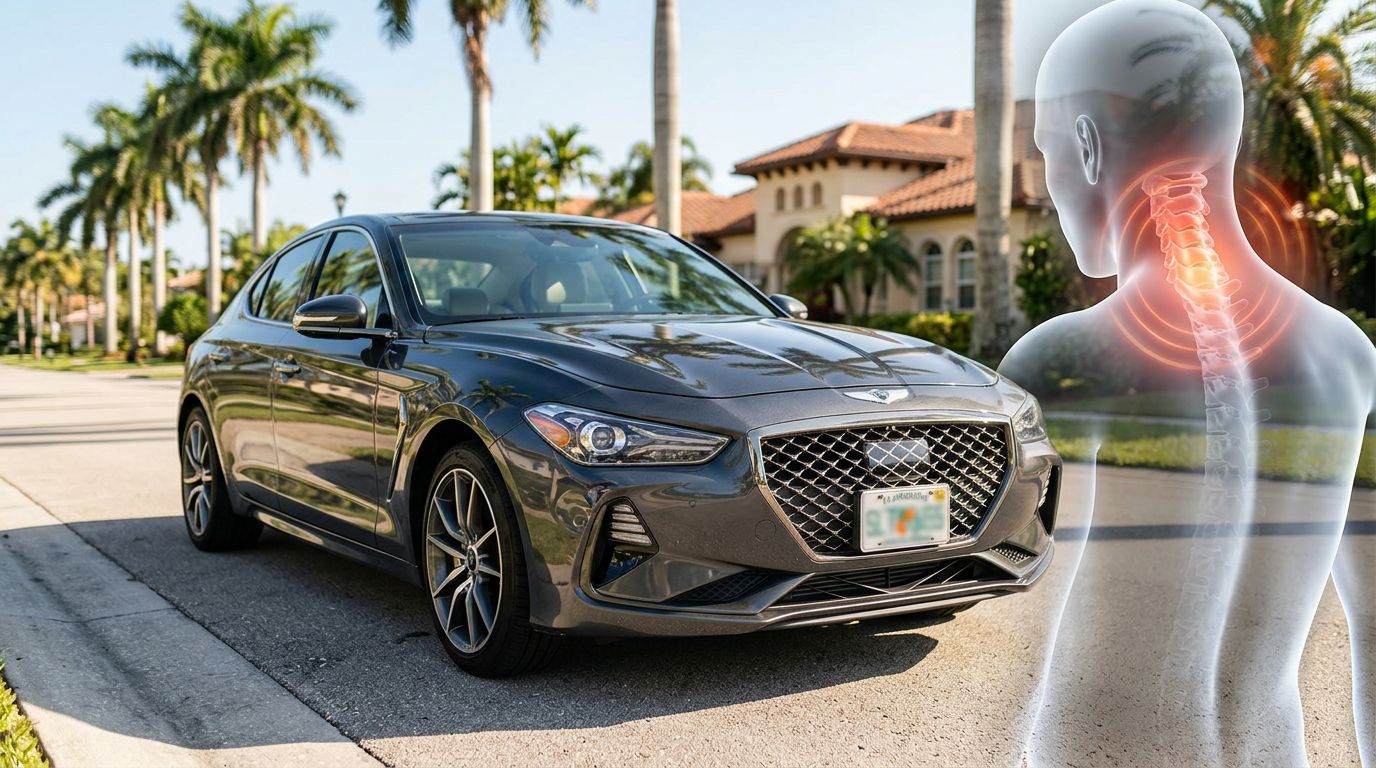
A dented bumper can hide a painful injury. That is why Florida low-impact crash claims often turn into arguments about photos, not symptoms.
Insurance companies like the minor damage defense because it sounds simple. If the car looks fine, they argue, the person must be fine too. Real crashes do not follow that script, and your claim should not be judged by a bumper alone.
Why a small crash can still hurt you
A car can absorb force better than the human body can. That matters in a low-speed collision, because the vehicle may show little damage while your neck, back, or shoulders take the full snap of the impact.
The force of a crash does not stop at the metal. It travels through the seat, the belt, and your body in a split second. Even when the cars move only a short distance, your muscles and joints can still strain hard enough to cause pain.
Whiplash is the injury people hear about most often, but it is not the only one. Soft tissue injuries, headaches, disc problems, and concussion symptoms can show up later. In many cases, the first sign is stiffness the next morning.
A small dent is evidence of a crash, not proof of a harmless one.
That point matters in Florida because insurers often treat visible damage as the whole story. It isn’t. The real question is whether the crash injured you and whether the medical proof backs that up.
How insurers use the minor damage defense in Florida
Adjusters often start with photos. If they see a scratched bumper or a shallow dent, they may claim the crash was too minor to cause real harm. They may also focus on any gap in treatment, any missed workday, or any delay in seeing a doctor.
Florida’s no-fault system gives insurers another opening. Your own PIP coverage pays first for certain losses, but when you pursue a claim against the at-fault driver, the insurer may attack the seriousness of the injury. That is where the low-damage argument shows up most often.
The defense usually sounds polished, but the logic is weak. Vehicle damage is one piece of evidence. It is not a medical diagnosis.
| Insurer’s talking point | What actually matters |
|---|---|
| “The bumper barely moved.” | How the force affected your body, plus medical proof |
| “You drove away from the scene.” | Whether symptoms started later and were documented |
| “The repair bill was low.” | The crash angle, the vehicle design, and the injury records |
A small repair cost can still come from a hard stop. Likewise, a car can suffer little visible damage while the occupants suffer real pain. In Florida claims, the defense’s guess is not the last word.
Evidence that matters more than the dent
A low-impact crash claim gets stronger when the proof lines up. Photos help, but medical records and timing matter even more. The insurer wants a gap between the crash and the complaint. You want a clear record that shows the injury began with the collision.
The best evidence often includes:
- Medical care soon after the crash: A same-day or next-day visit helps connect the pain to the collision.
- Consistent symptoms: Notes about neck pain, headaches, numbness, or back pain can show the injury did not appear out of nowhere.
- Repair estimates and photos: These show impact points, vehicle height, and the force path.
- Witness statements: People who saw the crash can confirm the speed, angle, and aftermath.
- Your own notes: A short pain journal can help show how the injury affected sleep, work, and daily tasks.
If the insurer says the damage was too small, those records give your claim structure. They move the discussion from opinion to proof.
For readers who want a broader look at claim handling after a wreck, the firm’s Florida car accident lawyers page explains how legal help fits into a car crash case.
What to do after a low-impact crash
The first hours after a fender-bender often shape the rest of the claim. Calm steps matter more than perfect words. Even if the vehicles look drivable, treat the crash as a real injury case until you know more.
- Get checked by a doctor
Pain can build slowly. A medical visit creates a record before the insurer has time to shape the story. - Take photos before anything moves
Capture all cars, plate numbers, the road, traffic lights, and any visible injury. - Report the crash
Make sure the event is documented. A report can help when the insurer later questions what happened. - Follow the treatment plan
Skipping visits gives the insurer an excuse to argue that you recovered quickly or were never badly hurt. - Save every bill and message
Keep repair estimates, co-pays, prescriptions, and letters from the insurer in one place.
If your crash happened in Southwest Florida, a Cape Coral car accident claim guide can help you understand the early steps after a wreck.
After that, stay careful with recorded statements. A short answer given too early can be used to minimize symptoms later. Clear records usually help more than quick phone calls.
When the defense shows up, legal help can change the record
The minor damage defense works best when the file is thin. It loses strength when the file is organized, the treatment is consistent, and the crash evidence matches the medical story.
That is why people with lingering pain should get help early. An attorney can gather repair records, medical notes, witness accounts, and, when needed, expert opinions about how the crash force traveled through the body. Those details often matter more than the shape of the bumper.
Florida insurers know that low damage and low injury do not always go together. A claim built on facts can show the difference.
Conclusion
Florida low-impact crash claims often rise or fall on proof, not on how the vehicle looks in a parking lot photo. The minor damage defense is common, but it does not decide the case by itself.
If a small crash left you with real pain, the strongest response is simple, document the injury, follow care, and keep the evidence together. A small dent may be easy to see, but it says little about what happened inside your body.