
Florida Misread Mammogram Claims After Delayed Breast Cancer Diagnosis
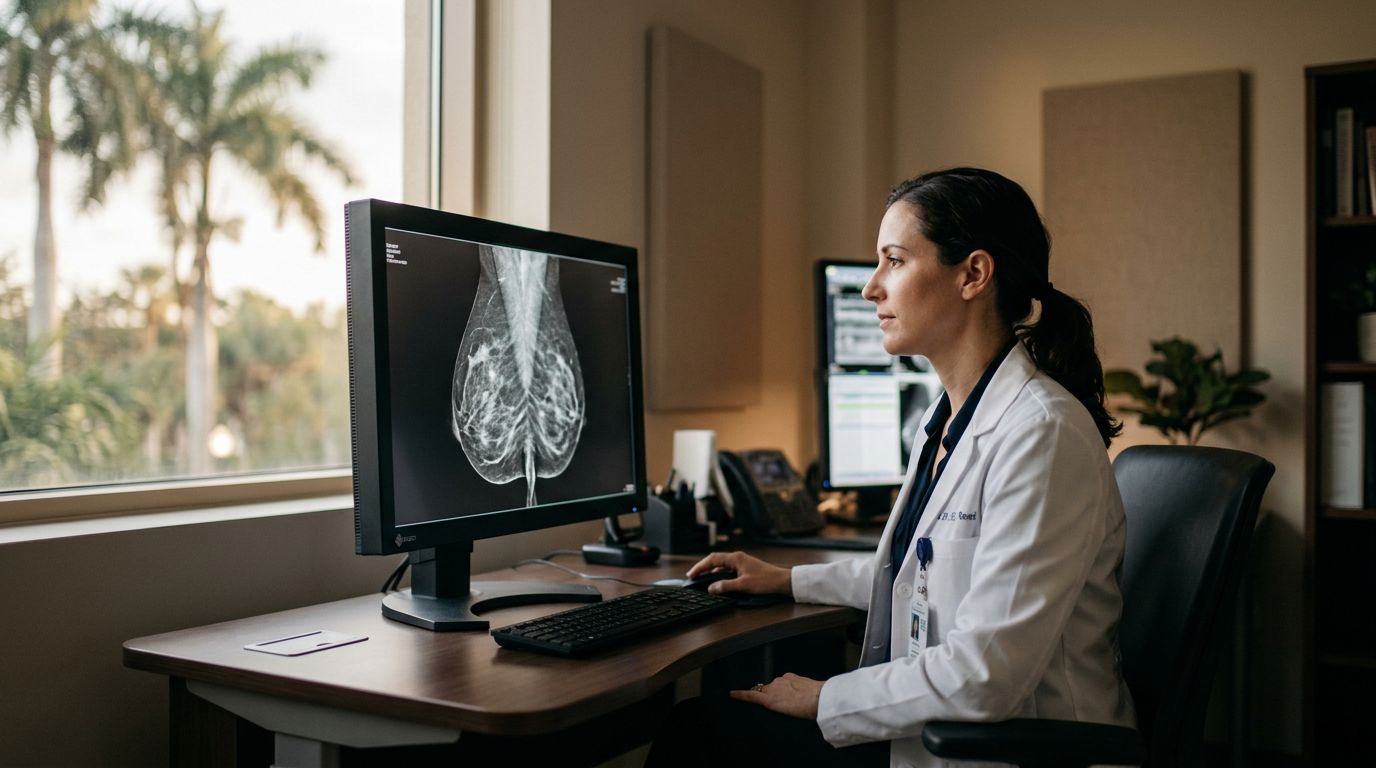
A mammogram is supposed to catch danger early, before treatment gets harder. When that image is read the wrong way, the delay can change everything.
For many families, misread mammogram claims start with a simple, painful thought: “This should have been found sooner.” In Florida, those cases often turn on timing, records, and whether the missed finding changed the outcome.
How a misread mammogram can lead to a delayed breast cancer diagnosis
A delayed breast cancer diagnosis often starts with one break in the chain. A radiologist may miss a suspicious mass. An imaging center may fail to flag a result. A doctor may get the report but not act on it. Sometimes the report mentions follow-up, yet no one closes the loop.
Florida does not publish a 2026 misread mammogram rate. Still, recent U.S. data puts missed breast cancers on screening mammograms in the 10% to 30% range. That matters because lost months can mean a larger tumor, lymph node spread, or more aggressive treatment.
Not every missed cancer is malpractice. Mammograms are useful, but they are not perfect. Dense breast tissue can hide a tumor. Some cancers also grow between screenings. A valid claim usually depends on more than a bad result. The issue is whether a careful provider should have seen the warning sign, communicated it clearly, or ordered faster follow-up.
Florida has also paid close attention to what patients are told after breast imaging. The 2023 Florida Senate analysis of Mammography Reports explains the state’s reporting rules, including information tied to dense breast tissue. Those notice rules do not decide a malpractice case by themselves, but they show how seriously timely communication matters.
Radiology cases also tend to involve more than one person. A radiologist reads the study, but the facility, primary doctor, OB-GYN, or surgeon may have separate duties. That broader picture is why many patients look into Florida radiology malpractice delayed cancer diagnosis when a mammogram miss led to late treatment.
What Florida misread mammogram claims must prove
Florida law does not compensate every missed diagnosis. A claim usually rises or falls on four points: duty, breach, causation, and damages. In plain terms, you must show that a provider owed you proper care, fell below the accepted standard, caused a harmful delay, and left you with real losses.
The hardest issue is often causation. It is not enough to show that cancer was found late. You also need proof that earlier detection likely would have changed treatment or outcome. In a breast cancer case, that can mean a lumpectomy instead of mastectomy, fewer rounds of chemotherapy, less invasive surgery, or better odds of long-term survival.
A bad outcome alone does not prove malpractice. The claim must connect the error to extra harm caused by the delay.
That is why the difference between a wrong diagnosis and a late diagnosis matters. A provider may mislabel a suspicious image as benign, or may recognize the risk but fail to act fast enough. Those are related, but they are not identical. The distinction is explained well in this guide on Florida misdiagnosis and delayed diagnosis.
A strong claim often shows that warning signs were visible on the original images, or that the report should have triggered fast follow-up. It may also show that earlier action would have caught the cancer at a lower stage. Defense lawyers usually fight hardest on that point because the timeline drives case value.
The records that usually decide these cases
Memory helps, but records decide most misread mammogram claims. If you suspect a delay, ask for the written report and the actual images. The images matter because another expert may find a suspicious area that the first reader missed.
This short table shows the records that often matter most:
| Record | Why it matters |
|---|---|
| Mammogram images and report | Shows what was visible and how it was described |
| Prior breast imaging | Helps reveal growth or changes over time |
| Follow-up orders and referrals | Shows whether doctors acted on the result |
| Pathology report | Confirms the type and stage of cancer |
| Portal messages and call logs | Helps prove when you were told, or not told |
Also keep your own timeline. Write down when the mammogram happened, when you got the result, when symptoms continued, and when cancer was finally diagnosed. That timeline may expose a gap that looked small at first but had major medical impact later.
Patients often do not realize how many records sit outside the main chart. Scheduling logs, reminder messages, and referral notes can show that follow-up never happened, or happened far too late. If you want a clearer sense of what lawyers and experts review first, this proof checklist for Florida delayed cancer diagnosis is a useful starting point.
Florida deadlines matter more than most people expect
Many people wait because they are still in treatment. Others hope the hospital will explain what happened. That delay can hurt the case. Florida medical malpractice claims usually face a two-year discovery deadline, and many also run into a four-year statute of repose. The exact rule depends on the facts, so early review matters.
Florida also requires pre-suit steps before filing many medical malpractice lawsuits. That means your lawyer often needs records and expert support before the case even reaches court. Waiting until the last minute leaves little room to build the timeline.
Coverage rules can also affect how fast patients get follow-up testing. The 2025 Florida Senate bill analysis on mammograms and supplemental screenings shows how state lawmakers have addressed access to mammograms and added breast screening.
If you suspect a misread mammogram caused a delayed diagnosis, protect your health first. Then protect the paper trail. Get copies of your images, avoid guessing when talking to insurers, and get legal advice before deadlines tighten.
Breast cancer cases often come down to lost time. When that time was lost because a mammogram was misread or a warning was ignored, the law may provide a path to accountability.
The strongest Florida claims usually are not built on anger alone. They are built on a clear timeline, careful expert review, and proof that an earlier diagnosis would have made a real difference.