
Florida Nursing Home Choking Claims and Care Plan Records
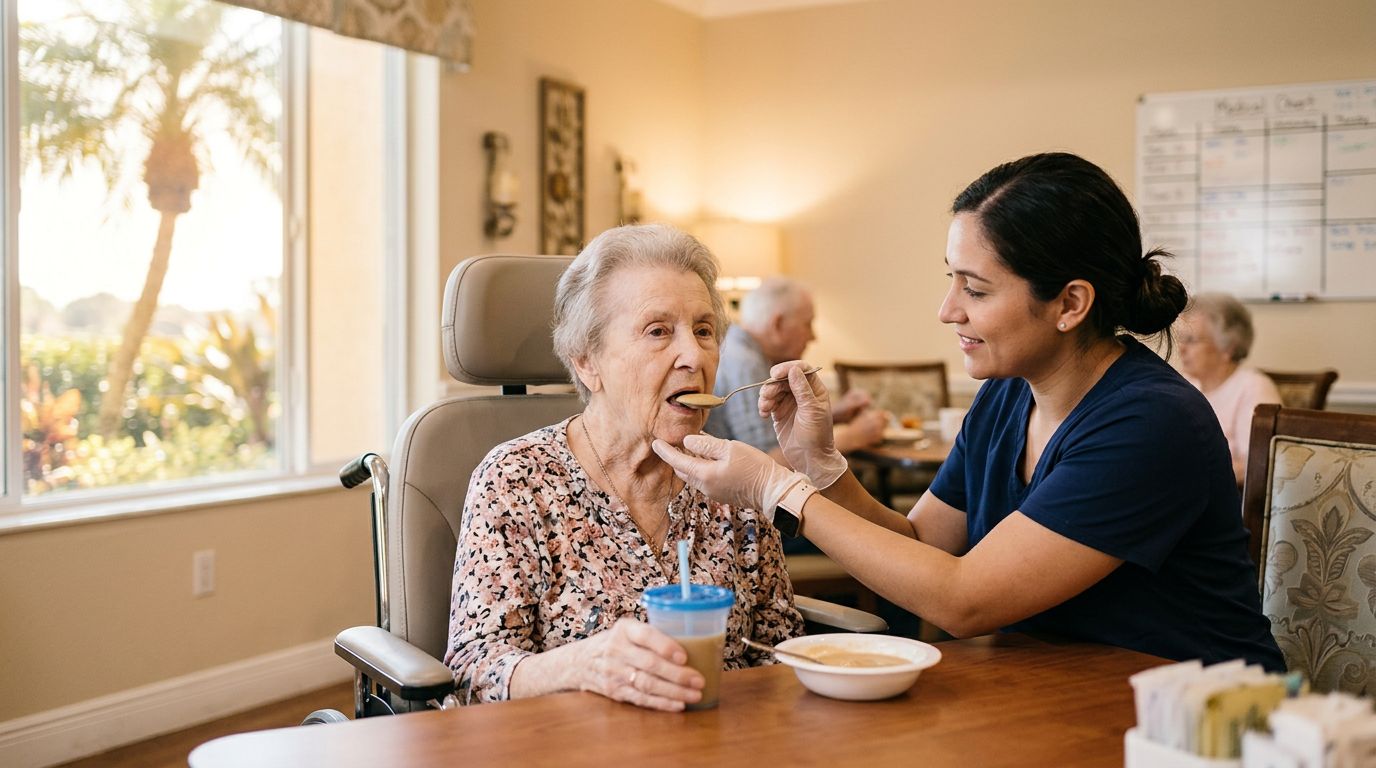
Choking in a nursing home rarely happens out of nowhere. The warning signs often show up first in swallow tests, diet orders, and care plan updates. When those records are wrong, missing, or ignored, families may have grounds for nursing home choking claims in Florida.
The painful part is that the resident’s decline can look sudden from the outside. Inside the chart, there may be a trail of missed assessments, poor supervision, and changed notes. The records often tell the story that the facility does not want to tell.
Why choking incidents often start with a weak care plan
A nursing home should know which residents need extra help with meals. That includes people with swallowing trouble, poor coordination, dentures that do not fit, or a history of coughing while eating. When a resident has those risks, staff should follow a clear plan every time food or drinks are served.
That plan may call for soft food, pureed food, thickened liquids, slow feeding, upright positioning, or one-on-one help. It may also require a speech-language pathologist to assess swallowing. If the care plan is stale, vague, or never updated, the resident is exposed.
Choking claims often start there. A resident is identified as high risk, but the facility treats breakfast like any other meal. A staff member rushes. Another resident is left alone with food. A tray comes up with the wrong texture. The crisis that follows is only the last step in a preventable chain.
A choking incident is often the final link in a chain of missed steps.
Families often hear that choking was “just a bad accident.” The chart may say something different. If the resident had prior coughing, weight loss, repeated throat clearing, or a recent swallow study, the home already knew there was a problem. In that situation, the care plan should have been precise, current, and followed without shortcuts.
Care plan records that matter most in a Florida claim
The most important records are not always the most obvious ones. A complete file can show what the home knew, when it knew it, and what it did next. Missing pages can matter as much as the pages that are present.
Here is a quick look at the records that often matter most.
| Record | What it may show | Why it matters |
|---|---|---|
| Care plan | Identified swallowing risk, feeding help, and diet instructions | Shows whether the home had a plan before the incident |
| Swallowing evaluation | Medical guidance on food texture, liquids, and supervision | Confirms what staff were supposed to do |
| Dietary order or meal ticket | The meal texture and liquid consistency served | Can reveal whether the wrong food was given |
| Nursing notes | Coughing, choking signs, staff response, and later symptoms | Helps build a timeline of the event |
| Incident report | How the home described the emergency | May show gaps, delays, or missing details |
| Hospital or EMS records | Injury severity and what responders saw | Can confirm the harm and immediate condition |
A strong paper trail can show that the resident needed help and did not get it. A weak paper trail can show something else, like no plan at all or a plan that staff ignored. Both can support a claim.
The care plan itself matters, but so do the updates. If a resident started coughing months before the choking event, the file should reflect that change. If the resident lost weight, refused food, or had repeated pneumonia, the home should have reconsidered the diet and supervision level.
That is why families should ask for the full chart, not a few pages. Short summaries often leave out the details that explain what went wrong.
How missing records can change a legal case
A choking case often turns on one simple question, did the nursing home do what the chart said it should do? If the answer is no, the records can become powerful evidence. If the records are incomplete, the gap itself can raise suspicion.
Incomplete or altered notes may suggest that staff wrote things down after the fact. Repeated language across days can point to copy-and-paste charting. A note that says “regular diet” can conflict with what the family was told, or with what the resident actually received. Those inconsistencies matter.
A few warning signs stand out often:
- The resident’s chart lists a regular diet, but staff later say the person needed pureed food.
- The care plan mentions supervision, but no one was present during the meal.
- Nursing notes leave out the time of the choking event.
- The incident report does not match the hospital record.
- The file shows no recent swallowing reassessment even after earlier warning signs.
If the file says one thing and the meal or staff behavior shows another, that gap can matter as much as the injury itself. In a negligence case, the lawyer must prove what the home knew and what it failed to do. Records are the best way to do that.
This is also why timing matters. Nursing homes control many of the records families need. Notes can be changed, files can be incomplete, and memories fade fast. A prompt request for records can preserve details before they disappear.
What families should do after a choking event
A choking event is terrifying. The next steps can feel messy, but a simple checklist helps.
- Ask for copies of the care plan, swallowing evaluations, nursing notes, incident report, and meal records.
- Write down the time of the event, the food served, and the names of staff or witnesses.
- Save hospital and EMS paperwork, including discharge summaries and transfer notes.
- Photograph injuries, the meal tray, or the room if you can do so safely.
- Avoid signing forms or accepting a quick explanation before you understand the full record.
Experienced Florida nursing home abuse and neglect lawyers can review the chart, identify missing records, and help preserve evidence before the home has a chance to clean up the paper trail. That review often starts with one question, does the chart match the care the resident should have received?
Families should also ask whether the resident had prior warning signs. Coughing during meals, repeated chest infections, changes in voice after eating, or sudden weight loss can all matter. So can a history of confusion or weak muscle control. Those details can show that the nursing home should have taken stronger steps long before the emergency.
Conclusion
A choking incident is painful on its own, but the records often show whether it was preventable. In Florida nursing home choking claims, the care plan, swallowing notes, and meal records can matter more than the first explanation the facility gives.
When the chart shows a risk, the home has a duty to follow it. When the chart is missing, inconsistent, or outdated, that gap can become the center of the case. For families, the clearest path forward starts with the paper trail.