
Florida Parking Garage Assault Claims: Camera and Key Card Evidence
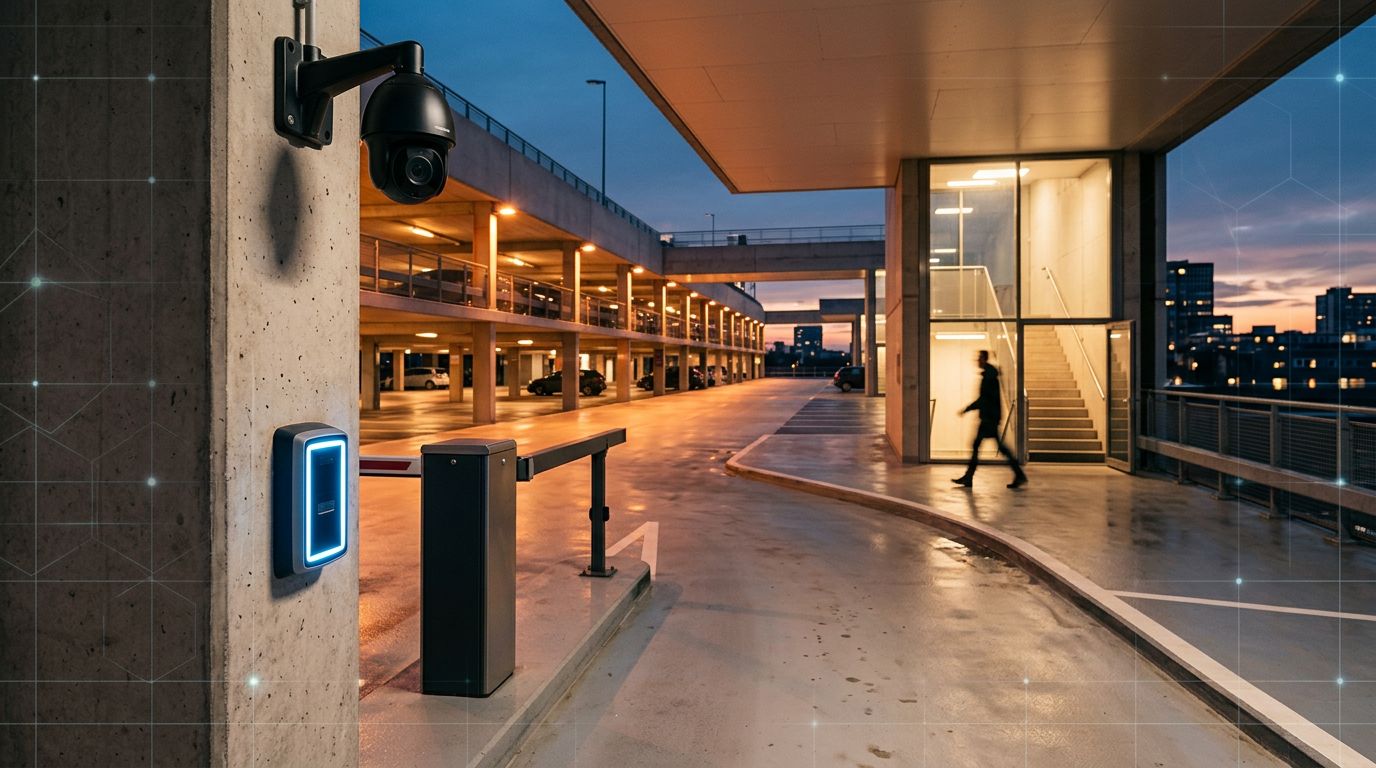
A parking garage assault often turns into a proof problem fast. The injuries are real, but the timeline can be hard to see unless the records are preserved right away.
That is where camera footage and key card evidence matter. These records can show who was present, when access happened, and whether the garage had holes in its security.
For people pursuing parking garage assault claims in Florida, the details matter almost as much as the attack itself. The video, the logs, and the scene can tell the story that memory alone cannot.
Why camera footage and access logs matter
Security cameras can capture more than the assault itself. They can show a dark stairwell, a broken gate, a missing guard, or a suspect waiting near a blind corner.
Key card records work differently, but they can be just as useful. They may show who entered a garage, what time a restricted door opened, and whether someone used a credential that should not have been active.
Put together, the two can form a timeline. That timeline can answer basic questions, such as how the attacker got in, whether the property had controlled access, and whether employees or contractors failed to respond.
Sometimes the strongest point is not what the camera shows, but what it does not show. If a camera at the entrance was offline, that gap can support a claim that security was weak or poorly maintained.
The same is true for access logs. If the garage had a card system for residents, staff, or vendors, those records can show whether the system tracked movement properly. They can also show if a door was left propped open or if a card was used outside normal hours.
In a case like this, the records are not background material. They are often the spine of the claim.
What the evidence can prove under Florida law
Florida law allows certain claims when a business or property owner fails to use reasonable security and a third party commits a crime. Florida Statute 768.0701 addresses civil actions tied to criminal acts of third parties on commercial property.
That matters because a parking garage assault claim usually turns on more than the attack itself. The legal question is whether the owner, operator, or manager knew, or should have known, that the property needed better security.
Camera footage can help prove several things at once. It may show poor lighting, broken equipment, no patrols, or a long response time after the incident started. It can also show whether the garage layout made the attack easier.
Key card evidence helps in a different way. It can show who had access to secured areas, whether restricted doors stayed open, and whether the property actually controlled entry the way it claimed.
Together, these records can help prove:
- Duty and control: who ran the garage and who controlled access.
- Breach: whether the property skipped basic safety steps.
- Foreseeability: whether prior incidents made an assault more predictable.
- Causation: whether weak security helped the attacker act.
A gap in the record can matter as much as a clip on a screen.
If the camera failed during the exact window of the attack, that failure may itself become part of the case. The same is true if access logs were not kept, were incomplete, or do not match the rest of the timeline.
How footage and logs disappear fast
Most people do not realize how quickly this evidence can vanish. Surveillance systems often overwrite video on a short cycle. Access logs may also be limited by vendor settings or retention policies.
That means delay can hurt the case before anyone files suit. Once the files are gone, the defense may argue they were never available, or that the missing records prove nothing.
The best response is immediate preservation. A lawyer can send a preservation letter, and that step puts the property owner and any management company on notice that the records must be saved.
A fast response should include a few simple actions:
- Report the assault to police and get the incident number.
- Notify the garage, management company, or landlord in writing.
- Ask for video, key card logs, maintenance records, and incident reports.
- Save your own photos, medical records, and witness names.
Each step matters because evidence works like wet cement. After a short time, it hardens into whatever remains.
Surveillance files are not the only records at risk. Door access logs, vendor service reports, camera repair tickets, and guard schedules can disappear too. Those records can help show whether the property knew about a bad camera, a bad lock, or a bad pattern of crime.
Even if the garage refuses to hand over records, the request still matters. It creates a paper trail that can help later if the owner claims the records were never requested.
Building the claim with more than one source of proof
Strong cases rarely rest on a single video clip. They usually combine several sources of proof that fit together.
Witness statements can fill gaps in the footage. Someone may have seen the attacker, noticed a broken gate, or heard a complaint about the garage before the assault.
Medical records matter just as much. They connect the attack to the injuries, and they help document the real cost of the harm. Emergency room notes, follow-up visits, photos of injuries, and lost-wage records all help show the impact.
Prior crime reports can also be important. If the garage or the surrounding area had repeated assaults, robberies, or car break-ins, that history can support the argument that the danger was predictable.
Maintenance and staffing records add another layer. A record showing a broken camera that was never repaired, a gate that failed repeatedly, or a shortage of guards can support a negligent security claim.
The best evidence often answers the same question from different angles. One source shows the entrance. Another shows the timing. A third shows the injuries. When those pieces line up, the claim becomes much stronger.
A few records deserve special attention because they often reveal the weak point in the garage’s security:
- Camera maintenance reports, because they can show whether equipment had known problems.
- Guard schedules, because they show whether anyone was present.
- Access logs, because they can reveal who entered and when.
- Prior complaints, because they may prove the risk was already known.
This kind of case is part timeline, part paperwork, and part common sense. If the records show long-standing security gaps, the defense has a much harder time blaming the victim’s injuries on chance alone.
When a lawyer should step in
The sooner a lawyer gets involved, the better the chance of saving useful records. That matters in parking garage assault claims because evidence can sit in the hands of several parties, including the garage owner, a property manager, a security company, and a camera vendor.
A lawyer can move fast to request video, access records, and incident reports before they are lost. That can also help identify who controlled the garage and who had the duty to keep it reasonably safe.
If the facts point to negligent security, the claim may need more than one witness or one report. It may require a records request, a subpoena, and an expert who can explain how the security system failed.
For people looking for Florida personal injury attorneys, this kind of case calls for quick action and close attention to detail. The right lawyer will know which records matter, who should have them, and how to keep the other side from talking around missing evidence.
That matters because the garage will often have a different version of events. It may say the cameras were working, the attack was unforeseeable, or the logs do not show anything useful. Good records are how those claims get tested.
The legal fight is rarely about one dramatic moment. It is usually about whether the property did enough before that moment arrived.
Conclusion
In a garage assault case, the evidence often decides how far the claim can go. Camera footage can show the scene, while key card records can show who had access and when.
Those records matter because they help connect the attack to the property’s security failures. They also fade fast, so the first days after the assault often matter most.
When the video is saved, the logs are preserved, and the scene is documented, the claim becomes much clearer. In these cases, speed and proof work together.