
Florida Phantom Vehicle Crash Claims: Proof That Matters
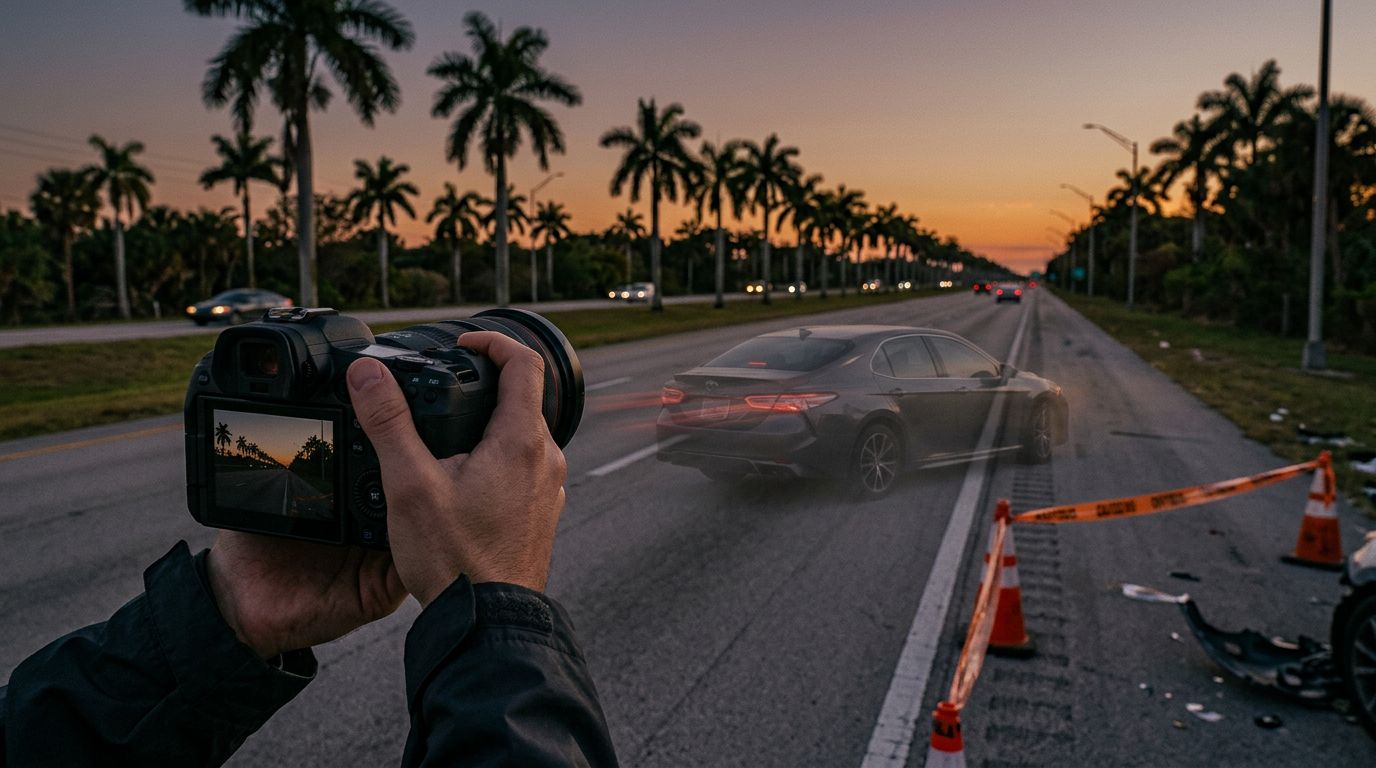
How do you prove a crash when the other driver disappears? In a phantom vehicle case, that question sits at the center of everything.
Florida phantom vehicle crash claims can turn into a battle over details fast. Your memory matters, but insurers want proof they can check. The first photos, witness names, and medical records often matter just as much as the wreck itself.
What counts as a phantom vehicle crash in Florida
A phantom vehicle crash happens when another driver causes the wreck and leaves the scene, often without contact. Maybe a car cuts across your lane. Maybe a truck forces you onto the shoulder. Maybe someone brakes hard and vanishes before you can get a plate number.
These claims are harder than a normal rear-end crash because the other driver is gone. There is no second account to compare with yours. There is no easy way to ask what happened.
That missing driver changes the entire claim. Your case may depend on whether the facts show that another vehicle caused the crash, even if that vehicle never touched yours. In Florida, that can affect how an insurer reviews the claim and what coverage may apply, including no-fault benefits and, in some cases, uninsured motorist coverage.
The more clearly you can show the sequence of events, the stronger your position becomes. A vague story about “a car came out of nowhere” will carry less weight than a detailed account tied to scene evidence.
Why insurers push back on these claims
Insurance companies look for gaps. If no one saw the other vehicle, they may question whether it was there at all. If there was no contact, they may ask whether you lost control for another reason.
That is why these claims often turn on consistency. The crash report, your statement, your medical records, and any witness account should point in the same direction. One weak link can give the insurer room to argue.
In a phantom vehicle case, the missing driver is only half the problem. The other half is proof.
A claim gets weaker when it rests on memory alone. It gets stronger when the record shows the same story from different angles. A lawyer who handles help with a Florida car accident claim can help spot those weak spots before an insurer uses them.
The evidence that carries the most weight
The best evidence in a phantom vehicle case is often simple, but it has to be preserved quickly. A clean paper trail can do more than a dramatic story.
| Proof | What it can show | Why it matters |
|---|---|---|
| Witness statements | Another vehicle caused the crash | Adds outside support |
| Police crash report | Scene details and officer observations | Creates an official record |
| Photos and video | Damage, roadway marks, and vehicle positions | Preserves facts before the scene changes |
| Medical records | Injury timing and symptoms | Connects the crash to your treatment |
| 911 call log | When and how the crash was reported | Helps confirm the timeline |
The takeaway is simple, the earlier the proof is collected, the harder it is to dispute later. Once the road is cleaned up and memories fade, that evidence starts to disappear.
Witnesses, police reports, and 911 calls
Independent witnesses matter because they do not benefit from the claim. A driver behind you, a pedestrian, or a nearby worker may have seen the other car cut you off or force you off the road. Even a short statement can help if it is clear and specific.
Police reports also matter, even when the officer did not see the crash. Officers can document what they found, where the cars ended up, and whether the scene matched the story. If the report includes the time, weather, lane position, or debris, those details can help later.
The 911 call adds another layer. It can lock in what you said right after the crash, before anyone had time to shape the story. That timing matters when the insurer later questions whether the phantom vehicle was real.
Photos, video, and physical damage
Photos are most useful when they show more than the damage. Take pictures of the entire roadway, the lane markings, skid marks, broken glass, guardrails, signs, and nearby intersections. If traffic moved through the area, the wider view can help explain what happened.
Dashcam footage is even better when you have it. So is video from a business, home, or traffic camera. Those recordings can show the other vehicle, the road position, or the split second that led to the crash.
Vehicle damage can also tell a story. The pattern of dents, scrapes, or impact points may support your version of events. For example, damage on the side of a car can fit a sudden lane intrusion. That kind of detail helps more than a general claim that a vehicle “caused trouble.”
Keep the original files if you can. Saved originals keep timestamps and image data that edited copies may lose.
Medical records and the time line of symptoms
Medical proof does more than list injuries. It shows when pain started, what symptoms you reported, and how the crash affected your daily life. That time line matters when the other driver is gone.
Seek care as soon as you can, even if you think the pain is minor. Some injuries start with stiffness or a headache and get worse later. If you wait too long, the insurer may say the injury came from somewhere else.
Tell each provider what happened in plain language. If another vehicle forced you to swerve, say that. If you hit a barrier or another object, say that too. Consistent treatment notes help connect the crash to the injury.
A strong medical file often includes:
- Emergency room or urgent care records
- Follow-up visits with your doctor
- Imaging results, if ordered
- Physical therapy notes
- Work restrictions or missed work records
The goal is not to make the injuries sound severe. The goal is to show the facts clearly and early.
What to do in the first hours after the crash
The first few hours can shape the claim more than people realize. Evidence fades fast, so quick action helps.
- Call 911 and ask for a police report.
- Photograph the scene, the damage, and any road debris.
- Get names and phone numbers for every witness.
- Look for nearby cameras, including businesses and traffic signals.
- Get medical care and describe the crash exactly as it happened.
- Tell your insurer the basic facts, but keep guesses out of it.
Each step builds the record. If you skip them, the insurer may argue that the crash details are uncertain. If you can safely do so, write down the other car’s color, type, direction, and any part of the plate you saw.
Do not edit the story to make it sound neater. Small details often matter most. A lane change, a sudden brake, or a brief swerve can explain the whole wreck.
When legal help becomes important
Phantom vehicle claims often become document fights. The insurer may ask for the same records twice. It may question your pain complaints or the lack of physical contact. It may also argue that the facts are too thin to support payment.
That is where Florida car accident attorneys can make the process more manageable. They can collect witness statements, request records, review policy language, and sort out whether UM coverage or other benefits may apply. They can also push for video before it gets erased.
Broader personal injury lawyers in Florida can help when the crash caused lasting injuries, missed work, or treatment that keeps going. In those cases, the claim is not just about one wreck. It is about proving the real cost of that wreck over time.
When the other driver disappears, the claim does not have to disappear with them. The facts still matter, and the right records can still tell the story.
Conclusion
Florida phantom vehicle crash claims often rise or fall on proof that survives the moment. Witnesses, police reports, photos, medical records, and early treatment notes can do what memory alone cannot.
If another vehicle caused your crash and left the scene, act quickly. The evidence you gather in the first hours may decide how well the claim holds up later.