
Florida Wheel Stop Trip and Fall Claims: Photo Proof That Matters
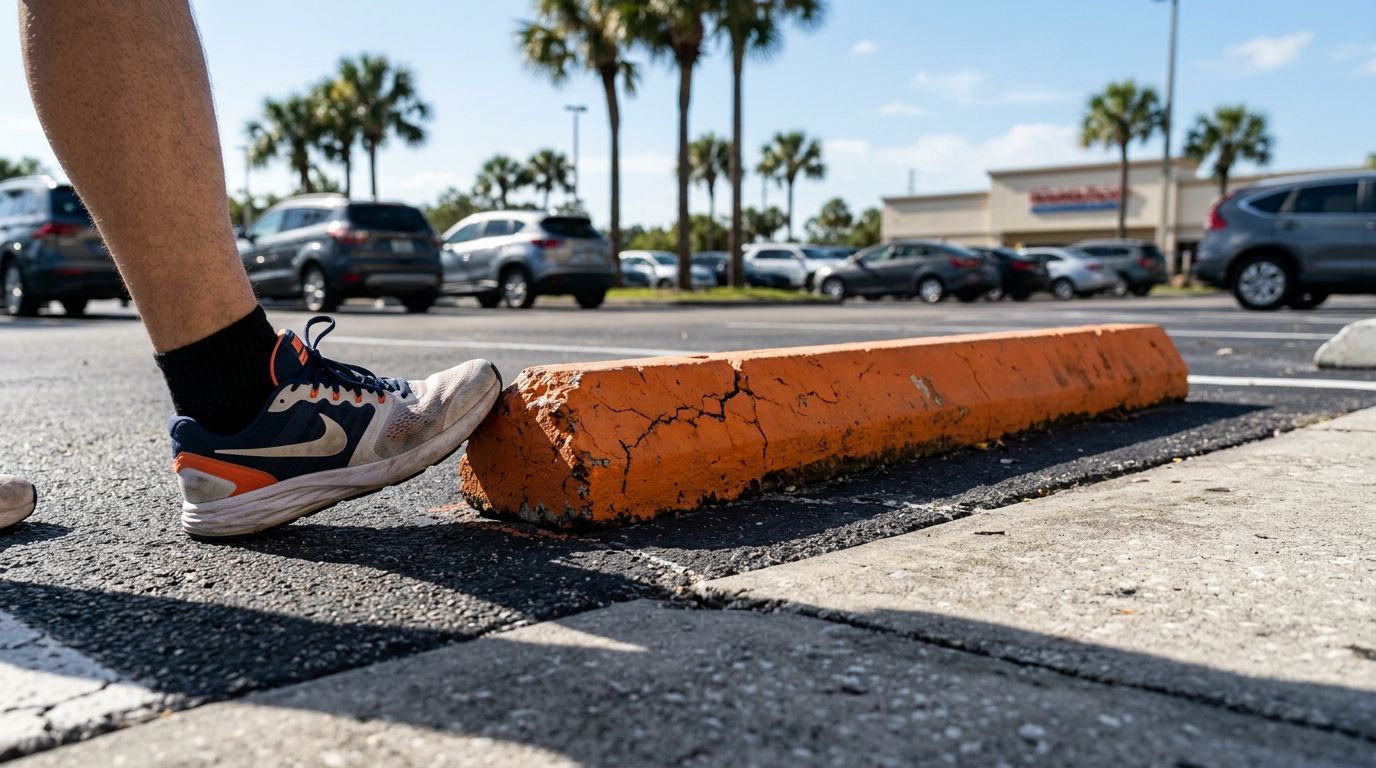
A wheel stop can look harmless until it catches your foot in a parking lot. In Florida trip and fall claims, the first photos often matter more than the story told later.
A clear image can show a cracked block, faded paint, poor lighting, or a bad sightline. If you fell at a store, apartment complex, or office lot, those details can shape the whole case.
Why wheel stops become legal problems
Wheel stops are supposed to help drivers park. They become a problem when they blend into the pavement, shift out of place, crack, or sit in a path people reasonably use.
That matters because Florida property owners owe visitors a duty to keep the premises reasonably safe. Our Florida premises liability duty of care guide explains that duty in plain terms. When the hazard is a spill or tracked-in water, Florida Statute 768.0755 often controls the notice fight for business establishments.
Wheel stop cases are different from spill cases in one important way. The hazard is often fixed and visible, but not always visible enough for a pedestrian. That gives the owner room to argue that the block was obvious, well-marked, or placed where no one should have walked.
Your photos help answer those arguments. They can show how the parking lot actually looked at the time of the fall, not how it looked after repairs, repainting, or cleanup.
The photos that do the most work
The best photo set does more than show the ground. It shows the scene, the angle, the lighting, and the hazard in context.
Here’s a simple way to think about the images that matter most.
| Photo to take | What it shows | Why it matters |
|---|---|---|
| Wide shot of the lot | Parking space, walkway, entrance, and your route | Shows the full layout and where the hazard sat |
| Close-up at ground level | Cracks, height, faded paint, broken edges | Helps show the wheel stop was unsafe or hard to see |
| Eye-level shot on approach | What a walker saw before the fall | Shows visibility, shadows, and clutter |
| Photo with a shoe or small object for scale | The block’s size and height | Makes the trip point easier to understand |
| Lighting photo at the same time of day | Dark areas, glare, or shadows | Helps prove the wheel stop blended into the lot |
| Injury and clothing photo | Bruises, scrapes, torn fabric, debris | Supports that the fall happened the way you said |
The strongest set tells a full story. A single close-up may prove the block was broken. A wider view may prove it was placed in a bad spot. Together, they carry more weight.
A clear photo can show more than a broken wheel stop. It can show what the owner should have seen before anyone got hurt.
That is why picture quality matters in parking lot trip and fall claims. The camera can catch what a witness forgets and what a manager later denies.
How to capture the scene before it changes
The first minutes after a fall are messy. You may be hurt, shaken, or focused on getting help. Still, if you can do it safely, a few steps can protect the claim.
- Take a wide shot before anything is moved.
- Photograph the wheel stop from several angles.
- Step back and show the route you walked.
- Include nearby signs, parking lines, curbs, and entrances.
- Save the original files without filters or edits.
If your phone allows it, keep the time and location data turned on. Also, make sure the images stay in their original form. Screenshots and edited versions can lose useful details.
If you were too injured to take the pictures yourself, ask someone else to do it fast. A friend, family member, or witness can capture the scene while it still looks the same. That helps because lots get repaired quickly, and paint or debris often disappears within hours.
In many cases, a short video helps too. A slow walk toward the wheel stop can show how the hazard looked from a pedestrian’s point of view. That can matter more than a single still image.
What the photos can prove about notice and fault
Owners often say the wheel stop was easy to see. They also say the injured person was distracted, rushing, or not watching where they were going.
Photos can push back on those claims.
A dark, unpainted block may blend into blacktop. Broken pavement beside it can create a second hazard. Poor lighting can make a parking block look flat until the foot catches it. A parked car can block the view from one side, which makes the hazard harder to spot from the path you used.
Photos can also suggest how long a defect existed. A worn edge, old dirt buildup, faded striping, or repeated damage can support an argument that the condition did not appear five minutes earlier. That matters because repeated wear can show the owner should have found and fixed the problem.
If the lot had prior complaints, earlier photos, or proof of similar falls, the claim gets stronger. Those details help show the condition was not a one-time surprise. They also help in cases where the owner blames the person who fell.
A useful photo set can also support your lawyer’s analysis of the scene. That is one reason a strong Florida slip and fall damages overview matters later, because proof of the hazard is only one part of the claim. Medical records, missed work, and pain evidence still have to line up with the fall.
Paper records still matter
Photos tell the visual story. Other records fill in the rest.
Keep the incident report, if one was made. Save the names and phone numbers of anyone who saw the fall. Hold on to medical discharge papers, x-rays, prescriptions, and work notes. If your clothes were torn or dirty from the fall, keep them too.
The best claims often have a simple paper trail. The scene photos show the hazard. The medical records show the injury. The wage records show the time lost. Witness statements help connect the dots.
If the property had cameras, ask that the video be preserved right away. Surveillance footage is often erased on a short schedule. That makes early action important.
You should also document any changes you notice after the fall. If the wheel stop gets painted, moved, or replaced, that change can matter later. A dated photo taken before the repair may be the only clear record of the original condition.
Deadlines and fault rules can close the door fast
Florida law does not give unlimited time to act. As of May 2026, most Florida personal injury claims must be filed within two years of the accident. That clock matters, even when the injury seems manageable at first.
Florida also uses a modified fault rule. If a jury decides you were 51% or more at fault, you recover nothing. If a defense lawyer can convince the fact finder that you should have seen the wheel stop, your case gets harder fast.
That is why photo proof is so important. It can help show the hazard was hard to see, badly placed, or poorly maintained. It can also help cut down the claim that you caused the fall by yourself.
For readers who want a broader look at how these parking lot cases work, the details in trip and fall claims for Florida parking lots are worth a closer read. The same themes show up again and again, notice, visibility, and proof that survives after the scene changes.
Conclusion
Wheel stop cases often come down to one simple question, what did the parking lot look like before anyone fixed it? The answer is usually in the photos.
The strongest Florida trip and fall claims show the hazard, the setting, and the damage in a way a defense argument can’t easily erase. If the scene was dark, damaged, or poorly marked, those images may do the heavy lifting.
The sooner you preserve them, the better they work.