
Florida Wrong-Site Surgery Claims and Pre-Op Marking Records
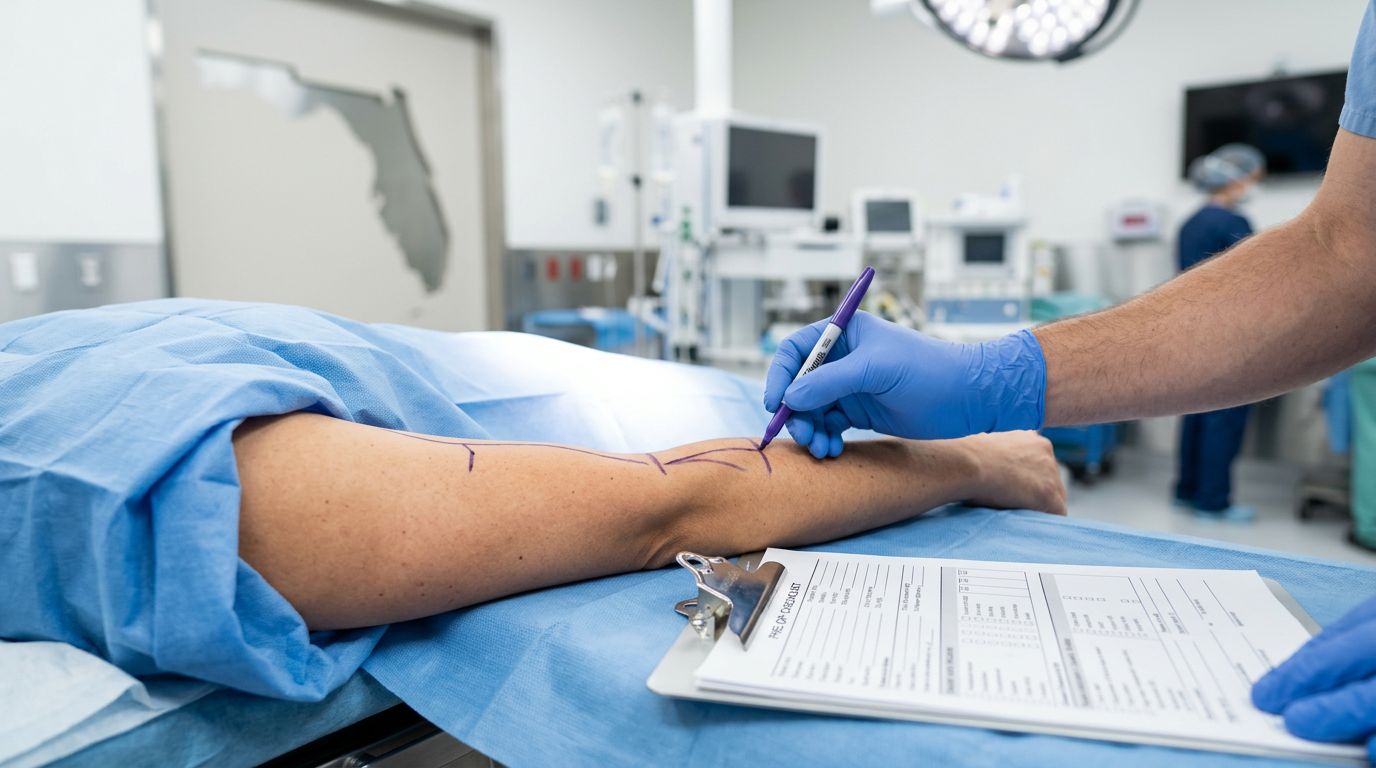
A wrong-site surgery case can turn on a few lines in a medical chart. That sounds small, but in the operating room, those lines can show whether the team checked the right patient, the right body part, and the right procedure.
Patients often focus on the injury itself. The real fight may be over the paper trail, because pre-op notes, marking records, and time-out forms can show where safety broke down. If you are sorting through a possible claim in Florida, the record trail matters as much as the surgery itself.
What counts as wrong-site surgery in Florida
Wrong-site surgery is not limited to operating on the wrong limb. It can also mean the wrong side, the wrong level of the spine, or the wrong body part inside a planned procedure. In some cases, the surgery may be done on the correct patient, but the wrong target.
Florida treats this kind of mistake as serious medical negligence when the facts support it. A patient should not be cut on the wrong site if the hospital and surgeon followed basic safety steps. That includes verifying the procedure before surgery, marking the correct site, and pausing before the first incision.
The harm can be physical and financial. A patient may need more surgery, face more pain, miss work, or deal with a longer recovery. In a medical malpractice claim, those losses matter, but so does the reason the mistake happened.
A wrong-site error often points to a breakdown in communication. The chart may have said one thing, the mark may have shown another, and the team may have missed the mismatch. That is why Florida wrong-site surgery claims often start with records, not memory.
The pre-op records that matter most
Pre-op marking records are important because they show what the medical team was supposed to do before surgery began. They also show whether the surgeon and staff followed the safety checks that should stop this kind of error.
Here is the kind of paper trail that can matter:
| Record | What it should show | Why it matters |
|---|---|---|
| Consent form | The planned procedure and body site | Shows what the patient agreed to |
| Pre-op verification note | Patient identity, procedure, and site | Confirms the team checked the basics |
| Site-marking record | The surgeon marked the correct spot | Shows the site was identified before surgery |
| Time-out documentation | The team confirmed the right patient, site, and procedure | Proves the final pause happened |
| Operative report | What the surgeon actually did | Can reveal a mismatch with the plan |
| Nursing and anesthesia notes | The sequence of events in the operating room | Helps show whether the process was rushed or incomplete |
If those records line up, the hospital may argue the wrong-site event was a rare mistake. If they conflict, the claim often gets stronger. A missing mark, a vague note, or a rushed time-out can matter just as much as the injury itself.
When the chart says one thing and the operating room did another, the gap in the records can become the center of the case.
The site mark itself also matters. In many cases, the surgeon should place the mark personally, and it should be done before the operation starts. The mark should be clear, visible, and tied to the correct site. If it is absent, unreadable, or on the wrong side, that can raise a serious problem.
Where the safety process breaks down
A wrong-site event rarely happens because of one bad moment alone. More often, it starts with small failures that build on each other. One note is incomplete. One image is missing. One person assumes another person already checked the chart.
That is how a simple checklist turns into a dangerous gap.
The pre-op process should catch those gaps. Staff must confirm the patient, the procedure, and the exact site. Then the surgeon should mark the correct location. Right before the incision, the team should do a time-out and speak up if anything looks off.
Breakdowns usually show up in the details. A mark may be placed too late. A mark may fade before surgery begins. The chart may list the correct side, but the consent form may use unclear language. In spine cases, the wrong level can be the problem, even when the general area is right.
Another common issue is poor documentation. A team may say the right steps happened, but the file does not show it clearly. In a claim, that gap can raise doubts about whether the check was done at all. A hospital record that looks tidy on the surface can still hide a mistake if the notes conflict with each other.
Patients often feel lost in that kind of situation. The medical language is dense, and the operating room record can look like a puzzle with pieces missing. Still, the details matter because they help show whether the injury came from a simple risk or a preventable error.
Evidence that can strengthen a Florida claim
The stronger the records, the easier it is to show what went wrong. After a suspected wrong-site surgery, the goal is to preserve evidence before it disappears or gets corrected later.
Common records to gather include:
- The full medical chart, not just a summary
- Consent forms and pre-op paperwork
- Surgical notes, anesthesia notes, and nursing records
- Imaging studies, such as X-rays, MRIs, or CT scans, if they were used
- Bills, follow-up notes, and discharge instructions
- Photos of visible markings or post-op changes, if they were taken safely and legally
A second opinion can also help. Another doctor may notice that the surgery was performed on the wrong site or that the records do not match the treatment. That kind of review can be valuable before the case is discussed with the hospital or insurer.
If you are worried about what to do next, avoiding common mistakes in injury claims starts with saving records and acting early. That matters in surgery cases too, because missing documents are hard to replace later.
Do not rely on a verbal explanation from the hospital. People forget details. Records do not. If the paperwork says one thing and the injury shows another, that conflict can support the claim.
How Florida law looks at the harm
A Florida wrong-site surgery claim still has to meet the rules that apply to medical malpractice cases. A patient usually must show the accepted standard of care, how the doctor or hospital fell below it, and how that failure caused harm.
That often means an expert witness is needed. In many cases, a doctor in the same specialty has to explain what should have happened and why the care fell short. Without that testimony, the claim may not move forward.
The injury also has to be real and documentable. Extra surgery, added pain, scarring, infection, disability, and extra medical costs are all examples of harm that may matter. So can lost income and a longer recovery.
Florida also has a time limit. The realtime rule summary for these cases says the usual deadline is two years from the injury or from when the injury should have been discovered, though exceptions can apply, especially for children. Waiting too long can put the claim at risk, even when the mistake is obvious.
That deadline makes record collection urgent. Once the chart is in hand, the pattern becomes easier to see. Once the file is lost or edited, the path gets much harder to trace.
Conclusion
In a wrong-site surgery case, the records are often the first witness. The consent form, the pre-op mark, the time-out, and the operative note can either line up or expose a dangerous gap.
For Florida patients, that gap can be the difference between a bad outcome and a valid malpractice claim. The faster the records are gathered, the easier it is to see whether the safety steps failed and whether the claim has a strong path forward.