
Florida SSDI for COPD in 2026: PFT Results and Oxygen Use
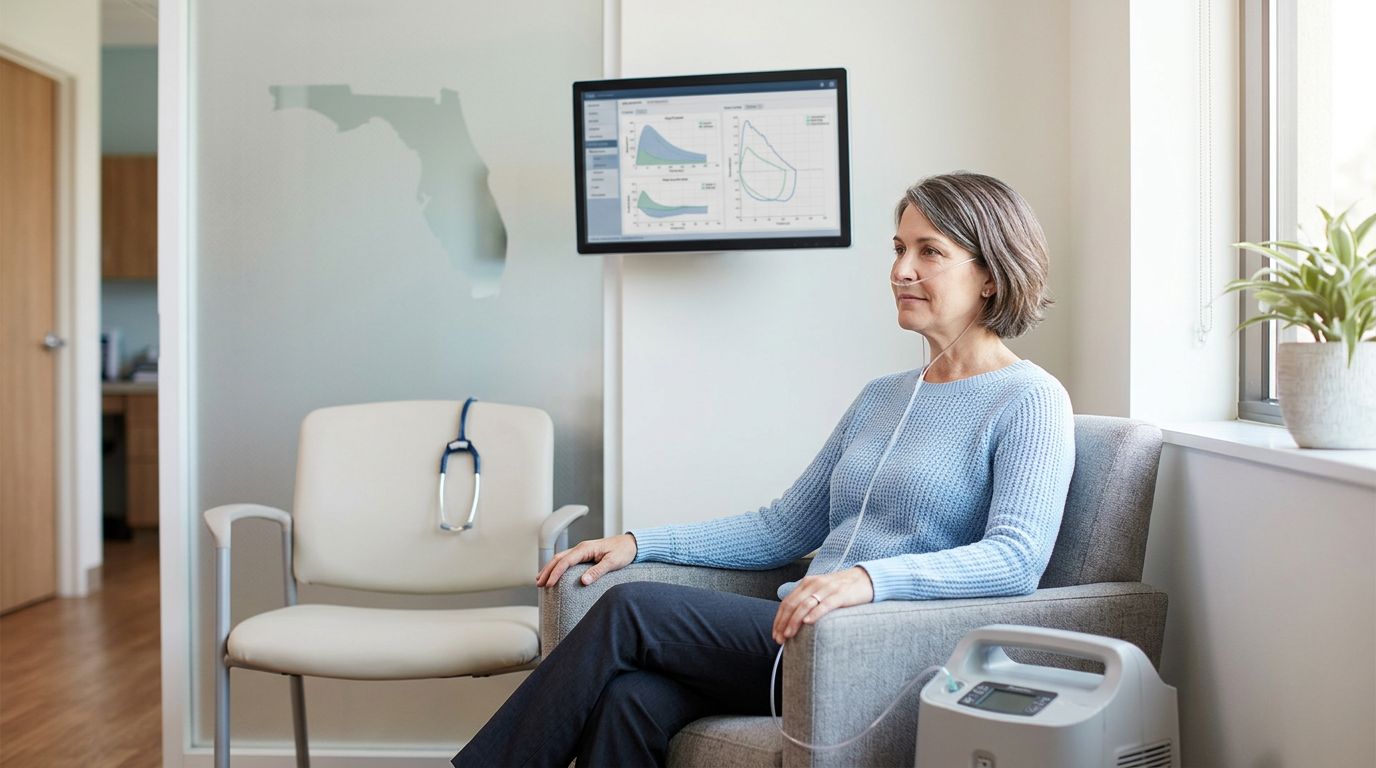
Florida SSDI COPD claims often turn on test results, not symptoms alone. If COPD leaves you short of breath after basic tasks, that still may not be enough for Social Security.
The strongest files usually have PFT results, oxygen records, and doctor notes that match the story. When those records line up, it becomes much easier to show why full-time work is out of reach.
How Social Security reviews COPD claims in 2026
Social Security looks at COPD under its respiratory rules, especially Blue Book Section 3.02. The first question is simple, even if the evidence is not: does the condition keep you from substantial work for at least 12 months?
In 2026, earning more than about $1,260 a month can put a claim at risk because Social Security may treat that as substantial gainful activity. That matters because SSDI is for people who cannot keep up with regular work over time.
There are two main paths to approval. One path is meeting the exact listing with objective medical proof. The other is showing that COPD does not meet the listing, but still leaves you unable to work under a residual functional capacity, or RFC, review.
That is why the Social Security disability listing requirements matter so much. The listing gives Social Security a strict checklist, and the file has to match it.
Social Security does not pay because breathing is hard on bad days. It pays when the record shows lasting work limits.
What PFT results can say about your lung function
Pulmonary function tests, often called PFTs or spirometry, are one of the clearest ways to measure COPD. They show how much air you can move, and how fast you can move it.
Social Security pays close attention to FEV1, which is the amount of air you blow out in one second, and FVC, which is the total amount of air you can force out after a deep breath. The test usually matters most after a bronchodilator, because Social Security wants to see your lung function after treatment.
Here is a simplified look at the FEV1 values Social Security uses for adults:
| Height without shoes | Men, FEV1 at or below | Women, FEV1 at or below |
|---|---|---|
| Under 65 inches | 1.29 | 1.07 |
| 65 to 67 inches | 1.37 | 1.13 |
| 68 to 69 inches | 1.45 | 1.19 |
| 70 inches | 1.53 | 1.25 |
| Over 70 inches | 1.61+ | 1.31+ |
If your FEV1 is at or below the number for your height and sex, your test may support the listing. If it misses by a little, the rest of the medical file still matters. That includes FVC results, blood gas testing, symptoms, treatment history, and how often you flare up.
A single good day in the office does not erase bad lung function on paper. Social Security wants a pattern, not a snapshot.
Why oxygen use helps, but does not decide the claim
Oxygen can be powerful evidence. It shows your doctor believes your lungs need help getting enough air.
Still, oxygen use alone does not automatically win a Florida SSDI COPD claim. Social Security wants to know why you need oxygen, how often you use it, and what testing supports that need.
That can include oxygen at rest, during walking, or all day. It can also include records showing low oxygen levels on an arterial blood gas test, or ABG. Those results can support the claim more than a prescription by itself.
A home oxygen order, tank delivery records, and notes about how you use the oxygen all help. So do records that show you still struggle with stairs, showering, or short trips outside.
Oxygen use is strong evidence when the file explains the medical reason behind it.
If the file only says you use oxygen, Social Security may still ask whether the rest of the proof shows severe COPD. The more the testing, treatment, and symptoms match, the better the claim reads.
Other records that matter when the PFT is close
Some COPD claims do not meet the exact test numbers. That does not end the case.
When the PFT result sits near the cutoff, Social Security looks harder at the full record. Hospital stays, flare-ups, and day-to-day limits can fill in the gaps. The goal is to show that breathing problems keep you from working a normal job, even if one test does not settle the issue.
The following records often help:
- Office notes that describe wheezing, shortness of breath, or poor response to inhalers.
- ER or hospital records after COPD flare-ups.
- Medication lists that show inhalers, steroids, or oxygen.
- Notes about side effects, like fatigue, dizziness, or trouble concentrating.
- Records of time off work, if your doctor documented it.
If your case is headed toward a hearing, preparing evidence for your SSDI hearing can keep the file organized. That matters because judges look for clear patterns, not scattered notes.
A strong hearing file often tells one story from start to finish. The records should show the diagnosis, the failed treatment, the test results, and the work limits that follow.
How Florida applicants can strengthen a COPD claim
Small choices can make a big difference before the claim is filed. First, keep every pulmonary test report, not just the summary page. The details matter, including whether the test was done before or after a bronchodilator.
Next, track your oxygen use and symptoms in plain terms. Write down when you need oxygen, how long you use it, and what activity set off the problem. Short notes are enough if they are consistent.
Also, follow treatment and keep appointments. If your doctor changes inhalers, sends you to rehab, or orders more testing, those records show that the condition is ongoing. Missed visits can leave holes in the paper trail.
A Florida disability attorney can also review whether the case should focus on listing-level proof or an RFC argument. That matters when PFT results are borderline, or when oxygen helps but the rest of the file is thin.
For many people, the claim comes down to whether the records show a lung problem that lasts, limits, and keeps getting in the way. When the file says that clearly, Social Security has less room to doubt it.
Conclusion
COPD claims are won on proof, and PFT results are often the center of that proof. Oxygen use helps, but it works best when the medical records explain why it was prescribed and how it affects daily life.
If you are building a Florida SSDI COPD claim in 2026, focus on the numbers, the treatment history, and the work limits. When those pieces line up, the case becomes much stronger.