
Florida SSDI Hearing Wait Times by Office in 2026
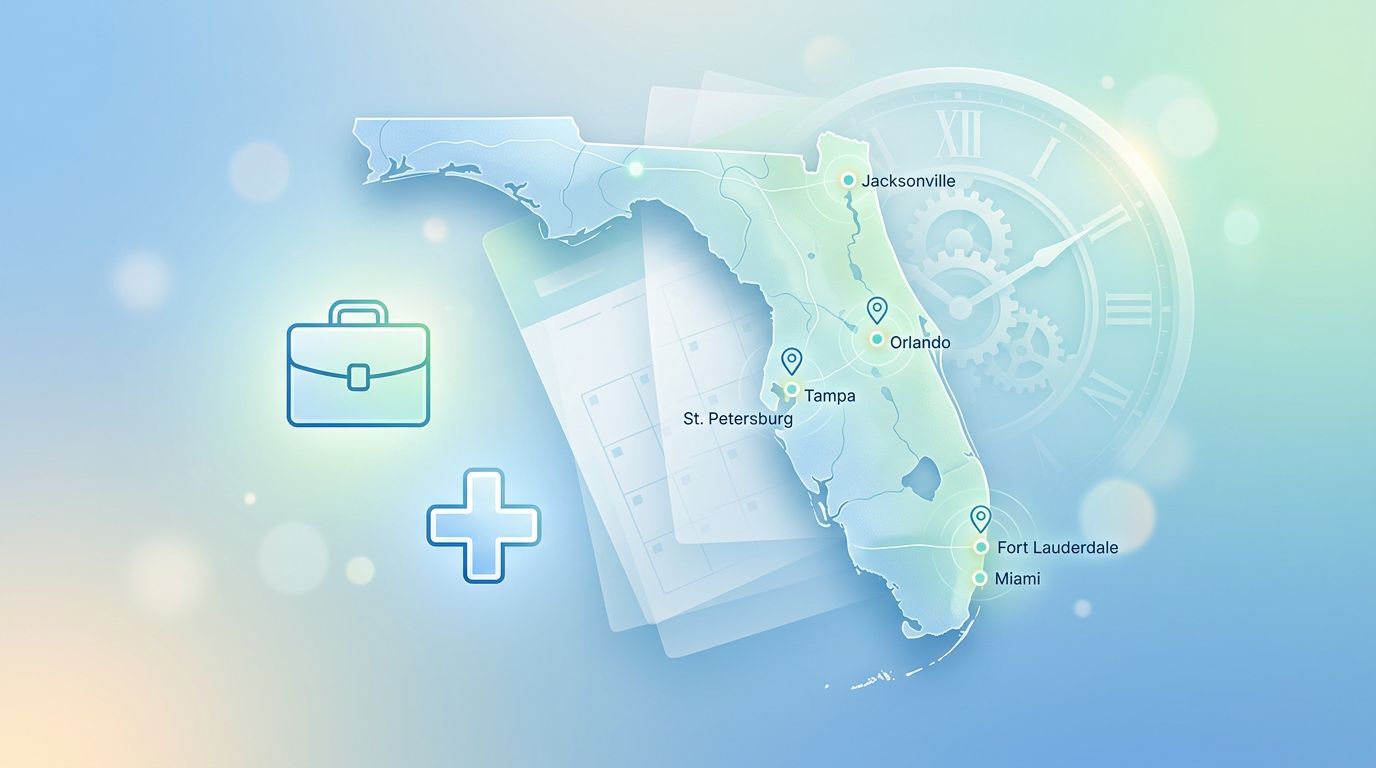
A Social Security disability hearing can take months, and the wait may differ depending on the Florida hearing office handling your case. The estimate shown for one office may not match the timeline for another, and no office can promise an exact hearing date.
Florida SSDI hearing wait times also depend on more than location. Case complexity, scheduling capacity, medical evidence, hearing format, and whether SSA identifies a case for priority handling can all affect the calendar. Knowing how the system works helps you plan while your appeal is pending.
Key Takeaways
- Florida has hearing offices in Fort Lauderdale, Jacksonville, Miami, Orlando, St. Petersburg, and Tampa.
- SSA office averages change over time, so the current estimate must be checked through the agency’s official hearing office information.
- A hearing office’s average is not a guarantee for an individual case.
- You may be able to request faster handling when you face dire financial need, a terminal illness, or another qualifying emergency.
- Strong, current medical evidence can prevent additional delays after the hearing.
Why Florida SSDI Hearing Wait Times Change
The hearing stage follows an initial application and usually a reconsideration appeal. If SSA denies the claim at reconsideration, you can request a hearing before an administrative law judge, commonly called an ALJ.
The hearing office then reviews the appeal, develops the record, schedules the hearing, conducts the hearing, and issues a decision. Each step takes time. A case may move quickly through scheduling but wait longer for a written decision. Another case may take longer before the hearing because the record needs updated medical evidence.
The number listed for a hearing office is usually an average processing figure. It doesn’t predict the exact date of your hearing or the date you will receive a decision. Some claims finish sooner, while others take longer because of missing records, complex medical conditions, work-history questions, or a need for additional testimony.
A hearing wait time also may not include every part of the disability appeal. The clock can be measured in different ways, such as:
- The time between the hearing request and the hearing date.
- The time between the hearing and the ALJ’s written decision.
- The total time between the hearing request and case completion.
These measurements produce different numbers. When you review an estimate, check what the number measures before comparing it with your own case.
The hearing stage is separate from an Appeals Council review. If an ALJ denies your claim, an Appeals Council request creates another stage with its own processing time. A federal court appeal is separate again. Therefore, a hearing office estimate shouldn’t be treated as the complete timeline for every possible SSDI appeal.
SSA’s hearing process information describes the steps after you request an ALJ hearing. The agency may offer a telephone, video, or in-person hearing, depending on the circumstances and available options.
Florida Hearing Offices You May See in 2026
SSA assigns a case to a hearing office based mainly on the claimant’s address and the agency’s workload. You don’t usually choose an office because you prefer its reported wait time. If you move, SSA may transfer the case, but a transfer can create additional administrative work and shouldn’t be requested solely to seek a shorter queue.
Florida hearing offices commonly associated with SSDI appeals include the following:
| Florida hearing office | What claimants should know |
|---|---|
| Fort Lauderdale | Often handles cases in South Florida, but assignment depends on SSA’s jurisdiction and current workload. |
| Jacksonville | Handles cases in North Florida and may use video or telephone hearings for claimants outside the immediate area. |
| Miami | Serves many South Florida claimants, with assignments based on residence and agency procedures. |
| Orlando | Handles cases in Central Florida and may schedule hearings remotely. |
| St. Petersburg | Serves portions of West Central Florida and may receive cases according to changing workload needs. |
| Tampa | Handles cases in the Tampa Bay area and may schedule different hearing formats. |
The office name on your hearing notice is more reliable than an online list of Florida locations. SSA can change assignments, use national scheduling capacity, or arrange a hearing with a judge who is not physically located in the same city as the claimant.
For the current office information, use SSA’s hearing office locator. Enter your location and compare the office identified for your case. If your notice names a different office, follow the notice and contact SSA before sending documents to another location.
A hearing may take place outside a traditional courtroom. Video and telephone hearings allow SSA to schedule cases across geographic areas. The remote format may affect convenience, but it doesn’t eliminate the need to prepare medical and vocational evidence.
How to Check Your Current Florida Hearing Wait Time
A static blog post can’t provide a guaranteed July 2026 hearing date. SSA updates workload information, and the displayed average can change after new cases enter the queue or the agency changes its scheduling practices.
Start with your hearing notice. It should identify the office handling your appeal and provide contact information. Keep the notice with your appeal records because it may contain deadlines, instructions for evidence, and information about the hearing format.
You can also review your appeal through a my Social Security account. Online information may show whether SSA received an appeal or whether the case has moved to another stage. However, an online status may not provide a precise hearing date or explain every administrative action.
When contacting SSA, ask clear questions:
- Has the hearing request been entered into the system?
- Which hearing office currently has the case?
- Has SSA scheduled a hearing?
- Does the office need additional evidence or forms?
- Is the hearing expected to be by telephone, video, or in person?
- Has the case received a priority flag?
- Where should new medical records be submitted?
Write down the date of each call, the employee’s name or identification number if available, and the information provided. Keep copies of letters, online submissions, medical records, and delivery confirmations.
The average shown by SSA is useful for planning, but it isn’t a deadline. A case that has waited longer than the published average may justify a status inquiry. It doesn’t automatically mean the claim has been lost or mishandled.
Why Two Florida Claimants Can Wait Different Lengths of Time
Location matters, but it is only one factor. Two people living in the same city may receive hearing dates months apart because their appeals entered the queue at different times or require different case development.
The medical record is one common source of delay. SSA may need treatment notes, diagnostic testing, hospital records, or opinions from a treating provider. If a claimant changes doctors, moves, or receives treatment from several facilities, collecting a complete record can take longer.
The alleged onset date and work history can also create questions. SSDI claims often require a review of past work, earnings, job duties, and the point when the claimant stopped performing substantial gainful activity. An ALJ may need testimony about why work ended and whether the claimant attempted work afterward.
Other factors include:
- Whether the claimant requested an accommodation or a particular hearing format.
- Whether SSA needs to correct an address or representative record.
- Whether the claimant submitted new evidence close to the hearing.
- Whether the judge needs additional testimony from a medical or vocational expert.
- Whether the claimant requested a postponement or missed a scheduled hearing.
- Whether the case qualifies for a special processing category.
A claimant’s attorney cannot control the hearing office queue. However, counsel can monitor the file, respond to requests, submit organized evidence, and identify problems before they cause a postponement.
The hearing date also may change after scheduling. Judges can become unavailable, a claimant may need an accommodation, or SSA may determine that another hearing format is appropriate. Treat every notice as important, even when the case has already been pending for a long time.
What to Do While Waiting for an SSDI Hearing
Waiting doesn’t mean the case is inactive. Your medical condition and treatment history continue to develop, so the evidence should stay current.
Continue medical care when possible and follow the treatment plan prescribed by your providers. Keep a record of appointments, medications, side effects, therapy, emergency visits, hospitalizations, and changes in symptoms. The record should describe functional limits, not only diagnoses.
For example, a diagnosis alone may not show how your condition affects work. Useful details can include how long you can sit, stand, walk, lift, concentrate, use your hands, interact with other people, maintain attendance, or complete tasks without unscheduled breaks.
Tell SSA and your representative about changes in:
- Your address, phone number, or email.
- Your doctors, clinics, medications, or treatment dates.
- Your work activity or income.
- Your ability to perform daily activities.
- Your need for an interpreter or hearing accommodation.
- Any hospitalization, serious decline, or new diagnosis.
Submit important medical records promptly rather than waiting until the week before the hearing. Late evidence may create practical problems, especially when the judge and vocational expert need time to review it.
You should also read every SSA notice. A missed response deadline can harm an appeal even when the hearing wait has been long. If you cannot attend the scheduled hearing, notify SSA immediately and explain the reason. Do not assume a voicemail or informal message automatically protects the case.
The SSA disability appeals page explains basic appeal deadlines and filing options. Most appeals must be filed within 60 days after receiving the denial notice, with an additional five days generally presumed for mailing. The exact deadline depends on the notice and the facts, so review it carefully.
Can You Get a Faster SSDI Hearing in Florida?
Some cases qualify for priority handling, but ordinary financial stress and a long wait don’t automatically guarantee an earlier hearing. If you need expedited review, make the request through SSA and provide documents that support it.
A claimant may have grounds to request priority attention because of a terminal illness, serious medical deterioration, homelessness, inability to obtain food or medicine, or another urgent circumstance recognized by SSA. Military service may also affect handling in certain cases.
A request should state the facts plainly. Explain what happened, when it happened, and why waiting through the standard process creates an immediate risk. Include supporting records, such as:
- A doctor’s statement describing a terminal or rapidly worsening condition.
- An eviction notice or shelter documentation.
- Proof that the claimant cannot obtain necessary medication.
- Hospital records showing a serious change in health.
- Documents concerning military service, when relevant.
Do not describe a routine financial hardship as an emergency unless the facts support that description. SSA may deny a priority request, but the appeal can continue through the standard process.
An attorney can help determine whether the case presents a valid basis for expedited handling and can submit the request to the correct office. The request should not replace normal case preparation. Even a fast-tracked hearing still requires evidence about the claimant’s medical condition, work history, and functional limitations.
A request to expedite also differs from a request for an earlier date based on convenience. A vacation, work conflict, or preference for a particular judge usually doesn’t establish an emergency. If a genuine conflict exists, report it immediately and ask what options are available.
How a Florida Disability Attorney Helps During the Wait
A disability attorney cannot promise a shorter Florida SSDI hearing wait time. The attorney’s value is in protecting the claim while the case moves through the queue and preparing the record for the ALJ.
Counsel can review the denial, identify the legal and medical issues, and determine whether the existing evidence supports the alleged onset date. The attorney can also request records, organize exhibits, prepare a written argument, and address gaps before the hearing.
Medical evidence should connect symptoms to work-related limitations. A lawyer may ask a provider to clarify attendance problems, lifting restrictions, concentration limits, expected absences, or the need for unscheduled breaks. The goal is accurate evidence supported by the treatment record, not a medical opinion based only on the claimant’s request for benefits.
Hearing preparation also matters. The ALJ may ask about daily activities, past jobs, treatment, medication side effects, pain, mental symptoms, and attempts to work. An attorney can help you answer directly and explain how your condition affects sustained full-time work.
Many hearings include a vocational expert. That witness may testify about whether a person with certain restrictions can perform past work or other jobs. Small differences in limitations can affect the testimony. Your representative can identify conflicts and ask focused questions when the record supports them.
SSA regulates representative fees. A fee agreement or fee petition generally requires agency approval, and payment rules depend on the outcome and the amount of past-due benefits. Discuss the fee arrangement before representation begins.
For people who speak Spanish, Creole, or another language, ask about interpreter services. Language access and clear communication are important throughout the appeal, especially when SSA sends time-sensitive notices.
Mistakes That Can Add More Time
Some delays come from agency workload. Others follow preventable problems. Missing a notice, failing to report an address change, or sending records without identifying information can make a case harder to track.
A common mistake is waiting until the hearing date is close to collect medical evidence. Older records may not describe the claimant’s current condition, while newer records may not explain the history. Send relevant evidence as it becomes available and keep proof that SSA received it.
Another problem occurs when claimants minimize symptoms during treatment but describe severe limitations at the hearing. Tell medical providers the full effect of the condition, including bad days, side effects, sleep problems, and limits on routine activities. The medical record should accurately reflect the condition over time.
Claimants also should report work attempts. Even a short job, part-time work, or self-employment can raise questions about capacity and the alleged onset date. Hiding work activity creates credibility problems. Reporting it allows the attorney and ALJ to examine why the attempt ended and whether special conditions affected it.
Finally, don’t ignore a hearing notice because the wait has been frustrating. A missed hearing can lead to dismissal unless you show good cause and follow SSA’s procedures. Check your mail, online account, voicemail, and email regularly while the appeal remains pending.
Conclusion
Florida SSDI hearing wait times vary by office and change as SSA’s workload changes. The six Florida hearing offices commonly listed by SSA are Fort Lauderdale, Jacksonville, Miami, Orlando, St. Petersburg, and Tampa, but your notice controls the office assigned to your case.
Use SSA’s current information for the latest estimate, keep medical evidence updated, report changes promptly, and request priority handling when a documented emergency exists. A long wait is difficult, but careful preparation protects your appeal while the hearing date approaches.