
Florida SSDI for Heart Failure in 2026: What Echo and Hospital Records Prove
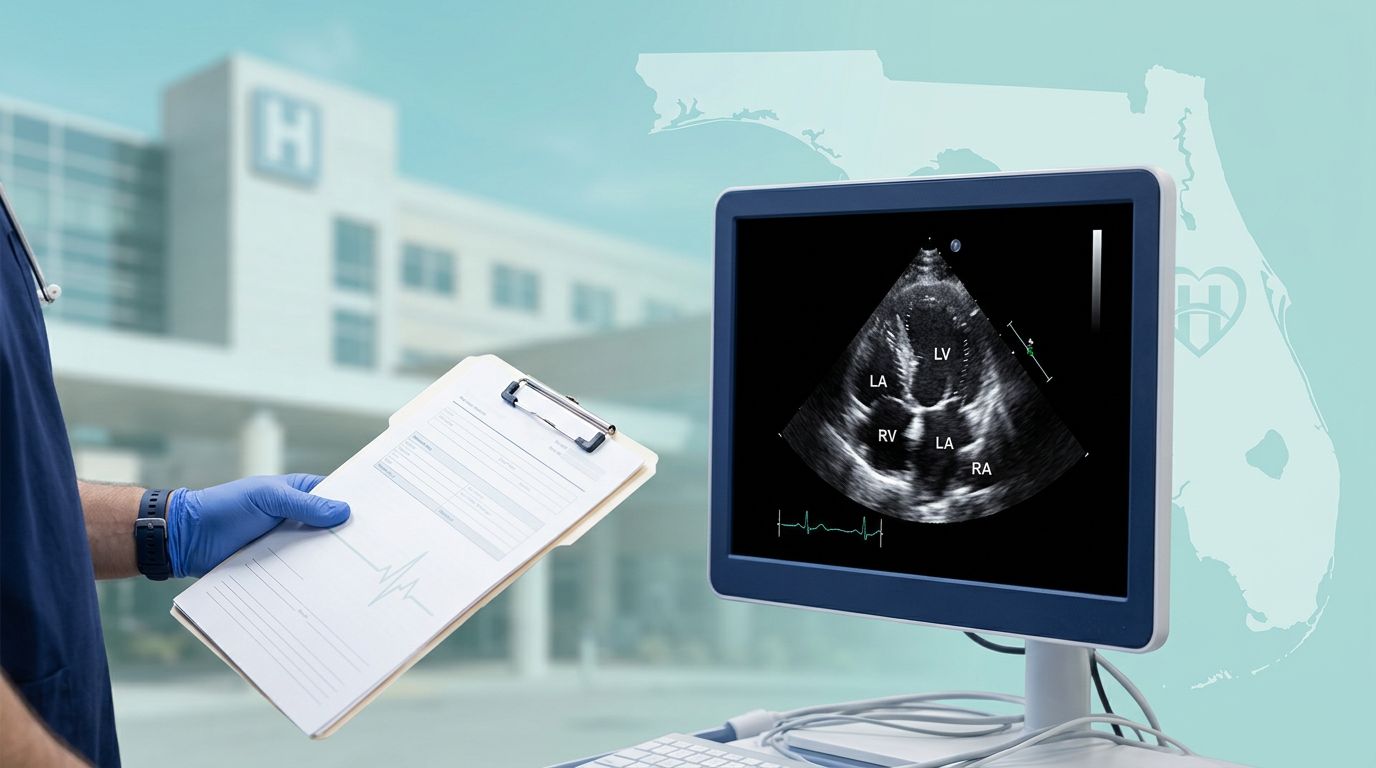
A heart failure diagnosis can sound clear on paper, but Social Security looks at something sharper: proof. For Florida SSDI heart failure claims in 2026, the strongest files usually come down to two things, the echocardiogram and the hospital record trail.
That matters because symptoms can come and go. One day you can breathe fine in a chair, then the next you need the ER. SSA wants to see how often that happens, how severe it is, and how it limits work.
If you are building a claim in Florida, the medical record details matter as much as the diagnosis itself. The next step is knowing what those records must show.
Why an echocardiogram can make or break a claim
An echo is one of the most important tests in a heart failure case. It shows how well the heart pumps, how the chambers look, and whether the muscle is weak or stiff.
That is why a good echo report can carry real weight. It gives SSA numbers, not guesses. It also helps separate systolic heart failure from diastolic heart failure, which can matter a lot under the rules.
The Social Security listing for chronic heart failure is in the official SSA cardiovascular disability criteria. In plain English, SSA looks for objective findings, plus serious limits on daily function.
For systolic heart failure, the records may show an ejection fraction of 30% or less. They may also show a large left ventricle. For diastolic heart failure, the focus shifts to chamber size, wall thickness, and a normal or near-normal ejection fraction during a stable period.
For heart failure claims, the echo is the snapshot, and the hospital chart is the timeline.
An echo by itself is not the whole case, though. If the report is old, incomplete, or taken during a better period, SSA may give it less weight. That is why the timing of the test matters just as much as the result.
What SSA looks for beyond the diagnosis
A diagnosis label does not win a disability claim on its own. SSA wants to know whether your heart failure meets Listing 4.02 or keeps you from full-time work for at least 12 months.
That usually means one of three paths. First, the medical findings may meet the listing directly. Second, you may have such severe symptoms that even light exertion is unsafe. Third, your condition may keep you out of regular work even if the listing numbers are not met.
SSA also looks for evidence that matches your symptoms. The record should show shortness of breath, swelling, fatigue, chest pain, dizziness, or the need to rest often. If the notes never mention those problems, the claim gets weaker.
For a plain-language view of how diagnosis and proof affect approval odds, see how diagnosis affects SSDI approval odds. A heart failure diagnosis can be serious, yet still fall short if the file does not show enough functional loss.
Systolic heart failure records
Systolic cases usually turn on how well the heart pumps. The echo is key here, because it may show a low ejection fraction or a dilated left ventricle.
Hospital notes help too. They can show fluid overload, IV diuretics, oxygen use, or repeated admissions for decompensation. Those details help tell the story of a heart that cannot keep up.
Diastolic heart failure records
Diastolic heart failure can be harder to prove because the pumping number may look normal. That is why wall thickness, chamber size, and symptom history matter so much.
Doctors’ notes should tie the test results to real limits. If you can only walk a short distance, need frequent rest, or cannot manage stairs, the chart should say so clearly.
Functional limits still matter
Even when the numbers are close, SSA still cares about what you can do. Can you stand, walk, lift, and finish tasks without needing long breaks? Can you make it through a full workday?
If the answer is no, the file should explain why. Hospital records, cardiology notes, and follow-up visits are often the best place to show that pattern.
The hospital records that help most
Hospital records are more than a stack of discharge papers. They show what happened when your heart failure flared, how severe it was, and how quickly symptoms returned.
A clean file usually includes records from each major episode. The best ones are easy to read, dated, and tied to the same medical story.
Here is a quick way to think about the most useful records:
| Record type | What it can show | Common problem |
|---|---|---|
| Echocardiogram | Ejection fraction, chamber size, wall thickness | Missing date or old results |
| ER notes | Sudden shortness of breath, swelling, chest pain | Brief notes with little detail |
| Admission and discharge summaries | Severity of the episode, treatment, response to care | No clear follow-up plan |
| Cardiology office notes | Ongoing symptoms, medication changes, work limits | Copy-and-paste notes with no function details |
| Medication lists | Diuretics, beta blockers, side effects, dose changes | Missing or outdated prescriptions |
The strongest hospital records do one more thing, they connect symptoms to treatment. If you were given IV medication, told to return fast, or admitted more than once, that history matters.
It also helps when the records line up. An ER note, then a cardiology visit, then another admission creates a timeline SSA can follow. Without that thread, the file can look scattered.
Gaps that slow down Florida SSDI heart failure claims
Even a strong diagnosis can stall if the file has holes. In heart failure claims, those gaps are often the reason people lose or wait too long.
Common weak spots include:
- Missing echo reports: A doctor may mention the result, but SSA wants the actual test.
- Long breaks in treatment: If you stop seeing a cardiologist for months, the claim may look less serious.
- Vague symptom notes: “Doing okay” tells SSA very little about work limits.
- No hospital follow-up: Repeated admissions matter more when the records show what happened after each stay.
- Mixed compliance records: If the chart says you skipped meds, SSA may ask why symptoms stayed uncontrolled.
None of that means a claim is lost. It does mean the record needs context. Sometimes people miss visits because they could not drive, could not afford care, or were in the hospital. Those facts should be in the file too.
Florida hospitals and specialist groups also keep records in different systems. That can leave gaps unless someone gathers everything early. A claim built on one cardiology note and a few discharge pages often feels thin.
Building a cleaner claim in 2026
A Florida SSDI heart failure claim is stronger when the story is consistent from start to finish. The diagnosis, the tests, the hospital stays, and the work limits should all point in the same direction.
Start with the echo. Then collect hospital discharge summaries, ER notes, cardiology visits, and medication history. If you had three or more heart failure episodes in 12 months, make sure each one is documented in the record.
It also helps to explain what changed at work. Did you miss shifts because of swelling or fatigue? Did you need to sit down often, leave early, or stop lifting? Those details matter because SSA cares about real work ability, not just lab numbers.
A clean claim also stays within SSA’s other rules. You still need enough work credits for SSDI, and your earnings must stay below the current substantial gainful activity limit. If your case is close, those non-medical rules can decide the result.
For many people, the right file is not the one with the most pages. It is the one with the clearest proof.
Conclusion
For heart failure claims in Florida, the echo and the hospital chart do the heavy lifting. Together, they show how the heart performs, how often symptoms flare, and whether work is still possible.
That is the real test in 2026. A diagnosis matters, but medical proof and a clear treatment history matter more. If your records are incomplete, the claim can look weaker than your condition really is.
The strongest files tell one simple story, the heart is not holding up, and the record proves it.