
VA Plantar Fasciitis Ratings in 2026: What Supports 10% and 30%
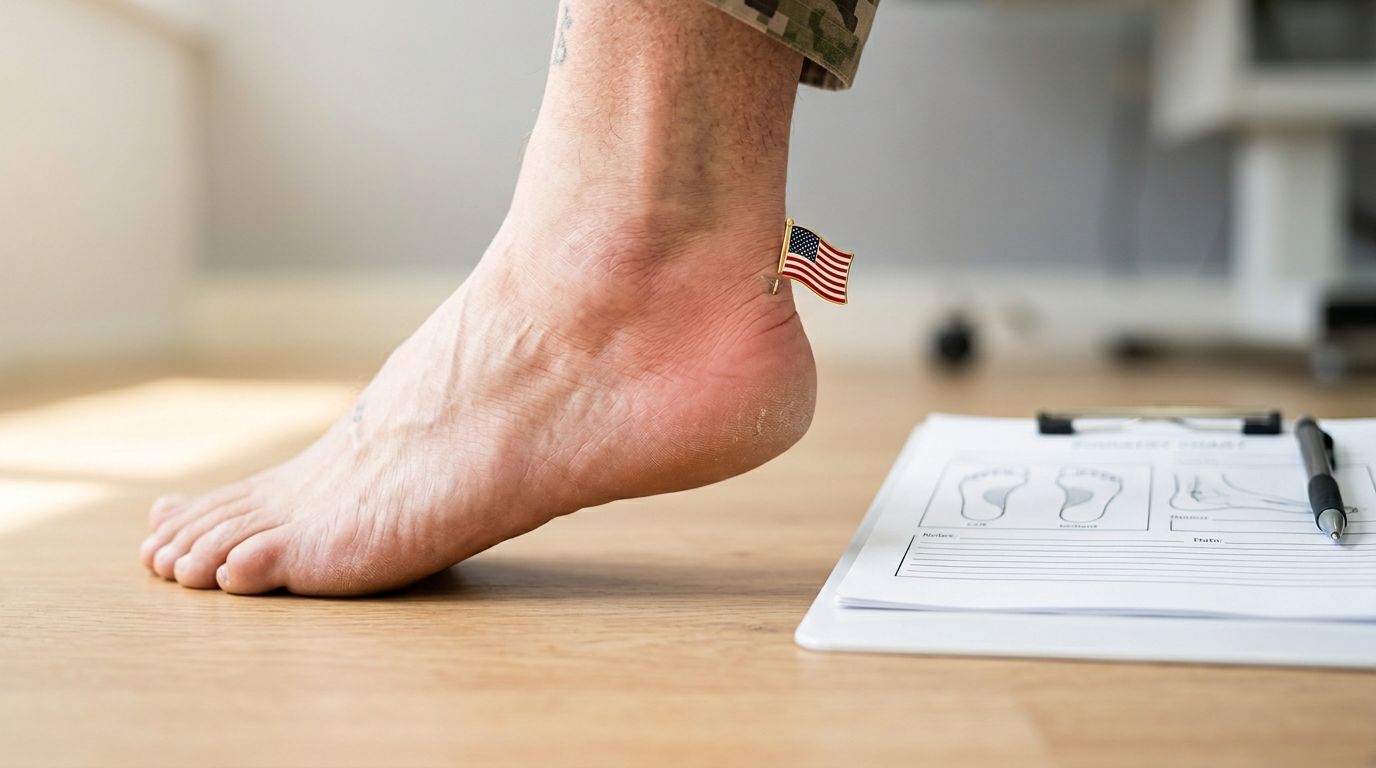
Heel pain can turn a short walk into a long day. For many veterans, the harder part is proving how that pain fits the VA’s rules.
In 2026, the VA plantar fasciitis rating still turns on a narrow set of facts. A file that shows basic symptoms may support 10%, while a stronger record can support 30% when both feet stay painful despite treatment. If you’re weighing an appeal or increase, the details in your podiatry records matter more than broad complaints of foot pain.
How the VA plantar fasciitis rating works in 2026
As of April 2026, the VA still rates plantar fasciitis under Diagnostic Code 5269. The current framework came from the Federal Register correction to the 2021 musculoskeletal rating schedule, and there have been no announced 2026 changes to that rating code.
This quick chart shows the two rating levels that cause the most confusion:
| Rating | What usually must be shown |
|---|---|
| 10% | Plantar fasciitis in one or both feet that does not meet the stricter no-relief standard for 20% or 30% |
| 30% | Both feet are affected, and there is no relief from both non-surgical and surgical treatment, or surgery was recommended but you are not a surgical candidate |
For context, 20% applies when that same no-relief pattern affects only one foot. A 40% rating applies with actual loss of use of the foot.
That wording matters because many veterans assume pain alone should mean 30%. It doesn’t. The jump from 10% to 30% usually depends on bilateral involvement and documented treatment failure.
The picture can get murky when plantar fasciitis overlaps with flat feet, or pes planus. If your records mention both, compare them with what qualifies for higher VA pes planus ratings. The VA should rate the symptoms under the code that best fits the evidence, while avoiding payment twice for the same limits.
What usually supports a 10% rating
A 10% rating often fits claims where the diagnosis is clear, the symptoms are real, but the record does not show the stronger facts needed for 20% or 30%. In plain terms, the VA sees plantar fasciitis, but not a condition that stayed resistant to both surgical and non-surgical care in the way the higher levels require.
Most 10% files include heel pain with standing, walking, or taking the first steps in the morning. Podiatry notes may show tenderness along the plantar fascia. The veteran may use inserts, stretching, night splints, medication, or physical therapy, and the records may show at least some relief, or at least no proof that treatment failed across the board.
If this is your first claim, the VA still needs service connection before it reaches the rating question. That means a current diagnosis, an in-service event or stress on the feet, and a medical link between service and the condition. After that, the percentage depends on severity.
Useful proof for 10% often includes recent podiatry notes, a C&P exam, prescription orthotics, and a short statement about walking and standing limits. Florida veterans who treat outside the VA should gather private records early, because gaps in treatment can make the condition look smaller than it is. This guide on medical records for VA disability proof can help you tighten that part of the file.
A weak record usually has one problem: it says “foot pain” but never explains diagnosis, treatment, or response.
What can move a plantar fasciitis claim to 30%
A 30% rating is a different case. The VA is looking for plantar fasciitis in both feet that has not improved with both non-surgical and surgical treatment. If surgery was recommended but you are not a candidate, that can still support the higher level.
That means the strongest files usually show a long treatment trail. Orthotics, custom inserts, night splints, stretching, steroid injections, medication, physical therapy, and follow-up visits all help tell the story. Then the record needs to show that these steps did not solve the problem. If a surgeon evaluated you and decided surgery was not an option, that note can matter a lot.
Pain alone rarely moves a case from 10% to 30%. The record has to show why treatment failed in both feet.
The best evidence often comes from a podiatrist who writes clearly. Notes should identify both feet, describe ongoing tenderness and functional loss, and address whether orthopedic devices or other care gave relief. Work limits also help. If standing, walking, climbing, or carrying became hard, the file should say so.
Board decisions are not binding, but they can show how closely these facts are read. In a 2025 Board decision awarding a higher bilateral foot rating, lack of improvement from orthopedic shoes was a key fact. That doesn’t guarantee the same outcome in another case. Still, it shows why vague treatment notes often leave money on the table.
Why claims stay stuck at 10%
Many low ratings come from thin exams. A C&P report may confirm plantar fasciitis, then skip the harder question of whether both feet failed both kinds of treatment. When that happens, the VA often falls back to 10%.
Mixed diagnoses cause trouble too. Plantar fasciitis, pes planus, calcaneal spurs, and Achilles problems can appear in the same chart. If the examiner blends them together, the decision may miss the strongest facts. That’s one reason it helps to read the VA’s explanation line by line. This guide on reading VA rating decision letters shows where to find the reason for the percentage and the evidence the VA relied on.
If the decision ignored private podiatry care, failed to discuss surgery, or understated bilateral symptoms, the problem may be proof, not the condition itself.
Every step hurts when plantar fasciitis flares. Still, the VA doesn’t rate pain by sympathy. It rates what the file proves.
For a 10% rating, the record usually shows a real diagnosis with symptoms that do not meet the higher no-relief standard. For a 30% rating, documented failure of treatment in both feet is often the turning point. When that detail is missing, the claim often stalls where it shouldn’t.