
VA Shoulder Ratings in 2026: Motion Loss and Instability Proof
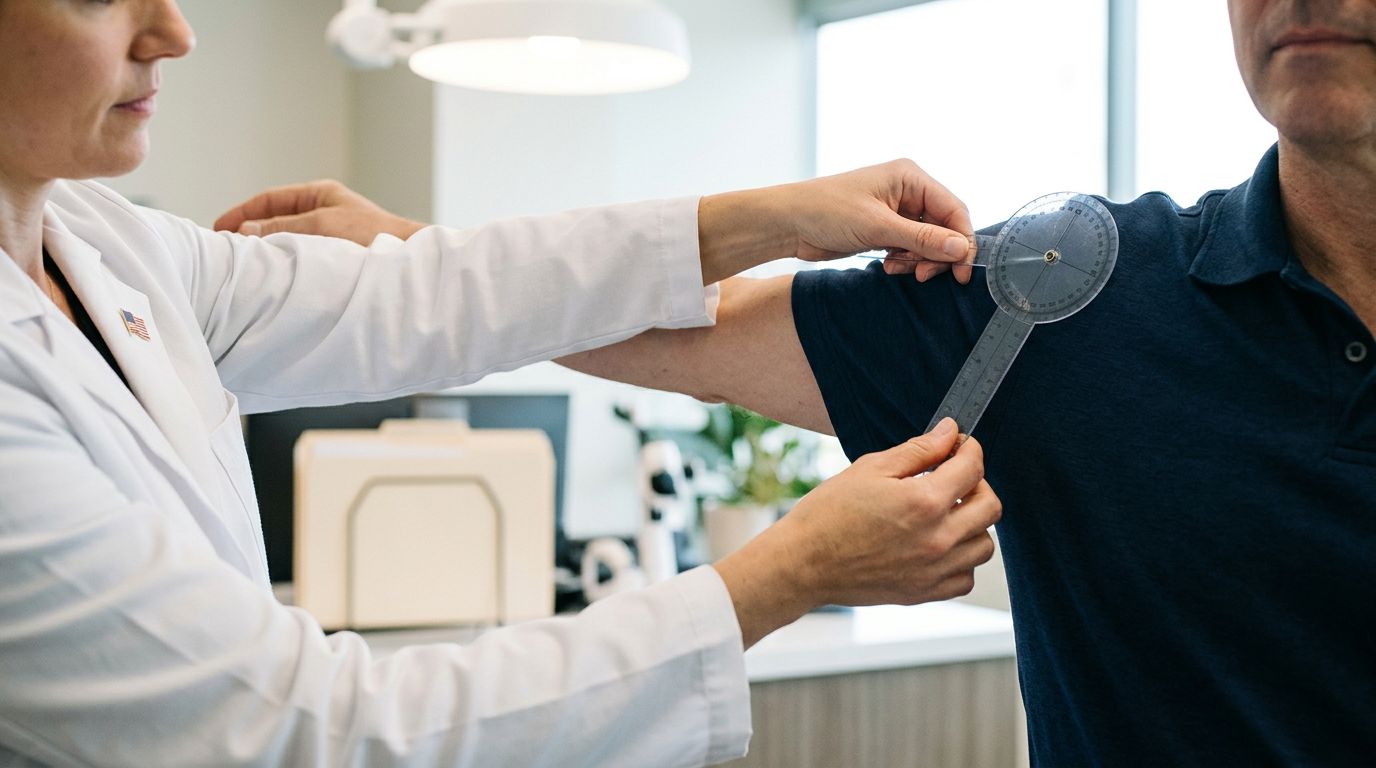
A shoulder claim can turn on a few inches of movement. If your arm stops short, slips out, or hurts every time you lift it, the VA wants proof, not guesswork.
That proof matters even more when the exam feels rushed. In 2026, the core rating rules for shoulder conditions are still built around measurements, instability, and medical records. A plain-English refresher on the system starts with VA disability ratings explained.
How motion loss drives shoulder ratings
The VA rates limited shoulder motion under Diagnostic Code 5201. Examiners measure how high you can raise the arm, usually with a goniometer. They look at flexion and abduction, then compare the result to the rating schedule in 38 CFR 4.71a.
The main thresholds are simple. If you can only raise your arm to shoulder level, that usually points to a 20% rating. If motion stops around the middle, the rating goes higher. If you can barely lift the arm away from your side, the rating climbs again.
Here is the basic motion-loss chart:
| Limitation | Major arm | Minor arm | What it means |
|---|---|---|---|
| To shoulder level, about 90° | 20% | 20% | The arm does not rise above shoulder height |
| Midway, about 45° | 30% | 20% | Lifting stops halfway up |
| To 25° from the side | 40% | 30% | Motion is very limited |
Pain matters too. Under 38 CFR 4.59, painful motion can support a compensable rating even when the range looks better on paper. That is why an exam should show where pain starts, not only where motion ends.
The rating is often tied to the worst useful motion, not the best move you can force once.
Dominance also matters. The VA usually pays more for the major, or dominant, arm because a loss there affects daily function more sharply.
Instability claims need more than pain complaints
Instability is rated under Diagnostic Code 5202, which covers dislocations and other humerus problems. This is where many shoulder claims get stronger. A shoulder that keeps popping out is not the same as a sore shoulder that still stays in place.
The VA looks for recurrent dislocations, guarding, malunion, or nonunion. Guarding means you protect the joint by avoiding certain motions because movement could trigger pain or another dislocation. That detail can matter even if your arm still moves fairly well during a brief exam.
The rating levels can look like this:
| Finding | Major arm | Minor arm | What VA looks for |
|---|---|---|---|
| Flail shoulder | 80% | 70% | Severe loss of humerus function |
| False joint | 60% | 50% | Nonunion or unstable bone healing |
| Frequent dislocations or guarding | 30% | 20% | Repeated slips or strong avoidance of movement |
| Infrequent episodes, guarding at shoulder level | 20% | 20% | Less frequent dislocations |
If you have ER visits, orthopedic notes, or imaging that shows a tear or instability, keep those records together. They help show the pattern. That matters when the VA reviews whether the shoulder is truly stable or only stable for a few minutes in an exam room.
Proof that makes a shoulder claim stronger
Good evidence matches the rating criteria. That is the same idea behind evidence for higher ratings. If you are asking for a higher shoulder rating, your file should show how the condition fits the next level up.
A strong claim usually includes more than one type of proof:
- Range-of-motion findings from VA or private exams, with the point where pain begins.
- Treatment notes that mention dislocations, catching, weakness, or reduced use.
- Imaging results, such as X-rays, MRIs, or arthrograms, when they show joint damage.
- Statements from family, coworkers, or fellow service members who have seen the shoulder fail in daily life.
- A symptom log that records flare-ups, missed work, and tasks you can no longer do.
Daily-life details help. For example, note if you cannot reach a shelf, put on a jacket without help, or sleep on one side. Those facts connect medical findings to real function.
The best records tell one consistent story. The worst files say one thing in the clinic and another at home. A single pain note is not enough when the rating turns on motion loss or repeated dislocation.
What rating percentage means for compensation
A shoulder rating is not only a number. It affects monthly pay and sometimes the path to a higher combined rating. For current payment examples, 2026 VA pay rates show how each percentage changes compensation.
The difference between major and minor arm ratings can be meaningful. A dominant-arm injury can push the award higher, especially when motion loss and instability both appear in the record. Even so, the VA will not pay twice for the exact same symptom. That is why the code used in the decision matters.
Some veterans also have more than one shoulder issue. A rotator cuff tear, instability, and limited motion may all appear in the same file. The VA still has to avoid “pyramiding,” which means the same pain or loss of use should not be counted twice. Clear records help the rater sort that out.
If your shoulder claim is already approved, the same evidence can support an increase later. If the condition worsens, the record should show when it changed and how far the arm can move now. That is the part the VA can rate.
Conclusion
VA shoulder ratings in 2026 still come down to two things, motion loss and instability proof. The VA wants measurements, not broad complaints, and it gives real weight to records that show how the shoulder behaves over time.
If your arm stops at shoulder level, gives out during use, or dislocates without warning, the file should say so in plain terms. The more clearly the evidence matches the rating criteria, the stronger the claim will be.