
VA Sleep Apnea Secondary to PTSD: Nexus Letters That Help in 2026
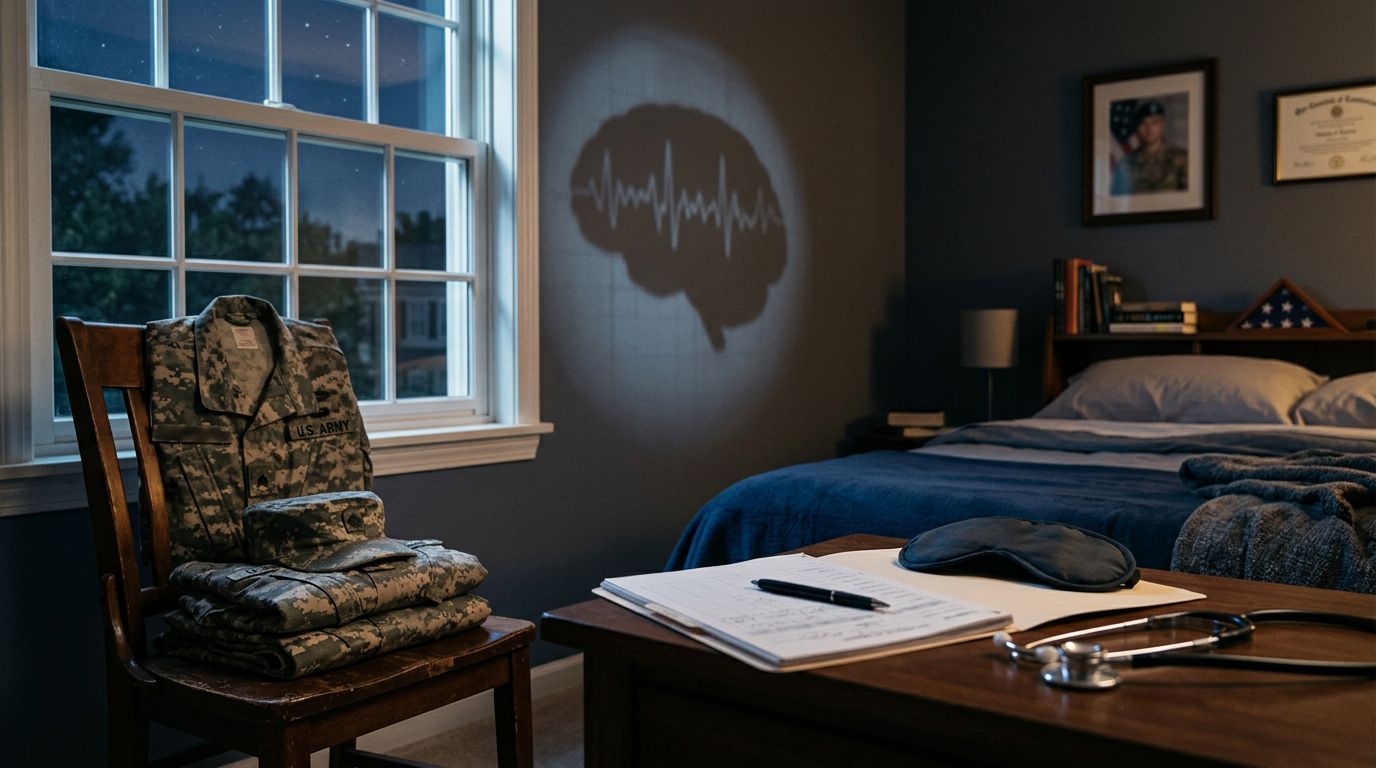
A sleep apnea claim can stall when the VA cannot see the bridge between your PTSD and your diagnosis. A scan of your records may show both conditions, but that alone does not win the case.
For va sleep apnea ptsd claims, the medical opinion often carries the most weight. As of May 2026, the current rating rules still apply, and the strongest files still rely on a clear diagnosis, a service-connected PTSD condition, and a nexus letter that explains the link in plain medical terms.
Why this claim still matters in 2026
Sleep apnea is one of the more common secondary claims veterans file after a PTSD grant. That is because PTSD can affect sleep in several ways. Nightmares, hypervigilance, poor sleep habits, medication changes, and weight gain can all show up in the medical record.
The VA recognizes secondary service connection when one service-connected condition causes or worsens another disability. A veteran does not need to prove every step alone. Instead, the claim needs a sound medical explanation that ties the pieces together.
A recent Board example shows how that works in practice. In a March 2025 Board decision, the VA granted sleep apnea as secondary to PTSD and tinnitus after finding the medical evidence persuasive. That decision is not a template for every case, but it shows the kind of record that can win.
As of May 2026, there has been discussion about possible changes to how the VA rates sleep apnea, but those changes have not replaced the current rules. So the focus still stays on proof. A diagnosis matters. A service-connected PTSD rating matters. The medical link matters most.
Think of the claim as a chain. If one link is weak, the whole claim can wobble.
What the VA needs to see in a secondary claim
The VA does not approve a secondary claim because the conditions seem related. It wants the relationship spelled out. That means the file should answer three basic questions.
First, do you have a current sleep apnea diagnosis? Usually that comes from a sleep study. Without that test, the claim can be hard to support.
Second, is PTSD already service connected? The VA needs a primary disability before it can grant a secondary one.
Third, does a medical professional explain that PTSD caused the apnea or made it worse? That is the heart of the case.
A strong file also explains whether the theory is causation or aggravation.
Causation and aggravation are not the same
Causation means PTSD led to sleep apnea. Aggravation means PTSD did not start the condition, but it made the condition worse over time.
That difference matters. A veteran may have had some breathing problems before PTSD treatment, then later develop worse sleep after years of nightmares, medication use, or weight changes. The VA can still grant a secondary claim if the doctor explains how the service-connected condition increased the severity.
The basic structure is the same one used in proving service connection for VA disability claims. The evidence must connect the current diagnosis, the service-connected condition, and the medical opinion in one clean line.
If the claim leaves one of those pieces out, the VA may deny it even when the conditions seem related.
What a nexus letter should say
A nexus letter is not a personal statement from a patient. It is a medical opinion. That means the doctor should use the record, not guesswork, and should explain the reasoning in a way the VA can follow.
The best letters are short, direct, and specific. They identify the diagnosis, review the relevant records, and give an opinion on causation or aggravation using the correct standard. The letter should also explain why the doctor reached that opinion, not just state the conclusion.
The firm’s VA nexus letter requirements page breaks down the pieces that matter most. In plain terms, the letter should include these points:
- The doctor states that the veteran has a sleep apnea diagnosis supported by testing.
- The doctor confirms review of the PTSD history, sleep records, and other relevant medical notes.
- The doctor gives an opinion on whether PTSD caused the sleep apnea or worsened it.
- The doctor uses clear probability language, usually “at least as likely as not.”
- The doctor explains the medical reasons for the opinion in everyday language.
A clean letter often looks better in side-by-side form.
| Strong nexus letter | Weak nexus letter |
|---|---|
| Reviews the chart and sleep study | Mentions the veteran without reviewing records |
| Says “at least as likely as not” | Says “could be related” or “might be related” |
| Explains the path from PTSD to apnea | Gives a conclusion with no medical reasoning |
| Addresses aggravation when needed | Ignores worsening and focuses only on cause |
| Identifies the provider’s credentials | Leaves the author’s background unclear |
The main point is simple. The VA wants a medical opinion, not a guess. A letter that sounds cautious or vague often gives the VA a reason to deny the claim.
A letter that says “maybe related” usually helps the VA, not the veteran.
A useful letter can also describe the chain of events. For example, PTSD may cause chronic sleep disruption, which may affect weight, medication use, or daytime fatigue. A doctor does not need to write a novel. The reasoning just needs to be clear and medically sound.
Evidence that makes the nexus letter stronger
A nexus letter works best when it matches the rest of the file. If the doctor says PTSD has affected sleep for years, the records should show that pattern. If the doctor relies on medication side effects, the medication history should be in the chart.
That is where a claim becomes stronger, because the letter and the records tell the same story. The VA tends to notice when they do not.
The best supporting evidence often includes:
- A sleep study showing a diagnosis of obstructive sleep apnea and, when available, its severity.
- PTSD treatment notes showing nightmares, insomnia, panic, hypervigilance, or chronic sleep loss.
- Medication records that show changes in weight, fatigue, or sleep quality.
- CPAP compliance records if you already use treatment.
- Lay statements from a spouse, partner, or family member who has seen snoring, gasping, or stopped breathing during sleep.
- Your own statement describing when the sleep problems began and how PTSD affects them.
- Weight history or BMI changes if a doctor uses weight gain as part of the medical explanation.
A veteran does not need every item on the list, but more support usually helps. One family statement may back up what a sleep study cannot show. One treatment note may confirm a long pattern of broken sleep. Together, they make the letter easier to trust.
This is also where DBQ and nexus letters can work side by side. A DBQ shows what the condition looks like now. The nexus letter explains why the VA should connect it to service-connected PTSD.
Common mistakes that sink these claims
Many denials come from paper problems, not from a lack of symptoms. The VA may believe the veteran is tired, but still deny the claim because the file never built a clear medical link.
The most common mistakes are easy to spot once you know what to look for.
- No sleep study. The VA usually needs testing to confirm the diagnosis.
- A diagnosis without a link. Having PTSD and sleep apnea in the same file is not enough.
- Vague language. Terms like “possible” or “might” can weaken the opinion.
- No aggravation analysis. If PTSD worsened the apnea, the letter should say so.
- A generic template. Letters that read like a form letter often get less weight.
- Missing record review. If the provider did not review the chart, the VA may question the opinion.
The hardest part for many veterans is that the medical issue and the legal issue are not the same. A doctor may believe PTSD is connected to sleep problems, but the letter still has to say that in VA-friendly language. The opinion should not leave the rater guessing.
A weak letter can also clash with treatment notes. If the record says one thing and the letter says another, the VA usually follows the inconsistency. That is why it helps to clean up the file before filing, not after the denial.
When a claim has already been denied, the reason letter matters. It shows whether the problem was the diagnosis, the nexus, or the way the evidence was presented. Fix the gap, then file again with a stronger record.
How Florida veterans can build a cleaner record
Florida veterans often see different providers for different parts of the same problem. A sleep study may come from one clinic, PTSD treatment from another, and the CPAP records from a third. That can make the file messy fast.
A cleaner claim tells one story from start to finish. It starts with the diagnosis, then moves through PTSD treatment, then lands on a medical opinion that explains the connection. When those records line up, the VA has less room to say the evidence is unclear.
That is why the details matter. A doctor should not only say the veteran has sleep apnea. The letter should explain whether PTSD symptoms, medication effects, or long-term sleep disruption caused or worsened the condition. If the doctor uses weight gain as part of the theory, the chart should support that too.
For veterans who are still piecing together the claim, the best approach is to review the record before filing. Ask whether the sleep study is in the file. Ask whether the PTSD records show long-term sleep problems. Ask whether the opinion uses the right standard and addresses aggravation.
If the record still has gaps, the first fix is often the evidence, not the appeal. The VA can only decide from what is in front of it.
Conclusion
A strong va sleep apnea ptsd claim still comes down to three things, a current sleep apnea diagnosis, a service-connected PTSD rating, and a medical opinion that explains the link. The best nexus letters do more than say the conditions are related. They show how and why.
That is why a careful file matters. When the records, the sleep study, and the nexus letter all point in the same direction, the claim is much easier for the VA to understand.
The cleaner the paper trail, the less room the VA has to miss the link.