
Florida Workers’ Comp MRI Denials and What to Do Next
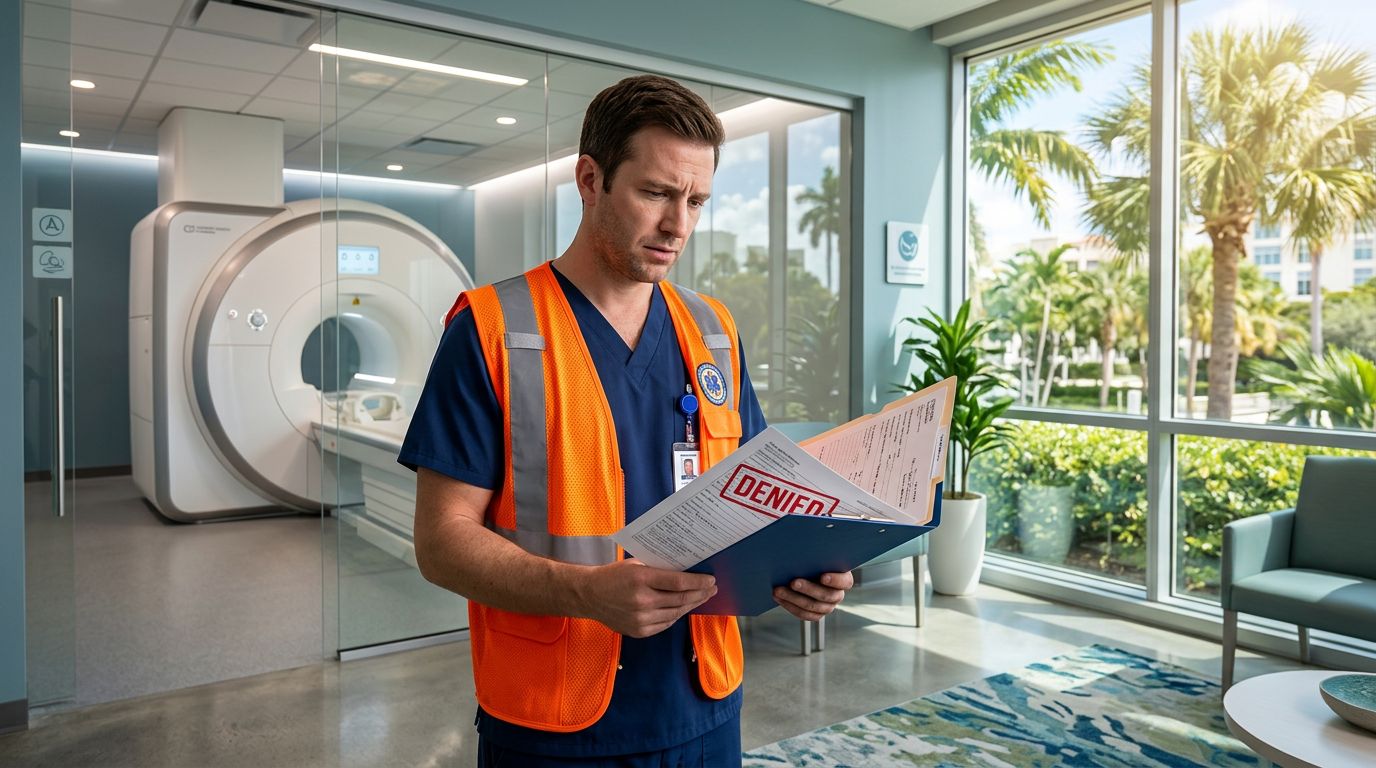
A Florida workers’ comp MRI denial can stop treatment when you need answers most. The problem is not always the scan itself. Often, the insurer says the request lacks enough proof, comes too early, or does not connect clearly to the work injury.
What happens next depends on the reason in the denial letter. That letter is the roadmap, and it tells you where the fight starts.
Why MRI requests get denied in Florida workers’ comp
An MRI is expensive, so carriers look hard at the request. They want proof that the scan is tied to the job injury and that it will help guide treatment. If the doctor note is thin, vague, or missing key details, the insurer has room to say no.
Florida’s workers’ compensation law is in Chapter 440 of the Florida Statutes. For denied benefits, section 440.192 says the carrier must explain its reason.
Common denial reasons usually fall into a few buckets:
| Denial reason | What it often means | Best next move |
|---|---|---|
| Not medically necessary | The carrier thinks the notes do not justify the scan | Ask the doctor to explain why the MRI is needed now |
| Not work-related | The insurer says the injury came from something else | Gather accident records and medical support |
| Missing records | The request did not include enough detail | Resubmit with better notes and test history |
| Preexisting condition | The carrier blames an old problem | Show how the work event worsened the condition |
A denial letter is not the end of the claim. It is the insurer’s reason in writing, and that reason can be challenged.
Most MRI disputes turn on medical proof. If the records say little more than “pain continues,” that may not be enough. The stronger file explains what treatment already failed, what symptoms remain, and why the MRI will change the next step.
What to do the same day the denial arrives
Start with the letter itself. Read every line, because the wording matters. If the denial says “not medically necessary,” your response should focus on medical need. If it says “not related to work,” the response should focus on causation.
Then contact the authorized doctor right away. Ask what they requested, what the insurer rejected, and whether the request can be rewritten with more detail. If the problem starts with the doctor instead of the carrier, a separate look at doctor denial of care next steps may be useful.
A practical response often follows this pattern:
- Get the denial in writing. You need the exact reason, not a summary from a phone call.
- Call the authorized doctor. Ask for a clearer note that ties the MRI to the work injury.
- Gather the records. Save office notes, prior treatment plans, test results, and any accident report.
- Keep the paper trail. Write down dates, names, and every follow-up call.
If your doctor supports the MRI, the next request should say more than “patient still has pain.” It should explain why the pain matters, what injuries the scan may show, and why other treatment has not solved the problem. That kind of detail gives the carrier less room to hide behind a generic denial.
For treatment disputes, Florida workers’ comp doctor rules help explain why the authorized provider matters so much in these claims.
When the carrier blames a prior injury
Some MRI denials are really preexisting-condition denials in disguise. The carrier may say the scan is for an old back problem, a prior shoulder issue, or a condition that started before the accident. That does not automatically end the claim.
The key question is whether the work accident aggravated, accelerated, or worsened the condition. If the answer is yes, the medical record needs to show it clearly. New symptoms, changed pain levels, and objective findings can all matter.
That is why medical proof against preexisting denial can make a real difference. The insurer needs more than a guess. It needs a reasoned medical basis for saying the MRI has nothing to do with work.
Look for these points in the file:
- The injury was reported soon after the accident.
- The symptoms changed after the work event.
- Earlier treatment did not solve the problem.
- The doctor can explain why the MRI is tied to the current need for care.
When those facts line up, the denial starts to look weaker. If they do not, the insurer will keep leaning on the old records. In that situation, the new imaging request should be rewritten around the change in condition, not the old diagnosis.
Deadlines, petitions, and hearings can move the case
If the carrier will not reverse course, the dispute may need to move into the formal system. Florida workers’ compensation uses a petition process, and that process is what pushes many denied treatment issues toward mediation or hearing.
A workers’ comp petition after denial is often the next step when informal requests fail. It puts the issue on the record and forces the carrier to respond.
The denial letter matters because it sets the path, and waiting too long can narrow your options.
The timing rules matter too. If the carrier paid for treatment or authorized care before denying later, the Florida workers’ comp 120-day rule may come into play. That rule can affect whether the carrier gets to change its position after it has already accepted parts of the claim.
The formal dispute process is governed by the Florida Rules of Workers’ Compensation Procedure. Those rules cover how cases move before a Judge of Compensation Claims, including the steps that come before a hearing.
A denied MRI does not always require a full courtroom fight. Sometimes, a stronger request and better records resolve it first. Still, once the insurer digs in, the petition process gives you a structured way to force a decision instead of waiting in the dark.
The best cases usually share the same pattern. They connect the scan to the injury, answer the insurer’s stated reason, and keep the timeline tight.
Conclusion
A Florida workers’ comp MRI denial is frustrating, but it is often a proof problem rather than the end of care. The denial letter tells you what the carrier is missing, and the medical record tells you whether that gap can be fixed.
When the scan is tied to the injury, the next move is to build that link clearly and quickly. If the insurer still refuses, the formal workers’ compensation process gives you a way to press the issue and keep the case moving.