
Florida Workers’ Comp for Required Training Injuries
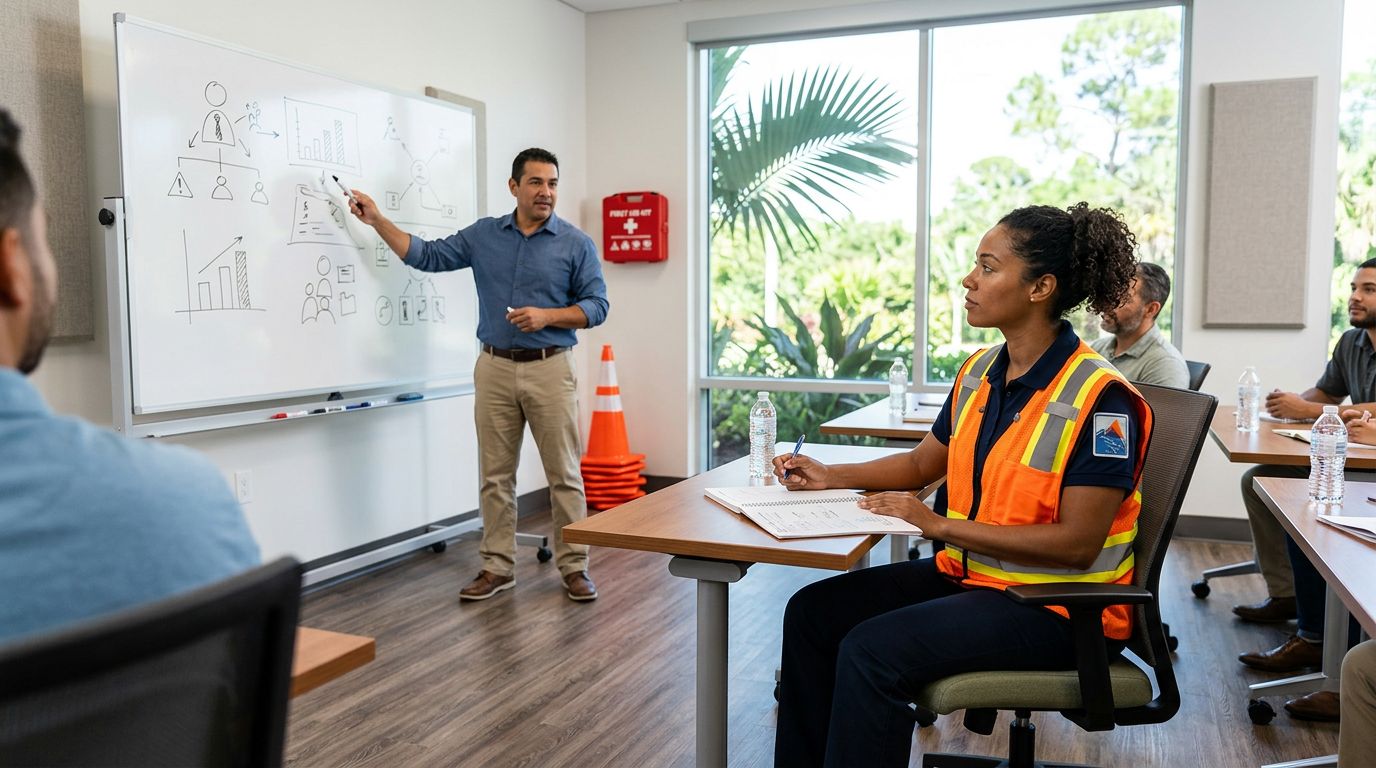
A workplace injury does not stop being a workplace injury because it happened in a training room. If your employer required you to be there, Florida workers’ comp may still apply, even when the injury happened during orientation, a safety class, or hands-on instruction.
That matters because a Florida workers’ comp training injury can turn into a fast dispute if the carrier says the class was optional, off the clock, or not part of your job. The facts around the training, the report, and the medical care often decide the claim.
The first question is simple, but it carries a lot of weight, was the training really part of your work?
When a required training injury is covered by Florida workers’ comp
Florida workers’ comp usually looks at whether the training was tied to your job duties and required by the employer. A mandatory class, a certification session, a safety demo, or hands-on instruction can all create a work connection. Even if you were not doing your normal tasks, the training itself may still count as part of employment.
Here is a quick way to think about the issue.
| Training situation | Coverage issue | Helpful proof |
|---|---|---|
| Mandatory safety class at work | Strong work connection | Schedule, sign-in sheet, supervisor message |
| Off-site certification the employer required | Often covered if attendance was required | Email instructions, registration, travel details |
| Online training assigned by HR | Can still be work-related | Login records, screenshots, assignment notice |
| Optional seminar you chose yourself | Harder to prove work link | Proof that your employer required or approved it |
The more control the employer had over the training, the stronger the claim usually is. Attendance, timing, and purpose all matter. A fall in a warehouse drill, a back strain during lifting practice, or a hand injury during equipment training can all raise valid workers’ comp questions.
Still, the carrier may argue that the activity was personal, voluntary, or outside work hours. That is why details matter early. If the employer set the schedule, gave the instructions, or required the certification, keep that proof.
A training session can still count as work when the job required you to be there.
What to do in the first 24 hours after the injury
The first day after the injury often shapes the whole claim. Tell a supervisor, trainer, or HR contact as soon as you can. Then ask for a written report or incident form. If you need a simple path for the first day, the Florida workers’ compensation reporting checklist can help you stay organized.
Use the first 24 hours to gather facts, not guesses.
- Write down the date, time, and location of the training.
- List the names of witnesses, instructors, and supervisors.
- Save emails, texts, calendars, and sign-in sheets.
- Take photos of the area, equipment, or anything that caused the injury.
- Get medical care, and describe the injury the same way each time.
If the pain is severe, go to emergency care right away. Florida workers’ comp usually expects you to use authorized treatment for non-emergency care, but emergencies are handled differently. Either way, keep every record.
A clean report on day one can save weeks of arguing later.
The strongest claims usually have the same story in every place, the report, the medical chart, and the witness statements. If those records clash, the insurer may use the mismatch against you.
Medical care and wage benefits after a training injury
Florida workers’ comp can pay for medical treatment when the injury is covered. That can include doctor visits, imaging, therapy, medication, and other approved care. It can also include wage benefits if your doctor takes you off work or limits your duties.
If you want a plain-English breakdown of payments, the Florida workers’ comp wage replacement explained page covers the main types of benefits. In short, temporary total disability can apply when you cannot work at all. Temporary partial disability can apply when you can work, but only with limits and lower pay.
Florida also pays based on wage rules and medical status. For 2026 injuries, the maximum weekly compensation rate is $1,358. Your actual payment depends on your wages, your restrictions, and how the insurer reads the medical records.
Do not rush back before the doctor clears you. That can hurt both your health and your claim. If the training injury leaves you with lasting restrictions after you reach maximum medical improvement, impairment benefits may also come into play.
A few things help protect wage benefits:
- Follow the doctor’s work restrictions.
- Keep pay stubs and missed-hour records.
- Tell the carrier if your light-duty hours change.
- Ask for copies of work-status notes.
The insurer will look closely at what you can do, not just what hurts. Clear medical notes make a big difference.
When the insurer says the training was not covered
Denials often turn on the same few arguments. The carrier may say the training was optional. It may say you were off duty. It may claim the injury came from a personal errand, horseplay, or a preexisting problem.
That does not end the claim, but it does mean the file needs support. Attendance records, training instructions, badge scans, and supervisor messages can all help show that the activity was required. Witness statements can also help, especially when the injury happened fast and nobody filled out a report right away.
Common pushback often looks like this:
- The employer says you chose the training on your own.
- The insurer says you had not started work yet.
- The carrier blames a prior back, knee, or shoulder issue.
- The claim file lacks a timely incident report.
Each defense can be answered with paperwork and witness proof. A strong medical note can also help if it matches the facts of the event. If the claim is denied, how to dispute a Florida workers’ comp denial explains the next step.
Do not assume a denial means the carrier is right. Often, the dispute is about proof, not about whether the injury matters.
When Florida training benefits matter after the injury
The phrase “training injury” can also point to a different kind of benefit. Florida law has a separate training and education program for workers who cannot go back to suitable work after a covered injury. That is not the same thing as getting hurt during required training, but the two issues are easy to mix up.
Under Florida workers’ comp, vocational training may be available after maximum medical improvement if you still cannot earn at least 80% of your compensation rate. The Department of Financial Services can screen the worker and approve training, education, or a vocational evaluation. The law can pay up to 26 weeks of extra training benefits, and a judge can approve a 26-week extension if needed.
That program is aimed at getting a worker back to earning wages in another job. It is not a reward, and it is not automatic. If a worker refuses recommended training, the extra training benefits and extra lost-wage payments can be lost.
This matters because a serious injury during required training can lead to a long recovery. When that happens, the claim may move from short-term medical care to long-term job planning. A good file keeps both parts straight.
Conclusion
If you were hurt during required training, do not assume workers’ comp is out of reach. The real issue is whether the training was part of your job and whether the injury was reported and documented the right way.
A covered training injury can lead to medical care, wage benefits, and, in some cases, retraining support later on. The claim gets stronger when the records line up, from the first report to the doctor’s notes.
When the carrier pushes back, the details matter more than the label on the class. A mandatory session can still be a workplace injury, and the paper trail often decides whether the claim holds up.