
Florida Telemedicine Malpractice Claims and Who May Be Liable
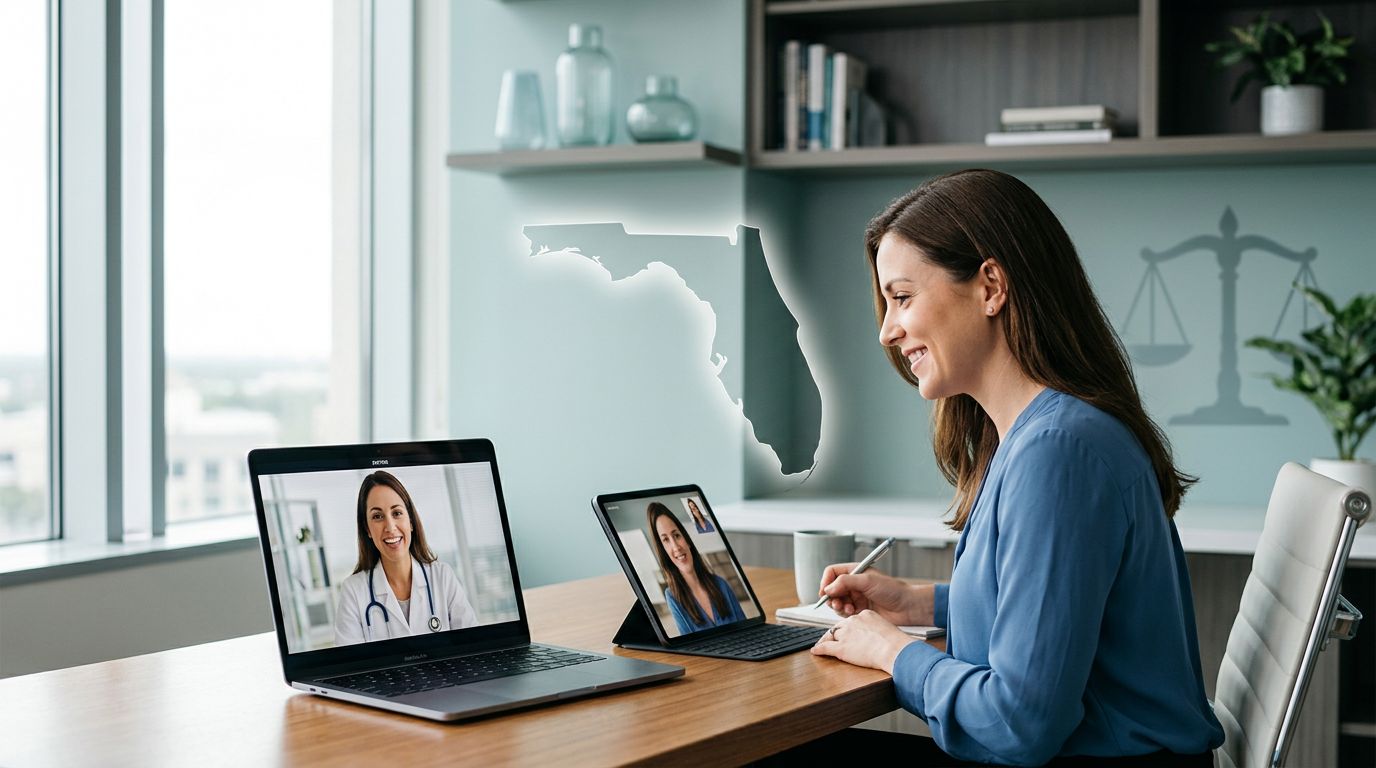
Telemedicine made care easier to reach, but it also created new ways for things to go wrong. A bad video visit can miss warning signs, delay treatment, or lead to the wrong prescription.
In Florida, those mistakes can support a telemedicine malpractice claim. The hard part is sorting out who may be responsible, because the answer is not always limited to the person on the screen.
How Florida law treats telemedicine malpractice
Florida treats telehealth as medical care, not a lesser version of it. As of May 2026, Florida Statute 456.47 still sets the rules for many telehealth providers, including registration and insurance coverage issues for out-of-state practitioners.
That matters because a provider using telemedicine still has to meet the same basic standard of care. If a reasonable provider would have ordered an in-person exam, sent the patient to the ER, or referred to a specialist, a video visit does not excuse the mistake.
Florida’s medical negligence rules also matter. Chapter 766 of the Florida Statutes controls many parts of a malpractice claim, including the presuit process and the need for a reasonable investigation. That is one reason records, messages, and timestamps become so important.
For a fuller look at the state rules that shape these cases, see Florida medical malpractice laws.
A video visit changes the setting. It does not lower the duty to act with reasonable care.
Common telehealth mistakes that become malpractice claims
Not every bad outcome is malpractice. The legal question is whether the provider acted the way a careful provider should have acted in the same situation.
Telemedicine claims often grow out of the same problems seen in office visits, but the remote format can make them easier to miss. A blurry camera, poor notes, or a rushed call can turn a small error into a serious injury.
Common examples include:
- Missed diagnosis after a provider overlooks symptoms that needed a closer exam.
- Wrong medication or dose when the provider fails to check allergies, interactions, or the patient’s full history.
- Failure to refer for in-person care when the symptoms point to a condition that cannot be managed safely by video.
- Delayed follow-up after abnormal test results, worsening pain, or a patient’s repeated messages.
- Documentation gaps that hide what the provider knew, when they knew it, and what advice they gave.
A telehealth case often starts with a simple question, did the provider stop short when the situation called for more? If the answer is yes, the case can grow fast.
If the harm followed a missed warning sign, recognizing medical negligence injuries can help show how the mistake unfolded.
Who may be liable after a telehealth injury
Liability in these cases depends on duty, control, and what each person or company actually did. The title on a badge matters less than the role in the care.
| Possible defendant | Why they may be liable |
|---|---|
| Treating doctor, nurse practitioner, or physician assistant | They made the clinical decision, missed a diagnosis, prescribed the wrong treatment, or failed to send the patient for in-person care. |
| Supervising physician or medical director | They may be responsible if the care required oversight and the supervision was weak or absent. |
| Clinic, medical group, or hospital | Their policies, staffing, charting systems, or employee conduct may have caused the harm. |
| Telehealth platform or vendor | They may face claims if they controlled scheduling, routing, records, or communication systems in a way that affected care. |
| Out-of-state provider | They can still owe duties to a Florida patient and may need proper registration and liability coverage under state law. |
The last category matters more than many people realize. Florida law allows some out-of-state providers to treat Florida patients by telehealth if they meet the statutory requirements. That does not shield them from malpractice claims if their care falls below the standard.
A remote visit can also create joint responsibility. For example, a doctor may make the medical call, while a clinic controls the records system. If both parts fail, both may be part of the claim.
The key point is simple. Liability follows the care, not the screen.
What evidence matters most in a telemedicine claim
Telehealth claims often rise or fall on documentation. A video call can feel informal, but the paper trail can be strong, and that trail usually decides what happened.
Start with the basics. Save the visit summary, portal messages, text messages, prescriptions, discharge instructions, and any notes you made about symptoms. Keep the date, time, and names of everyone involved.
Other useful records include:
- screenshots of the video visit or portal communication
- pharmacy records that show what was prescribed and filled
- test results, imaging reports, and referral orders
- ER or urgent care records that came after the telehealth visit
- bills and insurance paperwork that show the timing of care
Florida’s presuit process makes early evidence even more important. A claim often needs expert review, and that review depends on a clear record of what the provider knew and when they knew it.
For a closer look at the steps behind a malpractice case, see what to know before making a medical malpractice claim.
What to do after a bad telehealth visit
If a telemedicine visit leaves you worse off, move quickly. Some injuries get larger with every hour of delay.
First, get in-person care if your symptoms are serious. Chest pain, stroke symptoms, trouble breathing, heavy bleeding, severe infection signs, and sudden confusion need immediate attention.
Next, preserve everything. Do not delete messages, emails, call logs, or app notifications. Write down what was said during the visit, what symptoms you reported, and what advice you received.
Then compare the treatment to the result. If the provider ignored symptoms, refused to look deeper, or treated outside their scope, the case may involve more than a simple mistake.
Finally, speak with a Florida medical malpractice lawyer who handles injury claims. A lawyer can review whether the facts fit Florida’s presuit rules, identify each possible defendant, and request the records that matter most.
Conclusion
Telemedicine makes care easier to reach, but it does not lower the legal duty to give safe treatment. In Florida, the real questions are whether the provider acted reasonably, whether the injury was preventable, and who controlled the decision that caused harm.
That is why who may be liable is such an important part of every case. The treating provider, supervising doctor, clinic, or platform may all play a role.
If a telehealth visit in Florida left you with a missed diagnosis, a bad prescription, or delayed care, the record trail can tell the story. A careful review under Florida law is the next step.