
No Witnesses? Your Florida Work Injury Claim May Survive
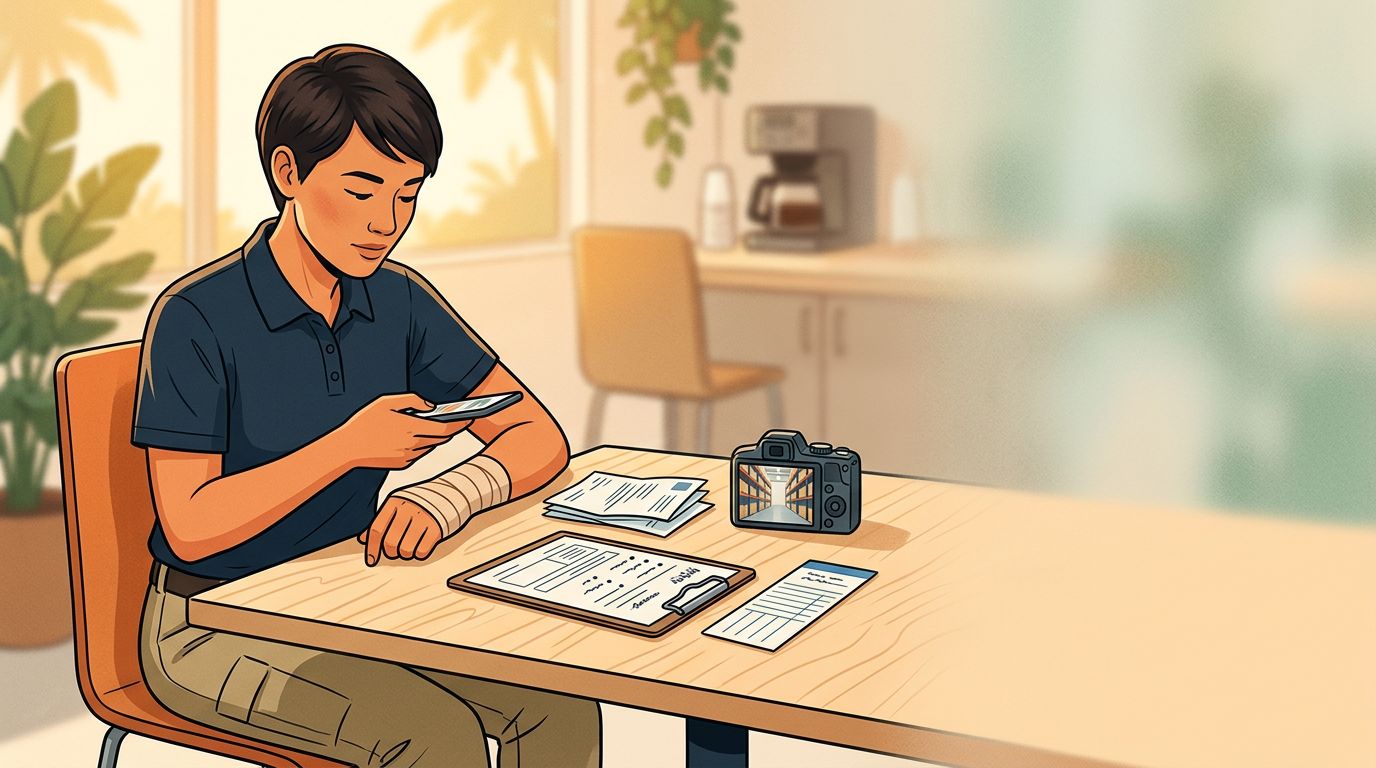
A coworker didn’t see your accident, but that doesn’t automatically defeat your claim. Florida workers’ compensation law does not require an eyewitness for every workplace injury.
You still must show that the injury arose out of and during your employment. A consistent report, medical records, work records, photographs, and surveillance footage can provide strong proof. The first steps you take often determine whether that evidence remains available.
Key Takeaways
- Florida law doesn’t require an eyewitness to support a workers’ compensation claim.
- Report the injury to your employer within 30 days, preferably in writing and as soon as possible.
- Medical records must connect your injury to a specific work accident or job duty.
- Save texts, emails, photos, time records, medical documents, and employer communications.
- If the insurer denies benefits, a Florida workers’ compensation attorney can pursue a Petition for Benefits.
An Eyewitness Is Helpful, But Not Required
An eyewitness can confirm what happened. However, Florida workers’ compensation cases rely on the full record, not one person’s testimony.
Under Florida Statutes section 440.09, you must prove that your injury arose out of and in the course of your employment. That means the injury must have a sufficient connection to your job, work duties, or workplace. You generally need to prove this claim by a preponderance of the evidence, meaning your evidence is more convincing than the evidence against you.
For example, you may suffer a back injury while lifting a box alone in a stockroom. No one sees your back twist. Still, your claim may have support if:
- You were clocked in and assigned to move inventory.
- You reported the injury to your supervisor shortly afterward.
- Your medical records describe the lifting incident and resulting pain.
- Your employer’s records show the task was part of your shift.
- A security camera captures you entering the stockroom and leaving in pain.
A coworker who didn’t see the accident may also confirm that you reported the injury, appeared distressed, or stopped working. That person isn’t an eyewitness to the injury itself, but the information may support your timeline.
The insurer may question an unwitnessed accident because it has fewer immediate sources to review. That creates a proof problem, not an automatic legal bar. Your written account and medical evidence must remain consistent from the first report through treatment and any hearing.
Florida workers’ compensation procedure also addresses situations where evidence develops during a dispute. A Florida workers’ compensation case summary discusses the treatment of rebuttal and impeachment witnesses in compensation proceedings.
Evidence That Can Support an Unwitnessed Injury
Without an eyewitness, every reliable record matters more. Begin by preserving evidence that establishes four points: when the event happened, where it happened, what you were doing, and how the injury affected you.
Your first report carries weight. Tell your supervisor what happened as soon as possible. Include the date, approximate time, location, job task, body parts affected, and when symptoms began. Send the report by email or text when appropriate, and save a copy. If you report the injury verbally, follow up with a written message confirming what you said.
Florida law generally requires notice to the employer within 30 days after the injury. Some circumstances involve a different deadline, including injuries that become recognizable as work-related later. Waiting creates an avoidable dispute about notice, so report the injury immediately.
Medical records can connect the injury to your job. Tell the authorized doctor exactly how the accident occurred. Describe the task, movement, object, location, and symptoms. Explain whether pain began immediately or increased over several hours.
Avoid guessing or changing details to make the event sound more dramatic. A doctor who records a clear, consistent history can provide important medical evidence. The records should identify the affected body parts and address whether the work accident caused or aggravated the condition.
Photographs can document both the injury and its cause. Take clear photographs of bruising, swelling, cuts, torn clothing, damaged equipment, unsafe flooring, broken tools, or other conditions related to the accident. Keep the original files when possible. Phone metadata may help establish when a photograph was taken, although you should not rely on metadata alone.
Work records can place you at the scene. Pay stubs, time-clock entries, schedules, route logs, task assignments, delivery records, and missed-shift records may support your account. A written light-duty assignment can also show that the employer recognized restrictions after the injury.
Employer records may contain key admissions. Ask for copies of the incident report and the First Report of Injury or Illness. Florida employers must report workplace injuries to their insurance carrier within the time required by law. The report may confirm the date, location, and basic description of the event.
Electronic communications often preserve the timeline. Save emails and text messages sent to supervisors, human resources staff, dispatchers, or coworkers. A message sent soon after an accident can show that you reported the injury before a legal dispute began.
Surveillance footage may be especially valuable. Cameras may cover hallways, entrances, loading areas, parking lots, or production floors. Ask your attorney to request preservation quickly because many systems automatically overwrite older footage.
Report the Injury and Protect Your Medical Evidence
Your first medical visit can affect the entire Florida workers compensation claim. Tell the provider that the injury happened at work, identify your employer, and describe the event without minimizing symptoms.
Workers’ compensation insurers generally control authorization for medical care after a workplace injury. Follow the carrier’s instructions about authorized physicians, referrals, diagnostic testing, and follow-up visits. If you need emergency treatment, seek care immediately and tell the hospital or urgent care staff that the injury is work-related.
Keep copies of medical records, work-status notes, diagnostic reports, prescriptions, bills, and appointment notices. Also record the names of medical providers and the dates of visits. If a doctor gives you restrictions, provide those restrictions to your employer and keep proof of delivery.
A personal injury journal can help you remember details and track changes. Write down pain levels, sleep problems, mobility limits, medication effects, missed work, and daily activities you can no longer perform. Keep entries factual. Don’t use the journal to exaggerate symptoms.
Your medical history must remain accurate. Tell the doctor about prior injuries and conditions when asked. A previous problem doesn’t automatically eliminate a claim, because Florida workers’ compensation may cover a work accident that aggravates a preexisting condition. However, the medical evidence must explain the relationship between the work event and your current condition.
An insurer may compare your first report, medical history, social media posts, and later testimony. Inconsistencies can create problems even when the accident occurred. Use the same basic facts each time, and correct genuine mistakes promptly.
You can also review the firm’s information about Florida workers’ compensation attorneys if you need help collecting records or addressing a disputed claim.
Common Problems That Can Weaken a No-Witness Claim
A lack of witnesses is only one possible concern. Delayed reporting, gaps in treatment, and inconsistent descriptions often create larger problems.
Delaying notice to the employer
Some employees wait because they fear losing their job or believe the pain will disappear. That delay can give the insurer an argument that the injury happened elsewhere. Report the accident promptly, even if symptoms seem manageable.
Failing to explain the work connection
Saying “my back hurts” doesn’t tell the doctor or adjuster what caused the condition. Explain the work activity, the movement involved, the time symptoms began, and the body parts affected.
Ignoring work restrictions
If an authorized doctor limits lifting, standing, driving, or other duties, follow those restrictions. Tell the employer what the doctor ordered. Continuing activities that contradict your restrictions may cause the insurer to question the severity of your injury.
Missing appointments
Attend authorized treatment and communicate before missing an appointment. Gaps can slow recovery and give the insurer a reason to challenge ongoing benefits.
Posting damaging material online
Photos or posts showing physical activity may be taken out of context during a claim. Avoid discussing the accident or your case publicly. Never delete existing content, and ask a lawyer how to respond to preservation requests.
Signing documents without understanding them
An adjuster may ask for a recorded statement, medical authorization, or settlement document. Read everything carefully. Before signing or giving a detailed statement, consider getting legal advice, particularly if the insurer has questioned whether the accident occurred at work.
What Happens If the Insurer Denies Your Claim?
An insurer may deny an unwitnessed claim by arguing that the injury didn’t happen at work, notice was late, medical treatment isn’t related, or the condition is preexisting. A denial letter should identify the reason for the decision and the benefits being disputed.
You may need to file a Petition for Benefits with Florida’s Office of Judges of Compensation Claims. The petition can seek medical treatment, temporary disability benefits, reimbursement, or other benefits available under the law. The process includes deadlines, discovery, medical evidence, mediation, and possibly a hearing before a Judge of Compensation Claims.
Don’t assume a denial is final. Gather your report, medical records, wage information, photographs, messages, and names of people who can confirm what happened before and after the accident. A lawyer can evaluate weaknesses in the denial and determine which evidence should be presented.
Attorney fees in Florida workers’ compensation cases follow statutory rules and generally require approval by a Judge of Compensation Claims. You can review how Florida workers’ compensation attorney fees work before deciding whether to seek representation.
The deadline for filing a claim can depend on the type of injury and the benefits requested. Florida commonly applies a two-year limit for an initial claim, with additional deadlines that may apply after the first injury report or treatment. Waiting until the deadline approaches can leave too little time to correct missing evidence.
Your Claim Doesn’t End With the Missing Witness
A coworker may not have seen the moment you were injured, yet your Florida workers compensation claim may still succeed. Prompt written notice, consistent medical records, work documentation, and preserved electronic evidence can establish what happened.
Don’t fill gaps with guesses or delay reporting because you lack a witness. Build the record from facts you can prove, and get legal advice if the employer or insurer disputes your account.
Conclusion
No eyewitness does not mean no claim. Florida law focuses on whether the available evidence shows that your injury arose from your employment.
Report the accident quickly, follow authorized medical care, preserve every relevant record, and take a denial seriously. A consistent paper trail can give an unwitnessed work injury the proof it needs.