
Florida Golf Cart Accident: Steps for Injured Passengers
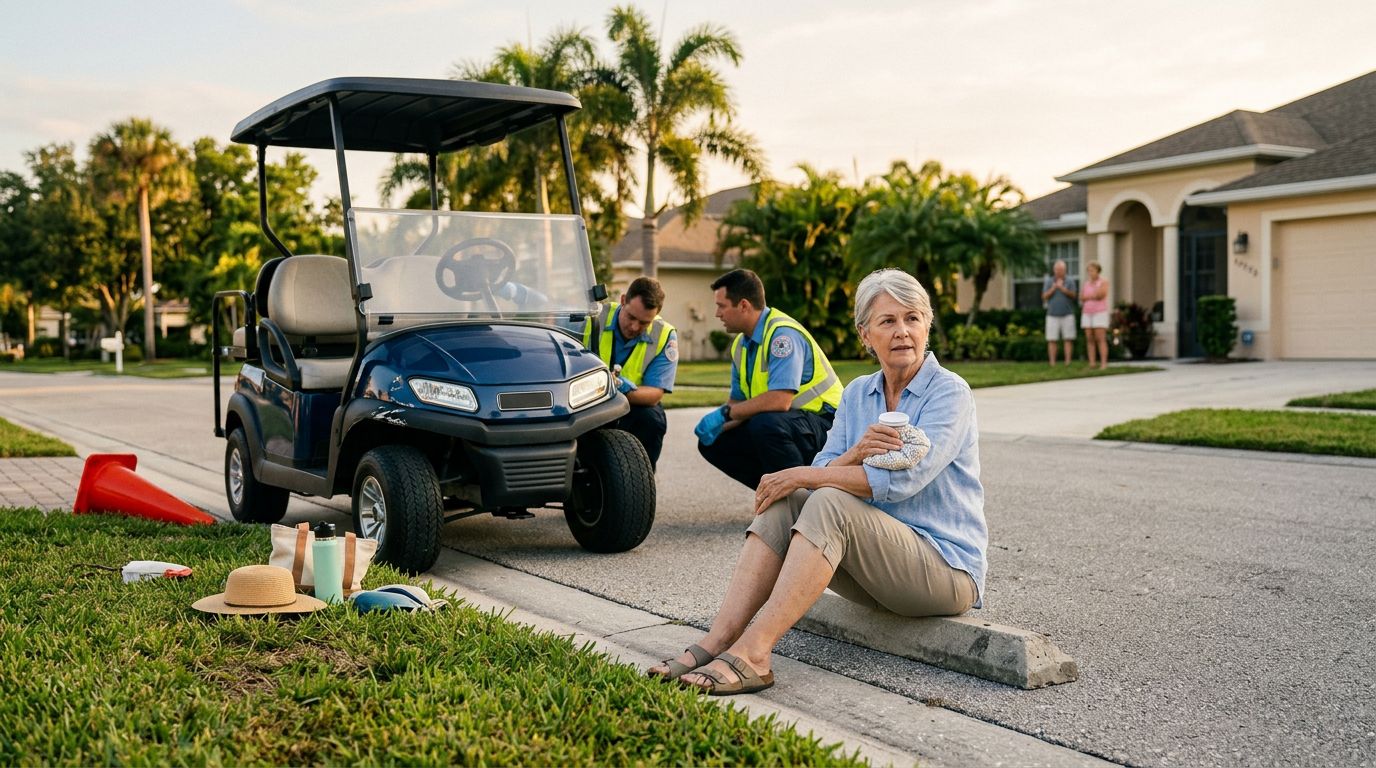
A golf cart crash can cause serious injuries even at neighborhood speeds. Passengers may suffer broken bones, head trauma, spinal injuries, or internal damage when a cart tips, collides with a vehicle, or throws someone onto pavement.
After a Florida golf cart accident, your health and legal rights depend on what happens next. Get emergency help, document the crash, follow medical instructions, and avoid giving an insurance company a recorded statement before you understand your claim.
Key Takeaways
- Call 911, request medical care, and report the crash even if injuries seem minor.
- Keep photographs, witness details, medical records, receipts, and other evidence.
- Standard golf carts usually don’t provide PIP coverage, so injured passengers may need a negligence claim.
- Potentially responsible parties can include the driver, owner, rental company, employer, HOA, or manufacturer.
- Florida generally gives two years to file a negligence lawsuit for crashes occurring on or after March 24, 2023.
Get Safe and Report the Golf Cart Crash
Move away from traffic, fire, leaking fluids, or other immediate dangers. However, don’t move an injured person unless staying in place creates a greater risk. Moving someone with a possible neck or spinal injury can worsen the damage.
Call 911 and tell the dispatcher that a golf cart crash occurred. Ask for law enforcement and emergency medical services. The crash report may identify the driver, owner, witnesses, road conditions, and apparent cause. Those details can become important later.
If you can safely do so, collect the driver’s name, phone number, address, insurance information, and golf cart owner’s information. Ask witnesses for their names and contact details. Avoid arguing with the driver or admitting fault. A statement such as “I’m sorry” can be misunderstood as an admission, even when you are expressing concern.
Take photographs from several angles. Capture the golf cart, damage, roadway, traffic signs, lighting, skid marks, debris, nearby vehicles, and your visible injuries. If you can’t take pictures yourself, ask a trusted person to help. A short post-crash safety checklist can help you remember these basic steps while you’re still at the scene.
Don’t repair, clean, sell, or discard clothing, helmets, or other items involved in the collision. Preserve them as they were after the crash. Also, save any available video from dashboard cameras, security systems, phones, or nearby businesses.
A police report doesn’t decide who wins a personal injury claim, but it can preserve facts that become harder to prove later.
Seek Medical Care Even If You Feel Fine
Adrenaline can hide pain after a collision. Symptoms from a concussion, soft-tissue injury, fracture, or internal injury may appear hours or days later. A same-day evaluation creates a medical record and gives doctors a chance to identify dangerous conditions.
Tell the provider exactly what happened. Explain that you were a passenger, describe where your body struck the cart or ground, and report every symptom. Mention headaches, dizziness, nausea, numbness, weakness, neck pain, back pain, abdominal pain, sleep changes, and trouble concentrating.
Follow the treatment plan. Attend appointments, complete recommended testing, and take medication as directed. If treatment causes side effects or your symptoms change, contact the provider instead of stopping care without medical guidance.
Florida’s no-fault PIP system generally doesn’t cover occupants injured in a standard golf cart crash. That creates an important insurance gap. You may need to use health insurance, medical payments coverage, or another available source while pursuing compensation from the responsible parties.
Keep copies of bills, explanation-of-benefits statements, prescriptions, mileage records, medical equipment receipts, and appointment notes. If the injury affects your job, document missed shifts, reduced hours, lost wages, and communications with your employer.
Medical records often connect the crash to the injury. Delayed care gives an insurer an argument that something else caused your symptoms, even when the crash clearly started the problem.
Preserve Evidence Before It Disappears
Golf carts are often rented, shared among family members, operated by resorts, or used on private community roads. That can make the evidence more complicated than it appears at first.
Write down what you remember while the details remain fresh. Include the location, direction of travel, speed, weather, lighting, road surface, traffic, passenger positions, and anything the driver said before or after the impact. Don’t guess. Mark uncertain details as uncertain.
Save text messages, emails, rental agreements, receipts, photographs, videos, and social media posts related to the crash. If the cart came from a rental company, preserve the reservation confirmation and any safety instructions you received.
Ask an attorney to send preservation requests when video or electronic records may exist. A resort, HOA, business, or rental company may overwrite surveillance footage or lose maintenance records if nobody requests preservation promptly.
The cart itself may contain evidence. Its brakes, steering, tires, seat belts, lights, speed settings, and passenger capacity may matter. Don’t allow repairs or modifications before the condition is documented. A defective component can create a claim against a manufacturer, distributor, maintenance company, or seller.
Your own social media can also affect the case. Insurers may review photographs, comments, check-ins, and activity posts. Avoid discussing fault, pain levels, settlement offers, or the crash online. Don’t delete relevant content, either. Tell your lawyer about it and preserve the original information.
Identify Who May Be Responsible
The driver is often the first person investigated. Speeding, driving under the influence, texting, using a phone, looking away from the road, overloading the cart, or allowing an unlicensed minor to operate it can support a negligence claim.
The owner may also be responsible under Florida’s dangerous instrumentality doctrine. Florida courts have treated golf carts as dangerous instrumentalities in cases such as Meister v. Fisher. When an owner permits someone to drive, the owner may face vicarious liability for the driver’s negligent operation, even without proof that the owner personally drove carelessly.
Other parties may matter depending on the facts:
- A rental company may face liability if it provided a cart to an unfit, intoxicated, underage, or unlicensed driver.
- An employer may be responsible when an employee causes a crash while performing work, such as operating a resort shuttle or maintenance cart.
- An HOA, community development district, or property owner may share responsibility for a dangerous road, poor maintenance, missing signs, or defective lighting.
- A manufacturer or repair company may be liable when brake, steering, tire, seat, or safety-equipment defects cause the crash.
- A property owner or alcohol provider may face a claim in limited circumstances involving negligent conduct and an impaired driver.
The type of cart also affects the analysis. Florida defines a standard golf cart as a vehicle capable of no more than 20 miles per hour. Standard carts may operate only on roads authorized for golf cart use, generally with posted speed limits of 30 miles per hour or less.
A modified cart capable of speeds above 20 miles per hour may qualify as a low-speed vehicle, or LSV. LSVs generally require registration, title, insurance, safety equipment, and operation on roads with posted speed limits of 35 miles per hour or less. Determining the cart’s classification can affect insurance, licensing, road-use rules, and liability.
Understand Insurance and Your Legal Options
Don’t assume the cart owner’s automobile insurance will pay your medical bills. Standard auto policies often exclude golf carts, especially when the cart isn’t registered as an LSV. Ask for copies of every potentially applicable policy, including the owner’s policy, a rental company’s coverage, an employer’s commercial policy, and your own household policies.
Because standard golf carts generally fall outside Florida’s PIP coverage, an injured passenger usually must prove negligence to recover damages. A claim may seek compensation for medical expenses, lost income, reduced earning ability, physical pain, emotional distress, disability, disfigurement, and related losses.
Florida uses modified comparative negligence. If a court finds that you were more than 50 percent responsible, you recover nothing. If your share of fault is 50 percent or less, your damages are reduced by that percentage. A passenger usually has a stronger position than a negligent driver, but insurers may still examine conduct such as standing in the cart, exceeding its designed passenger capacity, or ignoring safety instructions.
Don’t sign a release or accept a quick payment before your medical condition is clear. Once you sign a settlement agreement, you may lose the right to seek more money for future treatment or permanent limitations. Insurance adjusters may also request a recorded statement. You can provide basic facts, but consult a lawyer before discussing fault, medical history, or the value of the claim.
A Florida personal injury attorney can investigate the crash, identify all potentially responsible parties, collect records, communicate with insurers, and assess whether a lawsuit is necessary. The right approach depends on the cart’s classification, the road, the available insurance, and the severity of your injuries.
Watch the Florida Filing Deadline
For negligence claims arising from golf cart or LSV crashes occurring on or after March 24, 2023, Florida generally allows two years from the injury date to file a lawsuit under section 95.11. Wrongful death claims generally have a two-year deadline measured from the date of death.
That deadline doesn’t mean waiting is safe. Evidence becomes harder to locate, witnesses forget details, medical bills accumulate, and insurance companies may use delays against you. Government entities and special districts may also involve additional notice requirements and shorter practical deadlines.
Contact a Florida injury lawyer soon after the crash, especially if you suffered a fracture, head injury, surgery, extended treatment, lost wages, or permanent limitations. Bring the crash report, photographs, medical records, insurance letters, rental documents, and a written account of what happened.
Conclusion
A golf cart passenger should treat a crash as a serious injury event, not a minor neighborhood mishap. Report it, obtain medical care, preserve evidence, and identify every person or business connected to the cart and roadway.
The absence of standard PIP coverage makes early legal and insurance review especially important. Prompt action can protect the evidence and help preserve your right to pursue fair compensation.