
Florida Car Accident Claims When the Driver Was Working
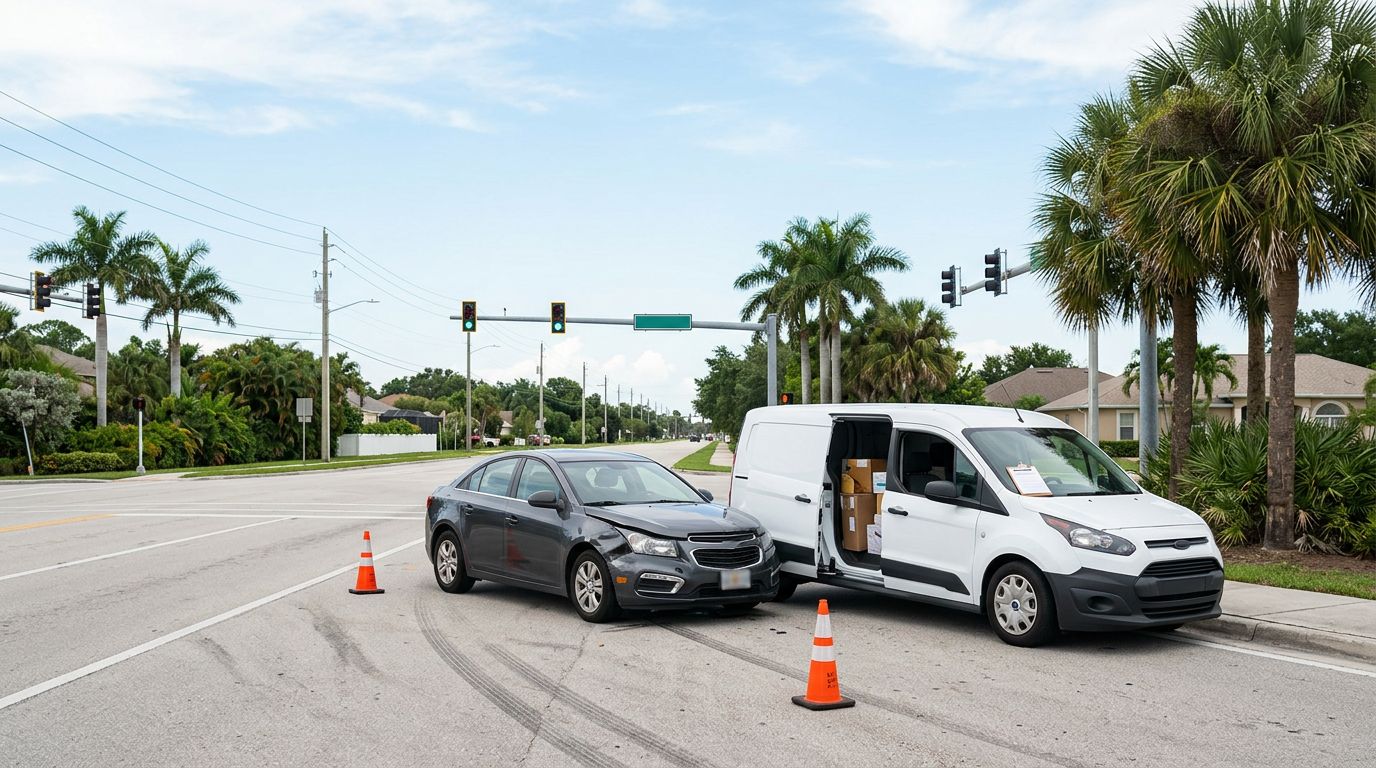
A crash with a delivery driver, company truck, or sales employee can create more than one possible source of compensation. Florida car accident claims may involve the at-fault driver, the driver’s employer, and one or more insurance policies.
The driver’s work status matters because Florida employers can be responsible for negligent driving that occurs within the scope of employment. However, employment alone doesn’t establish liability. The facts surrounding the trip, the driver’s assignment, and the employer’s conduct all matter.
Key Takeaways
- An employer may be liable when an employee causes a crash while performing job duties.
- Commuting and personal errands often fall outside the employer’s responsibility.
- Your own PIP coverage may pay initial medical bills and lost wages, regardless of fault.
- Evidence showing the driver’s work activity can strengthen your claim.
- Florida’s filing deadlines and injury requirements make early legal advice important.
How Florida Car Accident Claims Change When the Driver Was Working
Florida uses the legal doctrine of respondeat superior, also called vicarious liability. Under this rule, an employer may share responsibility for an employee’s negligence when the employee was acting within the scope of employment.
For example, the employer may face liability when a delivery driver runs a red light while taking an assigned order to a customer. The same may apply when a service technician causes a collision while traveling to a scheduled repair appointment.
The employer doesn’t need to have personally caused the crash. The employee’s negligence can create vicarious liability if the employee was carrying out work-related duties at the time.
Florida courts generally examine three factors:
- Whether the employee’s conduct was the type of work the employer hired the person to perform.
- Whether the conduct occurred within the time and geographic limits of the job.
- Whether the employee acted, at least in part, to serve the employer’s business interests.
A company vehicle can provide helpful evidence, but it doesn’t automatically decide the case. An employee may drive a personal vehicle for work, and an employer may still face liability if the trip served the business.
The opposite is also true. A marked company van doesn’t make the company responsible for every collision involving that vehicle. If the driver used the van for a purely personal trip outside work duties, the employer may argue that the employee had left the scope of employment.
When an Employer May Be Responsible for the Crash
The strongest cases usually involve a clear connection between the collision and the employee’s assigned work. A driver who was making deliveries, transporting equipment, visiting customers, or traveling between job sites may have been acting for the employer.
A short personal stop doesn’t always end that connection. Florida law can allow employer liability when the employee makes only a minor detour and remains substantially engaged in the employer’s business. The length and purpose of the deviation matter.
Suppose a courier stops briefly for fuel while completing deliveries. That stop may remain connected to the job. A long trip in the opposite direction for a personal appointment presents a different issue.
The employer’s direct conduct may also support a separate claim. Those claims can involve:
- Hiring a driver with a serious, relevant driving history
- Retaining a driver who showed unsafe conduct
- Failing to supervise the employee
- Allowing a driver to operate a vehicle without proper training
- Failing to maintain a company vehicle
These direct-negligence claims differ from respondeat superior. Vicarious liability focuses on the employee’s conduct during work. Direct negligence focuses on what the employer did or failed to do.
An employer might deny responsibility by claiming the driver was an independent contractor. That label doesn’t settle the question. Courts examine the actual relationship, including who controlled the driver’s work, schedule, tools, routes, and method of performing services.
Business records can help resolve that dispute. Contracts, dispatch records, delivery applications, time records, company policies, and communications may show whether the driver operated as an employee or contractor.
When the Employer May Not Be Liable
Florida’s going-and-coming rule generally protects employers from liability for ordinary commuting accidents. A worker traveling from home to a regular workplace usually isn’t performing work for the employer during that trip.
The rule has exceptions. A worker may be acting within the scope of employment when the job requires travel, the employee receives a special assignment, or the employee is traveling between work locations.
For example, a technician who drives directly from home to a customer’s property may have a stronger work-connection argument than an office employee driving to the company’s usual location. The employee’s regular duties and the employer’s travel expectations will matter.
Personal use creates another challenge. An employee who finishes work and drives to a private event may have left the scope of employment. The same concern can arise when a driver takes a company vehicle for an unrelated personal trip.
Yet the analysis isn’t always obvious. A driver might be answering work calls, carrying job materials, or traveling to complete an employer-directed task when the crash occurs. That is why the timeline matters.
A claim against an employer may also fail if evidence doesn’t connect the driver to the company. The driver may refuse to provide information, and the business may deny that the person worked there. Witness statements, vehicle markings, uniforms, receipts, and crash-report details can help identify the relationship.
What Insurance Covers After a Florida Work-Related Crash?
Florida’s no-fault system generally requires you to seek initial benefits through your own personal injury protection, or PIP, coverage. PIP can pay covered medical expenses and a portion of lost income, regardless of who caused the crash. Policy terms and statutory requirements control the available benefits.
You can review how Florida’s no-fault insurance law works when deciding which insurer to notify first.
PIP doesn’t always cover the full financial impact of a serious collision. It may not pay all medical treatment, future care, property damage, pain and suffering, or the income you lose beyond the policy’s limits.
A bodily injury claim against the at-fault driver and potentially the employer may provide another source of recovery. Florida law generally requires an injury that meets the state’s serious-injury threshold before an injured person can pursue certain non-economic damages against the at-fault party.
The available insurance may include:
- The employee’s personal auto policy
- A commercial auto policy held by the employer
- Coverage for a company-owned vehicle
- Additional coverage maintained by a contractor or delivery business
- Your uninsured or underinsured motorist coverage
Don’t assume the employer’s insurer will identify every available policy. Insurance companies investigate claims for their own financial interests, and they may question whether the driver was working.
The Florida Department of Highway Safety and Motor Vehicles provides information about obtaining official Florida crash reports. You can also use the state’s crash report purchasing portal to request a law enforcement report when it is available.
Evidence That Can Prove the Driver Was Working
The driver’s work activity may not appear fully in the first crash report. You may need additional evidence to establish what happened before the collision.
Start by preserving everything you already have. Keep photographs of the vehicles, roadway, signs, injuries, and any company logos. Save medical records, bills, prescription receipts, wage information, and communications with insurers.
Ask witnesses what they saw, not what they believe. A witness who saw the driver leave a loading area or check a delivery device may provide useful facts about the driver’s activity.
Other evidence may include:
- Employer vehicle markings and license information
- Delivery receipts or customer records
- GPS and route data
- Dispatch messages and phone records
- Timecards and work schedules
- Security-camera footage
- Vehicle event data, when available
- Social media posts about the driver’s work assignment
Don’t contact the employer to accuse anyone or demand payment. A conversation can create statements that an insurer later uses against you. Give basic identifying information, then direct substantive questions to your attorney.
Seek medical care promptly, even when pain seems manageable. Neck, back, head, and soft-tissue injuries may develop after the initial shock fades. Medical records also connect your condition to the crash when treatment begins without a long unexplained delay.
How Fault and Deadlines Affect Your Claim
You still must prove negligence. That generally means showing that the driver owed you a duty, violated that duty, caused the crash, and caused legally recognized damages.
The other side may argue that you contributed to the collision. Florida’s modified comparative negligence rule can reduce your recovery based on your percentage of fault. If you are found 51% or more responsible, you may be barred from recovering damages in a negligence action. Review the Florida modified comparative negligence rule for more detail about how fault percentages affect a claim.
Your conduct after the crash can affect the dispute. Avoid guessing about speed, distance, or fault when speaking with an insurer. Use clear facts, and don’t provide a recorded statement before you understand your rights.
Florida generally gives two years to file a negligence action for crashes occurring after the state’s 2023 change to the statute of limitations. Different deadlines can apply in cases involving government vehicles, wrongful death, minors, or other special circumstances. Waiting can also cause evidence to disappear, including video footage and electronic work records.
That deadline applies to filing a lawsuit, not merely reporting the collision to an insurer. An insurance claim does not preserve every legal deadline.
Should You Hire a Florida Car Accident Attorney?
A lawyer can investigate the employment relationship, identify applicable insurance, obtain records, and assess whether the driver’s conduct fell within the scope of employment. This work becomes more important when the employer denies responsibility or multiple insurers give conflicting answers.
Legal help may be especially useful when you have a serious injury, extended treatment, permanent limitations, lost income, disputed fault, or a denied claim. A lawyer can also handle communications while you focus on medical care.
You can contact Florida car accident attorneys for help evaluating the driver, employer, and insurance issues in your case. Bring the crash report, photographs, medical information, insurance correspondence, and any details about the driver’s job.
Conclusion
A collision caused by a working driver can involve more than an ordinary insurance claim. Florida car accident claims may extend to an employer when the employee was carrying out business duties, but the facts must establish that work connection.
Report the crash, protect your medical records, preserve evidence, and avoid settling before you know the full value of your injuries. When an employer or insurer disputes responsibility, a prompt case review can help identify the parties and coverage that may apply.