
Florida Pool Electrocution Claims and Lighting Records
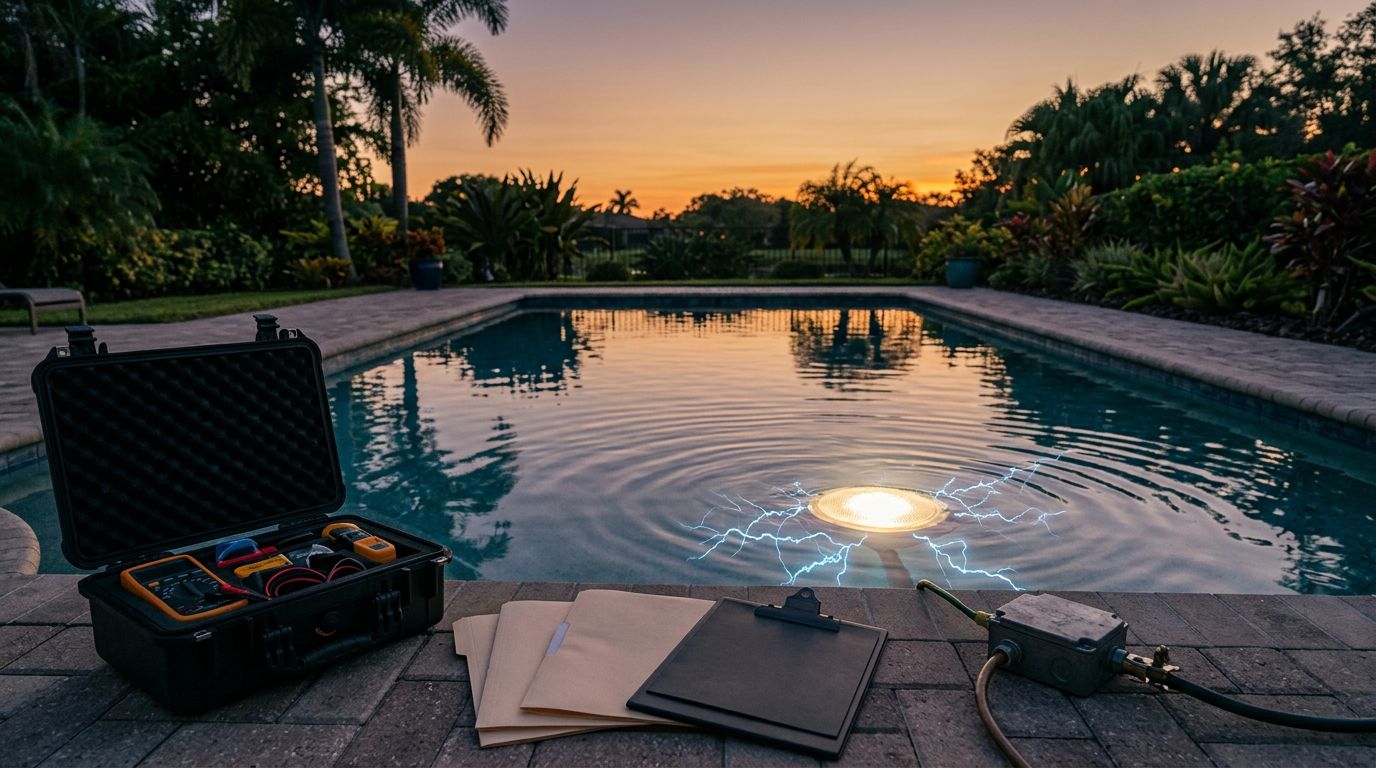
A pool light can turn a place for recreation into a source of lethal electrical current. Florida pool electrocution claims often depend on records showing who installed, inspected, repaired, or controlled the equipment before the injury.
Electrical current may come from an underwater light, pump, wiring, grounding failure, or damaged equipment. Because physical evidence can disappear after repairs, families should preserve inspection and maintenance records quickly. The evidence may show whether someone knew about a hazard and failed to correct it.
Key Takeaways
- Pool electrocution can result from faulty lights, pumps, wiring, bonding, grounding, or missing GFCI protection.
- Lighting inspection records may identify prior repairs, repeated warnings, corrosion, water intrusion, or failed testing.
- Potentially responsible parties can include property owners, pool companies, electricians, inspectors, manufacturers, and property managers.
- Photos, incident reports, service invoices, videos, permits, and witness accounts can support a negligence or product liability claim.
- Florida deadlines apply, so delaying an investigation can place compensation at risk.
How Pool Electrical Failures Cause Injury
Swimming pool electricity becomes dangerous when current escapes its intended path. A fault may energize a metal light niche, pump housing, ladder, handrail, or the water itself. A person entering the pool can then become part of the electrical circuit.
Some incidents cause a powerful shock, burns, cardiac arrest, or loss of consciousness. Others cause electric shock drowning. In those cases, a low level of alternating current can interfere with muscle control, making it difficult or impossible for a swimmer to move or stay above water.
The Consumer Product Safety Commission’s pool electrical safety guidance warns that rescuers can also suffer electrical injury if they enter the water before power is shut off. The agency recommends cutting power first and using a fiberglass rescue hook, when available, rather than grabbing a person directly.
Common sources of pool electrical hazards include:
- Damaged or improperly installed underwater lights
- Loose, corroded, or disconnected grounding wires
- Faulty bonding between metal components
- Defective pumps, heaters, transformers, or control panels
- Missing, defective, or improperly tested ground-fault circuit interrupter protection
- Water entering a light fixture or conduit
- Unlicensed or incomplete electrical work
Florida pool electrocution claims require more than proof that electricity was present. The evidence must connect the electrical condition to a legal duty, a failure to act reasonably, and the resulting injury or death.
Why Lighting Inspection Records Matter in Florida Pool Electrocution Claims
Lighting records can provide a timeline that eyewitnesses cannot. A family may know that a light flickered or that a switch made a buzzing sound, but the service file may show when the problem first appeared and who received notice.
Important records may include the original installation documents, equipment manuals, model and serial numbers, electrical plans, permits, inspection approvals, repair invoices, technician notes, and recurring maintenance agreements. Records from weekly or monthly pool service visits can be especially important.
A technician’s note may mention corrosion, a tripped breaker, a loose connection, water inside the fixture, or a failed GFCI test. Even a short entry such as “monitor light” can matter if the company continued servicing the pool without making a safe repair.
Look for records that answer these questions:
- Who installed the pool light and related wiring?
- Which company inspected or serviced the pool?
- Did anyone test the GFCI, bonding, or grounding system?
- Were electrical defects reported before the incident?
- Did a contractor replace parts without correcting the underlying problem?
- Did the owner receive warnings but keep the pool open?
- Did the manufacturer issue instructions, service notices, or replacement information?
A North Miami lawsuit involving the death of a 7-year-old after a suspected faulty pool light illustrates why several records may matter at once. Reports identified allegations involving the light manufacturer, a pool service company, an electrical consultant, and an inspection company. A home inspection industry discussion of the pool-light lawsuit also reflects how responsibility can extend beyond the property owner.
The records don’t need to prove every issue by themselves. They can help an attorney and electrical expert determine whether the equipment was defective, whether maintenance fell below an acceptable standard, and whether earlier action could have prevented the injury.
Who May Be Responsible for a Pool Electrocution?
Liability depends on control, notice, and the cause of the electrical failure. More than one party may share responsibility.
A property owner or operator may be liable if the pool was unsafe, required repairs were ignored, or warning signs were absent. Public pools, hotels, apartment complexes, condominium communities, country clubs, and private residences can raise different questions about ownership and control.
A pool maintenance company may face a claim if it performed regular service but failed to identify or report an electrical hazard. Its contract, work orders, employee training, and inspection practices may show what duties it accepted.
An electrician or electrical contractor may be responsible for negligent installation, unsafe repairs, improper grounding, or failure to follow applicable requirements. The investigation may include permits, invoices, photographs, and the contractor’s licensing information.
An inspection company may have exposure when it was hired to evaluate the pool or electrical system and failed to identify a dangerous condition within the scope of its work. The inspection agreement matters because it defines what the inspector agreed to examine.
A manufacturer may be involved when a light, pump, transformer, switch, or protective device had a design or manufacturing defect. Product liability cases may also examine warnings, installation instructions, recall history, and whether the product was reasonably safe for pool use.
A claim can involve several theories, including premises liability, negligent maintenance, negligent inspection, negligent construction, and product liability. An attorney will examine contracts and records before deciding which parties should receive a preservation demand or become defendants.
How to Preserve Pool Lighting and Inspection Evidence
Families should avoid moving, testing, repairing, or discarding electrical equipment after an incident. A well-intended repair can destroy evidence about the original failure.
If the pool remains dangerous, keep people away and contact emergency services or the proper utility authority. Do not handle a light fixture, breaker, pump, or wiring while power may still be connected.
A lawyer can send preservation letters to the owner, pool company, electrician, inspector, manufacturer, property manager, and insurer. The letter should request preservation of physical equipment and electronic information, including maintenance software, emails, text messages, photographs, video, and inspection databases.
Useful steps include:
- Photograph the pool, light, pump area, switches, breaker panel, warning signs, and surrounding surfaces.
- Save clothing, shoes, towels, or other items that may show burns or contact with equipment.
- Obtain emergency dispatch records, incident reports, fire-rescue records, and medical records.
- Record the names and contact information of witnesses.
- Ask whether surveillance cameras, doorbell cameras, or phone videos captured the incident.
- Keep all service contracts, invoices, receipts, emails, and communications with the property owner or pool company.
- Write down what happened while the sequence remains clear, including sounds, visible damage, lights, alarms, and breaker activity.
The pool may need an examination by a qualified electrical engineer or other appropriate expert. Testing should occur under controlled conditions and after the legal team has addressed evidence preservation. An expert may inspect bonding, grounding, GFCI protection, wiring, fixtures, junction boxes, and the relationship between the electrical source and the injury.
For related evidence issues in other Florida pool injury cases, see these Florida hotel pool drowning claims, which also involve maintenance records, surveillance, staff duties, and control over pool safety.
Injuries, Wrongful Death, and Compensation
A surviving pool electrocution victim may have a claim for emergency treatment, hospitalization, rehabilitation, medication, lost income, reduced earning ability, pain, disability, and emotional distress. The seriousness of the injury may not be clear immediately, especially after a near-drowning or cardiac event.
A family may also have a wrongful death claim when electrical shock causes a fatality. Damages can include medical and funeral expenses, lost support, lost services, and the survivors’ emotional losses, depending on Florida law and the relationship to the person who died.
Florida negligence claims generally have a two-year statute of limitations for incidents occurring under the current limitations rules. Wrongful death claims also commonly carry a two-year deadline. Claims against a government-owned pool may involve additional notice and timing requirements.
The exact deadline can depend on the date of injury, the type of claim, the defendant, and the facts surrounding discovery. Waiting for an insurer to complete its investigation doesn’t pause the legal deadline.
What to Do After an Electrical Shock
Call 911 after any suspected pool electrical injury, even when the person appears to recover. Electrical exposure can affect the heart, nervous system, muscles, and breathing.
Keep others out of the water until the power is disconnected by someone qualified to do so. Don’t touch the victim while current may remain active. After the scene is safe, follow dispatcher instructions, begin CPR if trained, and use an AED when available.
Medical records should describe the suspected electrical exposure, symptoms, burns, loss of consciousness, breathing problems, cardiac testing, and near-drowning details. Those records can connect the event to later treatment and lasting limitations.
Conclusion
Florida pool electrocution claims often turn on evidence that disappears after a cleanup or repair. Lighting inspection records, service invoices, electrical testing, permits, photographs, and incident reports can reveal who knew about the hazard and what should have been done.
A dangerous pool light or pump may involve several responsible parties, not one. Preserve the equipment and records, seek medical care, and obtain legal advice before critical evidence is lost.