
Florida Restaurant Food Allergy Claims: Proving Negligence
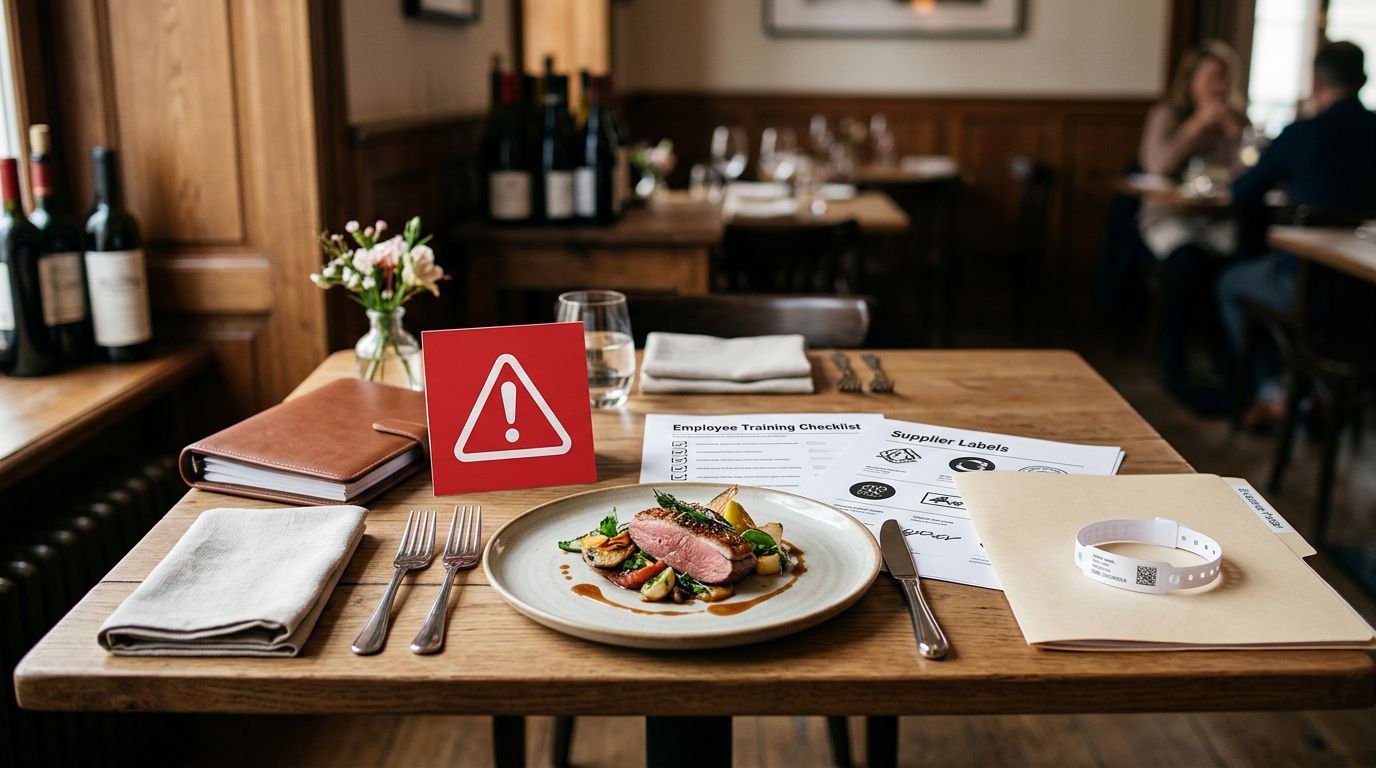
A restaurant meal can trigger an emergency within minutes when staff overlook an allergen. For people pursuing Florida restaurant food allergy claims, ingredient records and employee training documents can show what the restaurant knew, what it should have known, and whether it followed required safety procedures.
Florida law addresses allergen awareness, menu information, and staff training. However, a violation alone doesn’t automatically establish liability. The evidence must connect the restaurant’s conduct to the reaction, medical treatment, and financial losses. That proof often begins with records kept inside the restaurant.
Key Takeaways
- Florida restaurant food allergy claims usually require proof of duty, breach, causation, and damages.
- Ingredient lists, recipes, supplier labels, order records, and kitchen procedures can reveal whether the restaurant identified an allergen.
- Training records may show whether managers and food service employees understood cross-contact prevention and emergency procedures.
- Medical records, ambulance reports, photographs, witness accounts, and timely notice to the restaurant can strengthen causation evidence.
- A lawyer can help preserve restaurant records before they are deleted, changed, or lost.
Florida Restaurant Food Allergy Claims: What Must Be Proven
A food allergy case generally depends on ordinary negligence principles. The injured customer must show that the restaurant owed a duty of reasonable care, failed to meet that duty, caused the allergic reaction, and caused measurable harm.
Restaurants have a duty to use reasonable care when preparing and serving food. That duty can include accurately communicating known ingredients, responding appropriately when a customer reports an allergy, preventing cross-contact, and training employees on allergen procedures.
The customer’s warning is often central. If a diner tells a server, “I have a peanut allergy,” that statement may establish that the restaurant received direct notice of a known risk. The server’s response, the order notes, and the kitchen’s handling of the meal can then become important evidence.
A claim may involve an undisclosed ingredient, inaccurate menu information, contamination during preparation, or a staff member’s careless response. For example, a sauce may contain a nut-based ingredient that does not appear in the menu description. A fryer may also expose a supposedly safe meal to shellfish residue.
Florida’s 2023 allergen requirements added duties involving manager education, employee training, menu disclosures, and ingredient information for public food service establishments. The Florida Senate’s filed statutory materials provide the legislative text behind those requirements.
A regulatory violation can support a negligence argument, but it doesn’t replace proof of causation. The evidence still must show that the restaurant’s failure probably caused the reaction and that the reaction produced actual damages.
Potential legal theories may include negligence, premises liability, breach of warranty, or products liability, depending on the facts. The proper theory depends on how the food was prepared, sold, labeled, and served.
How Ingredient Records Can Establish What Happened
Ingredient records can answer questions that a customer’s memory cannot. They may show whether a menu item contained the allergen, whether a supplier changed a recipe, and whether the restaurant had information that never reached the customer.
Useful records may include:
- Master ingredient lists for menu items
- Recipes and preparation instructions
- Supplier invoices and product labels
- Allergen matrices or kitchen reference charts
- Menu versions, including digital menus
- Online ordering information and order confirmations
- Substitution notes and special-order instructions
- Food preparation logs and incident reports
Florida’s allergen rules require restaurants to keep a master list of ingredients used in menu items on the premises and make that information available upon request. That record can be important when a menu uses broad descriptions such as “house sauce,” “seasoned rice,” or “vegetable spread.”
The restaurant’s own records may also reveal inconsistent information. A menu might omit sesame, while a supplier label lists tahini. A server might assure a customer that a dish contains no dairy, while the recipe includes butter. Those conflicts can help establish what the restaurant should have disclosed.
Federal labeling rules are relevant when restaurants use packaged ingredients. The FDA’s food allergy labeling guidance explains how packaged foods identify major allergens through ingredient statements or “contains” disclosures. Restaurant meals prepared in response to an order don’t always carry the same packaged-food label, so the restaurant’s internal records may be the only practical source of ingredient information.
A lawyer may send a preservation letter soon after the reaction. Formal discovery can then seek recipes, supplier records, employee schedules, training documents, surveillance footage, and communications about the incident. If the restaurant changes its menu after the event, earlier versions may also matter.
Missing records don’t automatically prove negligence. Still, unexplained gaps can affect the credibility of the restaurant’s account and may create additional legal issues if relevant evidence was destroyed after the business received notice of a potential claim.
Evidence principles also overlap with Florida food poisoning claims, where medical proof, restaurant records, and evidence connecting the meal to the injury often determine whether a case can move forward.
Staff Training Records May Reveal a Safety Failure
Employee training is a separate part of the investigation. A restaurant may have accurate ingredient records but still fail to protect a customer if employees don’t know how to use them.
Florida’s 2023 requirements address allergen education for restaurant managers and food service employees. Managers must complete approved allergen education, while employees must receive instruction on food allergies and cross-contact prevention. Training also addresses recognition of allergic reactions and the need to call 911 when a serious reaction is suspected.
The nine major food allergens covered by current Florida restaurant guidance are:
- Milk
- Eggs
- Fish
- Crustacean shellfish
- Tree nuts
- Peanuts
- Wheat
- Soybeans
- Sesame
Training records can show whether the employees involved in the meal completed required instruction. They may also show the date of the training, the subjects covered, test results, and whether the employee was a manager, server, cook, or temporary worker.
A case becomes stronger when the records show that staff received training but ignored the procedures. It may also become stronger when the restaurant cannot identify who prepared the meal or cannot produce any training documentation.
A server’s assurance that a meal is safe matters only if the kitchen has reliable information and a procedure for verifying the answer.
Cross-contact evidence deserves close attention. An allergen can transfer through shared cutting boards, utensils, gloves, fryers, grills, storage containers, or preparation surfaces. The meal may not contain the allergen as a listed ingredient, yet still cause a reaction because employees failed to separate equipment or clean the workspace.
Staff statements can help establish what happened. Important questions include whether the customer disclosed the allergy, who received that warning, whether the order ticket identified it, who approved the substitution, and whether the cook used separate equipment.
Restaurant surveillance footage may show whether employees changed gloves, cleaned a surface, or handled another allergen immediately before preparing the meal. The footage may be overwritten quickly, so preservation should happen without delay.
Medical Records Connect the Meal to the Injury
A restaurant’s mistake matters legally only when the evidence connects it to the customer’s reaction and losses. Medical records provide that connection.
Emergency department records may document anaphylaxis, hives, swelling, breathing difficulty, vomiting, low blood pressure, or other symptoms. Ambulance reports can establish when symptoms began, what responders observed, and what medication they administered. Records may also show epinephrine use, oxygen treatment, observation time, hospital admission, and discharge instructions.
Timing is often important. A reaction that begins shortly after the meal may support causation, although the medical evidence must still account for other possible exposures. Doctors may review the meal history, prior allergy records, laboratory results, and follow-up testing.
A patient should tell medical providers what food was eaten, what allergy was reported, when symptoms began, and what treatment followed. The patient should also keep discharge paperwork, pharmacy receipts, medical bills, photographs of visible symptoms, and records of follow-up appointments.
Damages can include emergency care, ambulance charges, prescriptions, specialist visits, lost wages, reduced earning ability, and physical pain. Severe reactions may cause lasting anxiety about eating, additional allergy treatment, or restrictions that affect daily life.
Witnesses can fill gaps in the medical record. Dining companions may confirm the allergy warning, the server’s response, the food consumed, and the onset of symptoms. A spouse or coworker may document missed work and the customer’s condition after discharge.
What to Do After an Allergic Reaction at a Florida Restaurant
Seek emergency care first. A severe allergic reaction can worsen quickly, even if symptoms appear to improve after initial treatment.
Once safe, write down the restaurant’s name, location, date, time, menu item, ingredients described by staff, and every person involved. Save the receipt, order confirmation, menu photograph, delivery record, and any written communication with the restaurant.
Notify the restaurant in writing, but avoid guessing about fault or making a recorded statement before receiving legal advice. Ask the business to preserve the order ticket, employee schedules, ingredient records, training records, kitchen video, and incident report.
Don’t throw away leftovers or packaging. Store them safely and tell your attorney what remains. A lawyer may coordinate preservation, testing, subpoenas, and communications with the restaurant’s insurer.
Florida filing deadlines depend on the legal theory and facts. Because waiting can allow records and video to disappear, speak with a Florida personal injury attorney promptly. Bring medical documents, receipts, photographs, witness information, and every record showing that you disclosed the allergy before ordering.
Conclusion
Ingredient records and staff training documents can turn a disputed restaurant reaction into a fact-based claim. They may show whether the allergen was listed, whether employees received proper instruction, and whether the kitchen followed cross-contact procedures.
For Florida restaurant food allergy claims, medical evidence must connect those failures to the reaction and resulting losses. Preserving restaurant records early gives an attorney a better chance to establish what happened and pursue the compensation the injured customer deserves.