
Korean War Cold Injury Claims: Medical Evidence in 2026
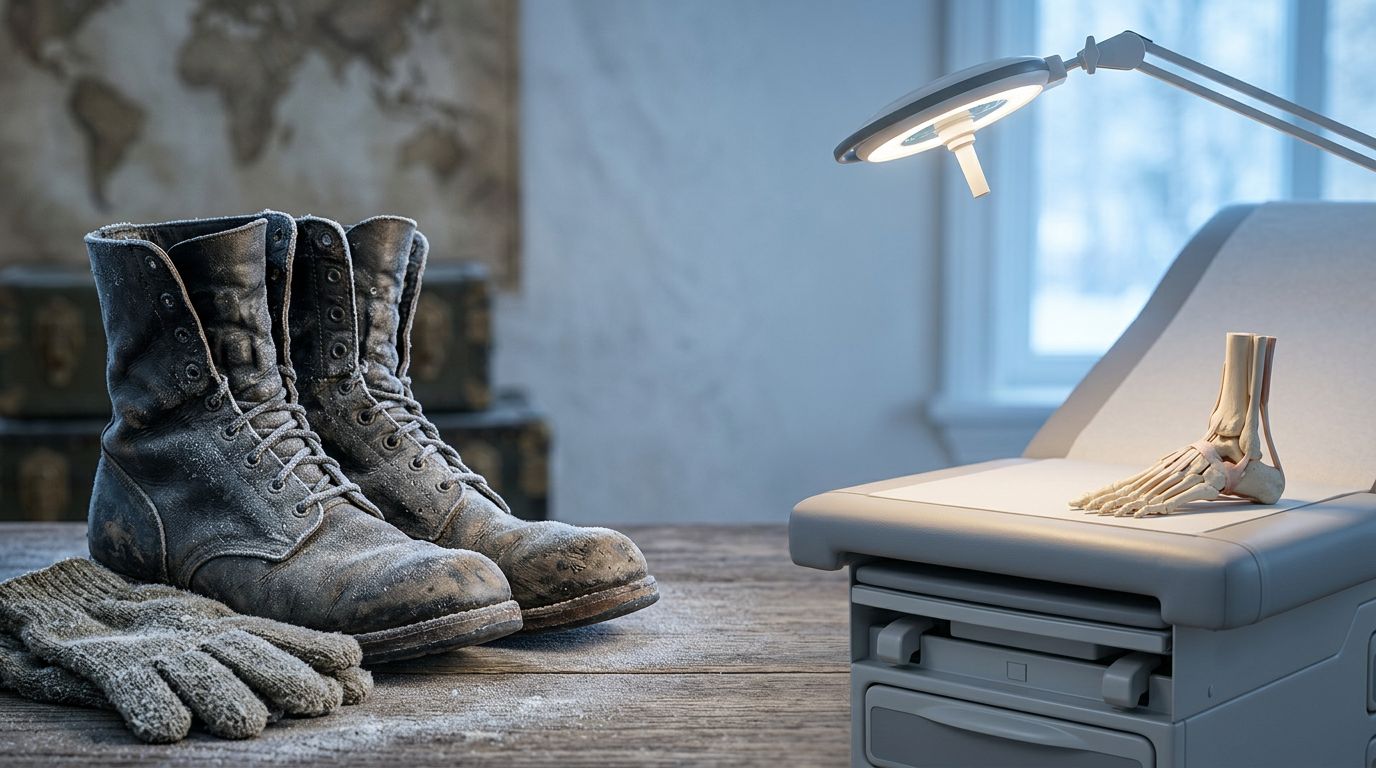
Cold exposure during the Korean War could leave lasting damage, even when the original frostbite or immersion injury happened more than 70 years ago. For Korean War cold injury claims, the strongest medical evidence connects today’s symptoms to the veteran’s service and describes how those symptoms affect daily life, especially when extreme cold exposure caused long term physical harm.
Many Korean War veterans have no treatment records from 1950 or 1951 for their cold weather injuries. That does not automatically defeat a claim. Current examinations, service records, family statements, unit histories, and a well-supported medical opinion can help fill the gap. The key is building a clear record instead of relying on a diagnosis alone.
Key Takeaways
- The Department of Veterans Affairs looks for a current cold injury residual, an in-service exposure, and a link between the two to grant disability benefits.
- Frostbite, trench foot, numbness, pain, color changes, nail problems, and circulation issues can support a claim.
- Medical records created decades later can still help when they document consistent symptoms and a reasoned connection to service.
- Unit assignments, dates, locations, buddy statements, and records from the Chosin Reservoir campaign can support proof of exposure for Korean War veterans suffering from cold weather injuries.
- A VA-accredited representative can help organize the evidence and respond to a denial.
Medical Evidence for Korean War cold injury claims
A Department of Veterans Affairs disability claim generally needs evidence of three facts to establish a service-connected disability:
- The veteran has a current disability or lasting residual.
- An injury, illness, or exposure occurred during military service.
- The current condition is connected to that service event.
Cold injury residuals can involve more than visible frostbite scars. The VA Public Health cold injury information identifies frostbite, non-freezing cold injuries, immersion foot, formerly called trench foot, and hypothermia as service-related cold injuries veterans may experience from cold weather injuries.
Medical evidence should identify the veteran’s present symptoms with precision. Useful documentation may include:
- Chronic pain, burning, tingling, or nerve damage in the fingers or toes
- Sensitivity to cold temperatures
- Skin color changes, swelling, or abnormal sweating
- Nail abnormalities or tissue loss
- Reduced sensation, frozen feet, or poor blood circulation
- Joint deterioration, arthritis, or other changes shown on imaging
- Persistent sores, scars, or skin cancer in a frostbite-affected area
A general statement such as “history of frostbite” may not provide enough detail, especially when evaluating delayed symptoms. The medical record should explain which body parts are affected, how often symptoms occur, and whether the findings match known cold weather injuries.
A primary care note can help, but a focused examination is often more useful. The provider should review the veteran’s service history, describe objective findings, and address whether the current condition is consistent with remote cold exposure.
Proving Korean War cold exposure without early treatment records
Korean War veterans often face an evidence problem because frontline combat conditions prevented care by military medics or transport to MASH units. Some veterans continued their duties despite painful feet or hands. Others did not seek care until years later.
Service records can still establish exposure. The veteran’s DD-214 may confirm dates and locations, but it may not show every weather condition or field operation. Additional records can provide the missing context, including unit histories, morning reports, personnel records, deck logs, and operational reports.
The veteran’s assignment and location matter. VA health materials identify extreme cold during the Korean War as a significant service era concern, particularly during the Chosin Reservoir campaign in October through December 1950. During this offensive, combat veterans faced sub-zero temperatures, inadequate shelter, frozen clothing, ill-fitting rubber shoe pacs, and relentless pressure from Chinese Communist forces.
A claim can benefit from records showing service with units connected to the Chosin Few, where members suffered extreme cold exposure that resulted in frozen feet, massive frostbite casualties, gangrenous limbs, and emergency medical evacuation. Those records do not prove every veteran suffered frostbite, but they can support the account of exposure when combined with personal testimony and medical findings.
Lay evidence also has a place. A veteran may describe the temperature, length of exposure, symptoms during service, and treatment received from fellow service members. Statements from spouses, children, friends, or former unit members can document long-term numbness, pain, sensitivity to cold, walking problems, or repeated skin issues for surviving Korean War veterans who still live with the lasting effects of frozen feet.
A missing 1950 treatment note does not erase a credible account of cold exposure, especially when later medical findings fit the reported injury.
The strongest statements provide dates, places, assignments, and specific symptoms. They should avoid broad conclusions about the law or diagnosis. A veteran can describe what happened. A qualified medical professional should explain the medical connection.
What a useful medical nexus opinion should say
A nexus opinion connects the present condition to military service. It should do more than repeat the veteran’s belief or state that a connection is “possible.”
A strong opinion usually identifies the records reviewed, discusses the reported cold exposure, explains the current diagnosis, and gives a clear conclusion. The provider should also address other possible causes, such as diabetes, peripheral vascular disease, smoking history, occupational exposure, or unrelated nerve disorders, especially when early medical treatment at temporary field stations or military hospitals was never documented for historical frostbite casualties.
For example, a doctor might explain that the veteran has chronic pain, sensory loss, and cold sensitivity in both feet, that the pattern is consistent with prior frostbite, and that the symptoms are at least as likely as not related to prolonged cold exposure during Korean War service. The opinion becomes more persuasive when the provider explains the medical reasoning behind that conclusion.
The examiner should distinguish cold injury residuals from conditions that may look similar. Nerve damage can result from diabetes or spinal disease, while poor blood circulation may have several causes. A medical opinion that ignores those issues may receive less weight.
Testing can support the diagnosis, although no single test proves every cold injury claim. Depending on the symptoms, a provider may order nerve studies, vascular testing, imaging, or a dermatological examination. An EMG may show neuropathy, while imaging can document arthritis or bone changes in an affected area. Normal testing does not always rule out cold sensitivity or pain, so the entire clinical picture matters.
Current treatment records are useful even when treatment began recently. Ask the provider to record the veteran’s full history, including delayed symptoms that appeared years after the initial discharge, not only the symptoms reported at that appointment. Consistent descriptions over time can help show that the condition is longstanding.
How VA rates lasting cold injury residuals
The Department of Veterans Affairs commonly evaluates cold weather injuries under 38 C.F.R. section 4.104, Diagnostic Code 7122, to determine monthly disability benefits. The rating depends on the symptoms and objective findings in each affected body part.
A 10 percent evaluation may apply when an affected part has arthralgia or other pain, numbness, or cold sensitivity. Higher evaluations require additional findings, such as tissue loss, nail abnormalities, color changes, locally impaired sensation, hyperhidrosis, or imaging abnormalities.
For many frostbite casualties who endured sub-zero temperatures and inadequate gear like shoe pacs during the Chosin Reservoir campaign, a 20 percent evaluation generally requires pain, numbness, or cold sensitivity plus one listed additional finding. A 30 percent evaluation generally requires pain, numbness, or cold sensitivity plus two or more additional findings.
VA can evaluate separate affected parts. For example, the hands and feet may require separate analysis when the evidence shows different residuals. The medical examination should identify each affected part instead of describing the condition only as frostbite.
Certain complications may receive separate evaluations under other diagnostic codes. These can include peripheral neuropathy, joint deterioration, or weakness in frozen feet associated with a cold injury. The rating schedule also limits duplicate compensation for the same symptoms, so the medical evidence must clearly separate overlapping conditions.
A veteran should report practical effects as well. Difficulty walking on cold floors, handling tools, wearing shoes, sleeping due to burning pain, or standing for extended periods may help explain the severity of the condition. Those reports do not replace medical findings, but they give the examiner and VA a fuller picture.
Building the claim and responding to a denial
Before filing, combat veterans should gather service records, private medical records, VA treatment notes, medication lists, imaging, nerve studies, and statements from people who have observed the symptoms. Request records from military medics, field aid stations, or specialized treatment facilities like Percy Jones General Hospital that helped care for service members soon after injury, even if those files are old or incomplete.
Write a timeline that connects the evidence. Include the veteran’s unit, service dates, locations of extreme cold exposure, medical evacuation details, symptoms during service, symptoms after discharge, and current limitations. A timeline can reveal missing records and help a medical provider give a more informed opinion.
The Department of Veterans Affairs uses Form 21-526EZ for an original disability benefits claim. Veterans may file through VA.gov, with an accredited representative, at a VA medical center or regional office, or by phone. Filing an intent to file may protect an earlier potential effective date while evidence is being collected.
The VA may schedule a compensation and pension examination. The veteran should describe symptoms accurately, including bad days and seasonal changes. Avoid minimizing problems out of habit, but do not exaggerate. Bring a list of affected body parts, treatments, testing, and daily limitations.
If the VA denies Korean War cold injury claims, review the reasons carefully. A denial may state that there is no current disability, no proof of in-service exposure, or no nexus. Each reason calls for different evidence. A missing diagnosis may require a new examination. A weak nexus may call for a detailed medical opinion. A disputed exposure may require service records or lay statements.
Avard Law Offices provides guidance about the steps to file a successful VA disability claim. Veterans can also review the basics of VA disability benefits before deciding how to proceed.
When legal help can improve the evidence
Older cold injury claims often involve several records systems and a medical history that developed over decades. A representative can identify gaps, request relevant military records, prepare lay statements, and ask a doctor to address the correct legal standard, which is especially valuable for aging Korean War veterans trying to piece together files from old military hospitals.
Legal assistance is especially useful after a denial based on an inadequate VA examination. The representative may challenge an examination that ignored the account of combat veterans, failed to examine all affected areas, or offered a conclusion without medical reasoning. This support helps severe frostbite casualties, including many survivors from the Chosin Few whose initial medical treatment went undocumented on active duty.
Florida veterans may also need help coordinating VA treatment records with private physicians, hospitals, and specialists. A complete file should show both the medical diagnosis and the history that supports service connection, making it easier for Korean War veterans to secure the benefits they earned.
Frequently Asked Questions
Can I file a cold injury claim if I do not have treatment records from the Korean War?
Yes, missing treatment records from 1950 or 1951 do not automatically defeat a claim. You can use current medical examinations, service records, unit histories, buddy statements, and a well-supported medical opinion to establish your service connection.
What types of medical evidence are most helpful for a cold injury residual claim?
Useful documentation includes precise descriptions of chronic pain, nerve damage, cold sensitivity, skin color changes, and tissue loss. A focused medical examination that explains how your current symptoms align with remote cold exposure is especially valuable.
How does the VA rate cold weather injuries like frostbite and trench foot?
The Department of Veterans Affairs typically evaluates cold injury residuals under 38 C.F.R. section 4.104, Diagnostic Code 7122. Ratings depend on objective findings and specific symptoms in each affected body part, such as pain, numbness, tissue loss, or circulatory issues.
Conclusion
Successful Korean War cold injury claims tell one consistent story: severe cold exposure during service, continuing symptoms after discharge, and current medical findings that fit the original injury. Early treatment records can help, but they are not the only way to prove a claim.
For Korean War veterans who survived the Chosin Reservoir campaign, fighting against Chinese Communist forces in sub-zero temperatures left lasting harm like frozen feet and gangrenous limbs. Surviving frostbite casualties and members of the Chosin Few deserve recognition and proper ratings for their lifelong cold weather injuries despite decades passing since their medical evacuation and service.
A focused examination, credible service history, detailed lay evidence, and a reasoned nexus opinion can give an older claim the support it needs. For those who served in Korea, the passage of time makes organization more important, not less.