
Florida Folding Chair Collapse Claims After Event Injuries
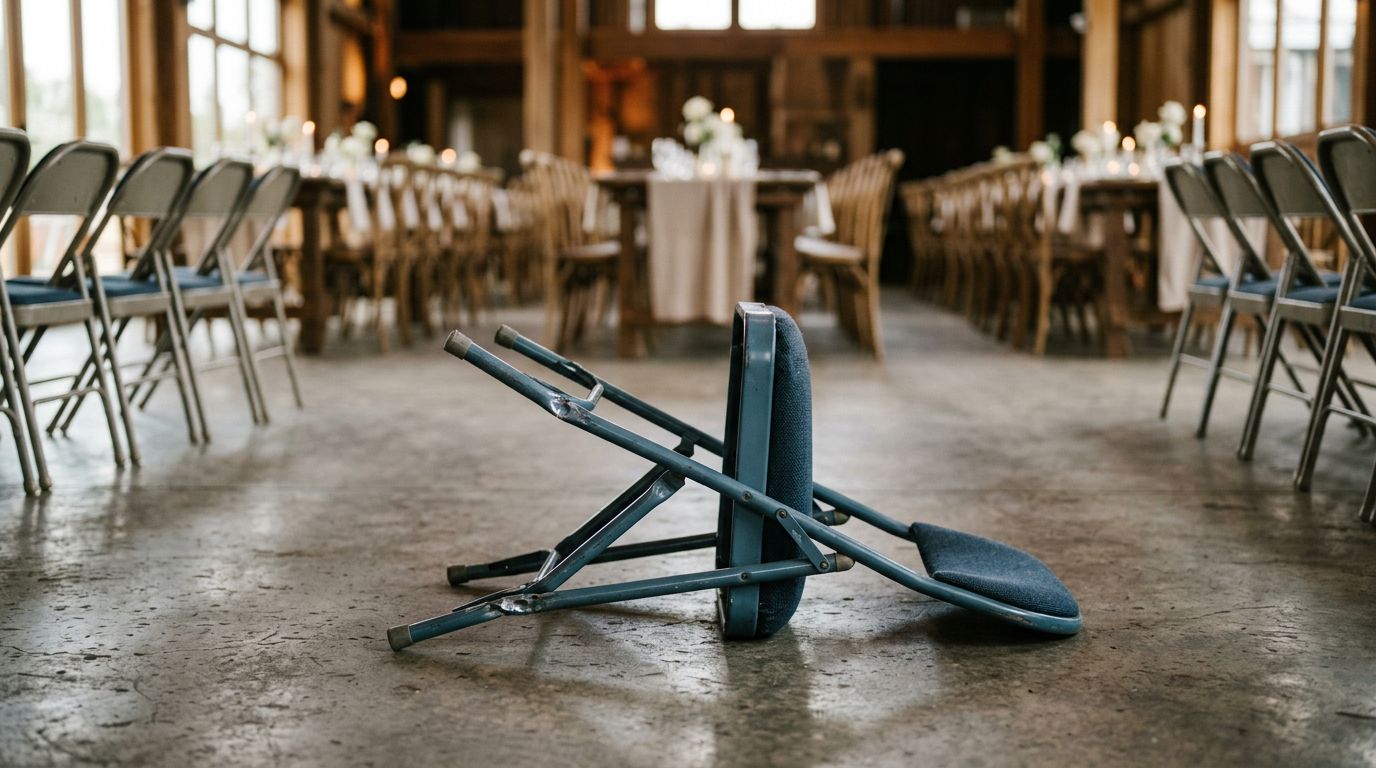
A folding chair should support a guest, not send that person crashing onto a concrete floor. When a chair fails at a wedding, concert, community gathering, conference, or sporting event, folding chair collapse claims may involve more than an ordinary accident.
The responsible party could be the event organizer, venue owner, rental company, chair manufacturer, or another business that controlled the seating. The evidence often disappears quickly, so knowing what to document and when to seek legal help matters.
Key Takeaways
- A chair collapse may support a premises liability, negligence, or product liability claim.
- Photos, witness information, medical records, incident reports, and the actual chair can help prove what happened.
- Florida’s filing deadline depends on the type of claim and when the injury occurred.
- Event organizers and venues may have duties involving inspection, setup, maintenance, and accessible seating.
- A Florida personal injury attorney can identify responsible parties and protect evidence before it is lost.
When a Folding Chair Collapse May Create Legal Liability
Florida law generally requires proof of four basic points in a negligence or premises liability case: duty, breach, causation, and damages.
A venue or event operator may owe guests a duty to provide reasonably safe seating. That duty can include selecting suitable chairs, inspecting them before use, removing damaged chairs, and setting them up on stable flooring. A business may also need a reasonable inspection process when chairs remain in use for long periods.
The facts surrounding the collapse will control the analysis. For example, liability may be stronger if:
- A chair had a cracked frame, loose bolt, broken weld, or bent leg.
- The chair was placed on an uneven surface.
- A missing rubber foot caused the chair to rock.
- Staff knew about damaged seating but left it available.
- The rental company supplied chairs that were visibly defective.
- The chair was opened incorrectly or failed during ordinary use.
A venue does not automatically become responsible whenever a guest falls. The injured person may need to show that the venue or another party knew, or should have known, about the dangerous condition. Evidence of repeated use, prior complaints, inspection records, or visible damage can help establish notice.
The event setting also matters. A private party at a hotel may involve different contracts and responsibilities than a city-sponsored festival. Public events often require site plans, seating arrangements, and safety reviews. For example, Tampa’s ADA compliance guidance for events addresses accessible facilities and event planning. Miami-Dade’s special-event accessibility procedures address accessible routes and wheelchair and companion seating.
Accessibility rules may not decide a chair-collapse case by themselves. However, they can help show who controlled the setup and what safety planning the event required.
What Evidence Supports Folding Chair Collapse Claims?
The chair itself may be the most important piece of evidence. Do not allow the venue, rental company, or another party to discard it, repair it, replace it, or exchange it for another chair before it is documented.
Take photographs of the chair from several angles. Include close images of the broken leg, seat, frame, bolts, screws, welds, hinges, and rubber feet. Wider photos should show where the chair stood, the surface beneath it, nearby tables, lighting, and the surrounding event area.
If possible, preserve the chair in the same condition it had immediately after the incident. Store it in a dry and secure location. Do not attempt to straighten the frame or repair the damage.
Other useful evidence may include:
- Photographs or video taken at the event
- Names and contact information for witnesses
- The event ticket, invitation, contract, or registration record
- A written incident report
- Text messages or emails about the event
- Security camera footage
- Chair rental and delivery records
- Inspection, maintenance, or replacement records
- Medical records and bills
- Pay stubs or other proof of lost income
Ask the event manager to preserve surveillance footage as soon as possible. Many systems automatically record over older video. A written preservation request can help put the venue or organizer on notice that the evidence may be relevant to a claim.
Witnesses may remember details that photographs cannot show. Someone may have seen staff move the chair, noticed that it rocked before the fall, or heard a crack when the frame failed. Obtain names promptly because event attendees may be difficult to locate later.
Medical documentation is equally important. Even when pain seems manageable, injuries such as spinal fractures, torn ligaments, head injuries, and nerve damage may worsen over time. Follow the treatment plan and tell medical providers that the injury resulted from a chair collapse.
Who May Be Responsible for an Event Seating Injury?
Several parties may share responsibility. Identifying each one requires examining the event contract, chair markings, purchase records, and the physical location where the accident occurred.
The venue owner or operator may be liable when unsafe conditions existed on the property or when venue employees selected, stored, inspected, or arranged the chairs. A hotel, restaurant, convention center, church, or community facility may have responsibilities even if another company supplied the furniture.
The event organizer may face a claim if it controlled seating arrangements or ignored complaints. Organizers may include private individuals, wedding planners, corporations, schools, nonprofits, or government agencies.
A chair rental company could be responsible if it supplied damaged equipment, failed to inspect its inventory, or delivered chairs that were unsuitable for ordinary use. The rental agreement may identify who handled setup and who accepted responsibility for the equipment.
A manufacturer or seller may face a product liability claim when a defect caused the failure. Florida product cases can involve:
- A design that makes the chair unsafe
- A manufacturing error affecting one chair or a particular batch
- Inadequate warnings or instructions
The chair does not need to be new for a product claim to exist. However, proving the defect can become harder if the chair is discarded or altered. Product identification, serial numbers, brand markings, purchase documents, and expert inspection may all matter.
An injured person may also share some responsibility. Florida’s comparative negligence rules can reduce a recovery when the evidence shows that the person’s conduct contributed to the accident. Questions may include whether the person exceeded the chair’s stated weight limit, stood on it, moved it, or used it in an unintended way. Those defenses depend on the evidence, not on assumptions made after the incident.
Injuries, Financial Losses, and Filing Deadlines
A chair collapse can cause more than a short-term bruise. A fall may result in a broken wrist, shoulder injury, back injury, hip fracture, concussion, or aggravation of an existing condition. Some people need emergency care, surgery, physical therapy, medication, or long-term assistance.
A claim may seek compensation for:
- Emergency and follow-up medical care
- Surgery, rehabilitation, and prescription costs
- Lost wages and reduced earning ability
- Physical pain and emotional distress
- Permanent impairment or disfigurement
- Transportation and other out-of-pocket expenses
- Loss of normal activities
The deadline depends on the legal theory and the date the claim accrued. For many Florida negligence or premises liability claims arising after March 24, 2023, the limitations period is generally two years. Product liability claims may have a different deadline, often four years, depending on the facts and theory of liability. Wrongful death claims and cases involving minors or incapacity can involve separate rules.
A deadline can arrive before the full extent of an injury becomes clear. Insurance negotiations also do not necessarily stop the statute of limitations. Waiting for a business or insurer to decide what happened can put the claim at risk.
The event may have involved a public entity, such as a city, county, school, or state facility. Claims against government bodies can involve additional notice rules and shorter deadlines. Legal advice should come early when a public agency controlled the venue or event.
What to Do After a Chair Collapses
Your first priority is medical care. Call for emergency assistance when needed, and do not refuse treatment because the injury initially appears minor.
Before leaving, report the incident to a manager, event supervisor, security officer, or venue representative. Ask for the person’s name and request a copy of the incident report. If the event staff will not provide one, write down what you reported, when you reported it, and who received the report.
Take photographs if your condition allows. Photograph the chair, floor, surrounding seating, lighting, signs, and any visible damage. Keep the clothes and shoes worn during the fall. Do not post detailed statements or photographs about the accident on social media.
Next, save medical bills, discharge papers, prescriptions, mileage records, and wage information. Keep a short record of pain, limitations, missed work, and changes to daily activities. These details can help connect the injury to the losses you later claim.
Avoid giving a recorded statement to an insurer before you understand your rights. Do not sign a release for payment of medical bills without reviewing what rights the document gives up. A release may end the claim even when treatment continues.
If you need legal guidance, Florida personal injury attorneys can review the event facts, identify potentially responsible parties, and help preserve evidence. A prompt review is especially important when the chair remains in the possession of a venue or rental company.
How an Attorney Investigates the Accident
An attorney may begin by determining who owned, rented, delivered, arranged, and inspected the chair. Contracts and insurance policies can reveal responsibilities that were not clear to guests at the event.
The investigation may also include a site inspection, witness interviews, requests for surveillance footage, preservation letters, and examination of the chair by a qualified professional. If a product defect is suspected, the attorney may compare the damaged chair with an exemplar and review manufacturer warnings, instructions, and recall information.
Medical records help establish the nature of the injury and whether the fall caused it. Employment records can document missed work or reduced capacity. In serious cases, medical and vocational professionals may assess future treatment and earning losses.
Insurance companies may argue that the chair was misused, that the venue had no notice, or that another party was responsible. A complete investigation gives your attorney a factual basis to challenge those arguments and pursue compensation from the proper parties.
Protecting Your Rights After a Florida Event Accident
A folding chair collapse can leave you facing medical treatment, missed income, and uncertainty about who should pay. The responsible party may not be obvious, particularly when a venue, organizer, rental company, and manufacturer were all involved.
Preserve the chair, document the scene, report the incident, obtain medical care, and track your losses. Because Florida filing deadlines can be short and evidence may disappear, speaking with a personal injury attorney soon after the event can protect your ability to pursue a claim.