
Florida Car Accident Claims When Fault Is Denied
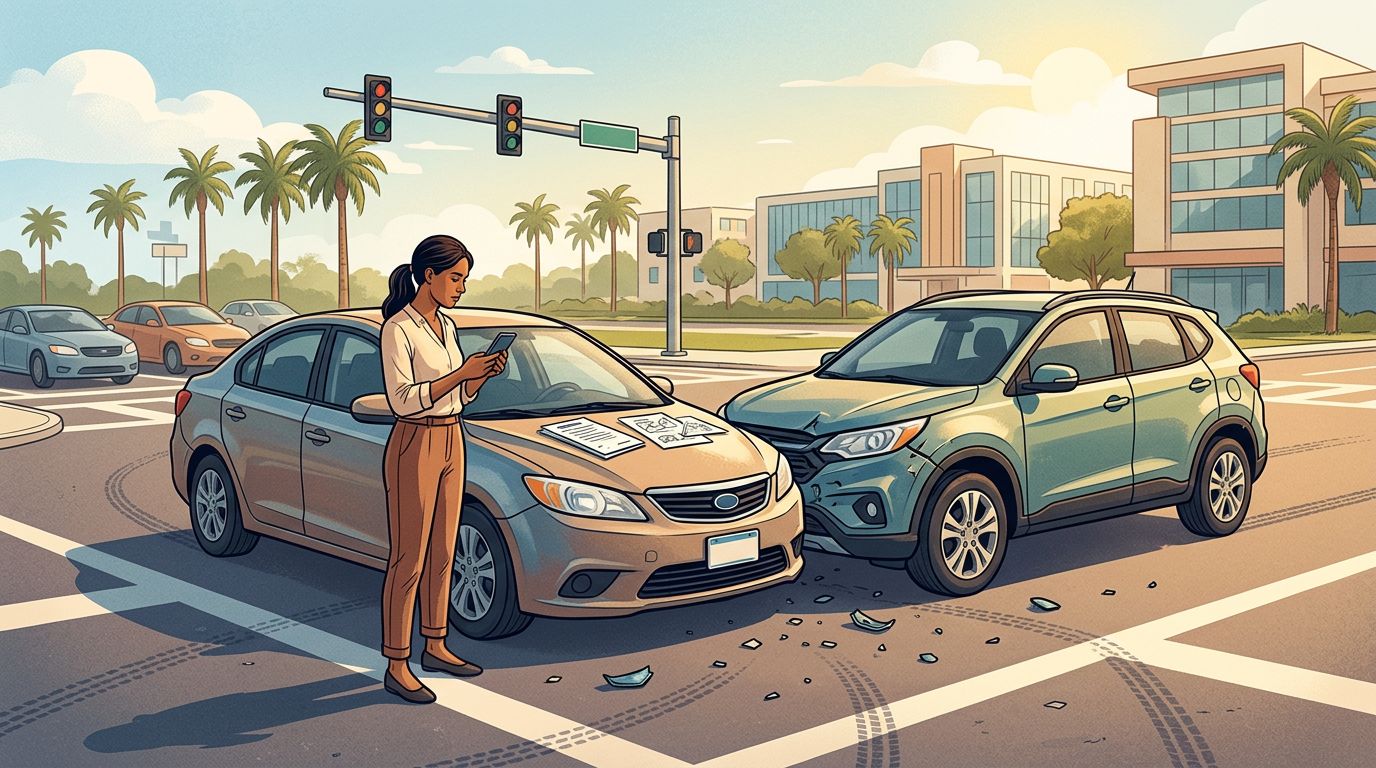
A driver who caused your crash may deny responsibility, but that statement doesn’t decide the outcome. Florida car accident claims often turn on evidence, insurance rules, and how clearly the facts show what happened.
You may still have a valid claim even when the other driver blames you, gives a different story, or refuses to cooperate with the insurer. The sooner you preserve evidence and protect your rights, the harder it becomes for someone else to rewrite the crash.
Why the Other Driver’s Denial Doesn’t End Your Claim
Drivers sometimes deny fault because they fear higher insurance rates, a citation, or personal liability. Others may honestly remember the collision differently. Either way, the denial is only one piece of evidence.
An insurance adjuster may review the crash report, vehicle damage, photographs, witness accounts, traffic-camera footage, and medical records. The adjuster also may compare each driver’s statement with the physical evidence. A driver’s version can lose credibility when it conflicts with skid marks, the point of impact, or the location of vehicle damage.
Florida car accident claims generally require proof that the other driver acted negligently and caused your injuries or losses. Negligence can include speeding, following too closely, distracted driving, failing to yield, running a red light, or making an unsafe turn.
You don’t have to prove your case through the other driver’s admission. In many disputes, the strongest proof comes from independent evidence. A neutral witness, a nearby business camera, or a clear photograph may carry more weight than two competing statements.
The police report can help, but it isn’t always the final word on fault. Officers may record statements, identify citations, and describe the scene without deciding every issue that affects a personal injury claim. You should obtain and review the report instead of assuming it tells the entire story.
Florida’s Department of Highway Safety and Motor Vehicles explains the state’s crash reporting requirements. A crash involving an injury, death, or at least $500 in estimated damage must be reported under Florida law.
Florida Car Accident Claims and No-Fault PIP Benefits
Florida’s no-fault system affects how an injured person first pays medical bills after a collision. Your own personal injury protection, or PIP, coverage may pay covered medical expenses and a portion of lost income, regardless of who caused the crash.
PIP coverage is usually limited to $10,000, depending on the policy. It generally pays 80 percent of reasonable medical expenses and 60 percent of lost income, subject to policy limits and other requirements. Because benefits can be limited, PIP may not cover the full financial effect of a serious injury.
You should seek medical care promptly and notify your own insurer as soon as possible. Florida PIP claims generally require notice within 14 days after the crash. Waiting can give an insurer a reason to dispute whether treatment relates to the collision.
Read more about how Florida no-fault insurance works, including PIP benefits for medical bills and lost wages.
PIP doesn’t always prevent you from pursuing the at-fault driver. A claim against the other driver may seek damages that PIP doesn’t cover, including unpaid medical expenses, future treatment, lost earning capacity, property damage, and pain and suffering. However, Florida law places limits on pain and suffering claims in many auto accident cases. The injury must meet the legal threshold for a lawsuit against the at-fault driver.
That threshold can involve a permanent injury, permanent scarring or disfigurement, or the loss of an important bodily function. A medical diagnosis and long-term prognosis often matter more than how severe the injury appeared at the crash scene.
Evidence That Can Prove Who Caused the Crash
When fault is disputed, start building the record immediately. Memories fade, vehicles get repaired, and surveillance footage may be deleted after a short period.
Take photographs of the vehicles, roadway, traffic signals, lane markings, debris, skid marks, and visible injuries. Include wide images showing the surrounding intersection and close images showing the damage. If you couldn’t take photographs because of your injuries, ask someone who was present to preserve them.
Save the following information:
- The names and contact information of every witness.
- The other driver’s insurance and vehicle information.
- The incident number and police agency handling the report.
- Medical records, prescriptions, bills, and work-loss documentation.
- Photos, videos, dashcam footage, and relevant text messages.
- Notes about your symptoms, treatment, and daily limitations.
Witnesses can be especially important when the other driver changes the story. Ask witnesses what they saw, but don’t pressure them to use particular words or conclusions. Record their contact information and allow your attorney or the insurer to follow up.
Vehicle damage can also show the direction and force of impact. A mechanic, accident reconstruction professional, or other qualified witness may help explain whether the damage matches the other driver’s account. In some cases, vehicles contain event data that can provide information about speed, braking, or airbag deployment.
The crash report may be available through FLHSMV or the investigating agency. You can review the official traffic crash report process and learn how to request the document. FLHSMV’s online purchase service lists a $10 statutory report fee plus a $2 convenience fee for each payment.
Don’t repair or dispose of a damaged vehicle before documenting its condition. If repairs are necessary, keep the estimates, invoices, photographs, and replaced parts when possible. Those records can help connect the damage to the collision.
Medical evidence matters just as much as accident evidence. Tell medical providers that the condition began or worsened after the crash. Follow treatment instructions, attend appointments, and report continuing symptoms. Gaps in care can give the insurer an argument that your injury was minor, unrelated, or resolved.
A denial becomes harder to defend when the physical evidence, witness accounts, and medical timeline all tell the same story.
How to Respond When an Insurance Company Denies Fault
The other driver’s insurer may deny liability after reviewing an initial statement. Ask for the denial in writing and keep every letter, email, and claim message. The explanation may identify the insurer’s position, such as an alleged traffic violation, lack of evidence, or a claim that your injuries existed before the crash.
Don’t respond by guessing or arguing emotionally. A careless statement can be taken out of context and used against you. Instead, provide accurate facts, correct clear errors, and avoid conclusions you can’t support.
You generally must cooperate with your own insurer under the terms of your policy. However, you don’t have to give the other driver’s insurer unlimited access to your medical history or agree to a recorded statement without understanding the risks. You also shouldn’t sign a release before your treatment and losses are reasonably known.
An adjuster may make a quick settlement offer because the insurer wants to close the file before the full extent of your injuries becomes clear. The amount may not account for future treatment, reduced ability to work, permanent limitations, or the effect of the injury on your daily life.
Your attorney can communicate with the insurer, collect supporting records, calculate damages, and challenge the denial. If negotiations fail, filing a lawsuit may be necessary. A lawsuit also allows the legal process to require evidence through discovery, although filing a case doesn’t guarantee a particular result.
Comparative Fault Can Reduce or Bar Recovery
Florida uses modified comparative negligence in many negligence cases. Under the current rule, an injured person who is 50 percent or less at fault may recover damages reduced by that percentage. A person found more than 50 percent responsible may recover nothing.
For example, if your damages total $100,000 and a court finds you 20 percent at fault, your potential recovery could be reduced to $80,000. If the court finds you 51 percent at fault, the rule can bar recovery in the negligence claim.
The other driver’s denial often becomes an attempt to shift part of the blame onto you. The insurer may argue that you were speeding, distracted, failed to brake, or made an unsafe maneuver. Even a partial-fault argument can affect the value of a claim.
Review Florida’s modified comparative negligence rule before accepting an insurer’s fault assessment. The percentage should come from the evidence, not from the adjuster’s opening position.
You also must watch the filing deadline. Florida personal injury claims generally have a four-year statute of limitations, but exceptions can shorten or change the deadline. Claims involving a government vehicle, a death, or certain insurance issues may involve different rules. Waiting until the deadline is close can make evidence harder to obtain and leave little time for investigation.
When Legal Help Makes Sense
You may benefit from speaking with a Florida personal injury attorney when the other driver denies fault, the crash caused significant injuries, or the insurer has offered a quick settlement. Legal advice is also important when multiple vehicles, commercial drivers, uninsured motorists, or disputed medical conditions are involved.
An attorney can examine the crash evidence before blame becomes fixed in the claim file. The legal team may also identify additional insurance coverage, preserve video, consult qualified witnesses, and calculate losses that are easy to overlook.
If you need help evaluating your options, you can contact Florida car accident attorneys at Avard Law Offices for a case review. Bring the crash report, insurance correspondence, photographs, medical records, and wage-loss information if you have them.
Conclusion
A denial of fault doesn’t erase your claim. It means the dispute must be supported with reliable evidence, timely medical documentation, and a clear understanding of Florida’s insurance and comparative-fault rules.
Report the crash, preserve the scene evidence, notify your insurers, and avoid statements that speculate or minimize your injuries. Strong documentation gives Florida car accident claims a factual foundation before the other side’s version becomes the only version in the file.