
Florida Workers Comp Settlement Offers: Accept or Reject?
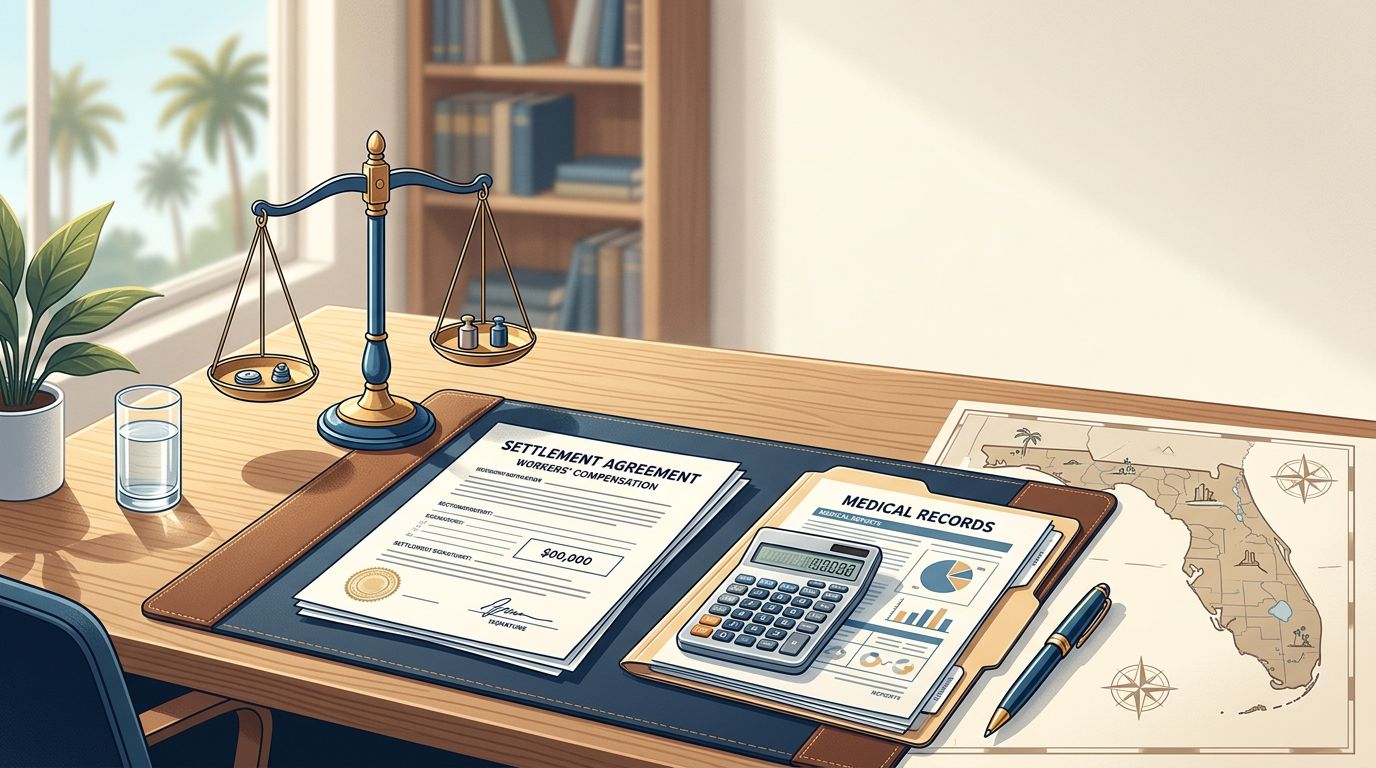
A Florida workers comp settlement offer can bring overdue financial relief, but signing too soon may close benefits you still need. The amount on the check matters, yet the rights you give up may matter more.
Before accepting or rejecting an offer, review future medical treatment, lost wages, disability benefits, insurance coverage, taxes, and the language of the release. A careful decision starts with understanding what the settlement actually ends.
What a Florida workers comp settlement offer means
Florida workers’ compensation settlements are voluntary agreements between an injured worker and the employer or insurance carrier. Neither side has to settle. If negotiations fail, the claim can continue through authorized treatment, benefit requests, mediation, or litigation before a Judge of Compensation Claims.
Most settlement offers involve a lump-sum payment. In exchange, you may release some or all claims connected to the workplace injury. The release may cover past-due benefits, future wage-loss payments, permanent impairment benefits, and future medical treatment.
The exact result depends on the settlement agreement. Some agreements settle only indemnity benefits, which are payments for lost wages or disability. Medical benefits may remain open. Other agreements are called washouts because they attempt to close the entire workers’ compensation case.
A settlement is not automatically fair because the carrier made an offer. Insurance companies consider their expected costs and litigation risk. Their first proposal may leave out future surgeries, prescription medication, physical therapy, or reduced earning capacity.
Review the written terms before discussing whether the number feels acceptable. A verbal promise from an adjuster does not replace the language in the final agreement.
For a closer look at Florida settlement structures, review this Florida workers comp settlement guide.
When accepting the offer may make sense
Acceptance can be reasonable when your medical condition is stable, the settlement reflects the benefits you may lose, and you have a realistic plan for future care. Reaching maximum medical improvement, or MMI, often provides a clearer basis for evaluating a settlement. MMI means your authorized doctors believe additional treatment is unlikely to improve your condition, although it doesn’t mean you are fully recovered.
A settlement may also make sense when the carrier has disputed important parts of your claim and the offer provides a reasonable compromise. Litigation can take time and carries uncertainty. A guaranteed payment may help with household expenses, retraining, or a change in employment.
However, compare the proposed payment with the value of the benefits you would surrender. Consider:
- Whether future medical care remains open or closes permanently.
- The cost of expected treatment, including surgery, injections, therapy, medication, and medical equipment.
- Whether you may qualify for temporary or permanent disability benefits.
- Your current ability to work and your expected future earnings.
- Any unpaid medical bills, mileage reimbursement, or past-due compensation.
- Attorney fees, case costs, child support obligations, and other deductions.
Your age, education, work history, restrictions, and ability to find comparable employment can affect the value of wage-related benefits. A serious back injury may limit future work even when you can return to a lighter job. That loss deserves attention during negotiations.
The Florida workers compensation settlement guide also discusses the difference between resolving wage benefits and closing medical care.
A lump sum should pay for the rights you are giving up, not only the bills you have today.
Why rejecting a settlement offer may be the right choice
Rejecting an offer doesn’t end your claim. It usually means negotiations continue or the case proceeds under the workers’ compensation process. You may still pursue authorized medical care and benefits supported by the evidence, subject to Florida’s deadlines and procedural requirements.
A low offer deserves careful review when your doctors expect substantial treatment. For example, a carrier may calculate a settlement using current symptoms while your orthopedic surgeon recommends a possible future operation. If the agreement closes medical benefits, you could become responsible for bills that exceed the settlement.
You may also need to reject an offer when the insurer has not accepted the full injury. A workplace accident can cause more than one condition. A shoulder injury may involve a torn tendon, nerve symptoms, or a neck condition that requires separate medical proof. Settling before the complete diagnosis is documented can weaken your position.
A rejected offer may lead to further evidence gathering. Your attorney might obtain medical records, employment records, wage information, deposition testimony, or an independent medical examination. The carrier may increase the offer after seeing stronger proof, although no increase is guaranteed.
Don’t reject an offer based only on emotion. A case can have legal weaknesses, disputed causation, limited medical evidence, or difficulty proving lost earning capacity. The right decision depends on the strength of the claim and the benefits at risk.
The danger of closing future medical benefits
Medical coverage is often the most important settlement issue. If a full and final agreement closes medical benefits, the insurance carrier generally won’t pay for later treatment related to the settled injury. That can include surgery, diagnostic testing, injections, therapy, medication, and specialist visits.
A check that seems substantial today may not cover years of treatment. Ask your doctors for a clear opinion about your condition and likely care. You should know whether you need additional procedures, whether your medications may change, and whether your restrictions are expected to last.
The agreement should identify the benefits being settled. Read every reference to future medical care, indemnity benefits, Medicare interests, liens, and the employer’s release. If the language is broad, ask what rights it eliminates.
Protecting future medical care in a settlement is especially important when your treatment remains active or your diagnosis is still developing.
Medicare can create another concern. A settlement must account for applicable government interests when a worker receives Medicare or may become eligible. Your attorney should review whether a Medicare Set-Aside analysis is needed and how the agreement addresses future treatment. Don’t assume that allocating money in a document automatically protects you from every payment problem.
Before accepting, compare the settlement with a reasonable estimate of future medical costs. You don’t need to predict every bill, but you should understand the major risks. If doctors disagree about your prognosis, waiting for better medical evidence may be safer than signing.
What happens after you accept
The settlement paperwork normally describes the payment, benefits being released, responsibility for medical care, attorney fees, costs, liens, and other conditions. Once you sign, changing your mind may be difficult or impossible.
Under Florida Statutes section 440.20, a lump-sum settlement submitted through a joint petition may require approval by a Judge of Compensation Claims. The judge considers the interests of the parties and may approve or reject the proposal. If the proposal isn’t approved, the settlement is void.
The approval process also addresses attorney fees. Florida law provides that the lump-sum settlement payment is due within 14 days after the judge mails the order approving the attorney’s fees. That deadline applies after the required approval process, not necessarily when you sign the agreement.
A settlement may also need to address child support arrears or other valid liens. Those obligations can reduce the amount you receive. Ask for a written calculation showing the gross settlement, attorney fees, case costs, lien payments, and estimated net amount.
After approval, keep copies of the agreement and order. You may need them for tax reporting, public benefits, Medicare questions, or future employment-related issues. Don’t destroy medical records simply because the workers’ compensation case has ended.
Questions to ask before signing
A settlement conference or attorney consultation should answer practical questions, not only produce a dollar figure. Ask:
- Which benefits does this agreement close?
- Will the insurance carrier continue paying authorized medical treatment?
- What treatment do my doctors expect in the next year?
- How does the offer compare with the likely value of future wage benefits?
- What happens if my condition gets worse?
- Are attorney fees, costs, liens, and child support deductions included?
- Could the settlement affect Social Security Disability, Medicare, Medicaid, or other benefits?
- When should I expect payment after approval?
- What deadlines apply if I reject the offer?
- What evidence would make the offer stronger?
Bring the complete offer, medical records, benefit payment history, job information, and questions to your lawyer. If you don’t understand a release provision, ask for an explanation in plain language before signing.
A lawyer can also identify terms that may look minor but have lasting effects. The settlement may require you to resign, waive reemployment rights, accept responsibility for future treatment, or resolve disputed liens. Each term can affect your finances after the case closes.
How a Florida workers comp settlement is valued
Florida doesn’t use one standard settlement amount for every injury. The value depends on the benefits owed, the strength of the medical evidence, the worker’s earnings, the extent of permanent limitations, and the cost of future care.
A useful review separates the claim into categories. First, calculate unpaid benefits and disputed amounts from the past. Next, estimate future wage-related benefits based on work restrictions, impairment, age, and earning capacity. Then, evaluate future medical expenses and the risk that treatment will continue.
The carrier also weighs its defenses. It may dispute whether the injury happened at work, whether a condition is related to employment, whether treatment is reasonable, or whether the worker can return to a particular job. Those disputes affect negotiation strength.
A high settlement isn’t always better if it closes medical benefits you can’t afford to replace. A lower settlement may be more useful if medical coverage stays open, depending on the agreement. The terms and net recovery must be reviewed together.
A Florida workers comp settlement should fit your expected life after the case, including work, treatment, insurance, and household income. That analysis is more reliable than comparing your offer with an online average.
Get advice before accepting or rejecting
An adjuster may encourage a quick decision, especially when you need money. You still have the right to review the proposal, ask questions, and negotiate. Don’t sign a release during a stressful phone call or before you understand every benefit it affects.
If your claim involves a serious injury, disputed benefits, permanent restrictions, or ongoing treatment, speak with a Florida workers’ compensation attorney before responding. The lawyer can assess the offer, identify missing benefits, explain the release, and negotiate with the carrier.
If you already signed an agreement, get legal advice promptly. The available options depend on the document, approval status, alleged misrepresentation, and timing.
Conclusion
A Florida workers comp settlement can provide financial certainty, but it may also end medical and wage benefits forever. Accepting makes sense only when the payment and terms account for the rights you are releasing.
Before you decide, confirm your medical outlook, calculate the net payment, review liens and benefit effects, and understand whether future care remains open. A settlement offer is a starting point for informed negotiation, not a deadline to sign without advice.