
VA Knee Ratings in 2026: Instability and Meniscus Evidence
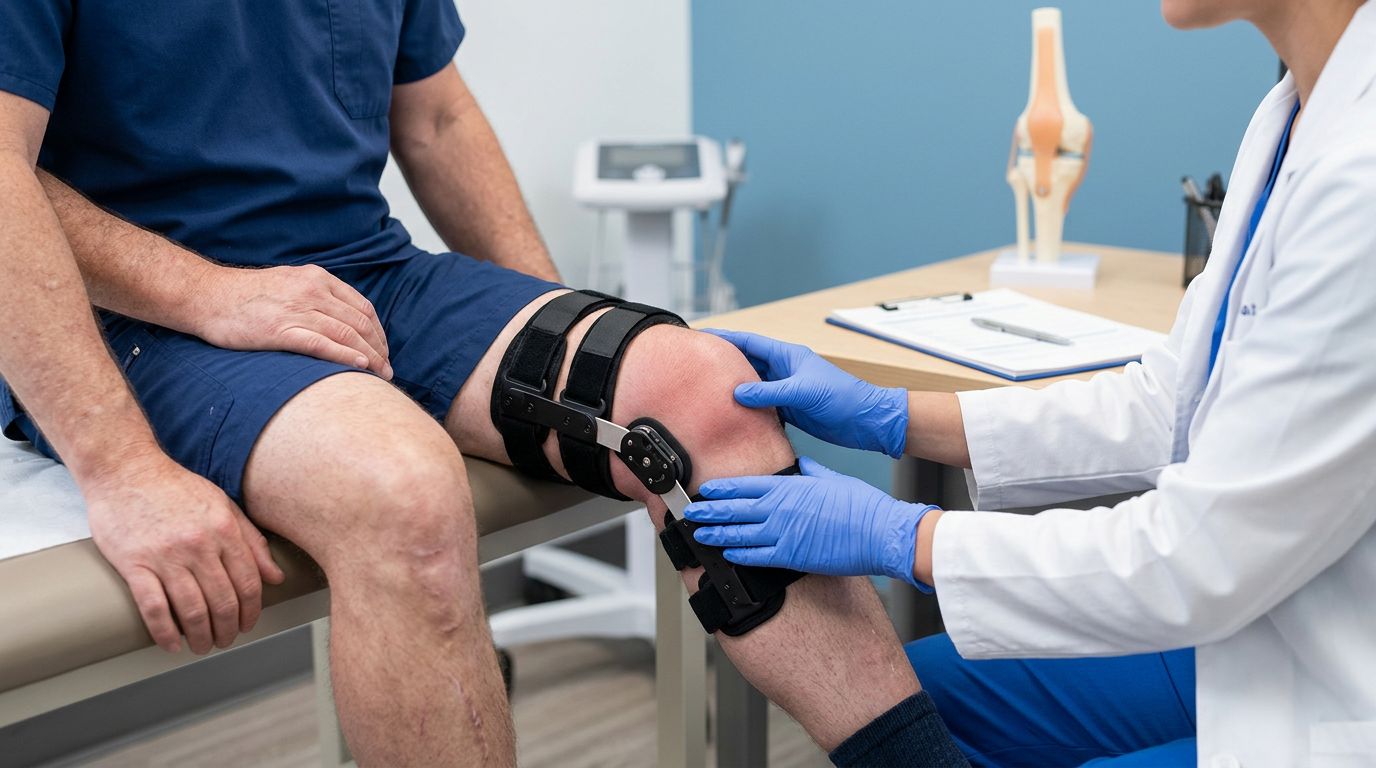
A knee that buckles, locks, or swells can affect every part of your day. Yet the VA rating may depend on details that do not appear in a diagnosis alone. VA knee ratings often turn on the exact type of impairment, the medical evidence, and how symptoms limit movement and stability.
In 2026, knee claims require close attention to Diagnostic Code 5257 for instability and Diagnostic Codes 5258 and 5259 for meniscus conditions. The right evidence can also support separate ratings for limited flexion or extension. Understanding how these rules work can help you identify gaps before filing a claim or appealing a denial.
What VA Knee Ratings Measure in 2026
The VA rates a service-connected knee based on functional impairment. A torn ligament, meniscus injury, arthritis diagnosis, or surgical history helps establish the medical condition. The rating still depends on how that condition affects the knee.
The primary knee provisions appear in the current knee rating schedule under 38 C.F.R. § 4.71a. Common diagnostic codes include:
- Diagnostic Code 5257 for recurrent subluxation or lateral instability, along with certain patellar instability conditions.
- Diagnostic Code 5258 for dislocated semilunar cartilage, commonly called a meniscus, with frequent locking, pain, and joint effusion.
- Diagnostic Code 5259 for symptomatic removal of semilunar cartilage.
- Diagnostic Code 5260 for limited flexion.
- Diagnostic Code 5261 for limited extension.
A veteran may have more than one knee impairment. For example, the same knee may have instability, restricted flexion, and a meniscus condition. VA cannot assign separate ratings for the same symptoms twice, but distinct manifestations may support separate evaluations.
The rating schedule changed for some musculoskeletal conditions on February 7, 2021. A claim involving an earlier period may require consideration of the older criteria and the current criteria. The effective date of the evidence and the period being rated can affect which version applies.
A current claim usually needs more than an MRI showing a tear. The record should connect the diagnosis to symptoms such as giving way, locking, swelling, limited motion, or difficulty walking.
How VA Knee Ratings Handle Instability in 2026
Diagnostic Code 5257 covers recurrent subluxation, lateral instability, and certain patellar instability conditions. The current criteria focus on the type of ligament or patellar problem and whether a medical provider prescribed a brace or assistive device.
Ligament-related instability
For a sprain, incomplete ligament tear, or repaired complete ligament tear that causes persistent instability, the current criteria provide a 10 percent evaluation when the veteran does not have a prescribed brace or assistive device for ambulation.
A complete ligament tear that remains unrepaired, or a failed repair that causes persistent instability, can support a 20 percent evaluation when a medical provider prescribes either an assistive device or bracing for ambulation. The same type of condition can support 30 percent when both a prescribed assistive device and bracing are required.
The regulation refers to devices such as canes, crutches, and walkers. A veteran’s use of a cane can still provide important evidence, even when the cane was not formally prescribed. However, the specific 20 and 30 percent criteria refer to a prescription by a medical provider.
Medical records should identify the ligament involved, whether the tear is complete, whether a repair failed, and whether instability remains persistent. A note that only says “knee pain” does not establish the same impairment as a documented ACL tear with recurrent giving way.
Patellar instability
The current schedule separately addresses a diagnosed condition involving the patellofemoral complex with recurrent instability. A 10 percent evaluation may apply when the condition causes recurrent instability without a prescribed brace or assistive device.
A prescribed brace can support a 20 percent evaluation. A prescribed brace combined with a prescribed assistive device can support 30 percent.
Patellar dislocation, recurrent subluxation, apprehension, and tracking problems should appear in the medical record when they are present. Orthopedic examinations may include patellar movement, apprehension testing, alignment findings, and a discussion of prior stabilization surgery.
Older claims may use the former version of Diagnostic Code 5257, which described instability as slight, moderate, or severe. A VA appellate decision applying the former instability criteria illustrates why the date of the rating period matters. Veterans should not assume that a newer decision will use the same wording as an older examination or rating decision.
The current criteria do not make a brace or cane the only proof of instability. Medical testing, treatment records, credible descriptions of buckling, and the history of falls can also matter. Still, the type of instability and the prescribed treatment should be clearly documented.
Meniscus Evidence Under Diagnostic Codes 5258 and 5259
The meniscus is also called the semilunar cartilage in the VA rating schedule. A meniscus tear can cause pain and limited motion, but the evidence must show which symptoms and residuals remain.
When Diagnostic Code 5258 may apply
Diagnostic Code 5258 provides a 20 percent evaluation for dislocated semilunar cartilage with frequent episodes of locking, pain, and effusion into the joint.
The wording matters. An MRI that identifies a meniscal tear may establish the structural injury, but it does not automatically prove frequent locking or joint effusion. Medical records should describe how often the knee locks, whether it becomes stuck during movement, and whether a clinician finds or aspirates fluid from the joint.
A veteran’s statement can describe the actual episodes. For example, the record may explain that the knee locks while climbing stairs, remains stuck for several minutes, or suddenly releases with sharp pain. Treatment notes can then confirm swelling, reduced motion, tenderness, or an effusion.
The word “frequent” has no single number that applies to every claim. Consistent reports over time are more persuasive than a vague statement that the knee locks “sometimes.” A symptom diary can help preserve dates, triggers, duration, and the effect on walking or standing.
When Diagnostic Code 5259 may apply
Diagnostic Code 5259 provides a 10 percent evaluation for symptomatic removal of semilunar cartilage. This code often becomes relevant after a partial or total meniscectomy.
Surgery alone does not guarantee a 10 percent rating. The knee must remain symptomatic after the removal. Pain, swelling, catching, reduced motion, tenderness, or other residual problems can help establish that the surgical site continues to affect function.
Operative reports, orthopedic follow-up notes, physical therapy records, and post-surgical imaging can all help. The claim should identify the procedure and explain the symptoms that continued after recovery.
A veteran generally should not receive separate ratings under both 5258 and 5259 for the same meniscus symptoms. Diagnostic Code 5258 concerns dislocated cartilage with a particular symptom pattern. Diagnostic Code 5259 concerns residual symptoms after cartilage removal. VA must avoid compensating the same pain, locking, or swelling twice.
A meniscus rating and an instability rating may be assigned separately when each rating covers different manifestations. For example, recurrent buckling may support Diagnostic Code 5257 while documented locking and effusion may support Diagnostic Code 5258. The evidence must distinguish those problems rather than describe every symptom as one general knee complaint.
An MRI can prove that a meniscus injury exists, but the rating usually depends on what the knee does after the injury.
Evidence That Supports a Higher Knee Rating
A strong claim connects the medical condition to repeated, observable limitations. The most useful evidence usually comes from several sources rather than one isolated appointment.
Medical records should identify the current diagnosis and the affected knee. MRI reports can show an ACL tear, meniscus injury, cartilage damage, or degenerative changes. X-rays may show arthritis or other structural findings. These records establish the condition, but they should be read alongside treatment notes and functional reports.
Orthopedic examinations are especially important for instability claims. The examiner may perform Lachman, anterior drawer, posterior drawer, varus, valgus, or patellar stability testing. The record should state whether the knee gives way and whether the instability is related to a ligament injury, patellofemoral condition, or another cause.
A prescription for a brace, cane, crutches, or walker can have particular importance under the current Diagnostic Code 5257 criteria. Keep copies of written prescriptions, durable medical equipment orders, and treatment instructions. A note that says a provider prescribed a hinged knee brace for ambulation is more useful than a bare statement that you own a brace.
Lay evidence can fill in the daily details that a short clinical appointment may miss. A veteran should explain how often the knee buckles, whether falls occur, what activities trigger locking, and how far the person can walk before needing to stop. Statements from a spouse, coworker, friend, or family member may confirm observed falls, use of a brace, or difficulty using stairs.
The record should also address flare-ups and repeated use. Knee symptoms may be less severe during a brief morning examination than after standing at work, walking across a large facility, or climbing stairs. Explain the frequency, duration, triggers, and functional loss during those periods.
The VA Knee and Lower Leg Disability Benefits Questionnaire can provide a useful structure for the examination. It asks about diagnoses, range of motion, instability, meniscus conditions, surgery, assistive devices, flare-ups, and functional loss. Review your medical history before the appointment so you can describe your actual limitations accurately.
Treatment gaps do not automatically disprove a claim. Veterans may avoid appointments because of cost, transportation, work schedules, or the belief that knee pain is normal after service. Still, a long period without treatment can make the current severity harder to establish. Explain the reason for any gap and provide other evidence when available.
Range of Motion May Support a Separate Evaluation
Instability and meniscus symptoms are only part of the analysis. VA also evaluates how far the knee can bend and straighten.
Diagnostic Code 5260 rates limited flexion. Flexion limited to 60 degrees is noncompensable under the code. A 10 percent evaluation applies at 45 degrees, 20 percent at 30 degrees, and 30 percent at 15 degrees.
Diagnostic Code 5261 rates limited extension. Extension limited to 5 degrees is noncompensable. A 10 percent evaluation applies at 10 degrees, 20 percent at 15 degrees, 30 percent at 20 degrees, 40 percent at 30 degrees, and 50 percent at 45 degrees.
Pain can affect the rating even when the measured motion does not reach the highest threshold. The examiner should record where pain begins, whether repeated movement causes additional loss, and whether flare-ups reduce function. A veteran who can bend the knee to 100 degrees during a brief examination may have a lower usable range after prolonged standing or repeated stair climbing.
VA may assign separate evaluations for flexion and extension when the evidence supports two distinct limitations. It may also assign a separate instability evaluation with limitation of flexion when each condition produces different impairment. The combined rating follows VA’s combined-ratings rules, so separate percentages are not always added as simple arithmetic.
A knee examination should address active and passive motion, weight-bearing and non-weight-bearing motion when appropriate, and the effect of repeated use. If the examiner cannot estimate additional loss during a flare-up, the report should explain why. A vague statement that the examination was normal may not capture the veteran’s actual disability picture.
Building a Claim or Appeal in Florida
A knee claim begins with service connection unless the knee is already service-connected. Direct service connection generally requires evidence of a current knee disability, an in-service injury or disease, and a connection between the two.
Service treatment records may show a torn ligament, knee pain, swelling, a profile, physical therapy, or a documented injury. However, the absence of extensive in-service treatment does not automatically end the claim. Post-service records, consistent symptoms, and a medical nexus opinion may help establish what happened after separation.
Secondary service connection is another possible path. A service-connected ankle, hip, back, or other lower-extremity condition may alter gait and place additional stress on the knee. A medical opinion should explain whether the service-connected condition caused or aggravated the knee disability. Aggravation claims require evidence that the knee became worse because of the service-connected condition.
When the knee is already service-connected, an increased-rating claim usually focuses on current severity. The evidence should show what has changed, how often symptoms occur, and whether the existing percentage reflects the present disability.
A VA compensation and pension examination can affect the outcome. Answer questions directly and describe the symptoms you experience over time, not only how the knee feels while sitting in the examination room. Do not exaggerate, but do not minimize falls, locking, brace use, swelling, or limitations at work and home.
If VA denies the claim or assigns a lower evaluation, the decision should be read closely. Common reasons include a finding that instability was not shown, a conclusion that a meniscus tear is unrelated to service, reliance on a single examination, or application of the wrong rating criteria.
Under the modern review system, a veteran may select a Supplemental Claim, Higher-Level Review, or Board Appeal. A Supplemental Claim uses new and relevant evidence. Higher-Level Review asks a senior reviewer to identify an error using the existing record. A Board Appeal may involve direct review, submission of additional evidence, or a hearing.
The deadline is important. In many situations, filing the next review request within one year of the decision helps preserve the potential effective date. A Florida veteran can discuss the record with Florida veterans disability attorneys before choosing a review option.
Common Problems in Knee Rating Claims
Several evidence problems appear often in instability and meniscus cases.
- An MRI is submitted without records describing locking, effusion, giving way, or functional loss.
- The veteran reports “severe pain” but does not explain how often the knee buckles or what activities cause symptoms.
- A brace or cane is used regularly, but the claim does not include the provider’s prescription or treatment instructions.
- The evidence discusses a meniscus tear but does not distinguish a current tear from residual symptoms after meniscus surgery.
- The claim ignores the February 2021 change in Diagnostic Code 5257 when the appeal covers more than one rating period.
- The veteran assumes that one knee percentage automatically includes every symptom, even when separate motion and instability findings may apply.
Consistency also matters. Statements to VA, private doctors, physical therapists, and employers should describe the same general pattern. Symptoms can vary, but unexplained differences can weaken credibility.
A single normal stability test does not always describe the knee during a flare-up or after repeated use. At the same time, a veteran should address the normal finding honestly and explain when buckling occurs. VA must evaluate the full record, including medical evidence and competent lay reports.
Conclusion
VA knee ratings in 2026 depend on more than a diagnosis or MRI. Instability claims require evidence of the type and persistence of instability, while meniscus claims require proof of locking, pain, effusion, or continuing symptoms after cartilage removal.
A complete record connects those symptoms to daily function, medical findings, prescriptions, and the correct rating period. When the evidence separates instability, meniscus symptoms, and restricted motion, the VA can evaluate each impairment under the appropriate rule.