
Florida Underinsured Motorist Claims After a Serious Crash
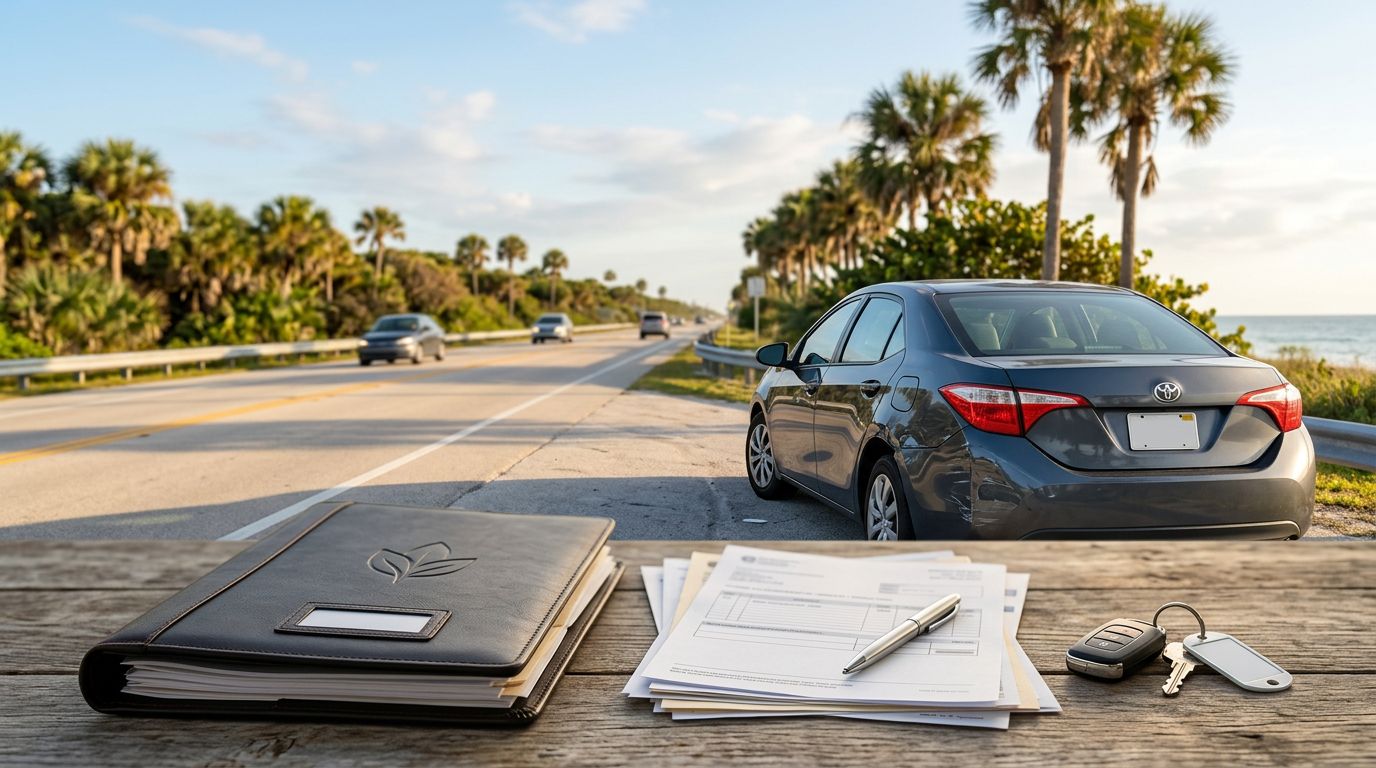
A serious Florida crash can leave you facing medical bills long after the at-fault driver’s bodily injury liability limits have been exhausted. Florida underinsured motorist claims may provide compensation when those limits cannot cover the full value of your injuries.
Your personal injury protection may help pay some serious medical bills and lost income, but it doesn’t fully compensate most serious injuries. Before accepting a settlement or signing a release, review your auto insurance policy and understand whether underinsured motorist coverage may respond after the liability insurance is exhausted.
Key Takeaways
- Florida underinsured motorist coverage may help when the at-fault driver’s bodily injury liability limits cannot cover the full value of your injuries.
- Review the complete policy, UM selection or rejection form, stacking provisions, named insured, resident-relative definitions, and every potentially available household policy.
- Give your UM carrier the required settlement notice before accepting the at-fault driver’s settlement or signing a release; the carrier generally has 30 days to respond.
- Preserve medical records, wage-loss documentation, crash evidence, and proof of your daily limitations to support fault, causation, and damages.
- Serious injuries, disputed fault, multiple policies, stacking questions, and requested releases are situations where legal review may help protect your claim.
Why UM Coverage Matters After a Florida Car Accident
Uninsured motorist coverage protects you when a responsible driver has no liability insurance for injuries. Underinsured motorist coverage applies when the driver has insurance, but the available limits are too low to cover your damages. Many Florida policies refer to both protections as UM coverage or UM/UIM coverage.
Florida’s motor vehicle insurance requirements generally include the following for most registered vehicles:
- $10,000 in PIP coverage
- $10,000 in property damage liability (PDL)
Florida generally doesn’t require ordinary drivers to purchase bodily injury liability coverage. As a result, a driver may have insurance for property damage but no coverage for your injuries. Even when a driver carries injury coverage, the limits may fall far below the cost of hospitalization, surgery, rehabilitation, lost earnings, and long-term care.
Recent estimates have placed Florida’s uninsured driver rate at roughly 16% to more than 20%, depending on the year and research method. That leaves injured people relying on their own coverage more often than many drivers expect.
The coverage available depends on the auto insurance policy purchased:
| Coverage | What it generally pays |
|---|---|
| PIP | Part of your medical expenses and lost income, regardless of fault, up to the coverage limit |
| PDL | Damage you cause to another person’s vehicle or property |
| Bodily injury liability | Injury damages you cause to other people, if you purchased this coverage |
| Uninsured motorist coverage | Covered bodily injury damages you suffer because another driver caused the crash and lacks adequate coverage |
For household coverage, the named insured usually controls whether UM protection is selected or rejected. Confirm which household member is listed as the named insured before relying on that protection.
UM coverage is usually a first-party claim because you make it against your own insurance company. That doesn’t mean the carrier automatically accepts responsibility. You still must prove another driver’s fault, show that the coverage applies, connect the crash to your injuries, and document your damages.
UM coverage generally doesn’t pay to repair your vehicle. Collision coverage or the responsible driver’s property damage coverage addresses vehicle damage. UM/UIM protection focuses on bodily injury, sickness, disease, and death.
How Section 627.727 Governs Florida UM/UIM Coverage
Florida statutes, particularly Section 627.727, govern uninsured motorist coverage. Review the Florida statutory requirements for UM coverage before examining your auto insurance policy. Do not rely only on the declarations page when discussing a claim with an adjuster.
When an auto policy includes bodily injury liability coverage, the insurer generally must offer UM coverage. The offered UM limits usually must match the bodily injury limits purchased by the policyholder. The named insured can choose lower limits or reject UM coverage, but that choice must comply with Florida statutes’ written-form requirements.
The named insured’s decision usually affects other insured people under the policy. A spouse or resident family member may find that a household policy lacks UM protection, even when someone expected coverage to exist.
A named insured’s signed rejection is serious and should be examined for statutory compliance. If the rejection is compliant, the policy may provide no UM benefits. However, the form, wording, policy transaction, and insurer’s compliance can still matter, so verify who signed the form. Do not assume the insurance company’s statement settles the issue; request the actual signed form and policy documents.
UM coverage applies only when you are legally entitled to recover damages from the responsible motorist. In practical terms, you must establish:
- The other motorist caused the collision or bears legal liability for it.
- The crash caused your bodily injuries.
- Your total damages exceed the compensation already available from other sources.
- The policy provides UM/UIM benefits for your claim.
An uninsured vehicle can include one driven by a motorist with no applicable bodily injury insurance. Hit-and-run situations may also qualify when the facts and policy requirements support coverage. A motorist may be underinsured despite carrying some liability insurance. Underinsured motorist coverage may apply when those limits cannot satisfy a valid injury claim’s full value.
Steps to Take Before Filing a UM or UIM Claim
Your actions during the first weeks after a serious crash can affect the claim later. Focus on medical care, documentation, and preserving every possible source of insurance.
1. Get medical attention and report the crash
Call 911 when anyone may be injured. Obtain emergency care when recommended, and follow up with the physicians treating your injuries. Florida personal injury protection (PIP) may cover 80% of reasonable medical expenses and 60% of lost income, subject to policy limits and statutory requirements, but PIP doesn’t replace a UM claim.
Report the accident to law enforcement and obtain the accident report when it becomes available. A police report can help establish the location, vehicles, witnesses, and initial account of the collision. It isn’t the final decision on fault, however. Evidence developed later may show that the other driver violated traffic laws or caused the impact.
2. Identify every potentially available policy
Ask for the other driver’s insurance information, but don’t stop there. Locate your own declarations page and full auto insurance policy. Also check policies held by your spouse, resident relatives, or other household members.
Coverage may depend on whether you were driving your own vehicle, riding as a passenger, walking, using a borrowed car, or occupying a vehicle listed on another policy. Identify the named insured on each declarations page. Check whether a spouse or resident relative is the named insured under another policy. Confirm which people qualify as insureds, including household members of the named insured.
The declarations page alone may not reveal every exclusion, stacking term, or resident-relative coverage provision.
Look for:
- UM or UIM limits
- A written rejection or lower-limit selection
- Stacked or nonstacked coverage
- Insureds and resident relatives
- Policy definitions and exclusions
- Other household vehicles and policies
3. Notify your insurer promptly
Give your own insurance company timely notice of the accident and potential UM claim. Use the notice method required by the policy, and keep copies of every letter, email, claim number, and delivery confirmation.
You can report the facts without giving the carrier unrestricted access to your entire medical history. Before providing a recorded statement or signing a broad medical authorization, understand what the request covers. If your injuries are serious, an attorney can communicate with the adjuster and help prevent an incomplete statement from being used against you.
4. Preserve evidence
Keep photographs of the vehicles, roadway, traffic signals, visible injuries, property damage, and any relevant conditions. Save text messages, dash-camera footage, witness information, medical records, bills, and correspondence with every insurer. Keep work records documenting lost wages, while separately preserving evidence of broader earning-capacity damages.
Don’t discard damaged safety equipment, such as a helmet or child restraint, before discussing its importance with counsel. Evidence can disappear quickly after a collision, especially when surveillance footage or vehicle data is involved.
5. Resolve liability and damages carefully
The other driver’s liability insurer may offer its available coverage quickly. That offer may help with immediate financial pressure, but accepting it often requires signing a release. A release can affect your ability to pursue additional compensation.
Before accepting an offer, identify all available liability and UM policy limits, the value of your injuries, and the procedures required by your own policy. The settlement process with the other driver’s insurer and the UM claim against your carrier are connected, but they are separate legal matters.
Building Evidence for a Stronger UM Claim
The insurer will examine more than the fact that you went to the hospital. It will evaluate the collision’s cause, symptom timing, treatment, daily effects, and total damages, not just incurred expenses.
Medical records should connect the crash to the diagnosis and explain the treatment plan. If you had a prior condition, the question may be whether the collision aggravated it or caused a new injury. A pre-existing condition doesn’t automatically eliminate a claim, but incomplete records can make causation harder to prove.
Documentation of lost wages requires more than a statement that you missed work. Pay records, employer documentation, tax records, disability records, and medical restrictions can help show the amount and reason for the loss. If the injury affects your future work capacity, medical and vocational evidence may be necessary.
Your claim may include reasonable and necessary medical expenses, future treatment, wage loss, reduced earning capacity, pain and suffering, and other non-economic losses. Florida’s injury threshold rules generally apply before a person can recover non-economic damages in an auto accident. Serious permanent injuries, significant permanent scarring or disfigurement, death, and certain permanent losses may satisfy that threshold.
Keep a simple record of surgeries, therapy, medications, pain levels, sleep problems, mobility limits, and missed family or work activities. This record doesn’t replace medical proof, but it helps explain how the injury affects your life.
The 30-Day Notice Rule Before Settling With the At-Fault Driver
Florida’s settlement notice requirement is one of the most important parts of a UM claim. Under florida statutes, notice is required before you finalize a settlement with the at-fault driver’s liability insurer when you may seek additional UM benefits.
The notice gives your UM carrier a chance to protect its subrogation rights. After receiving notice, the carrier generally has 30 days to either pay the proposed settlement amount or consent to the settlement.
Check the florida statutes and your policy for the required delivery method and response procedure. Send the notice by certified or registered mail when required, and keep the return receipt or other proof of delivery. Include the settlement offer, the proposed release if available, accident information, the parties’ names, and enough detail for the carrier to understand the proposed resolution. Email or an online portal may help, but shouldn’t replace the required formal delivery method.
Do not sign a release with the liability insurer until your UM carrier has received notice and its 30-day response period has been addressed.
If the UM insurer pays the settlement amount, it may acquire subrogation rights against the responsible motorist to the extent of its payment. If the carrier consents, it may require steps that preserve its ability to pursue the other driver. Those subrogation rights are one reason the carrier must receive notice before the underlying claim is released.
Silence isn’t a safe basis for assuming that the carrier consented. When the claimant is the named insured, that person should confirm the carrier received the notice. If the insurer doesn’t respond, contact counsel promptly and preserve all delivery records. If you already accepted a settlement without giving notice, don’t assume the UM claim is automatically lost. The legal effect requires fact-specific review of the policy, the notice provided, the carrier’s rights, and whether the settlement prejudiced those rights.
How Stacking Changes Available UM/UIM Benefits in Florida
Stacking can increase available underinsured motorist coverage by combining limits associated with multiple vehicles or policies. Whether it applies depends on the policy language, the named insured’s relationship to each policy, the vehicles involved, and the selection made when coverage was purchased.
For example, two household vehicles may each have UM limits, but those limits don’t automatically combine. A nonstacked election by the named insured can prevent adding limits across vehicles. Some policies also restrict coverage when the injured person occupied a vehicle that isn’t listed on the policy.
The declarations page may identify coverage as stacked or nonstacked, but review the endorsements and signed selection forms as well. A carrier’s description over the phone isn’t a substitute for the policy language.
Search every possible policy before accepting a settlement. A spouse’s policy, a resident relative’s policy, or coverage involving a non-owned vehicle may affect the available benefits. The named insured may qualify as an insured person under one policy, but the result can change based on the policy’s definitions, the person’s relationship, and the vehicle occupied at the time of the crash.
Stacking also differs from simply adding settlement proceeds to UM limits. Payments from the other driver’s insurer, PIP, workers’ compensation, health insurance, and other sources may affect the claim calculation or create offset and reimbursement issues. They don’t automatically increase UM coverage. The carrier must calculate available benefits under the policy and applicable law, not merely quote the largest number appearing on a declarations page.
What UM Benefits Can Pay and Why Insurers Push Back
A UM or UIM claim can seek the bodily injury damages you could have recovered from the responsible motorist, subject to available coverage and applicable offsets. The claim’s value depends on total damages, including paid and unpaid losses, future care, and non-economic harm. Recoverable losses may include medical treatment, lost income, reduced earning capacity, pain and suffering, emotional effects, permanent physical impairment, and loss of normal activities.
The insurance company may dispute fault or argue that the injury existed before the crash. It may question a treatment gap, challenge evidence supporting future care, or base an offer on medical bills paid by PIP or health insurance. Amounts already paid don’t necessarily represent the full value of the injury, including unpaid losses and non-economic damages.
Respond to those positions with organized evidence. A medical opinion can explain causation and future treatment, while employer records can verify lost income. Diagnostic images, surgical reports, therapy notes, and testimony from people who observe your daily limitations can document changes from before the crash.
A named insured or other insured claimant shouldn’t sign a broad medical release or final settlement agreement while treatment remains uncertain. A release may waive claims for complications that haven’t yet been diagnosed. Likewise, a quick check from the responsible motorist’s insurer may not account for your UM rights, medical liens, or future losses.
The carrier’s low offer isn’t the final value of the claim. Still, disagreement alone doesn’t prove insurance bad faith. First establish legal liability, coverage, causation, and damages. Separate bad-faith issues require a fact-specific legal review.
Why Drivers Reject UM Coverage and When Legal Help Matters
Some drivers reject uninsured motorist coverage to reduce premium rates. Others believe PIP will cover all injuries or assume the other driver carries enough bodily injury insurance. Those assumptions about PIP and minimum coverage may leave serious injuries undercompensated, especially given Florida’s low required limits.
A named insured’s signed rejection can leave you without a claim against your own insurer. An incomplete rejection, wrong form, missing advisements, or policy mismatch may require closer review, but no defect automatically creates coverage. Review the form and written selection against Florida statutes, then request the complete policy file before accepting the carrier’s interpretation.
Legal help is especially useful when the crash caused permanent injury, the other driver denies fault, several vehicles or policies are involved, or the insurer requests a release. You can review related guidance on Florida car accident claims when fault is denied when liability is disputed.
A lawyer can also examine stacking, coordinate the liability and UM claims, protect the 30-day notice process, and calculate losses beyond the bills already in front of you. People seeking representation can use a free consultation to evaluate permanent injuries, disputed fault, multiple policies, or a requested release. They can learn more about Florida personal injury attorneys before speaking with an insurer about a serious injury claim.
Frequently Asked Questions
What is an underinsured motorist claim in Florida?
An underinsured motorist claim is usually a first-party claim against your own insurance company. It may provide benefits when the responsible driver has some bodily injury insurance, but those limits are not enough to cover your legally recoverable damages.
Does Florida require drivers to carry uninsured or underinsured motorist coverage?
Florida generally does not require ordinary drivers to purchase bodily injury liability coverage or UM coverage. When a policy includes bodily injury liability coverage, the insurer generally must offer UM coverage, but the named insured may select lower limits or reject it if the statutory requirements are satisfied.
Can I settle with the at-fault driver’s insurer before pursuing UM benefits?
You may be able to settle, but Florida generally requires notice to your UM carrier before finalizing the settlement when additional UM benefits may be claimed. The carrier generally has 30 days to pay the proposed settlement amount or consent to the settlement, so do not sign a release before addressing the notice requirements.
Can UM coverage be stacked in Florida?
Stacking may combine UM limits associated with multiple vehicles or policies, but it does not apply automatically. The result depends on the policy language, the named insured’s relationship to each policy, the vehicle involved, and any stacked or nonstacked selection.
What evidence supports a Florida UM claim?
Important evidence may include the crash report, photographs, witness information, vehicle data, medical records, diagnostic images, treatment records, wage documentation, and proof of future care or reduced earning capacity. The evidence should establish the other driver’s fault, connect the crash to your injuries, and document both economic and non-economic damages.
Conclusion
Florida underinsured motorist claims can provide an important source of compensation when the at-fault driver’s bodily injury liability cannot cover serious injuries. The result depends on more than policy limits. Fault, medical proof, the UM selection form, stacking rules, settlement credits, and timely notice all affect the full value of the injury.
If you are the named insured, confirm every available household policy and its policy limits before settlement. Other insured people may also have rights, so provide your UM carrier the required settlement notice before signing a release. A careful review before settlement may help protect compensation that could be difficult to pursue later.