
Florida Bus Passenger Injury Claims After a Sudden Stop
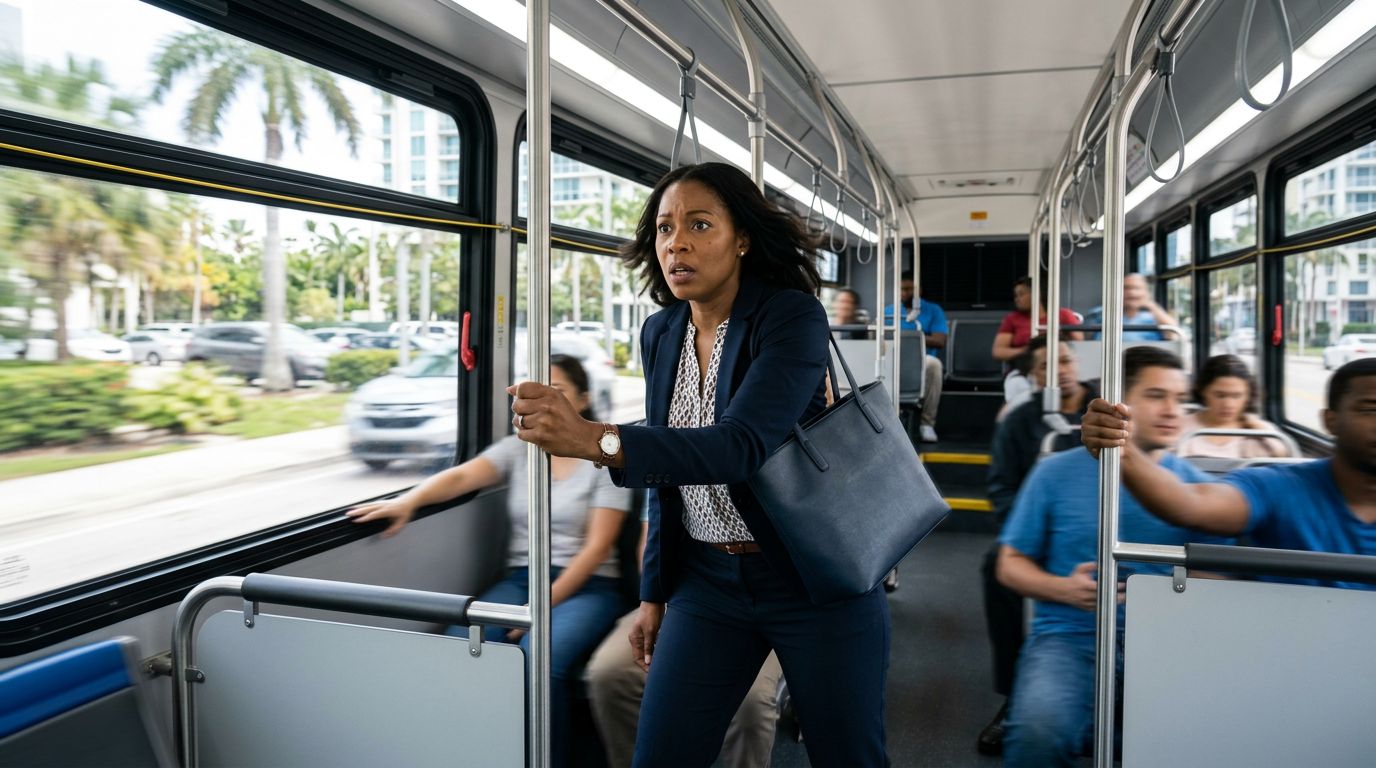
A bus doesn’t need to crash for a passenger to suffer a serious injury. A hard stop can throw someone into a pole, seat, window, or another rider within seconds.
Florida bus passenger injury claims after a sudden stop usually depend on whether the driver acted reasonably, whether the stop caused the injury, and what evidence supports the account. The type of bus also matters because public transit agencies face different rules than private carriers.
When a Sudden Stop Creates a Bus Injury Claim
A sudden stop alone doesn’t prove negligence. Bus drivers may need to brake quickly when a vehicle cuts into traffic, a pedestrian enters the roadway, or another hazard appears. The legal question is whether the driver responded reasonably under the circumstances.
A claim may have merit when the driver was speeding, following too closely, distracted, fatigued, or operating the bus aggressively. Poor maintenance, defective brakes, or inadequate driver training may create additional claims against the bus company or another responsible party.
Florida bus operators commonly fall under the rules that apply to common carriers. These carriers owe passengers a heightened duty of care because the driver controls the vehicle and passengers have limited ability to protect themselves during the trip. That duty doesn’t make the carrier automatically responsible for every fall, but it requires careful operation.
To establish negligence, the injured passenger generally must prove four points:
- The driver, carrier, or another party owed a duty of care.
- The responsible party breached that duty.
- The breach caused the passenger’s injury.
- The passenger suffered damages that the law can address.
A standing passenger doesn’t automatically lose a claim. Public buses are designed to carry standing riders, and normal movement inside the bus is part of ordinary transit. However, the carrier may argue that the passenger failed to use an available handrail or acted unsafely. That issue becomes part of the fault analysis rather than an automatic defense.
A reasonable emergency stop and an unsafe hard brake are different events. The surrounding traffic, driver conduct, and available evidence help distinguish them.
How Florida bus passenger injury claims are proven
The best evidence often disappears quickly. Bus video may be overwritten, witnesses may leave the area, and the company may control maintenance or driver records. Early preservation matters.
Important evidence can include:
- Bus surveillance footage showing the passenger’s position and the force of the stop.
- The route number, bus number, stop location, and exact time of the incident.
- Driver statements, dispatch communications, and incident reports.
- Names and contact information for passengers or bystanders who saw the stop.
- GPS data, vehicle speed information, and braking records, when available.
- Driver hours, training records, and inspection documents.
- Maintenance records for brakes, tires, steering, doors, and handrails.
- Photographs of bruising, damaged clothing, the bus interior, and the surrounding area.
Write down what happened while the details are fresh. Include whether you were seated or standing, what you were holding, where your body moved, and whether the driver made an announcement before braking. Those details can answer questions that arise weeks later.
Bus companies may hold records that passengers cannot obtain without formal requests or legal process. Avard Law’s guide to Florida bus crash records discusses driver logs, inspection records, and other proof that may affect a claim.
Medical documentation is just as important as accident evidence. Tell the healthcare provider that the injury began during a bus stop or fall. Describe every symptom, including pain that appeared hours later. A prompt examination can connect the injury to the event and identify conditions that require follow-up care.
Injuries and compensation after a bus stop
A passenger may suffer a broken wrist while trying to catch a rail, a concussion after striking a window, or a back injury after landing on the floor. Neck injuries, shoulder damage, knee trauma, and aggravation of a pre-existing condition can also support a claim when medical evidence connects them to the stop.
Compensation may include reasonable medical expenses, future treatment, lost wages, reduced earning ability, pain, disability, scarring, and loss of normal activities. The value of a claim depends on the injury and its effect on the person’s life. A short emergency-room visit may lead to very different damages than surgery, physical therapy, or permanent limitations.
Keep copies of bills, medical records, prescriptions, work restrictions, pay information, and mileage related to treatment. A personal account of missed activities and daily limitations can also help show how the injury affects ordinary life.
Florida’s comparative fault rules may reduce recovery when the passenger’s conduct contributed to the event. For example, the defense may argue that a rider ignored a warning, failed to use an available handrail, or moved through the bus while it was in motion. The facts must support that argument, and the carrier still must account for ordinary passenger behavior.
Public transit and private bus claims follow different paths
The first legal question is often who operated the bus. A city or county system such as LYNX, Miami-Dade Transit, Palm Tran, HART, JTA, or Broward County Transit may be a government entity. Greyhound, FlixBus, Megabus, and charter companies are private operators.
Claims against a Florida government transit agency
Claims against a public bus system may involve Florida’s sovereign immunity law. Florida’s sovereign immunity statute includes procedures that differ from an ordinary claim against a private company.
Generally, the injured person must present written notice to the proper government agency and the Florida Department of Financial Services within the required period. Section 768.28 generally provides three years for presenting a claim, with a shorter period for wrongful death claims. A lawsuit may also have to wait until the claim is denied or the statutory waiting period passes.
Public-entity claims also face statutory damage limits. Section 768.28 generally caps recovery at $200,000 per person and $300,000 per incident against a state agency or subdivision, subject to legal exceptions and possible legislative action. The cap can affect the amount recovered even when the evidence supports liability.
Because notice and filing deadlines are separate issues, an injured passenger shouldn’t assume that sending an incident report to the bus company protects the claim. A lawyer should identify the agency, confirm the correct recipients, and calculate the deadlines based on the accident date and claim type.
Claims against private carriers
A private bus company may be responsible for a driver’s negligent conduct performed during work duties. Separate allegations may involve negligent hiring, poor supervision, inadequate training, unsafe scheduling, or failure to maintain the vehicle.
Private bus claims generally follow Florida personal injury rules, including a two-year filing period for many negligence cases. Exceptions can change the deadline, so waiting for symptoms to become severe can create a serious problem. Interstate carriers may also have layered insurance and federal transportation requirements, which can affect investigation and settlement discussions.
A school bus injury may involve a school district, transportation contractor, driver, or another motorist. School bus cases have their own facts and notice issues. Families can review information about Florida school bus crash claims when preserving video, reports, and other early proof.
What to do after a bus suddenly stops
Your first priority is medical care, but the steps that follow can protect the claim.
- Report the injury to the driver and request an incident report before leaving, if your condition allows.
- Record the bus number, route, location, time, driver’s name, and names of witnesses.
- Take photographs of visible injuries and the bus interior. Ask someone else to take them if movement causes pain.
- Seek medical treatment promptly and explain the exact movement that caused the injury.
- Save clothing, shoes, receipts, medical paperwork, and messages about missed work or appointments.
- Avoid giving a recorded statement or signing a release before understanding the claim’s value and legal effect.
- Contact a Florida personal injury lawyer before important video or transit records disappear.
Don’t assume that a minor-looking bruise is the full extent of the injury. Some head, neck, and back symptoms appear later. A medical evaluation creates a record and helps identify the care you need.
When to speak with a Florida bus injury lawyer
A lawyer can investigate whether the stop was necessary, review available video, identify every potentially responsible party, and address defenses about handrails, seating, or comparative fault. The lawyer can also determine whether the bus was publicly or privately operated and calculate the correct notice and lawsuit deadlines.
Legal help becomes especially important when the injury requires surgery, causes missed work, involves a child or older adult, or affects long-term mobility. It is also important when an insurer requests a statement, disputes the cause of the injury, or offers a quick settlement.
An attorney may send preservation notices for onboard video, driver records, GPS information, dispatch communications, and inspection documents. That step can prevent important evidence from being discarded under routine retention policies.
Conclusion
A hard brake can create a valid injury claim when the driver or carrier acted unreasonably and caused measurable harm. The strength of Florida bus passenger injury claims often depends on medical records, witness information, bus video, and the legal status of the transit operator.
Report the incident, obtain medical care, preserve every detail, and review deadlines promptly. If you need help assessing your options, Florida bus accident attorneys can investigate the facts and explain the next step.