
Florida Equine Liability Waivers: When Claims Survive
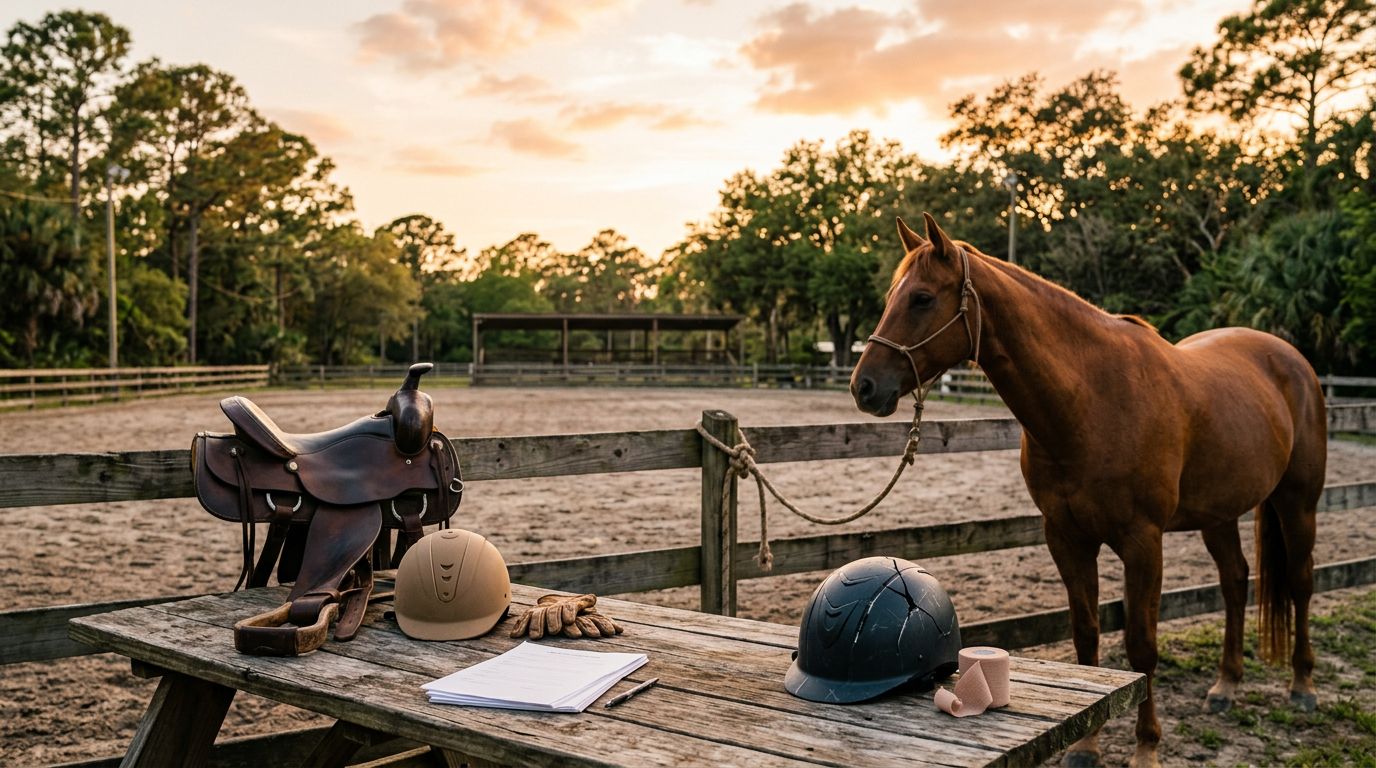
One wrong step on a Florida trail can leave a rider with a broken bone, lost wages, and an insurance dispute before the saddle is put away. Florida equine liability waivers often shape the claim, but a signature doesn’t automatically excuse every unsafe act.
Florida’s Chapter 773 protects equine professionals and activity sponsors from some claims involving inherent horse-related risks. It also identifies situations where that protection may fail. The wording of the form, the required warning, and the facts surrounding the accident all matter.
How Florida equine liability waivers work under Chapter 773
Florida’s equine liability law is found in Chapter 773 of the Florida Statutes. The law applies to equine activity sponsors, equine professionals, and certain other people or businesses involved in horse-related activities. A sponsor may include a stable, trail operator, event organizer, or facility owner. An equine professional may provide instruction, rent horses or equipment, or manage riding activities.
Under Florida’s Chapter 773 equine activity statute, covered parties generally aren’t liable for injuries or deaths caused by the inherent risks of equine activities. Section 773.02 focuses on those risks, which can include a horse’s unpredictable reaction, contact with another horse, or certain conditions integral to riding.
The protection isn’t a blanket release from negligence. Florida equine liability waivers can support a defense, but the business still must follow the statute and avoid conduct that falls within an exception. A separate contract may also contain release, assumption-of-risk, hold-harmless, or indemnity language. Those provisions can expand the issues in dispute, but their effect depends on the exact wording and the facts.
The statutory warning must be handled correctly
Florida law requires an equine activity sponsor or professional to post a warning in a clearly visible location near where the activity begins. The warning must tell participants that the sponsor or professional generally isn’t liable for injury or death resulting from the inherent risks of equine activities.
The statute also addresses written warnings. A participant may receive a document containing the required warning and sign it. Special rules apply when an event occurs away from the sponsor’s or professional’s usual facility. A missing sign, incomplete warning, or failure to provide the required document can become important evidence in an injury claim.
When Florida equine liability waivers don’t end the case
A signed form doesn’t answer the central question: What caused the injury? If the injury resulted from an ordinary risk that Florida law protects, the waiver and statute may create a strong defense. If the injury resulted from preventable negligence, the claim may continue.
Florida courts generally examine release language closely. A form that uses general terms may not clearly release every type of negligence. Courts also consider whether the language is readable, conspicuous, and specific enough to inform the participant about the rights being surrendered.
Faulty tack or equipment
Section 773.03 creates an exception when the sponsor or professional provides faulty equipment or tack, knew or should have known it was defective, and the defect contributes to the injury. A broken stirrup, unsafe saddle, defective bridle, or damaged helmet may require more than a simple reference to inherent horse risks.
The condition of the equipment matters, as does who inspected it and when. Maintenance records, photographs, repair logs, and witness statements may show whether the problem existed before the ride.
Poor horse selection or inadequate supervision
A professional who provides a horse must make reasonable and prudent efforts to determine whether the participant can safely ride or manage that particular animal. A beginner placed on an unsuitable horse may have a different claim than an experienced rider injured by an unforeseeable reaction.
The same issue can arise when an instructor fails to supervise a lesson, ignores dangerous behavior, or gives instructions that create an unreasonable risk. The participant’s experience, stated ability, prior riding history, and the horse’s known behavior may all matter.
Dangerous property or reckless conduct
A facility owner may face liability when a dangerous latent condition causes an injury, the owner knows about the condition, and fails to provide a warning. Examples may include a hidden hole, concealed wire, unstable gate, or other dangerous condition that a rider couldn’t reasonably identify.
The statutory protection also doesn’t apply to conduct that a reasonably prudent person wouldn’t have done or omitted in similar circumstances when that conduct proximately causes the injury. Willful or wanton disregard for participant safety and intentional injuries fall outside the protection as well.
A horse’s ordinary unpredictability may be an inherent risk, but unsafe tack, an unsuitable horse, or an unmarked hidden hazard can point to a different legal theory.
Evidence that supports a Florida horseback riding injury claim
Evidence can disappear quickly after a fall. The horse may be moved, the tack may be repaired or discarded, and the trail condition may change after rain or maintenance.
Seek medical care promptly, even when the injury first appears minor. A medical record connects the accident to the diagnosis and documents symptoms that may worsen later. Follow-up care also helps establish the extent of treatment and any lasting limitations.
Preserve every document from the stable or event. Keep the signed waiver, registration materials, emails, text messages, payment records, safety instructions, and incident report. Photograph the saddle, bridle, helmet, riding area, gate, trail, and visible injuries when possible.
Useful evidence may include:
- Names and contact information for witnesses, instructors, guides, and employees.
- Photographs or video showing the accident scene, equipment, horse, and posted warnings.
- Records showing the horse’s prior incidents, training, temperament, or assigned riders.
- Medical bills, work records, wage information, and disability restrictions.
- Communications with the stable, property owner, insurance company, or event organizer.
Don’t give a recorded statement or sign another release before understanding what it says. An insurer may focus on the signed waiver while overlooking facts that support an exception.
Who may be responsible after a Florida riding accident?
The responsible party isn’t always the business named on the waiver. A claim may involve the stable, riding instructor, trail guide, horse owner, event sponsor, property owner, equipment provider, or another rider.
A stable may face questions about horse selection, employee training, supervision, maintenance, and safety rules. An instructor may be responsible for unsafe directions or failing to respond to a known risk. A property owner may have duties tied to dangerous conditions on the land, depending on control and notice.
A separate claim may arise against a manufacturer or repair company when defective equipment caused the fall. Another rider’s careless conduct may also matter. Identifying each potentially responsible party helps prevent an injured person from relying only on the insurance policy of the business that supplied the horse.
The waiver may name several entities. Read every page, including attachments and indemnity clauses. A form that releases the stable may not automatically release an unrelated property owner or equipment manufacturer.
What to do after a Florida horseback riding accident
Take these steps after receiving emergency care:
- Report the accident to the stable, guide, or event organizer, and request a copy of the incident report. Avoid guessing about fault or minimizing your symptoms.
- Get the signed waiver and any safety materials. Photograph posted warning signs, including their location and visibility. Florida’s statutory warning requirements can matter when a business relies on Chapter 773.
- Photograph the accident scene and equipment before conditions change. If you can’t do this yourself, ask a trusted person to preserve the evidence.
- Keep a written record of pain, missed work, medical appointments, medication, and daily limitations. These details can help show how the injury affected your life.
- Refer insurance representatives to your attorney once you obtain legal advice. Don’t sign a settlement or broad medical authorization without reviewing its consequences.
Contact a lawyer soon, particularly when you suffered a head injury, spinal injury, fracture, permanent disability, or significant wage loss. Florida deadlines vary by claim type and defendant. Waiting can also make it harder to inspect equipment, identify witnesses, and obtain records.
How an attorney evaluates an equine waiver
A personal injury lawyer will compare the waiver’s language with Chapter 773 and the accident evidence. The review should address whether the required warning appeared, whether the rider received and signed the proper document, and whether the claim involves an exception.
The lawyer may investigate the horse’s history, the stable’s policies, prior complaints, equipment inspections, employee training, property conditions, and available insurance. The case may involve negotiation, a lawsuit, or both, depending on the evidence and the insurer’s position.
If cost concerns are delaying a consultation, review understanding accident case fees and ask the firm to explain its fee agreement before representation begins.
Conclusion
Florida equine liability waivers can protect a stable or professional from claims based on ordinary, inherent risks of riding. They don’t automatically excuse faulty tack, poor horse selection, dangerous hidden conditions, reckless conduct, or intentional injury.
After a fall, preserve the waiver and accident evidence while obtaining medical care. The strongest next step is a prompt review of the document, the statutory warning, and the facts that caused the injury. A signature is only one part of the legal analysis.