
Florida Gym Injury Claims: Maintenance Records That Matter
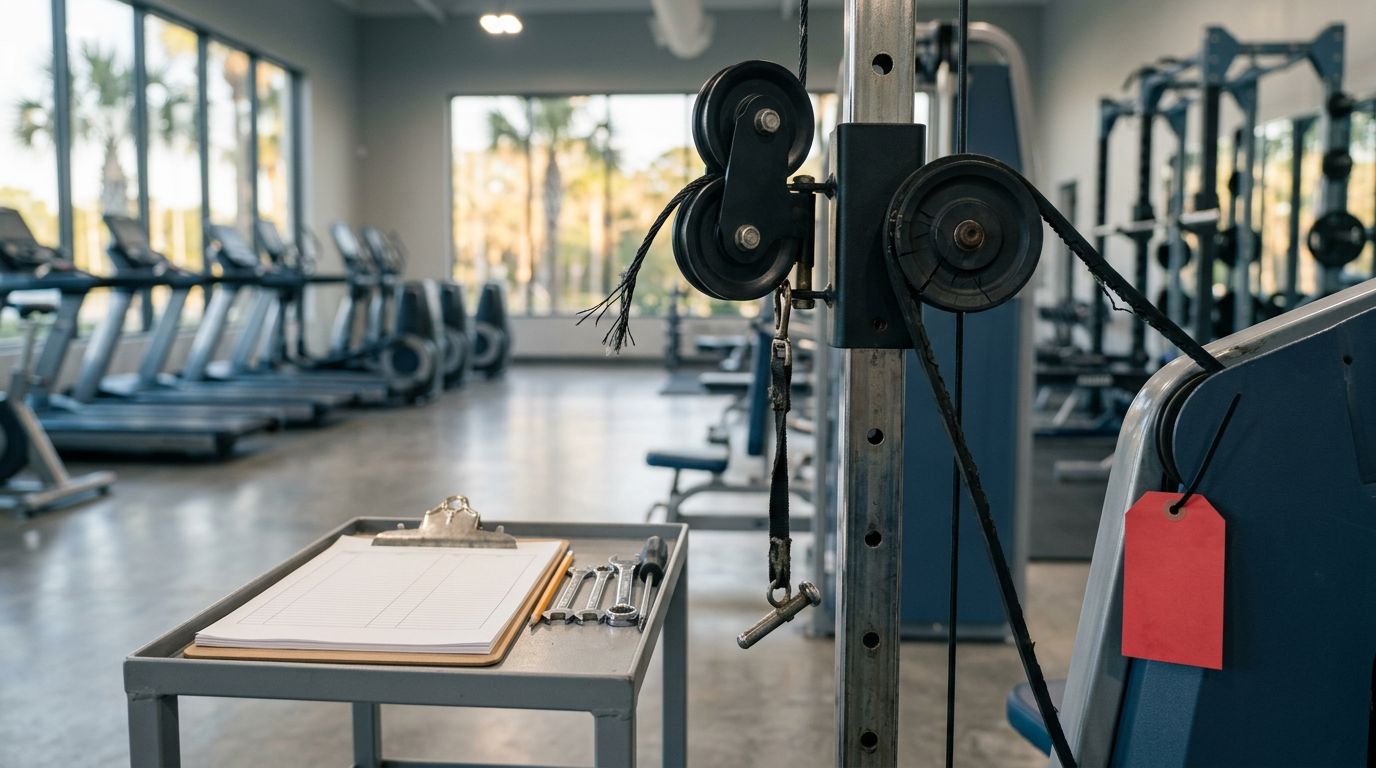
One loose cable, worn belt, or broken adjustment pin can turn a routine workout into a serious injury. If you’re pursuing Florida gym injury claims, the facility’s maintenance records may show whether staff knew about the danger before your accident.
A gym’s records can reveal more than a machine’s repair history. They may show skipped inspections, repeated complaints, temporary fixes, or a delay in taking unsafe equipment out of service. Knowing which documents matter can help protect your claim before important evidence disappears.
Why maintenance records matter in Florida gym injury claims
Gym injury cases often turn on notice. Under Florida premises liability principles, an injured person may need to show that the owner or operator knew, or should have known, about a dangerous condition and failed to correct it or provide an adequate warning.
Maintenance documents can help establish that knowledge. For example, a work order may show that employees reported a frayed cable two weeks before the accident. An inspection sheet may show that staff marked the equipment as safe despite the same problem appearing several times. A complaint log may prove that other members reported slipping, shaking, or unexpected movement.
The records also help connect the condition to the injury. A loose seat may explain a fall. A broken safety stop may explain why a weight struck someone. A damaged treadmill belt may support a claim involving a sudden loss of balance.
However, an accident alone doesn’t prove negligence. The facility may argue that the equipment passed a recent inspection, that the defect appeared without warning, or that a manufacturer or service company handled maintenance. The complete record helps separate those arguments from the facts.
The Consumer Product Safety Commission’s safety information can also help identify recalls, hazard notices, or reports involving certain equipment. A recall doesn’t automatically prove liability, but it may raise questions about whether the gym received a warning and responded appropriately.
The maintenance records that deserve close attention
A gym may keep paper forms, software logs, emails, or vendor invoices. Each type of record can answer a different question about what happened before and after the injury.
Important records often include:
- Daily inspection sheets. These may show who checked the machine, when the check occurred, and whether anyone noted a defect.
- Preventive maintenance schedules. Manufacturer instructions and internal policies may set inspection or service intervals. Missed service dates can matter.
- Repair work orders. Look for the reported problem, the parts used, the technician’s findings, and whether the machine returned to service.
- Vendor invoices and service contracts. These documents may identify an outside company responsible for repairs or scheduled inspections.
- Member complaints and incident reports. Earlier reports of slipping, wobbling, broken parts, or unusual noise may establish notice.
- Out-of-service records. A tag, closure notice, or employee message may show that staff knew the equipment was unsafe.
- Equipment purchase and installation records. These can identify the manufacturer, model, serial number, installer, and warranty terms.
- Recall and manufacturer communications. Emails or notices may show that the gym received safety information before the accident.
- Employee training records. These may show whether staff knew how to inspect, lock out, or report defective equipment.
A vague entry such as “checked all machines” provides less information than a machine-by-machine inspection with a time, employee name, and specific findings. The level of detail can affect how reliable the record appears.
The date matters, too. Records from the months before the accident may show a pattern. Records created immediately afterward may show what broke, what staff observed, and whether someone repaired or removed the equipment.
A facility’s own policies can be just as important as the manufacturer’s instructions. If the gym required employees to inspect cables every morning but failed to keep those inspections, that gap may support an argument that staff did not follow the facility’s safety system.
What to do after a Florida gym equipment accident
Seek medical care first, especially if you have a head injury, back pain, fracture, or symptoms that worsen after the workout. Tell the medical provider how the accident happened and identify the body parts affected.
Then report the incident to the gym. Ask for a written incident report and request the report number or a copy if the facility will provide one. Record the names and job titles of employees who responded. If witnesses saw the accident, save their names and contact information.
Photograph the equipment, surrounding area, warning signs, floor condition, and any visible damage. Take close-up photographs of broken parts and wider images showing how the machine was positioned. If you have torn clothing, damaged shoes, or other physical evidence, preserve those items without cleaning or altering them.
Send the gym a written request to preserve relevant evidence. The request should identify the machine, accident date, approximate time, location, and the types of records that may be relevant. Ask the facility to preserve:
- Maintenance and inspection records before and after the accident
- Repair orders, invoices, and replaced parts
- Complaints and prior incident reports
- Surveillance video and access records
- Employee schedules and training materials
- Manufacturer notices, recalls, and service communications
- Photographs taken after the incident
- The equipment itself, including damaged components
Surveillance systems may overwrite footage on a set cycle. A prompt preservation request can put the facility on notice that the video and other evidence may be needed in a legal claim.
Avoid posting detailed comments about the accident on social media. Also, be careful with statements to an insurance adjuster. A recorded statement may be used to challenge your account later, especially if you describe the injury before a diagnosis is complete.
Many claimants make avoidable mistakes while trying to handle the matter alone. Reviewing these common personal injury mistakes can help you avoid damaging evidence or making inconsistent statements.
How an attorney builds the equipment timeline
Maintenance evidence becomes more useful when placed in chronological order. A lawyer may examine the records through five points:
- Before the reported defect. Was the equipment new, under warranty, or subject to a recurring problem?
- The first warning. Did a member, employee, or technician report the condition?
- The facility’s response. Did staff inspect the machine, repair it, warn members, or remove it from service?
- The accident. Does the reported failure match the injury and the physical evidence?
- What happened afterward. Did the gym repair, replace, move, or discard the equipment?
Patterns often matter more than one isolated entry. Several work orders for the same machine may show that the problem continued despite repairs. A completed work order without a parts invoice may raise questions about what work actually occurred. A machine that disappeared from the gym after the accident may require careful investigation.
A complete timeline can also identify other potentially responsible parties. The gym may have failed to inspect the equipment. A maintenance vendor may have performed defective work. The manufacturer may have supplied a defective component. An installer may have assembled the machine incorrectly.
Determining responsibility requires more than finding a bad-looking record. The evidence must support a connection between the condition, the defendant’s conduct, and the injury.
Problems that can weaken maintenance evidence
Some gyms use electronic inspection systems. Those systems may show the employee who made an entry, the time of the entry, and whether someone changed it later. Paper records may lack that detail, but they can still reveal missing dates, identical handwriting, or entries completed in batches.
A record that says “OK” without identifying what the employee inspected may not answer whether the defective part was checked. On the other hand, a detailed record showing repeated inspections can support the gym’s argument that it used reasonable procedures.
Maintenance records can also be spread across several businesses. The gym may hold daily logs while a national fitness company holds service records. A property owner, franchise operator, equipment vendor, and insurance carrier may each possess different documents.
A liability waiver may affect the case, but it doesn’t automatically answer whether the facility ignored a known hazard. Its wording, presentation, scope, and relationship to the alleged conduct all matter. A waiver also doesn’t replace the need to investigate the equipment and the facility’s records.
Preserving evidence matters because a missing record may later become a dispute. If a business had notice of a likely claim and failed to preserve relevant material, an attorney can examine whether that loss affected the case.
Maintenance records are only part of the claim
A strong injury claim needs proof of the accident, the dangerous condition, and the resulting losses. Medical records should connect the treatment to the gym incident. Diagnostic images, physician opinions, therapy notes, and surgical records may help establish the seriousness of the injury.
Keep bills and receipts for medical care, prescriptions, transportation, medical equipment, and other accident-related expenses. Employment records can help show missed work or reduced earnings. These measurable costs may qualify as special damages in a personal injury case, depending on the facts and available proof.
Photos, witness statements, the incident report, and the machine’s service history should tell the same basic story. Inconsistencies do not always defeat a claim, but they can give an insurer or defense attorney an argument about what caused the injury.
An attorney may also consult an engineer, equipment technician, or other qualified professional when the cause of a mechanical failure is disputed. That analysis can help determine whether the problem resulted from ordinary wear, poor maintenance, improper assembly, or a product defect.
Conclusion
A gym’s maintenance file can show whether an injury came from a sudden accident or an unsafe condition that staff had warnings about before the event. Inspection sheets, repair orders, complaint logs, service invoices, and recall notices each add a piece to the timeline.
If you’ve been hurt on gym equipment, preserve photographs, medical records, witness information, and written requests for evidence. In Florida gym injury claims, the most important proof may be a maintenance entry created before anyone expected a lawsuit.