
Florida Restaurant Food Poisoning Claims and Inspection Records
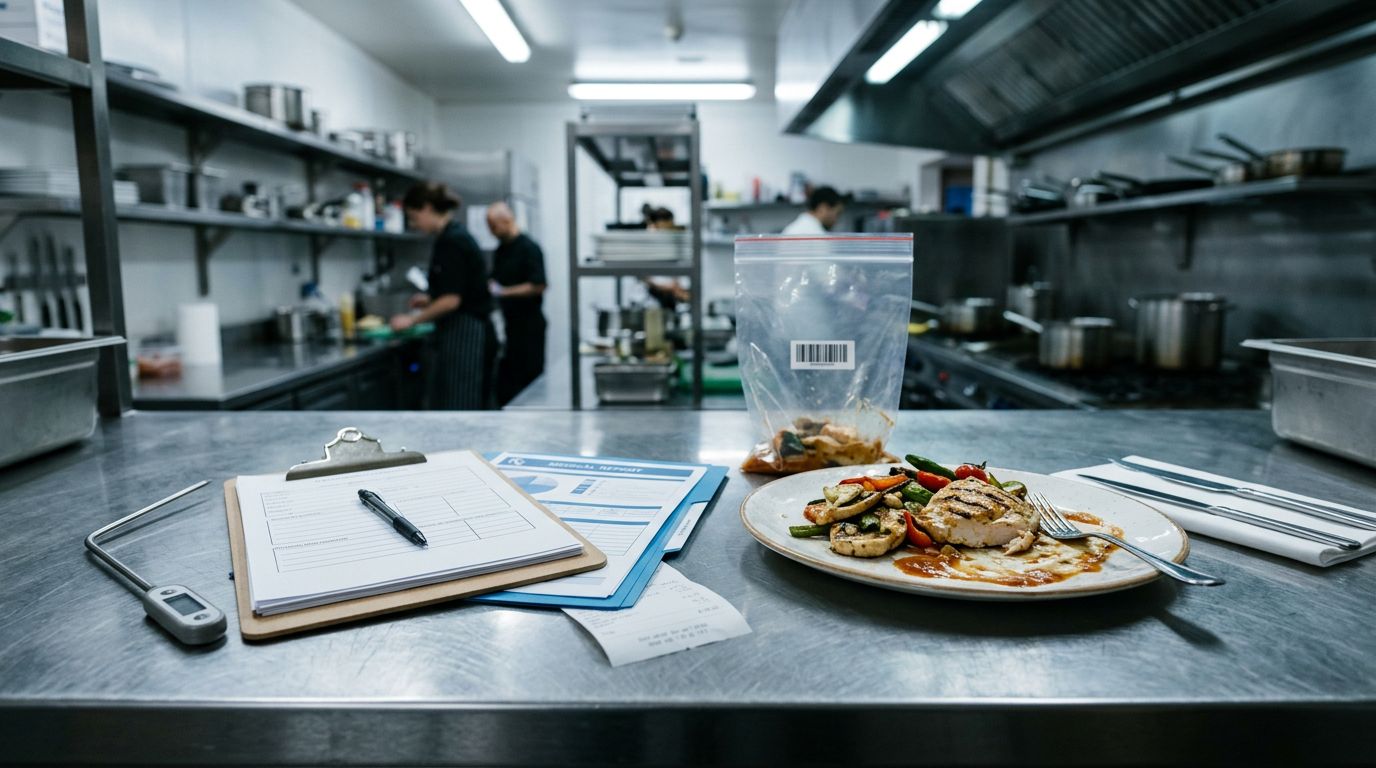
Florida restaurant food poisoning claims often depend on evidence that connects a meal to an illness. A health inspection record can support that connection, but it rarely proves the entire case by itself.
If you became sick after eating at a Florida restaurant, act quickly. Medical records, leftover food, receipts, witness accounts, and inspection history can disappear or become harder to obtain. The first step is understanding what Florida’s inspection records show and how they fit into a personal injury claim.
How Florida restaurant food poisoning claims use inspection records
Florida restaurant inspection records can help show that a business had food safety problems before or around the date of your meal. A report might identify improper food temperatures, poor employee hygiene, pest activity, contaminated equipment, unsafe storage, or other violations.
That information can support an argument that the restaurant failed to follow required safety practices. For example, a violation involving refrigerated food may matter if you developed symptoms after eating a dish that required cold storage. A report about an ill food worker may also matter if the timing and symptoms fit the reported illness.
However, an inspection report doesn’t automatically prove that the restaurant caused your sickness. The report usually concerns conditions observed during one inspection. It may not show what happened several days earlier, when your food was prepared or served.
Florida’s Division of Hotels and Restaurants describes inspection reports as electronic records of sanitation and safety inspections. The agency also explains that each report is a snapshot of conditions present at the time of inspection.
What a record can establish
An inspection record may help establish:
- The restaurant had a documented food safety violation.
- An inspector observed a condition that could permit contamination.
- The business received a follow-up inspection or corrective order.
- The restaurant faced disciplinary action or an emergency closure.
- Similar problems continued after an earlier inspection.
These records become more useful when they match other evidence. Suppose a restaurant received a violation for failing to keep cooked food at a safe temperature, and several customers reported illness after eating the same meal. That combination is more meaningful than an unrelated violation recorded months later.
A history of repeated violations may also help show notice. If management had been warned about the same unsafe practice and failed to correct it, the evidence may support a stronger negligence argument.
What a record cannot establish alone
A prior violation doesn’t prove that a particular meal caused your illness. It also doesn’t establish how long the condition existed, who handled the food, or whether contamination occurred before the food reached the restaurant.
The inspection date matters. So does the violation’s subject. A broken floor tile may violate a safety rule but have no connection to food contamination. A report about a refrigerator temperature can be more relevant to a cold food illness claim, but medical and exposure evidence still must connect the facts.
An inspection report can support causation, but it cannot replace medical proof and a clear timeline.
Which Florida agency holds the restaurant record?
The correct record source depends on the type of food business. Florida divides regulatory responsibility among state agencies, so searching the wrong database may produce no useful result.
| Business or record | Likely source | What you may find |
|---|---|---|
| Restaurant, food truck, caterer, bar, cafeteria, or other public food service establishment | Florida DBPR | Inspections, violations, complaint information, and disciplinary records |
| Grocery store, food processing facility, wholesale food business, or certain other food entities | Florida Department of Agriculture and Consumer Services | Food establishment inspection reports and related conditions |
| Foodborne illness complaint | DBPR, with public health coordination when appropriate | Complaint details, investigation activity, and possible inspection follow-up |
The Florida Department of Business and Professional Regulation, commonly called DBPR, regulates public food service establishments. That category includes many restaurants, mobile food dispensing vehicles, cafeterias, bars, caterers, and food carts.
You can review DBPR inspection records through the agency’s Hotels and Restaurants resources. The available information can include recent and historical inspection data, the type of inspection, cited violations, and the inspection’s final disposition.
FDACS regulates different food entities. If you ate food prepared or sold by a grocery store, processor, or another FDACS-regulated business, search the FDACS inspection database. The database describes reports for food entities regulated by that agency during the past four years.
A lawyer may also request public records that aren’t easy to locate through a basic search. Those records can include complaint materials, disciplinary activity, follow-up inspection documents, and communications about a reported safety issue.
How to search Florida restaurant health inspection records
Start with the restaurant’s exact name, location, and approximate meal date. A business may have a common name, multiple locations, or a legal name that differs from its sign.
Search DBPR by county or establishment information. Review records before and after the date you ate there. A report issued shortly after your illness may show that inspectors found a problem, while an earlier report may show whether the restaurant had been warned about a similar condition.
Pay attention to the following details:
- Inspection date and type. A routine inspection, complaint inspection, follow-up visit, or reinspection has a different context.
- Violation description. Read the actual condition cited instead of relying on a general score or summary.
- Corrective action. Check whether the restaurant corrected the issue during the inspection, later, or after repeated visits.
- Disposition and enforcement. Look for emergency closure information, administrative action, or other disciplinary records.
- Location and license details. Confirm that the record concerns the same restaurant and location where you ate.
A report may list several violations, but their relevance varies. A food temperature violation, cross-contamination concern, or employee illness issue may relate more directly to a foodborne illness claim than a structural or paperwork violation.
Save copies of every relevant record. Government websites can change their search systems, and a page that appears today may be difficult to locate later. Record the URL, print the report to PDF, and keep screenshots showing the inspection date and establishment name.
Also search nearby dates. If a restaurant had an inspection one day after your meal, the report may contain useful evidence. Still, the report remains an observation made at a particular time. It doesn’t prove that the same condition existed during your visit.
Report suspected food poisoning as soon as possible
Reporting an illness serves two purposes. It may help public health officials identify other sick customers, and it creates a contemporaneous record of your complaint.
Florida DBPR provides a process for reporting suspected foodborne illness at a public food service establishment. You can review the DBPR foodborne illness complaint page for reporting instructions and contact information. DBPR’s listed customer contact number is 850-487-1395.
The foodborne illness complaint form, HR-7004, requests details such as:
- The establishment’s name, address, county, ZIP code, and phone number.
- The foods you ate and the date and time of the meal.
- When symptoms began and how long they lasted.
- Symptoms such as nausea, vomiting, diarrhea, abdominal cramps, fever, chills, or headache.
- The name and contact information for your doctor or hospital.
- The names of other people who became sick after the same meal.
Give accurate information. Don’t guess about the ingredient that caused the illness unless you clearly identify it as an assumption. A detailed report about what you ate, when you ate it, and when your symptoms started is more useful than a broad statement that the food was “bad.”
Florida public health guidance considers a person’s food history during the 72 hours before symptoms began. Investigators may compare foods eaten by ill and healthy people, examine incubation periods, consider non-food exposures, and look for other complaints involving the same establishment.
Several people becoming ill after a shared meal can prompt a broader investigation. However, multiple sick diners still don’t guarantee a legal claim. Investigators and attorneys must examine whether the symptoms, timing, and shared exposure fit a foodborne illness.
Preserve evidence before it disappears
Keep your restaurant receipt, credit card record, reservation confirmation, delivery order, and loyalty-app history. These items can establish the exact location and date of the meal.
If you have leftover food, don’t throw it away. Place it in a sealed container, label it with the date, and ask an attorney or public health investigator how to preserve it. Don’t submit food for private testing without guidance. Improper handling can affect the value of any test.
Save photographs of the meal, packaging, menus, restaurant conditions, and any visible foreign material. Keep text messages or social media posts showing when you reported symptoms to family members or friends.
You should also preserve:
- Hospital and urgent-care records.
- Prescription and over-the-counter medication receipts.
- Bills for laboratory testing and follow-up care.
- Wage records showing missed work.
- Names and contact information for people who ate with you.
- A daily symptom and treatment log.
Avoid arguing with restaurant employees or posting accusations online. Public statements can create disputes over what happened and may distract from the evidence needed to prove your claim.
What evidence proves a restaurant caused your illness?
The central issue in many Florida restaurant food poisoning claims is causation. You must connect the restaurant’s conduct to your illness and then connect the illness to your losses.
Medical care should come first. Tell the doctor that you suspect food poisoning and identify the meal date, foods eaten, symptom onset, and other possible exposures. A physician may order stool testing or other tests when medically appropriate. Even when testing doesn’t identify a pathogen, medical records can document the symptoms, dehydration, treatment, diagnosis, and recovery period.
Timing matters. Symptoms that begin shortly after a meal may fit some forms of food-related illness, while other illnesses take longer to develop. A lawyer and medical provider will consider the timing along with your symptoms, test results, other meals, travel, sick contacts, and preexisting conditions.
Your claim becomes stronger when other diners report similar symptoms. Their accounts may help establish a shared exposure, especially when healthy people who ate different foods remained well. Still, a person who became sick after the same meal isn’t automatically a witness who can prove contamination. Each person’s timeline and medical condition may differ.
Inspection records provide context. They may show that the restaurant had unsafe practices, but you still need evidence involving your meal. Helpful evidence may include:
- A violation involving the same food-handling practice at the relevant time.
- A complaint inspection soon after the meal.
- A restaurant closure connected to sanitation or food safety.
- Other reports involving customers who ate there during the same period.
- Test results or medical opinions that fit the suspected exposure.
- Restaurant records showing temperature, preparation, supplier, or employee information.
Some evidence is difficult for an individual customer to obtain. Restaurants may possess food purchase invoices, temperature logs, employee schedules, cleaning records, internal incident reports, surveillance video, and communications with insurers. These materials may require a formal preservation request, subpoena, or litigation discovery.
Food poisoning also differs from a food allergy claim. An allergic reaction may result from an undisclosed ingredient or cross-contact, while foodborne illness generally involves contamination, toxins, pathogens, or unsafe handling. The medical proof and legal theory can differ. Avard Law’s information on Florida restaurant food allergy claims addresses that separate type of case.
A lawyer can assess whether the available evidence supports negligence, product liability, or another legal theory. The correct approach depends on who prepared the food, where contamination occurred, and what records exist.
What an inspection violation means for liability
Florida restaurants must follow food safety rules, but a code violation doesn’t automatically create liability for every customer who later becomes ill. The violation must relate to the injury and the conduct must have caused a legally recognized loss.
For example, an inspection finding about inadequate handwashing may support a claim involving a contagious pathogen. A finding about a freezer temperature may matter when the meal included food that required freezing. By contrast, an unrelated equipment or building violation may have little value in proving food contamination.
The timing of enforcement also matters. A restaurant that corrected a violation before your meal may present a different issue than one that continued the same practice. A report after your meal can still help, but it requires careful analysis because the condition may have developed later.
Prior inspection history can show notice, especially when the same problem appears repeatedly. It may help establish that management knew or should have known about a dangerous practice. The history still doesn’t eliminate the need to prove that the practice caused your illness.
An attorney may compare inspection records with medical records, witness statements, complaint activity, and business documents. That comparison can show whether the public record is a meaningful part of the case or only background information.
Compensation and deadlines for a Florida food poisoning case
A successful personal injury claim may seek compensation for medical bills, diagnostic testing, prescriptions, hospital care, lost wages, reduced earning ability, and pain and suffering. Severe illness can lead to dehydration, emergency treatment, extended recovery, or lasting complications.
Document every loss. Keep pay stubs, employer messages, appointment records, mileage information, receipts, and insurance statements. If you missed work, obtain records that show the dates and financial effect of the absence.
Florida law imposes deadlines for personal injury lawsuits. Many negligence claims currently carry a two-year statute of limitations, but the deadline can depend on the date of injury, the legal theory, the defendant, the claimant’s age, and other facts. A deadline may apply even when an inspection investigation is still pending.
The public complaint process and a civil claim are separate. Reporting the restaurant doesn’t file a lawsuit, preserve every legal deadline, or obtain compensation for your losses. An agency may inspect the business without sharing all investigative materials with you.
Get legal advice before giving a recorded statement to the restaurant’s insurer. Provide medical providers with a complete and accurate history, but avoid minimizing symptoms or speculating about facts you can’t confirm.
If you consult an attorney, bring the inspection reports and a simple timeline showing:
- When and where you ate.
- What food and drinks you consumed.
- When symptoms started.
- When you sought medical treatment.
- Who else became ill.
- What work and activities you missed.
- What you reported to the restaurant or a government agency.
For more discussion of the evidence needed in Florida food poisoning claims, review the related Avard Law resource. Prompt legal review can help preserve records before the restaurant’s systems overwrite them or witnesses forget important details.
Common mistakes that weaken a food poisoning claim
People often wait several days before seeking medical care. That delay can make it harder to document the original symptoms and distinguish food poisoning from a stomach virus or another condition.
Another mistake is blaming the last restaurant visited without considering the full 72-hour food history. A meal may be the source, but the investigation must account for other foods, sick contacts, travel, and possible exposures.
Some diners rely on online reviews instead of making an official report. Reviews may show that others complained, but they don’t replace medical records or a formal complaint. Save relevant reviews as possible leads, then report your own illness through the proper agency.
Do not discard receipts or assume a small charge has no value. A receipt can establish the location and time of purchase. Delivery records can show which kitchen prepared the food, even when the meal came through a third-party platform.
Finally, don’t assume a clean inspection clears the restaurant. An inspection occurred at a particular time and may not cover the exact food, shift, employee, or preparation process involved in your illness. Read the record in context and compare it with the rest of the evidence.
Conclusion
A restaurant inspection record can reveal food safety violations, repeated problems, complaint activity, or corrective action. Its value increases when the record matches your medical timeline, the food you ate, statements from other diners, and proof of financial harm.
Report suspected illness promptly, preserve every meal and medical record, and search the correct Florida agency database. Florida restaurant food poisoning claims require more than a bad inspection report, but that report may become an important piece of a well-documented case.