
Florida Rideshare Crash Claims When App Status Is Disputed
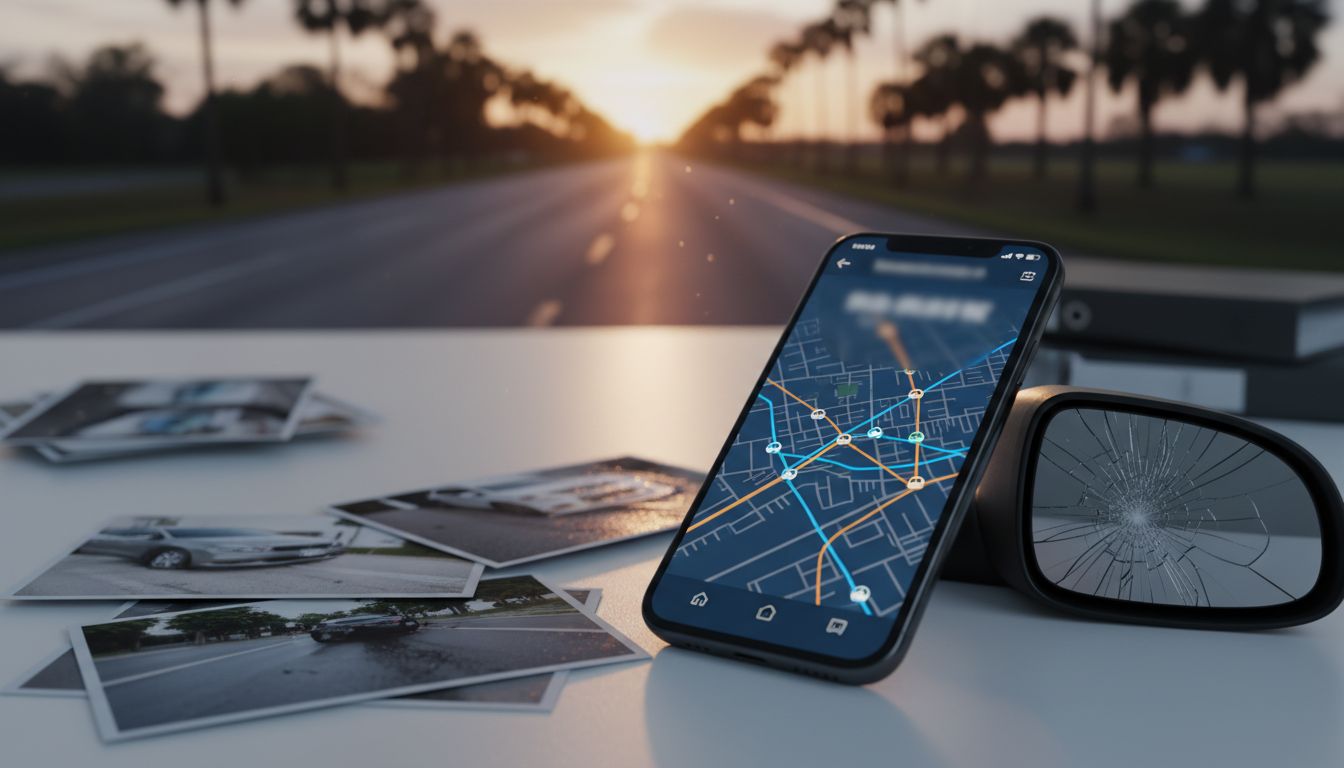
A rideshare insurer can deny responsibility by pointing to one moment in a driver’s app. For Florida rideshare crash claims, that moment can affect whether personal insurance, limited logged-in coverage, or $1 million active-trip coverage applies.
After a collision, the driver may say the app was offline while Uber or Lyft records show a pending request. An insurer may point to a different timestamp. Passengers and injured third parties can be left waiting while companies argue over a screen they cannot access. The first task is to identify the app status at impact and preserve evidence before it changes.
How Florida rideshare crash claims change when app status is disputed
Florida law divides rideshare driving into coverage periods. Florida Statute section 627.748 sets insurance requirements for transportation network companies, commonly called TNCs. The framework covers Uber, Lyft, and similar app-based services.
The important question is whether the driver was offline, logged in and waiting, or handling an accepted ride. The status at the exact time of the crash usually matters more than what happened minutes earlier or later.
The three coverage periods
| App status at impact | Typical insurance framework | Main issue in a dispute |
|---|---|---|
| App off or driver logged out | The driver’s personal auto policy generally applies. | The driver or insurer may claim the app was closed. |
| App on, no ride accepted | Florida law lists minimum coverage of $50,000 per person, $100,000 per incident for bodily injury or death, and $25,000 for property damage. | The parties may disagree about whether a request had been accepted. |
| Ride accepted through drop-off | The TNC must provide at least $1 million in primary liability coverage for death, bodily injury, and property damage. | The disputed timestamp may show whether the trip was active. |
Florida law treats a prearranged ride as beginning when the driver accepts the request. It continues through pickup and transportation until the last passenger exits. Therefore, a crash during the accepted-ride period can involve a very different insurance limit than a crash while the driver was waiting for a request.
Lyft’s official insurance coverage guidance also separates coverage according to the driver’s activity and app status. However, an insurance limit does not automatically prove fault. The injured person still needs evidence showing who caused the collision and what losses resulted.
Why insurers dispute the app record
App status disputes often begin with incomplete information. A passenger may have a ride receipt but no access to the driver’s status screen. The other motorist may know only that a rideshare vehicle struck their car. Meanwhile, the driver and insurance companies may have different records about login activity, ride acceptance, cancellations, or trip completion.
A police crash report can identify the vehicles and describe the collision. It may not establish whether the driver was available for a request or had accepted a passenger. That fact often requires records from the rideshare company, the driver, and the insurance carriers.
Useful evidence can include:
- A passenger’s electronic receipt, trip map, fare record, and pickup or drop-off information.
- Text messages, push notifications, emails, or platform alerts showing a ride request and its timing.
- The driver’s app history, trip records, earnings statements, and screenshots taken shortly after the crash.
- GPS data, vehicle telematics, dashcam footage, traffic-camera video, and nearby business surveillance.
- The crash report, witness information, photographs, vehicle damage, and medical records tied to the collision.
Do not guess about the driver’s status. A mistaken statement can create problems later, especially when the company has a different electronic record. Instead, state what you personally saw, such as whether a passenger was inside, whether the driver mentioned a pickup, or whether a trip receipt exists.
Records can disappear through routine data retention practices. An attorney may send a written preservation request to Uber or Lyft, the driver, and each insurer. Depending on the dispute, the request may seek the trip identification number, acceptance timestamp, GPS history, status changes, driver communications, and insurance information.
Passengers should also document the steps they take after the crash. Avard Law’s Florida rideshare wreck guide covers immediate concerns such as medical treatment, accident documentation, and contacting a lawyer.
The strongest evidence may be a time-stamped platform record that connects the driver’s exact status to the moment of impact.
PIP may pay first, but it doesn’t settle the dispute
Florida follows a no-fault system for many motor vehicle crashes. Personal Injury Protection, or PIP, may pay initial medical expenses and lost income without requiring the injured person to prove fault first. Standard PIP benefits generally cover 80% of reasonable medical expenses and 60% of lost income, subject to policy limits and eligibility rules.
The correct PIP source depends on the injured person’s circumstances. A passenger’s own policy, a resident family member’s policy, or coverage connected to the occupied vehicle may affect where the claim begins. A rideshare driver may also need to examine personal auto coverage and any applicable rideshare policy.
PIP is only one part of the case. It does not decide whether Uber, Lyft, the driver’s personal insurer, another motorist, or several parties must pay the remaining damages.
To recover non-economic damages, such as pain and suffering, an injured person generally must meet Florida’s serious injury threshold. The statute identifies conditions that include a significant and permanent loss of an important bodily function, a permanent injury within a reasonable degree of medical probability, significant and permanent scarring or disfigurement, or death.
Medical records should describe more than pain on the day of the collision. They should document diagnoses, treatment, restrictions, prognosis, and how the injury affects work and daily activities. Rideshare drivers should also preserve app earnings statements, 1099 forms, bank deposits, and work records. Avard Law’s guidance on proving PIP wage loss addresses the income records insurers often request from gig workers.
What to do when the insurance companies point fingers
A disputed app status does not mean an injured person has no claim. It means the claim requires a careful review of every possible coverage layer and the evidence supporting each one.
Start with medical care and a prompt crash report. Tell medical providers that the injury came from a motor vehicle collision. Gaps in treatment can give an insurer an argument that the injury was minor or came from another cause.
Next, collect basic identifying information. Keep the rideshare driver’s name, vehicle description, license plate, platform, trip receipt, crash location, and the names of all responding agencies. If another vehicle contributed to the collision, preserve that driver’s information as well.
Avoid posting about the crash or your injuries on social media. Do not provide a recorded statement to an insurer before understanding which company is handling which coverage period. Also, do not sign a release because one carrier offers a quick payment. A release may affect claims against other insurers or responsible parties.
A lawyer reviewing the case will usually need to compare several timelines:
- When the driver logged in or went offline.
- When the platform sent a request.
- When the driver accepted or rejected the request.
- When the driver reached the pickup point.
- When the collision occurred.
- When the ride ended or the passenger exited.
That timeline can expose a false denial. For example, a carrier might describe the driver as offline because the personal policy was cheaper, while platform records show that the driver had accepted a request before the crash. The reverse can also occur. A driver may have had a passenger earlier but ended the trip before the collision.
The claim may involve more than one insurance company. Depending on the facts, those companies can include the rideshare platform’s carrier, the driver’s personal insurer, another driver’s liability carrier, and an uninsured or underinsured motorist carrier. Each may ask questions that affect how the others view the case.
Florida deadlines also apply. The deadline can depend on the crash date, the type of claim, and whether a government vehicle or entity is involved. Prompt legal review gives counsel time to preserve electronic records, evaluate coverage, and file suit before a deadline expires.
How a Florida attorney can help with a rideshare coverage dispute
An attorney can separate two questions that insurers often blend together: What coverage was available, and who caused the crash? The answer to the first may depend on app records. The answer to the second may depend on traffic evidence, witness accounts, vehicle damage, medical proof, and expert analysis.
Counsel can also identify whether the injury meets Florida’s serious injury threshold, calculate medical and income losses, and communicate with multiple carriers. If a company refuses to provide relevant records, formal discovery in a lawsuit may provide a path to obtain them.
The injured person’s role remains important. Save every message, receipt, photograph, bill, appointment record, and employer document. Keep a short record of symptoms and work limitations. Those details can help connect the crash to the losses claimed.
A rideshare crash can affect a passenger, driver, pedestrian, bicyclist, or occupant of another vehicle. The available claim is not determined by the label on the trip receipt. It depends on the driver’s status, the collision facts, the insurance policies, and the severity of the injuries.
Conclusion
Florida rideshare crash claims often turn on a timestamp that passengers cannot see and insurers may interpret differently. App-off, logged-in waiting, and accepted-trip periods can carry different insurance consequences, but coverage alone does not establish fault or damages.
Preserve the trip records, seek medical care, avoid guessing about app status, and get legal advice before accepting a settlement. When the platforms and insurers disagree, a complete timeline can show which coverage should respond and protect the injured person’s right to pursue full compensation.