
Florida Retail Assault Claims and Security Records
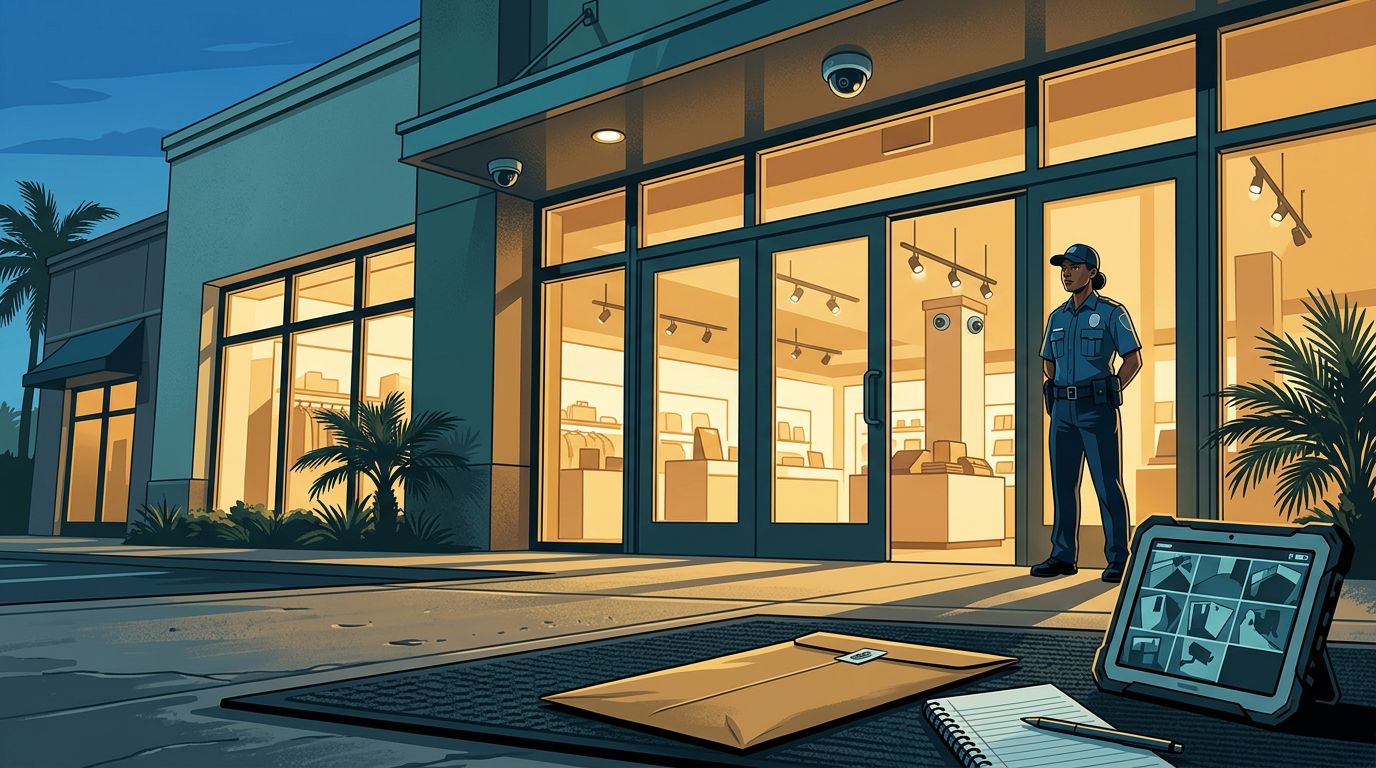
An assault in a Florida retail store can cause lasting physical, emotional, and financial harm. The store may also face responsibility if poor security allowed a foreseeable attack to happen.
Florida retail assault claims often turn on evidence that disappears quickly, especially surveillance video, employee schedules, guard logs, and prior incident reports. The sooner those records are preserved, the better the chance of proving what the store knew and what security measures were actually in place.
How Florida retail assault claims are evaluated
A retail store isn’t automatically liable whenever a customer is attacked. A successful negligent security claim usually requires proof that the business owed the injured person a duty, the risk of criminal conduct was reasonably foreseeable, and the store failed to take reasonable precautions.
Those precautions might include security guards, working cameras, adequate lighting, controlled entrances, trained employees, emergency procedures, or a response plan for known threats. The right security measures depend on the property’s size, location, prior incidents, operating hours, and the type of criminal activity previously reported.
The store’s duty depends on control and foreseeability
The business that controlled the area may owe a duty to customers and other lawful visitors. That party might be the retailer, shopping center owner, property manager, or a security contractor. Responsibility can become more complicated when the retailer controls the sales floor but another company controls the parking lot.
Prior crimes at the property can help establish foreseeability. So can customer complaints, police calls, threats, fights, robberies, or management communications about unsafe conditions. A review of Florida premises liability duty of care can help explain how control and notice affect these cases.
The attacker is not the only source of liability
The person who committed the assault may face criminal charges and civil liability. However, a negligent security claim focuses on whether the property owner or operator took reasonable steps to protect visitors from a known or predictable danger.
That distinction matters. A store may argue that the attacker acted intentionally and unexpectedly. The injured person may respond with evidence showing that management had warning signs, failed to staff the property properly, ignored defective cameras, or left a known danger unaddressed.
Strong Florida retail assault claims connect the security failure to the injury. Evidence of a missing guard alone may not be enough unless the records also show what the guard was supposed to do and how that failure affected the attack.
What security staffing records can show
Security staffing records can reveal the difference between a written safety plan and what happened during the shift. They can also identify the people responsible for monitoring the property, responding to threats, and documenting problems.
Retailers and security companies may keep many of these records electronically. Some records may be held by a third-party guard company, payroll provider, or staffing contractor instead of the store itself.
Schedules and time records show actual coverage
Relevant staffing evidence may include employee schedules, shift rosters, time-clock entries, guard sign-in sheets, post assignments, patrol logs, and supervisor reports. Together, these records may show:
- Whether a guard was assigned to the store or parking area
- Whether the guard arrived and stayed for the entire shift
- Which employee monitored cameras or entrances
- Whether the property had fewer staff members than its policy required
- Whether employees received notice of earlier threats or incidents
- Who responded after the assault and how long that response took
A schedule can show planned coverage, but time records may show whether anyone actually worked that shift. If the store claims that security was present, payroll and access records may help confirm or challenge that statement.
Policies and training records establish expected conduct
Security policies, guard-post instructions, training materials, contracts, and emergency response procedures may establish what management considered reasonable. Incident reports and disciplinary records may show whether employees previously failed to follow those procedures.
For example, a guard contract may require regular parking lot patrols, while the patrol log shows no rounds occurred during the relevant period. A store policy may require an employee to report threats to management, but complaint records may show that repeated warnings were never escalated.
These documents don’t automatically prove negligence. They help establish the expected security measures, the actual conduct, and the connection between the two. Avard Law’s Florida negligent security proof checklist discusses other evidence that may support an assault case.
Preserve video and other evidence immediately
Surveillance systems often overwrite older footage automatically. A store may retain video for a limited period, and footage from nearby cameras may be deleted even sooner. A prompt written preservation request can identify the date, time, location, and camera angles that need protection.
The request should cover more than the few minutes showing the assault. Footage before the incident may show the attacker’s entry, suspicious conduct, lighting conditions, crowd levels, or the absence of security. Footage afterward may show employee response, emergency calls, and whether staff created an incident report.
A preservation request should identify the right records
A useful request may identify:
- All surveillance footage for the store, entrances, aisles, checkout areas, and parking lot
- Staffing schedules, time records, and security post assignments
- Guard patrol logs, radio communications, and dispatch records
- Store incident reports and internal investigation materials
- Customer complaints and prior reports of threats, fights, or criminal activity
- Lighting, camera, lock, alarm, and access-control maintenance records
- Contracts with security companies or property management firms
Send the request to the store manager, corporate office, property owner, management company, security vendor, and insurer when those parties are known. Keep proof of delivery. A verbal request to a cashier or shift supervisor may not reach the people who control electronic records.
Collect independent evidence while memories are fresh
Get medical care and follow the treatment plan. Medical records can document injuries, pain, psychological symptoms, and the effect on work or daily activities. A person who develops anxiety, sleep problems, or post-traumatic stress should discuss those symptoms with a medical provider.
Photograph the scene, lighting, entrances, damaged clothing, visible injuries, and any security features. Preserve receipts, work records, medication bills, and communications with store employees. Obtain the police report and identify witnesses before names and contact information disappear.
Don’t assume the retailer’s incident report tells the whole story. Ask what was reported, when it was reported, and who prepared it. Different versions of the same event can create important questions about notice and response.
How attorneys obtain retail security records
A store may voluntarily provide some records after an assault. It may also refuse, produce only selected documents, or claim that relevant footage no longer exists. A formal personal injury case gives an attorney tools to request records from the retailer and third parties.
Florida Rule of Civil Procedure 1.280 governs general discovery, while Rule 1.350 addresses requests for production. The Florida Supreme Court discovery rules provide the procedural framework for requesting documents and electronically stored information.
Document requests can target more than the store
A request may seek records from the retailer, shopping center owner, property manager, security contractor, camera company, or alarm provider. It can ask for electronic files in a usable format, including metadata when necessary to determine when footage was created, copied, or deleted.
Florida Statute Section 92.35 also addresses production of business records. Depending on the case, an attorney may use a subpoena to obtain records from a nonparty security company or another business that has staffing, payroll, dispatch, or maintenance information.
The request should be narrow enough to identify relevant records but broad enough to capture the full security picture. A request limited to one incident report may miss prior complaints, staffing gaps, or maintenance problems that establish notice.
Missing records can raise serious questions
If a retailer received notice of the claim and then failed to preserve relevant footage, the loss may become a discovery or spoliation issue. The legal effect depends on what happened, whether the evidence was under the party’s control, and whether it was intentionally or negligently destroyed.
A lawyer will examine retention policies, backup systems, deletion schedules, preservation notices, and testimony from employees who handled the records. The absence of video doesn’t automatically prove liability, but it can affect how the court evaluates the evidence.
Deadlines, comparative fault, and compensation
A person injured in a store assault should avoid waiting to investigate. Under Florida’s current limitations statute, negligence actions generally must be filed within two years when the claim accrued on or after March 24, 2023. The Florida negligence limitations statute contains the governing rules and exceptions.
The older four-year deadline still appears in many online articles, but it isn’t the current general rule for new Florida negligence claims. The deadline can also depend on the type of defendant, the date of the injury, and facts that affect when a claim accrued.
Comparative fault can reduce or bar recovery
Florida Statute Section 768.81 addresses comparative fault. Under the current modified comparative fault system, a claimant found more than 50 percent at fault in a covered negligence action generally cannot recover. If the claimant’s fault is 50 percent or less, the damages are reduced proportionally.
A defense may argue that the injured person provoked the encounter, ignored a warning, entered a restricted area, or contributed to the event. The Florida comparative fault statute provides the statutory framework, but the facts and evidence determine how it applies.
Damages reflect more than emergency treatment
A claim may include past and future medical expenses, lost income, reduced earning ability, pain, physical impairment, and emotional harm. Severe injuries may require long-term treatment or affect a person’s ability to return to the same work.
Keep records that show the full impact of the assault. A settlement evaluation based only on the first emergency room bill may overlook continuing therapy, missed work, medication, or lasting psychological effects.
Steps to take after a Florida retail assault
After receiving medical care, write down what happened while the details remain clear. Include the store location, time, exact area, employees involved, security personnel, warnings, witness names, and statements made after the attack.
Then preserve every document connected to the incident. Save photographs, medical records, police information, work records, receipts, messages, and insurance correspondence. Don’t give a recorded statement or sign a release that allows broad access to medical records before obtaining legal advice.
An attorney can identify every party that controlled the property, send preservation notices, investigate prior incidents, and request staffing records through the proper process. Early action is especially important when surveillance footage or electronic logs may be deleted automatically.
Conclusion
Florida retail assault claims depend on more than proving that an attack occurred. The evidence must show what the property knew, what security measures were expected, whether staff followed them, and how the failure contributed to the injury.
Security schedules, time records, guard logs, surveillance video, prior complaints, and maintenance records can reveal that story. Preserving those records quickly gives an injured person a better chance to pursue fair compensation before critical evidence disappears.