
Florida Stolen Vehicle Accident Claims: Who Pays?
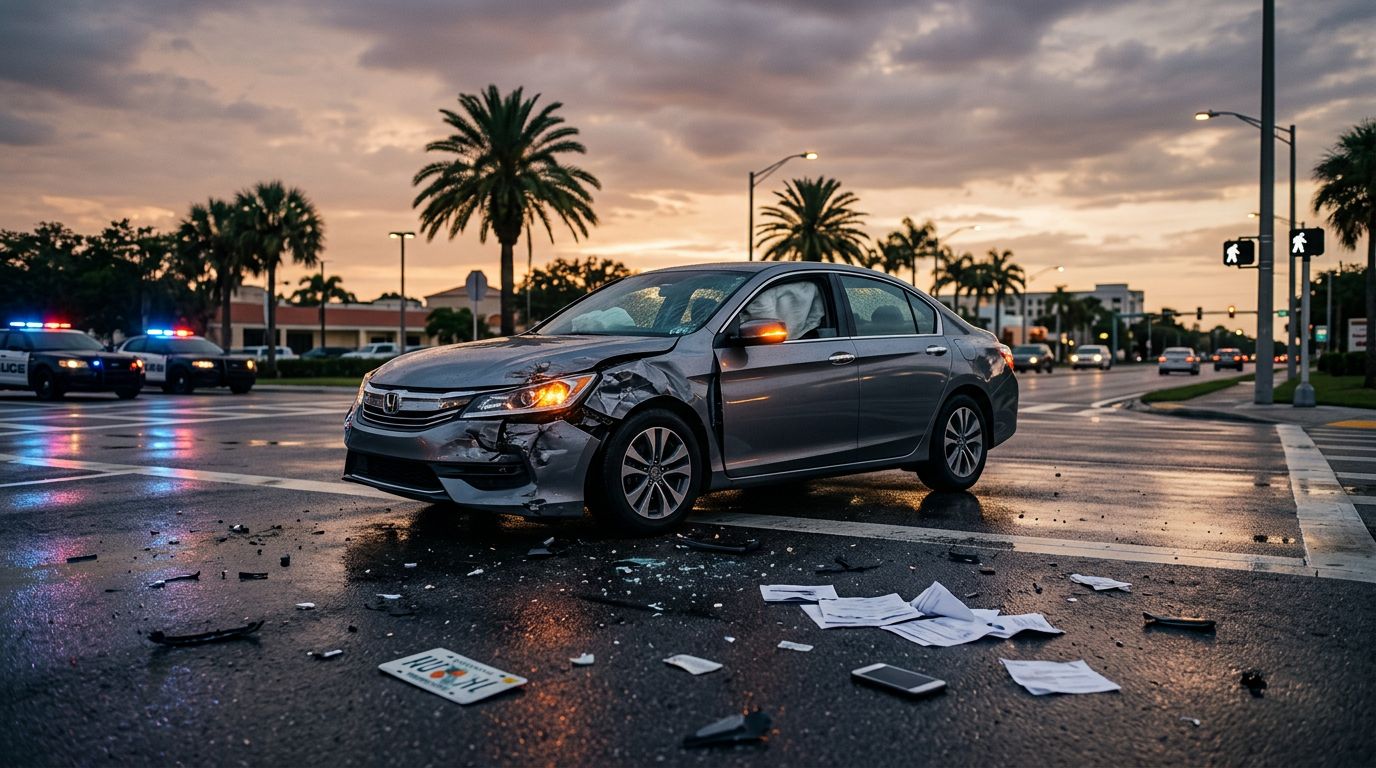
When a stolen car causes a crash, injured people often face two separate problems: proving who caused the collision and finding insurance that will pay. A Florida stolen vehicle accident can involve the thief, the vehicle owner, the owner’s insurer, and the injured person’s own insurance company.
The police report may confirm that the vehicle was stolen, but it doesn’t decide civil liability or coverage. Your next steps should focus on preserving evidence, reporting the crash, reviewing every applicable policy, and protecting the deadline for a personal injury claim.
Who May Be Liable After a Stolen Car Crash
A stolen vehicle crash creates different legal questions than an ordinary collision. The person driving the car, the person who owned it, and one or more insurance companies may have separate roles.
The thief is usually the first liability target
The thief may be personally liable if negligent driving caused the crash. A negligence claim generally requires proof that the driver owed a duty of reasonable care, violated that duty, caused the collision, and injured you.
If police identify and arrest the driver, the criminal case doesn’t replace your civil claim. You may still need to pursue compensation for medical expenses, lost income, property damage, pain, and other losses through a separate legal process.
Collection is often a serious concern. A thief may have little money or no insurance. Even when you win a judgment, recovery can be difficult if the driver has no meaningful assets. That is why your own insurance coverage may become especially important after a Florida stolen vehicle accident.
The vehicle owner is not automatically responsible
Florida’s dangerous-instrumentality rule can make an owner responsible for the negligence of a person who operates the vehicle with the owner’s permission. A true theft usually creates a major problem for that theory because the thief didn’t receive consent to drive.
However, the word “stolen” doesn’t end the investigation. The facts may show that the driver had permission, that the owner knowingly allowed an unsafe person to drive, or that the theft story is disputed. Those details can change the available claims.
Negligent entrustment is also different from automatic owner liability. It focuses on the owner’s own conduct, such as knowingly giving a vehicle to someone who was incompetent, reckless, or unfit to drive. A stranger’s unauthorized theft usually doesn’t establish negligent entrustment by itself, but the surrounding facts still deserve review.
The owner’s comprehensive insurance may cover theft-related damage to the vehicle. That coverage usually doesn’t pay an injured third party’s bodily injury claim. Liability coverage and permission rules must be examined separately.
Insurance After a Florida Stolen Vehicle Accident
Insurance often determines whether an injured person can collect compensation. Several policies may apply, but each has different requirements and limits.
PIP usually handles the first medical expenses
As of August 2026, the Florida Highway Safety and Motor Vehicles insurance requirements still list at least $10,000 in Personal Injury Protection, or PIP, and $10,000 in Property Damage Liability coverage for a Florida-registered vehicle.
PIP can pay 80% of necessary and reasonable medical expenses, up to the policy limit, regardless of who caused the crash. It may also cover part of lost income. PIP is limited, however, and it doesn’t provide full compensation for serious injuries, long-term disability, or pain and suffering.
Your available PIP coverage depends on your policy, household coverage, and status during the crash. Report the accident promptly and ask the insurer how to open a PIP claim. The FLHSMV crash insurance guidance also provides information about the state’s required coverage.
UM coverage may become the main source of recovery
Uninsured motorist coverage can help when the thief has no liability insurance or cannot be located. It may also become important if the vehicle owner’s insurer denies coverage because the thief took the car without permission.
Florida’s uninsured motorist statute addresses coverage for insured people who are legally entitled to recover damages from the owner or operator of an uninsured motor vehicle. Whether your policy applies depends on the policy language, the facts, and proof that the other driver caused your injuries.
Review the declarations page, endorsements, household policies, and any rejected or reduced UM forms. Give your insurer prompt notice, but consider obtaining legal advice before giving a detailed recorded statement or signing a release. For more guidance, see these Florida uninsured driver claims.
If the owner’s policy provides some compensation but the limits are too low, underinsured motorist coverage may also matter. A lawyer can compare the available limits with your medical costs, lost wages, and expected future losses.
Evidence That Can Support Your Claim
A successful claim depends on more than the fact that the car was stolen. You must connect the driver or insurer to the crash, prove fault, and document the harm.
Build proof of the theft and collision
Call law enforcement and obtain the crash report and theft case number. If the driver fled, report that fact immediately and preserve any information about the vehicle’s direction of travel, license plate, damage, or occupants.
Collect photographs of your vehicle, the road, debris, traffic signals, visible injuries, and surrounding property. Ask witnesses for contact information. Businesses, homes, traffic cameras, rideshare vehicles, and nearby buildings may have video that disappears quickly.
Save 911 records, emergency medical records, towing documents, repair estimates, and communications with insurers. If the vehicle has an event data recorder or telematics system, those records may help show speed, braking, or impact forces. A lawyer can send preservation requests before evidence is overwritten or discarded.
When the thief remains unknown, the case may resemble a hit-and-run claim. Prompt notice and independent proof matter, so review the guidance on Florida hit-and-run insurance claims.
Document the full effect of your injuries
Seek medical care promptly and describe every symptom accurately. Gaps in treatment can give an insurer an argument that the crash didn’t cause your condition, even when the symptoms are real.
Keep copies of medical bills, prescriptions, diagnostic reports, therapy records, and work documentation. Ask your employer for records showing missed time, reduced hours, or lost wages. If an injury affects household tasks, sleep, mobility, or family activities, keep a dated record of those limitations.
PIP may cover part of the immediate expenses, but a broader injury claim can include future treatment, reduced earning capacity, permanent impairment, and non-economic losses when Florida law allows them. A medical diagnosis and consistent treatment history help establish the seriousness of the injury.
Deadlines and Fault Rules in Florida
A strong claim can still fail if it is filed too late or if the evidence leaves fault unclear. Two rules deserve early attention.
Watch the two-year deadline
For most negligence claims accruing on or after March 24, 2023, Florida law generally provides two years to file a personal injury lawsuit. The Florida statute of limitations contains the controlling deadlines and exceptions.
The crash date usually matters, but other facts can affect the calculation. Different rules may apply to wrongful death claims, claims involving a government entity, or older accidents. Insurance negotiations don’t automatically extend the lawsuit deadline.
Contacting an attorney early gives time to identify the correct defendants, obtain records, investigate the theft, and file suit if negotiations fail.
Fault can reduce or bar recovery
Florida’s modified comparative fault rule affects negligence claims. Under Florida’s comparative fault statute, a person found more than 50% responsible for their own harm generally cannot recover damages.
If you are 50% or less at fault, your award can be reduced by your percentage of responsibility. Insurers may argue that you were speeding, distracted, failed to avoid the crash, or delayed medical treatment. Evidence from witnesses, cameras, vehicle data, and medical records can challenge those allegations.
The thief’s criminal conduct doesn’t eliminate the need to prove that the driver’s negligent operation caused your injury. Your claim should address both the driver’s conduct and any arguments about your own actions.
When Legal Help Matters
A Florida personal injury attorney can be especially helpful when the driver is unidentified, the owner’s insurer denies coverage, or your injuries may require long-term care. Multiple policies can create overlapping deadlines and notice requirements.
Get advice when coverage is disputed
A carrier may argue that the owner didn’t give permission, that its policy excludes theft-related use, or that your injuries aren’t serious enough for the requested compensation. Your own UM carrier may also investigate fault and challenge the value of the claim.
Don’t assume a denial from one insurer ends the matter. The decision may affect another policy, and the policy language may support a coverage challenge or UM claim.
A claim review should address the whole loss
An attorney should examine the police reports, insurance policies, medical records, wage loss, vehicle damage, witness accounts, and available video. The review should also identify every potential defendant and calculate how the injury may affect your future work and care.
After a Florida stolen vehicle accident, the most useful legal strategy often begins with coverage rather than a quick settlement demand. Finding the available source of compensation early can prevent you from releasing a claim before the full value of your injuries is known.
Conclusion
A stolen car crash doesn’t create one automatic claim. The thief may be liable for negligent driving, while the owner’s responsibility depends on permission and the owner’s own conduct. PIP may cover initial expenses, but UM or UIM coverage can become the main path to compensation when the driver lacks usable insurance.
Preserve evidence, report the crash, review every policy, and track the filing deadline. In a Florida stolen vehicle accident, early attention to insurance and proof can make the difference between a denied claim and a properly supported recovery.