
Housebound vs Aid Attendance: VA Benefits Compared
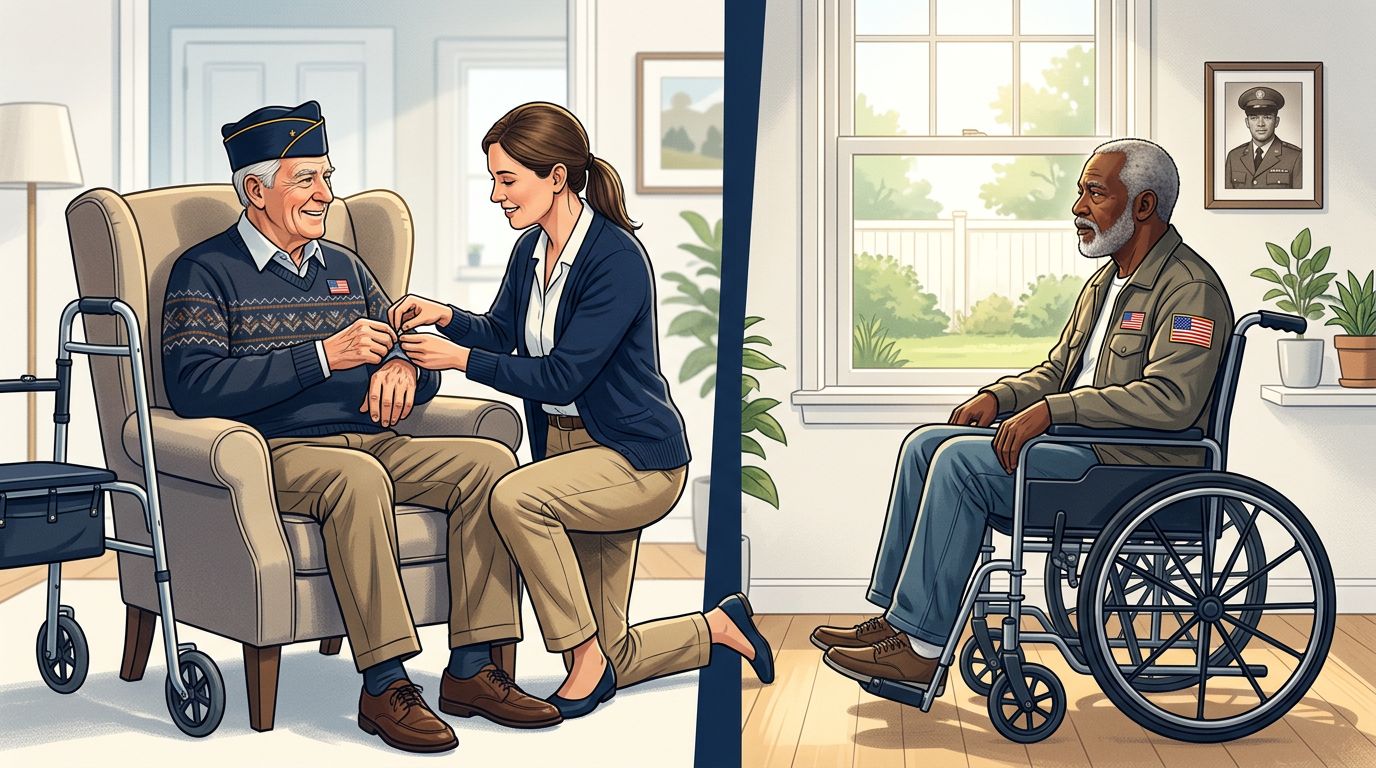
A veteran may qualify for one benefit and not the other, even when both conditions keep them at home. When comparing housebound vs aid attendance, the central question is whether a disability causes substantial confinement to the home or creates a regular need for personal help.
These are special monthly pension benefits, not separate pensions. Aid and Attendance usually provides the higher payment ceiling, while Housebound applies to a narrower type of limitation. Florida veterans and survivors must meet the same federal eligibility rules as claimants nationwide.
Housebound vs Aid Attendance: The Core Difference
Both programs can increase a VA pension payment, but they address different needs. The VA’s Aid and Attendance and Housebound guidance explains the basic requirements.
| Requirement | Aid and Attendance | Housebound |
|---|---|---|
| Main test | Regular help with personal care, qualifying blindness, bedridden status, or nursing-home care | Substantial confinement to the home because of permanent disability |
| Financial gate | Must qualify for VA pension | Must qualify for VA pension |
| 2026 MAPR, no dependents | $29,093 | $21,313 |
| Can both be paid together? | No | No |
When Aid and Attendance fits
Aid and Attendance, often called A&A, is for someone who needs regular assistance with daily activities. The VA may consider help with bathing, dressing, feeding, or other basic personal functions.
Eligibility may also apply when the claimant is bedridden, lives in a nursing home because of disability, or has qualifying severe vision loss. The vision standard generally requires 5/200 vision or less in both eyes, or a visual field limited to five degrees or less.
The person doesn’t need help every minute of the day. However, the evidence must show a regular need for another person’s assistance or supervision. A diagnosis alone usually won’t establish that need.
When Housebound fits
Housebound benefits apply when a permanent disability substantially confines the claimant to the home or immediate premises. The record should show that the person spends most of their time at home because of disability.
Housebound status doesn’t require the same level of personal-care assistance as A&A. Someone may manage bathing and dressing independently but still be unable to leave home safely or regularly because of a permanent condition.
The two benefits cannot be paid at the same time. If the facts support A&A, that benefit generally provides the higher pension rate.
Both Benefits Require VA Pension Eligibility
Neither benefit is a standalone monthly check. The claimant must first qualify for VA pension under the VA pension program.
VA pension is needs-based. A claimant must meet the applicable service, age or disability, income, and net worth requirements. A surviving spouse may face separate Survivors Pension rules but can also qualify for an applicable additional benefit.
For the period from December 1, 2025, through November 30, 2026, the VA lists a net worth limit of $163,699. VA considers financial information when deciding whether a claimant qualifies for pension.
Countable income affects the final amount
The VA uses a Maximum Annual Pension Rate, or MAPR, for each household situation. The annual MAPR is a ceiling, not an automatic payment. The VA generally subtracts countable income when calculating the amount payable.
Unreimbursed medical expenses may affect the calculation when they meet VA requirements. Household size also matters, so a veteran with a spouse or dependent may have a different MAPR than a veteran without dependents.
The current annual rates are:
| Household situation | Basic pension | Housebound | Aid and Attendance |
|---|---|---|---|
| Veteran with no dependents | $17,441 | $21,313 | $29,093 |
| Veteran with one dependent | $22,839 | $26,710 | $34,488 |
For a veteran with no dependents, the A&A ceiling is $29,093 per year, compared with $21,313 under Housebound. Actual monthly payments depend on the claimant’s countable income and other pension factors.
The Evidence Must Show Daily Limitations
The most useful evidence explains what the claimant can and cannot do during ordinary life. Medical records should connect the disability to the need for care or confinement.
A diagnosis tells the VA what condition exists. Daily examples show how that condition affects eligibility.
Evidence for Aid and Attendance
An A&A claim should describe the specific tasks that require help. A medical provider can explain whether the claimant needs assistance with:
- Bathing, dressing, grooming, or using the restroom
- Feeding or preparing food safely
- Taking medication correctly
- Moving safely around the home
- Protecting against falls or other daily hazards
The record should also address whether the person is bedridden, receives nursing-home care, or has qualifying vision loss. Statements from caregivers and family members can support the medical evidence by describing how often help is needed and what happens when assistance is unavailable.
VA Form 21-2680 is the primary medical examination form for these claims. Vague answers can lead to requests for clarification or delays. Florida families can review these VA Form 21-2680 aid and attendance delays before submitting the application.
Evidence for Housebound status
Housebound evidence should explain why a permanent disability keeps the claimant at home. A provider might describe limited mobility, serious respiratory problems, severe weakness, or another condition that prevents regular travel.
The statement should address the claimant’s normal routine. It can explain how often the person leaves, whether trips are limited to medical care, and what assistance is required to travel safely.
Simply writing “housebound” on a form isn’t enough. The VA needs facts showing substantial confinement caused by a permanent disability. Lay statements can help fill gaps when they provide clear observations instead of general conclusions.
Don’t Confuse Pension Benefits With SMC
Many veterans search for housebound or A&A benefits when their claim may involve Special Monthly Compensation, or SMC. The programs sound similar, but they use different eligibility rules.
Pension Housebound and pension A&A are needs-based benefits. They require VA pension eligibility and are affected by income and net worth. The disabling condition doesn’t generally have to be service-connected.
SMC is additional compensation tied to service-connected disabilities. SMC-L is often associated with a regular need for Aid and Attendance, while SMC-S is commonly associated with housebound status. SMC has its own rating and functional requirements, and income limits that apply to pension don’t control SMC eligibility.
The VA’s official compensation information provides the starting point for service-connected compensation programs. Veterans with severe service-connected limitations should also review VA Special Monthly Compensation explained.
A veteran may have facts supporting a pension claim, an SMC claim, or both theories at different points in the case. Choosing the wrong benefit category can leave money and legal issues unaddressed.
How Florida Veterans Can Apply
Florida claimants follow federal VA procedures. The state doesn’t create a separate Housebound or A&A standard, although local doctors, caregivers, hospitals, and nursing homes may hold important evidence.
Start with the correct forms
The VA allows applicants to apply online, by mail, or in person. The official application instructions explain how to begin a Housebound or A&A request.
VA Form 21-2680 documents the medical need for regular assistance or housebound status. It doesn’t replace the pension application or the financial information the VA needs. If the claimant lives in a nursing home, the VA may also require Form 21-0779, which requests information from the facility.
The completed form should be detailed, consistent with the medical records, and based on the claimant’s actual daily functioning.
Build the claim around real-life facts
Gather medical records, care notes, nursing-home records, eye examinations, caregiver statements, income information, asset information, and records of qualifying medical expenses. A spouse or family member should describe the help provided and how often it is needed.
For Housebound claims, evidence should focus on the claimant’s normal ability to leave home. For A&A claims, it should focus on personal care, supervision, mobility, safety, and other daily needs.
A Florida VA-accredited attorney can review whether the evidence supports pension A&A, pension Housebound, SMC, or another benefit before the claim is filed.
Common Problems That Lead to Denials
Several mistakes can make a valid claim harder to prove:
- A claimant applies for Housebound benefits without first establishing VA pension eligibility.
- The medical form lists diagnoses but doesn’t describe the need for help with daily activities.
- A family member says the veteran is “housebound” without explaining the permanent disability and ordinary travel pattern.
- The application assumes that A&A and Housebound payments can be combined.
- The claimant pursues a pension add-on when the facts may support service-connected SMC.
- The records describe the veteran’s condition during an appointment but not the assistance needed at home.
A denial should be reviewed for both factual and legal errors. The decision may have overlooked a medical statement, used the wrong benefit standard, or failed to address evidence supporting a different form of special monthly benefit.
Conclusion
The difference between Housebound and Aid and Attendance is the type and severity of assistance the claimant needs. Housebound focuses on substantial confinement to the home, while A&A focuses on regular help with personal care, supervision, blindness, bedridden status, or nursing-home care.
Both require VA pension eligibility, and A&A generally has the higher MAPR. If the disability is service-connected, the claim may also involve SMC, so a complete review should address the correct benefit category and the evidence supporting it.