
Florida Household Services Claims After Permanent Injury
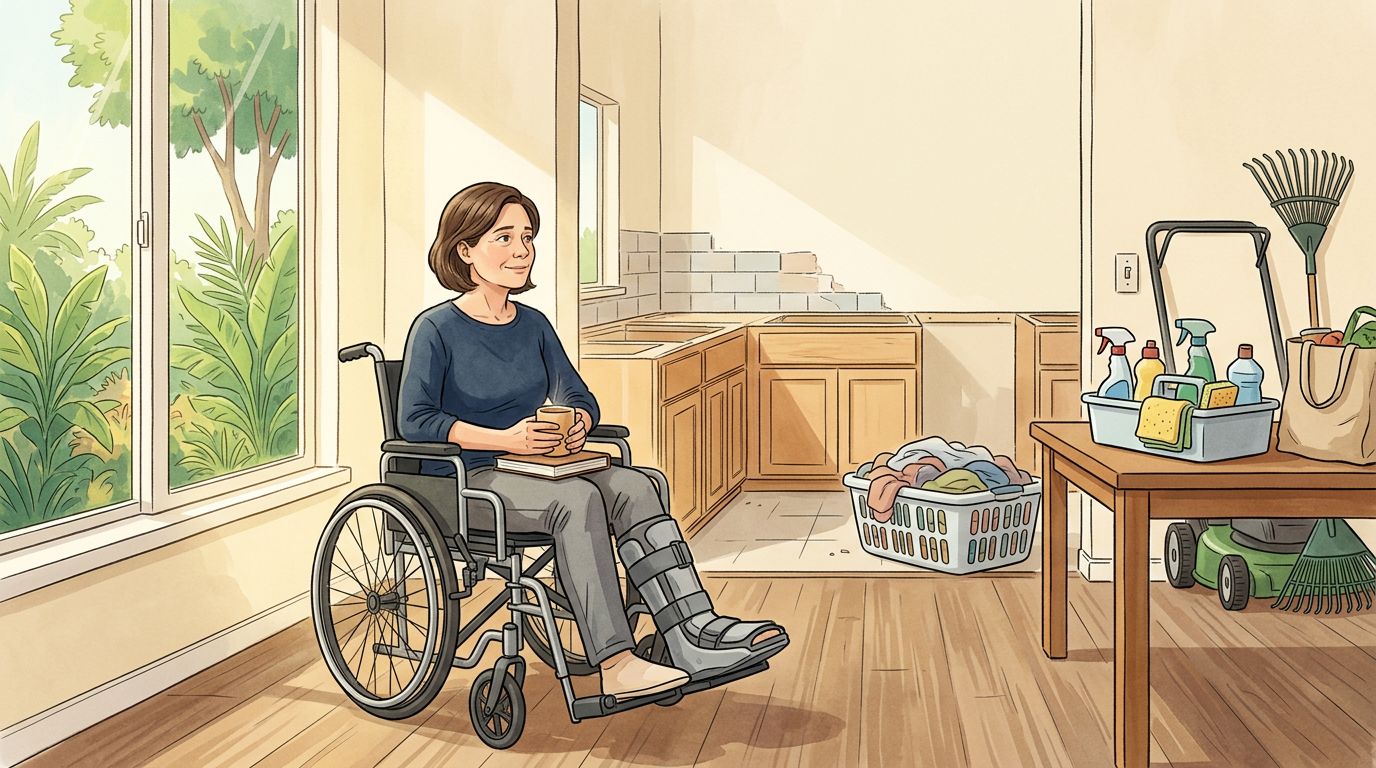
A permanent crash injury can change who cooks dinner, cuts the grass, cleans the home, or cares for children. Florida household services claims may help recover the value of work you can no longer perform because of another driver’s negligence.
These losses are often overlooked because they don’t appear on a hospital bill. A strong claim connects your former household duties to medical restrictions, replacement costs, and the expected length of your disability. The legal and practical issues begin with identifying exactly what changed after the crash.
What household services damages can cover
Household services damages concern the value of ordinary tasks you performed before the collision but cannot perform, or can perform only with substantial difficulty, after the injury. The claim may involve past services, future services, or both.
Common examples include:
- Cleaning bathrooms, kitchens, floors, and other living areas
- Doing laundry and changing bedding
- Preparing meals and grocery shopping
- Mowing, landscaping, and basic home maintenance
- Caring for children, elderly relatives, or other household members
- Driving family members to school, medical appointments, or activities
- Managing routine errands and household organization
The precise value depends on the services, the hours required, the local market rate, and the medical reason you cannot do the work.
The loss is about work you can no longer do
You don’t need to have paid someone before the accident to show that the work had value. Household labor takes time and often requires physical ability, planning, or both. When a permanent injury removes that capacity, the value of the lost work can become part of the economic damages in a personal injury claim.
For example, a person with a permanent back injury may still walk independently but cannot bend, lift laundry baskets, stand long enough to cook, or remain on a ladder. Those limitations can support a claim for reasonable replacement services if medical records and other evidence connect them to the crash.
Unpaid help from a spouse or family member also deserves documentation. The absence of an invoice doesn’t automatically make the service worthless. However, the claim still needs proof of what the helper did, how often, and what comparable services would cost.
Permanent injuries can create long-term service needs
A temporary recovery period may require help for several weeks or months. A permanent injury can create recurring needs for years. The difference affects how the claim is valued.
A spinal cord injury, traumatic brain injury, severe fracture, or permanent orthopedic impairment may affect household duties even after formal medical treatment ends. Rehabilitation records can show whether you regained function, reached a plateau, or need continuing assistance.
For more detail about collision-related paralysis and long-term losses, see these resources on Florida spinal cord injury claims.
How Florida household services claims work after a crash
Florida household services claims can involve two separate sources of benefits. Personal Injury Protection, or PIP, may provide limited first-party benefits after a covered crash. A liability claim against the at-fault driver may seek broader economic and non-economic damages when the injury meets Florida’s legal requirements.
Keeping these claims separate prevents confusion about what each insurer should pay.
PIP may pay limited replacement-service benefits
Florida’s no-fault system requires drivers to carry PIP coverage. Florida Statute 627.7407 identifies the required coverage framework, while section 627.736 sets out the benefits and conditions.
PIP generally provides up to $10,000 in combined medical and disability benefits, subject to the policy and statutory requirements. It may also cover certain ordinary and necessary replacement services that you would have performed without charge if the injury had not occurred. These benefits are limited, and they don’t replace a full claim for future household-service losses.
Initial medical care generally must begin within 14 days after the crash for PIP eligibility. Therefore, report the collision to your insurer and seek appropriate medical attention promptly. A delay can create a coverage dispute even when the injury is genuine.
You can also review how Florida PIP wage loss benefits differ from a claim for long-term earning losses and household services.
The tort claim addresses broader losses
A third-party bodily injury claim may seek losses that PIP doesn’t fully cover. Those losses can include medical expenses, reduced earning capacity, household services, and pain and suffering.
Florida’s no-fault rules generally limit lawsuits for pain, suffering, mental anguish, and inconvenience unless the injury meets a statutory threshold. The law includes a significant and permanent loss of an important bodily function, a permanent injury within a reasonable degree of medical probability, significant permanent scarring or disfigurement, or death.
Read the official Florida permanent-injury threshold before assuming that a serious diagnosis automatically qualifies. A diagnosis matters, but the legal analysis also depends on permanence, function, medical opinions, and causation.
The threshold generally concerns non-economic damages. Household services are usually presented as an economic loss. Still, proof of a permanent injury often supports the need for future services and the broader liability claim.
Evidence that supports a Florida household services claim
A claim is stronger when it shows a clear before-and-after difference. General statements such as “I can’t keep up with the house” may not establish the number, duration, or value of the services.
The goal is to document the work, explain the limitation, and calculate a reasonable replacement cost.
Document the pre-crash household routine
Start by identifying the tasks you regularly handled before the collision. A spouse, adult child, roommate, neighbor, or coworker may help confirm your routine. Household calendars, cleaning schedules, receipts, photographs, and messages can also show the work you performed.
Create a record that answers practical questions:
- What task did you perform?
- How often did you perform it?
- How long did it usually take?
- Did you perform it alone?
- Who performs it now?
- What does comparable help cost in your area?
A person who handled yard work every Saturday has a different claim from someone who occasionally trimmed a few plants. Detail gives the loss a measurable value.
Tie each task to medical restrictions
Medical records should explain why the injury affects specific household activities. Useful restrictions may address lifting, bending, reaching, standing, walking, gripping, driving, balance, concentration, or tolerance for repetitive movement.
A physician’s statement that an injury is permanent can help, but functional detail is also important. The records should connect the restrictions to the crash rather than leaving the insurer to guess.
Rehabilitation notes, occupational therapy evaluations, and work-capacity assessments may add useful information. If a preexisting condition exists, the evidence should distinguish the limitations that existed before the collision from the additional limitations caused by the crash.
A permanent diagnosis does not automatically establish the cost of household help. The claim must show which services were lost and why the injury caused that loss.
How attorneys value past and future services
Household-service damages require more than choosing an hourly rate. The calculation should account for the actual tasks, reasonable hours, duration, and evidence that the services are medically necessary.
Past services need dates and rates
Past losses are usually easier to measure when you keep invoices, receipts, canceled checks, payment records, or a detailed service log. If relatives provided unpaid help, record the dates, tasks, approximate hours, and comparable local rates.
A written estimate from a cleaning company, lawn service, childcare provider, or home-health agency may help establish market value. The provider should describe the services and rate clearly. Avoid using a broad monthly estimate without explaining how it was calculated.
Separate household services from other categories. Personal attendant care, transportation, medical treatment, lost wages, and home modifications may involve different evidence and legal theories. Combining them can create confusion or duplicate damages.
Future services require a defensible projection
Future claims depend on how long the need is expected to continue. A temporary restriction may support a short-term projection. A medically established permanent impairment may support a future-services claim extending over the person’s expected lifetime.
The calculation may consider the number of hours per week, the tasks involved, current local rates, expected rate changes, and the proper present-value method. Medical and rehabilitation opinions can establish the expected duration. In difficult cases, a life-care planner, vocational professional, or economist may help explain the projection.
The claim should remain tied to real needs. An insurer may challenge a projection that includes every household task without showing why each one is medically necessary.
Deadlines, fault, and available insurance
A permanent injury claim can take time to develop because doctors may need to assess lasting impairment. That delay doesn’t remove the need to protect legal deadlines or preserve evidence.
The filing deadline is shorter than many people expect
For many Florida negligence claims that accrued on or after March 24, 2023, the statute of limitations is generally two years under section 95.11(5)(a). The deadline may differ for older crashes, claims involving government entities, wrongful death, or other special circumstances.
Insurance notice isn’t the same as filing a lawsuit. Telling an insurer about the collision doesn’t preserve every legal deadline. Because the correct date can depend on the facts, have the claim reviewed well before the two-year period expires.
Fault also affects the amount recovered. Florida’s modified comparative negligence rule can reduce damages based on the injured person’s share of responsibility. A claimant found more than 50% at fault in a covered negligence action may be barred from recovery.
Policy limits and liens affect the recovery
The other driver’s bodily injury policy may not cover the full value of permanent household-service losses. Review all available insurance, including coverage connected to the vehicle owner, additional liable parties, and uninsured or underinsured motorist protection.
Florida’s uninsured motorist statute addresses an important source of compensation when the at-fault driver has no insurance or insufficient limits. Policy language, rejection forms, and coverage limits can affect the analysis.
Medical bills may also create reimbursement claims against a settlement. Understanding Florida health insurance subrogation claims early can help prevent unexpected deductions after the case resolves.
Mistakes that can weaken the claim
People often understate household losses because they focus on medical treatment and employment. Avoid these common problems:
- Describing the injury without listing the household tasks it prevents
- Failing to record help provided by relatives or friends
- Waiting months to obtain service estimates
- Treating a temporary recovery period as proof of a permanent need
- Ignoring preexisting conditions that the insurer may use to challenge causation
- Mixing household services with lost wages or medical attendant care
- Accepting a quick settlement before doctors assess permanent restrictions
- Failing to investigate uninsured or underinsured motorist coverage
Keep copies of medical records, service invoices, insurer letters, photographs, and a current task log. Don’t exaggerate the loss, but don’t dismiss unpaid labor that your family now performs because of the crash.
Conclusion
Florida household services claims can address a real economic loss when a permanent injury prevents you from maintaining your home, caring for family members, or handling routine responsibilities. PIP may provide limited immediate benefits, while a third-party claim may seek the full proven value of past and future services.
The strongest evidence identifies your pre-crash routine, documents the tasks you lost, ties each limitation to medical proof, and supports the cost with reliable market data. When a crash changes the work you do at home, that change belongs in the claim rather than being left out of the calculation.